
Best Utility Tokens for Investment in 2026: A Practical Guide to High-Potential Assets
Most people think buying crypto is like picking stocks. You buy a piece of a company, wait for it to grow, and hope the price goes up. But utility tokens are cryptographic assets designed to provide access to specific products or services within blockchain ecosystems, distinct from security tokens that represent ownership. They don't give you equity. They give you keys. Keys to vote on protocol changes, keys to use decentralized computing power, or keys to trade real estate fractions. If you treat them like stocks, you will likely lose money. If you treat them like tools with value, you might find some of the best opportunities in the current market.
The landscape has shifted dramatically since the early days of Ethereum. As of mid-2026, utility tokens make up nearly two-thirds of all non-stablecoin crypto assets. The market isn't just about speculation anymore; it's about utility. Real-world adoption is driving prices, not just hype. This guide cuts through the noise to show you which utility tokens actually have working products, strong communities, and realistic growth potential right now.
What Makes a Utility Token Worth Your Money?
Before looking at specific names, you need to know what separates a solid project from a scam. A utility token only has value if people actually use the service it unlocks. Think of it like a subway card. The card itself isn't valuable unless there are trains running. In crypto, the "trains" are the network activity, transaction volume, and user engagement.
Here are the three non-negotiable criteria I look for:
- Real Usage Metrics: Does the platform process transactions? For example, Propy (PRO) has processed over $4 billion in real estate transactions. That’s hard data. Hype is easy; billions in processed value is not.
- Tokenomics Sustainability: How are new tokens created? If the supply inflates too fast, your holdings get diluted. Look for projects with capped supplies or deflationary mechanisms where tokens are burned during usage.
- Technical Infrastructure: Which blockchain does it run on? Most top utility tokens still rely on Ethereum, specifically the ERC-20 standard. However, newer chains like Solana are gaining ground due to speed and lower costs.
Avoid tokens that promise returns without a clear product. According to recent analysis, nearly 80% of new utility tokens fail within 18 months because their tokenomics are broken. Do your homework.
Top Utility Tokens to Watch in 2026
I’ve analyzed dozens of projects based on market cap, user growth, and technical viability. Here are five that stand out for different reasons.
1. Propy (PRO): The Real Estate Pioneer
If you want exposure to real-world assets (RWA), Propy is the leader. It allows users to buy and sell property using cryptocurrency, with smart contracts handling the legal transfer. This isn't theoretical; it’s happening now. With a market cap around $70 million and $4 billion in historical transaction volume, Propy has proven its model works.
Why it’s interesting: It solves a massive pain point-slow, expensive cross-border real estate deals. While transaction times can hit 14 seconds during peak hours, the ability to settle international property sales in minutes instead of months is revolutionary. The team plans to integrate with 12 more national land registries by Q2 2026, which could unlock significant value.
2. io.net (IO): Powering the AI Boom
Artificial intelligence needs computing power, and GPUs are scarce. io.net creates a decentralized marketplace for GPU clusters. Developers rent idle GPU power from providers worldwide. With a market cap of $117 million, it’s smaller than competitors but offers unique infrastructure. It currently supports 30,000 GPU clusters and aims for 50,000 by year-end.
The catch: It requires technical knowledge. Setting up a node or renting compute takes time. Users report spending an average of 14.5 hours configuring clusters initially. But if you believe AI growth will continue, IO is a bet on the shovels sold during the gold rush.
3. Aave (AAVE): The DeFi Standard
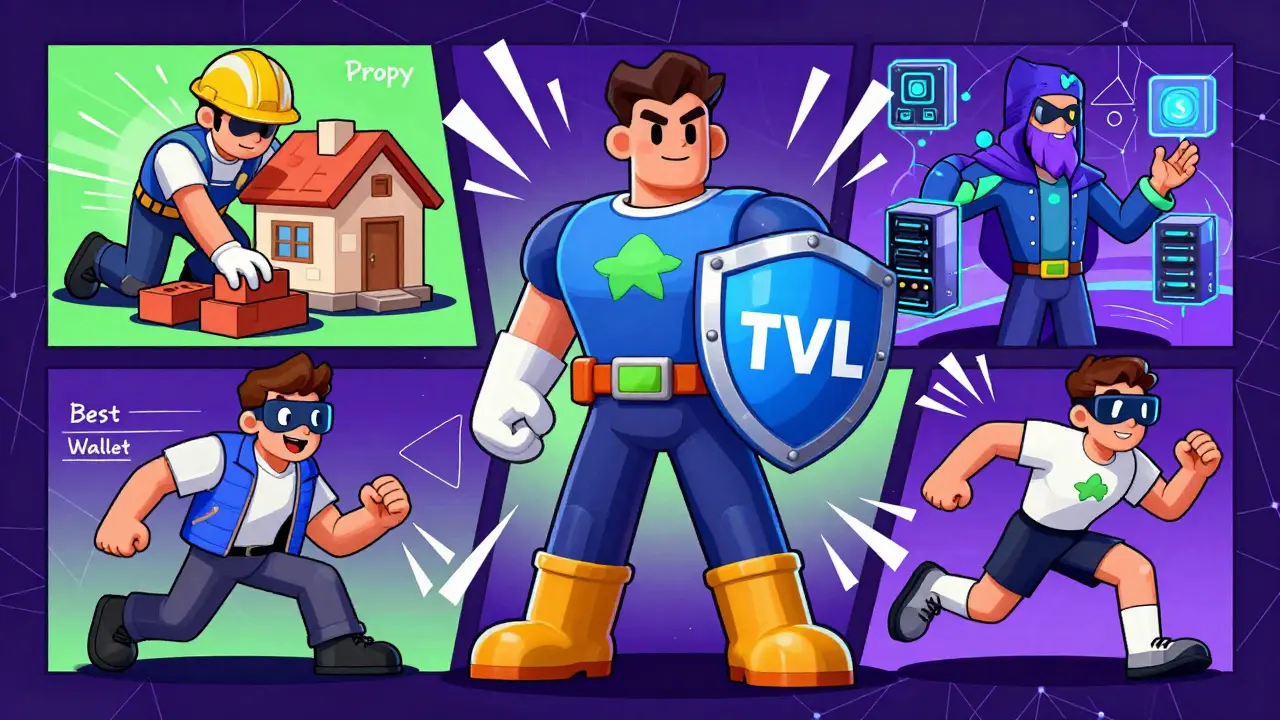
You can’t talk about utility tokens without mentioning Aave. It’s a lending protocol where you earn interest on deposits or borrow against collateral. With $13 billion in Total Value Locked (TVL), it’s one of the most secure and widely used platforms in crypto.
Pros and Cons: Aave’s governance model is considered the "gold standard." However, its price action has been stagnant since 2021 because it’s so established. It’s less of a moonshot and more of a blue-chip hold. If you want stability and steady yield rather than explosive growth, Aave is your pick.
4. Best Wallet Token (BEST): User Experience Focus
Newer entrants often win on usability. Best Wallet Token powers a comprehensive wallet app that makes multi-chain trading easy. It offers staking rewards up to 18% APY and seamless integration across Ethereum, Solana, and BNB Chain.
User Feedback: Reviews highlight the smooth setup (average 1.5 hours) but criticize the 0.8% transaction fee, which is higher than some competitors. Still, for beginners who find traditional wallets confusing, BEST lowers the barrier to entry significantly.
5. LivLive (LIV): Gamifying Fitness
This one is different. LivLive combines augmented reality with fitness tracking. You earn tokens by moving. Experts like Michael van de Poppe have pointed out that this creates a sustainable utility model unlike speculative meme coins. While riskier, the potential for viral adoption among retail users is high.
| Token | Primary Use Case | Market Cap (Approx.) | Risk Level | Best For |
|---|---|---|---|---|
| Propy (PRO) | Real Estate Transactions | $70M | Medium | RWA Investors |
| io.net (IO) | Decentralized GPU Compute | $117M | High | Tech-Savvy / AI Believers |
| Aave (AAVE) | Lending/Borrowing | $13B TVL | Low-Medium | Conservative Yield Seekers |
| Best Wallet (BEST) | Wallet Access/Staking | Varies | Medium | Beginners |
| LivLive (LIV) | Fitness/AR Rewards | Small Cap | Very High | Speculative Growth |
Understanding the Risks: Why Most Tokens Fail
It’s crucial to be honest about the dangers. The crypto market is ruthless. Here are the biggest threats to your investment:
- Regulatory Uncertainty: The US SEC continues to scrutinize tokens. While the EU’s MiCA framework provides clarity, causing many projects to incorporate in Switzerland or Singapore, US investors face ambiguity. Always check if a token is classified as a security in your jurisdiction.
- Smart Contract Bugs: Even audited code can have flaws. Aave undergoes regular third-party audits, but no system is 100% immune. Diversify your holdings to mitigate this risk.
- Low Liquidity: Smaller tokens like io.net can suffer from liquidity crunches. If everyone tries to sell at once, the price can crash drastically. Check the trading volume before buying.
- Complexity Barrier: Many utility tokens require you to understand complex interfaces. Propy users report an 8-12 hour learning curve. If you aren’t willing to learn, stick to simpler platforms or avoid these assets entirely.

How to Buy and Store Utility Tokens Safely
Buying utility tokens is straightforward, but storing them securely is where many people slip up. Here is the step-by-step process:
- Choose a Reputable Exchange: Platforms like Binance, Coinbase, or Kraken list major utility tokens like AAVE and ETH. For smaller caps like PRO or IO, you may need to use decentralized exchanges (DEXs) like Uniswap or Raydium.
- Set Up a Compatible Wallet:
- Ethereum-based tokens: Use MetaMask or Trust Wallet.
- Solana-based tokens: Use Phantom or Solflare.
- Multi-chain: Best Wallet or BlockchainFx offer integrated solutions.
- Verify Contract Addresses: Never copy-paste addresses from random websites. Go to CoinMarketCap or CoinGecko to find the official contract address. Scammers create fake tokens with similar names.
- Enable Security Features: Use hardware wallets (like Ledger or Trezor) for large amounts. Enable two-factor authentication (2FA) on all exchange accounts.
Remember, once you send tokens to the wrong address, they are gone forever. Double-check everything.
Future Outlook: Where Is This Going?
The convergence of AI, real-world asset tokenization, and improved blockchain infrastructure is setting the stage for sustained growth. Deloitte predicts that utility tokens will underpin 15-20% of global digital transactions by 2030. Institutional investors are increasingly favoring established tokens like Aave, while retail drives innovation in newer sectors like AI compute (io.net) and gamified fitness (LivLive).
With Ethereum’s Pectra upgrade reducing gas fees by 47% and Solana improving network reliability, the technical hurdles are lowering. This means more users can participate, which drives demand for the utilities these tokens provide. The key is to focus on projects with tangible use cases, strong communities, and transparent roadmaps.
Are utility tokens safe investments?
No investment is completely safe. Utility tokens carry risks such as regulatory changes, smart contract vulnerabilities, and market volatility. However, tokens with real-world usage like Propy or Aave tend to be more resilient than purely speculative assets. Always diversify and only invest what you can afford to lose.
What is the difference between a utility token and a security token?
A utility token grants access to a product or service, like using AAVE to borrow funds or PRO to trade real estate. A security token represents ownership in a company or asset, similar to a stock, and is subject to stricter financial regulations. Utility tokens are generally less regulated but also lack dividend rights.
Which blockchain is best for utility tokens?
Ethereum remains the dominant platform, hosting 78.6% of utility tokens via the ERC-20 standard. It offers the largest ecosystem and developer support. However, Solana is growing rapidly due to its high speed (65,000 TPS) and low fees ($0.00025 per transaction), making it attractive for high-frequency applications.
Can I earn passive income with utility tokens?
Yes, many utility tokens offer staking rewards. For example, Best Wallet Token offers up to 18% APY, and Aave allows you to earn interest on deposited assets. However, yields vary based on market conditions and platform usage. Always read the terms regarding lock-up periods and withdrawal fees.
How do I research a utility token before buying?
Start by checking the project’s whitepaper and roadmap. Look for active development on GitHub, regular community updates, and third-party audits. Analyze on-chain metrics like daily active users and transaction volume. Finally, join their Discord or Telegram to gauge community sentiment and responsiveness.





another day another crypto scam trying to sell you dreams :P the SEC is right to be worried about this garbage
The distinction between utility and security tokens remains legally ambiguous in many jurisdictions despite what proponents claim. One must consider that regulatory bodies are increasingly focused on economic substance rather than technical classification. The assertion that utility tokens lack equity rights does not necessarily shield them from securities laws if investors reasonably expect profits derived from the efforts of others. It is prudent to exercise extreme caution and consult legal counsel before engaging with these assets as the precedent set by recent enforcement actions suggests a broad interpretation of what constitutes an investment contract.
You are completely missing the point of decentralized infrastructure scaling. io.net is not just a token it is a critical layer for AI compute allocation efficiency. The latency reduction in GPU provisioning via smart contracts is massive. We are talking about sub-second settlement for compute resources which is impossible with traditional cloud providers. The market cap is irrelevant compared to the total addressable market of AI training workloads. If you understand the tech stack you know this is undervalued. Stop looking at price charts and look at the node distribution metrics. The burn mechanism ensures deflationary pressure as demand for compute increases exponentially. This is pure utility driven value accrual.
Oh look another guru telling you how to pick winners. Good luck with that. Most of these projects will be dead code in six months.
i mean its ok i guess but why do we need more tokens? like really? my portfolio is already a mess and now im supposed to learn about gpu clusters? sounds exhausting lol
It is important to remember that accessibility is key for mass adoption. While the technical aspects of setting up nodes or managing multi-chain wallets can be daunting for newcomers, tools like Best Wallet Token aim to bridge that gap. However, users should always prioritize understanding the underlying technology before committing funds. Education is the best defense against volatility and scams. Take your time to explore the interfaces without risking real capital first.
I find the focus on real-world asset tokenization through Propy to be genuinely exciting because it brings tangible value into the digital space. The idea of settling international property transactions in minutes rather than months could revolutionize global commerce and reduce friction for buyers and sellers alike. It is inspiring to see blockchain technology solving such persistent logistical challenges. I believe that projects with clear use cases like this have a stronger foundation for long-term sustainability compared to purely speculative assets. Let us continue to support innovations that drive real utility and positive change in traditional industries.
The analysis presented here is superficial at best. You ignore the systemic risks associated with centralized exchanges listing these tokens. Furthermore, the correlation between AI hype cycles and crypto valuations is historically poor. Do not trust retail narratives.
Great breakdown of the risk factors 🛡️. One thing to add is the importance of hardware wallet integration for long-term holding. I always recommend Ledger or Trezor for anything beyond trivial amounts. Also keep an eye on the gas fees during peak hours as mentioned 👀. Stay safe out there folks! 💪
There is a philosophical shift occurring where value is no longer defined by scarcity alone but by utility and network effects. The convergence of fitness tracking and rewards in LivLive exemplifies this behavioral economics approach. It gamifies health outcomes while creating a sustainable token model. This aligns with broader trends in digital identity and personal data ownership. We are moving towards a future where our daily activities generate verifiable value.
The sheer complexity of navigating these different ecosystems is overwhelming. One minute you are dealing with Ethereum gas wars and the next you are configuring Solana RPC endpoints. It feels like every project wants to reinvent the wheel instead of collaborating on standards. The fragmentation hurts the average user who just wants to participate in the economy. We need better abstraction layers.
In Asian markets particularly Singapore and Hong Kong the regulatory clarity provided by frameworks similar to MiCA is accelerating institutional adoption of RWA tokens. Propy’s expansion into these regions is strategic given the high net worth demographic seeking alternative stores of value. The cultural emphasis on real estate as a primary asset class makes this utility highly relevant. Localized compliance solutions will be the differentiator for success in APAC.
I agree with the points made regarding Aave’s stability. It serves as a reliable anchor in a volatile portfolio. The governance model is indeed robust and has proven resilient over multiple market cycles. For conservative investors seeking yield without excessive risk exposure Aave remains a top choice. Diversification across different utility sectors like AI and RWA alongside DeFi blue chips seems like a balanced strategy.