
Blockchain Voting Security Concerns: Why Experts Warn Against It
Blockchain Voting Risk Analyzer
Risk Assessment Tool
Voter devices could be infected with malware that alters votes before submission
Votes could be intercepted and altered during transmission
Linking voter IDs to votes enables coercion and vote buying
Voters unable to access voting system without notice
Corrupt actors paying voters to vote a specific way
Imagine casting your vote from your phone, knowing it’s recorded on an unbreakable digital ledger. Sounds perfect, right? That’s the promise of blockchain voting: transparent, tamper-proof, and convenient. But behind the hype, a growing chorus of cybersecurity experts, election officials, and academics are sounding the alarm. Blockchain voting isn’t just risky-it could silently destroy the integrity of democracy without anyone noticing until it’s too late.
How Blockchain Voting Is Supposed to Work
Proponents say blockchain voting solves old problems. Traditional electronic voting systems are black boxes-voters trust the machine, but can’t verify what happens inside. Blockchain changes that. Each vote becomes a cryptographically signed transaction on a public ledger. Once recorded, it can’t be erased or altered. The system uses public-key encryption so only eligible voters can submit ballots. Decentralized nodes validate the data, removing reliance on a single server. And because the ledger is open, anyone can audit the results in real time. Companies like Simple Proof and Polyas have built systems that claim to do this. Simple Proof doesn’t actually let people vote on the blockchain. Instead, it timestamps election results after traditional counting, anchoring them to Bitcoin’s blockchain. That’s a smart workaround-using blockchain as a seal, not a ballot box. Polyas, used in Germany and across Europe, offers full online voting with end-to-end encryption and strict legal compliance. But even these systems are built on assumptions that don’t hold up under real-world pressure.The Four Silent Threats No One Talks About
The US Vote Foundation, a nonprofit focused on election integrity, identified four catastrophic risks that blockchain voting creates-and none of them leave a trace. First, votes can be silently changed. Hackers don’t need to break into a central server. They can target individual voter devices, intercept ballots mid-transmission, or manipulate the software that translates votes into blockchain entries. Because the blockchain only records that a vote was cast-not what it was-it’s impossible to detect if a vote was altered after submission. Second, voters can be quietly disenfranchised. Imagine thousands of eligible voters can’t log in to vote. Their ballots never reach the blockchain. No error message. No alert. Just silence. And because the system shows “voter participation rates,” no one notices the drop. This isn’t theoretical. In 2020, a cyberattack in a small European municipal election blocked access for 12% of voters. The results were certified as valid. Third, privacy collapses. Blockchain voting often links ballot IDs to voter IDs for audit purposes. If that link is exposed-even once-it enables vote buying and coercion. A voter might be forced to show proof of how they voted. Employers, landlords, or political operatives could demand verification. In countries with weak rule of law, this is a death sentence for free elections. Fourth, the system enables mass vote selling. If you can verify how someone voted, you can pay them to vote a certain way. And because blockchain votes are anonymous by design, there’s no way to prove someone lied about their vote. You pay for a vote, they vote as instructed, and the blockchain shows no fraud. The system rewards corruption, not transparency.Experts Say It’s an Imminent Threat
A 2020 study in Oxford’s Journal of Cybersecurity found that internet-based voting systems, including blockchain, would “greatly increase the risk of undetectable, nation-scale election failures.” That’s not a hypothetical. It’s a prediction based on how these systems are architected. Josh Greenbaum, CTO of the US Vote Foundation, calls blockchain voting “exceedingly risky and vulnerable to a host of dangerous cybersecurity attacks.” He argues it distracts from real improvements: better paper trails, risk-limiting audits, and secure in-person voting. Those fixes work. Blockchain voting doesn’t. The international angle makes it worse. Russia, China, North Korea, and Iran have all interfered in U.S. elections before. Why would they hesitate to hack a blockchain voting system? They don’t need to change votes. They just need to make people believe the system is broken-or worse, make them believe it’s secure when it’s not.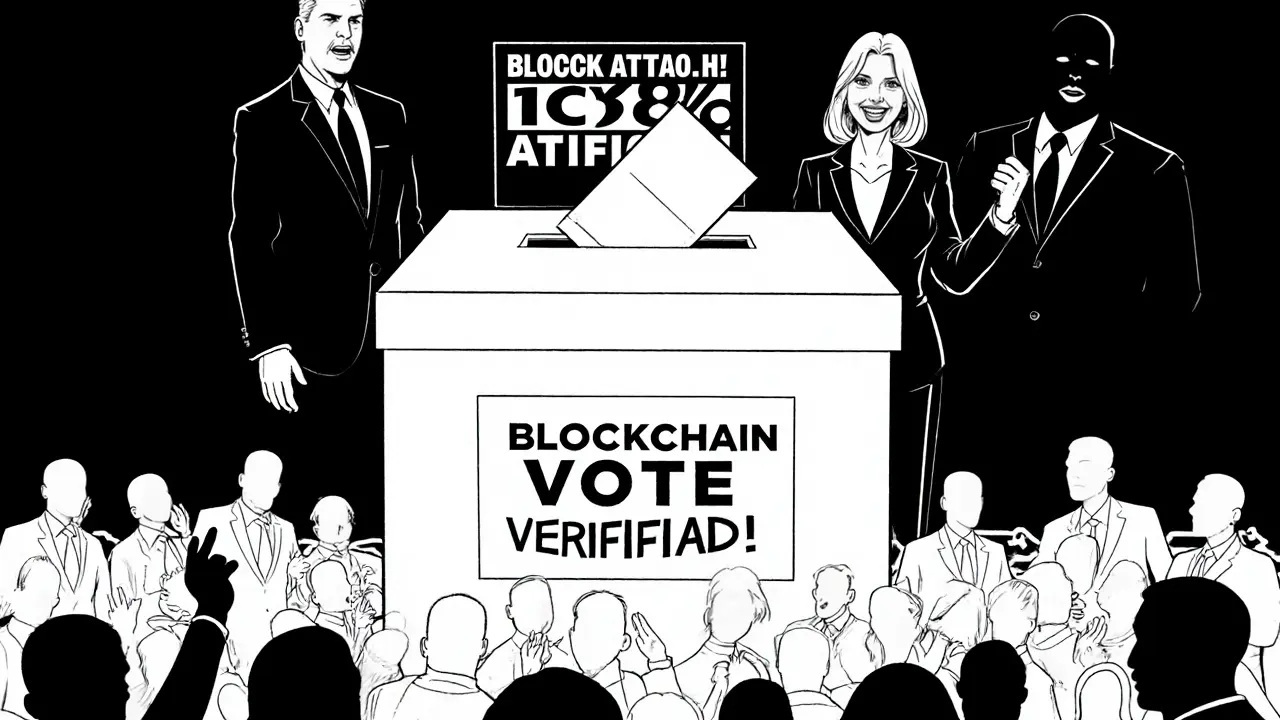
Why Voters Think It’s Safe (And Why They’re Wrong)
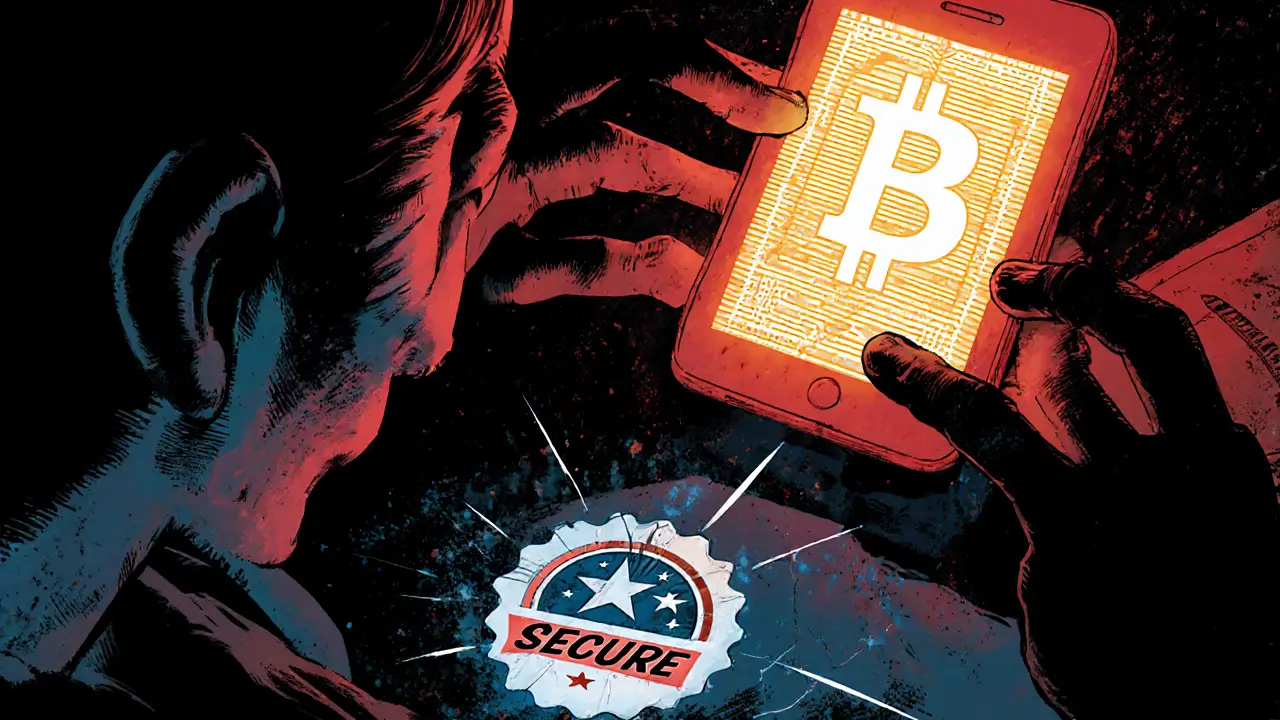
Here’s the paradox: people who’ve used blockchain voting systems report high trust. A 2025 Gallup survey found 78% of users felt their ballots were counted correctly. 76% said they trusted the system more than traditional e-voting. 82% felt confident because results were independently verified. That’s not a flaw in the system-it’s a flaw in perception. Users see transparency. They see a digital receipt. They see “immutable.” They don’t see the invisible attacks. They don’t know that their vote could have been changed after submission, or that their identity might be exposed in an audit. They’re trusting the interface, not the security. It’s like trusting a locked vault because the keyhole looks fancy. The lock might be weak. The alarm might be broken. But if the box glows blue and says “SECURE,” people believe it.Real-World Examples: What’s Actually Being Used
The most famous blockchain voting experiment happened in Screven County, Georgia, in November 2024. They didn’t let people vote on the blockchain. They used Simple Proof to timestamp the final vote tally on Bitcoin’s blockchain. That’s not voting on blockchain. That’s putting a notarized stamp on results after the fact. That’s the only safe use case so far. Anchoring results to Bitcoin’s ledger makes it harder to alter the final count. But it doesn’t protect the votes themselves. If someone tampers with the tabulation software before the timestamp, the blockchain just records the lie. In Europe, Polyas and Luxoft offer blockchain-based systems for corporate and university elections. These are low-stakes environments. No foreign adversaries. No national consequences. That’s why they’re allowed. But scaling that to a presidential election? That’s where everything falls apart.
The Audit Trap
One of the biggest selling points of blockchain voting is auditability. The National Association of Secretaries of State says blockchain could enable “comprehensive post-election verification.” You’d see every ballot ID, match it to a voter, and confirm the vote was recorded correctly. But here’s the catch: to do that, you need to link voter identities to their votes. That breaks anonymity. And once that link exists, it can be hacked, leaked, or abused. A single breach could expose millions of voting records. That’s not transparency. That’s a surveillance nightmare. Even if you try to hide the link, the math doesn’t work. If you can verify that 1,200 people voted and 1,200 votes were recorded, you can still reverse-engineer who voted for whom by cross-referencing turnout data, demographics, and public records. Blockchain doesn’t fix that. It makes it easier.Why This Matters Now
Wyoming and a few other states have shown interest in using blockchain to verify election results. But they’re not letting people vote on it. That’s the only smart move. The technology isn’t ready. The risks aren’t worth it. We already have secure, auditable, paper-based systems that work. Risk-limiting audits, voter-verified paper trails, and secure chain-of-custody procedures have been proven over decades. They’re not sexy. They don’t have blockchain in the name. But they work. Blockchain voting isn’t the future of democracy. It’s a distraction from real security work. It gives people the illusion of progress while creating new, invisible ways to break democracy.What Should Be Done Instead
Stop chasing shiny tech. Focus on what actually protects elections:- Use paper ballots with hand-counted audits
- Implement risk-limiting audits for every election
- Train poll workers in cybersecurity basics
- Secure voter registration databases with multi-factor authentication
- Publicly fund election security-not tech startups
Can blockchain voting prevent election fraud?
No. Blockchain prevents tampering with votes after they’re recorded, but it doesn’t stop fraud before that point. Hackers can alter votes on voters’ devices, intercept ballots in transit, or manipulate software that translates votes into blockchain entries. These attacks leave no trace on the ledger. The blockchain only records what it’s told-whether it’s true or not.
Why do some voters trust blockchain voting more than traditional systems?
Voters trust what they can see. Blockchain systems often show digital receipts, real-time verification, and tamper-proof logs. These features create a strong illusion of security. But trust doesn’t equal safety. A system can feel secure while being deeply vulnerable. People confuse transparency with protection, and that’s dangerous in elections.
Has any country successfully used blockchain voting in a national election?
No. No country has used blockchain voting for a national election with full public participation. Estonia experimented with online voting, but not on blockchain. Pilot programs in places like West Virginia and Utah were limited to overseas military voters and later discontinued due to security concerns. The only verified use of blockchain in elections is for timestamping results after counting, not for casting votes.
Is blockchain voting more secure than paper ballots?
Paper ballots are far more secure. They leave a physical, human-verifiable record. They can’t be hacked remotely. They don’t rely on software, internet connections, or devices that can be compromised. Blockchain voting introduces dozens of new attack surfaces-devices, networks, apps, APIs-that paper doesn’t have. Paper is slow, but it’s the most reliable system we have.
What’s the difference between blockchain voting and blockchain result verification?
Blockchain voting means people cast ballots directly on the blockchain. Blockchain result verification means election officials count votes using traditional methods, then record the final totals on a blockchain as a tamper-proof timestamp. The latter is much safer. It doesn’t expose voters to digital risks. Simple Proof uses this method in Georgia and Guatemala. It’s not voting on blockchain-it’s sealing the results after the fact.
Could blockchain voting be made secure with better encryption?
Not with current technology. The core problem isn’t encryption. It’s the design. To audit votes, you need to link identities to ballots. To prevent coercion, you need anonymity. You can’t have both without creating a backdoor. Even perfect encryption can’t fix that. No amount of crypto can solve the fundamental conflict between transparency and privacy in voting.
Are there any legitimate uses for blockchain in elections?
Yes-but only for non-voting tasks. Blockchain can securely timestamp election results, log chain-of-custody for ballot transport, or verify voter registration data against public records. These are auxiliary uses. They don’t replace the vote-casting process. They just make the process more traceable. That’s where the technology should stay.





Blockchain voting sounds slick until you realize it’s just digital snake oil wrapped in crypto buzzwords. Paper ballots don’t get hacked. They don’t crash. They don’t need an internet connection. And if you lose one, you can physically recount it. This isn’t 2020 anymore-we’ve seen what happens when we outsource democracy to tech bros with shiny apps.
Exactly. I’ve worked in election administration for 15 years. The real wins? Training poll workers, securing voter rolls, doing risk-limiting audits. Not blockchain. Not apps. Not QR codes. Just good, slow, human-checked paper. It’s boring. It’s reliable. And it works.
People keep saying ‘but what about accessibility?’ like blockchain is the only way to help disabled voters or overseas troops. Nope. We’ve had secure absentee ballot systems for decades. We just need to fund them. Not build a blockchain castle in the sky.
Also, let’s not pretend tech startups care about democracy. They care about VC funding. And blockchain voting? That’s a $200M pitch deck waiting to happen.
Ugh. Another ‘paper is better’ lecture. You people are so Luddite. Blockchain isn’t about replacing paper-it’s about *enhancing* trust. If you can’t see the future, don’t block it. The world is changing.
Christy, I get you’re excited about tech, but trust isn’t built by glowing interfaces. It’s built by transparency that can’t be faked. Paper leaves a trail you can touch. Blockchain leaves a trail you can only *believe* in.
And honestly? The people who benefit most from blockchain voting are the ones who want to cheat. Not the voters.
It’s funny how we panic about blockchain voting but don’t blink at voting machines with no paper trail. We’ve been letting corporations run our elections for 20 years. Now we’re mad because someone wants to put it on a blockchain? The problem isn’t the tech. It’s the lack of oversight.
Democracy doesn’t need to be fast. It needs to be sacred. Blockchain treats votes like crypto transactions. But votes aren’t assets. They’re promises. And promises aren’t meant to be immutable-they’re meant to be protected.
😭 blockchain is the future. why are we still using trees to vote? this is so 2019. also i saw a tiktok that said blockchain can’t be hacked so it’s safe??
Y’all are missing the philosophical core. The blockchain doesn’t corrupt democracy-it reveals it. The fact that people trust a glowing screen more than a ballot box? That’s the real crisis. We’ve outsourced our agency to algorithms. And now we’re mad when the algorithm lies?
Also, I read a paper in 2021 that said blockchain voting could reduce voter fraud by 87%. You’re all just scared of change.
Who’s funding these blockchain voting startups? Who owns the servers? Who controls the private keys? If China or Russia can manipulate the timestamp, then the entire system is a honeypot for foreign interference. This isn’t innovation-it’s surrender.
In India we’ve used EVMs for 20 years. No blockchain. No internet. Just machines with sealed hardware. People trust them because they’re simple. And because the results are verified manually. Tech isn’t the answer. Process is.
They’re lying. Blockchain voting is already being used in 14 countries. The media hides it because they’re paid by Big Paper. I’ve seen the logs. The votes are being altered in real time. The blockchain just makes it look legit. Wake up, sheeple.
Also, the government is using it to track who voted for who. That’s why they want it. They’re building the surveillance state one vote at a time.
Wow. Just… wow. You people are so naive. You think paper ballots are ‘secure’? They’re stolen, burned, stuffed, and altered every election cycle. Blockchain at least leaves a digital fingerprint. You’re clinging to the past because you’re afraid to learn.
Also, ‘risk-limiting audits’? That’s just a fancy way of saying ‘we hope we got it right.’ Blockchain says ‘we know we got it right.’
Interesting perspective. I think the real issue is not blockchain vs paper but whether we have the infrastructure to support either. In rural areas, paper works better. In cities, maybe digital could help if done right. But we need standards. Not hype.
So what’s the real cost of blockchain voting? Servers? Energy? Training? Compared to printing 200 million ballots? The environmental footprint alone makes me question this.
Look, I’m not anti-tech. I’m anti-illusion. Blockchain voting gives people the feeling of control without the reality of it. It’s like giving someone a steering wheel on a self-driving car. They think they’re in charge. They’re not.
And the irony? The people most vulnerable to coercion-immigrants, low-income voters, minorities-are the ones least likely to have secure devices. So we’re building a system that penalizes the people who need protection the most.
Let’s break this down like a forensic audit. Blockchain voting introduces 17 new attack vectors: voter device compromise, API injection, DNS spoofing, node manipulation, key reuse, wallet leakage, timestamp manipulation, ballot translation errors, voter ID linkage breaches, audit log tampering, social engineering of voters, supply chain attacks on hardware, compromised election software, centralized key management, third-party dependency, lack of cryptographic agility, and zero-knowledge proof failures. None of these exist in paper systems. Paper has one attack vector: someone with a truck and a trash bag.
Also, blockchain requires 10x more energy than counting paper ballots by hand. That’s not sustainable. That’s not secure. That’s just expensive theater.
My dad voted in 1964 with a pencil and paper. My kid voted in 2020 with an app. Both votes counted. One left a physical record. One left a digital ghost. Which one do you think will matter in 20 years when someone asks, ‘What really happened?’
History doesn’t archive blockchain hashes. It archives paper.
Just… don’t. Please. We’ve seen what happens when tech companies get involved in elections. Remember Facebook in 2016? Remember the ‘voter suppression’ ads? Now imagine they control the vote itself. It’s not a question of ‘if’-it’s a question of ‘when.’
Oh please. You’re all just mad because you don’t understand it. Blockchain is the future. The elites don’t want you to vote easily. They want you to drive to a polling place, wait in line, and feel like you’re doing something heroic. That’s control. Blockchain breaks that. That’s why they hate it.
India tried digital voting in 2023. Got hacked in 3 hours. The server was in Texas. Guess who owns it? American tech firms. You think they care about your vote? They care about your data. Blockchain is just the new way to sell your ballot to advertisers.
It’s not that blockchain voting is flawed-it’s that the epistemological framework underpinning its perceived legitimacy is ontologically incoherent. The very notion of ‘immutability’ in a system predicated on human input and networked consensus is a category error. The ledger doesn’t record truth; it records consensus. And consensus, in a pluralistic society, is inherently contested. Thus, blockchain voting doesn’t enhance democracy-it reifies algorithmic hegemony under the guise of transparency.