
Nepal Crypto Ban Explained: Foreign Exchange Act, Penalties & 2026 Status
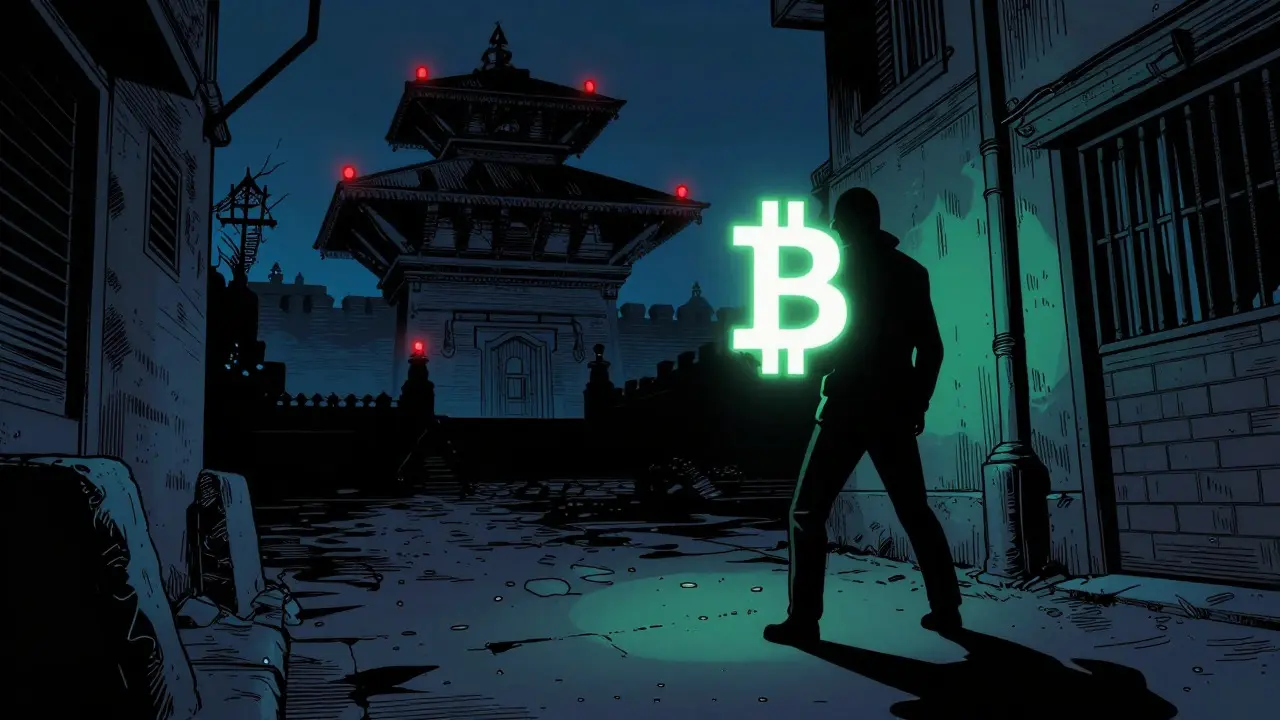
Imagine trying to buy a coffee in Kathmandu with Bitcoin. You can’t. In fact, you could face jail time. Nepal sits alone among South Asian nations as one of the few countries on Earth where owning, trading, or even talking about Cryptocurrency is a digital asset that operates independently of a central bank and is strictly prohibited under current law is a criminal offense.
If you are Nepali, living abroad, or doing business with Nepal, this ban isn't just a minor footnote-it’s a major legal hurdle. The rules aren't vague. They are harsh, enforced by the Nepal Rastra Bank (NRB) is the central bank of Nepal responsible for monetary policy and financial regulation, and backed by decades-old legislation that was never designed for the internet age. But does it work? And what happens if you slip up?
The Legal Backbone: Why the Ban Exists
To understand why Nepal is so strict, you have to look at the laws on the books. The primary weapon against crypto is the Foreign Exchange (Regulation) Act, 1962 is a statute originally enacted to control currency exchange and prevent capital flight. Specifically, Section 9(c) states that no person shall deal in foreign currency without approval from the NRB. Since Bitcoin and Ethereum are not issued by any central authority, the NRB argues they don’t count as legal tender-and therefore, dealing in them is illegal.
This wasn't an overnight decision. It started on August 13, 2017, when the NRB issued Notice No. 37/074/075. This notice explicitly banned Bitcoin transactions. At the time, many thought it was just about preventing money laundering. But the government tightened the screws over time. By September 2021, the Government of Nepal expanded the ban to cover all cryptocurrency activities, including mining and advertising. Then, in January 2022, they clarified that even "network marketing" involving virtual currency was off-limits.
The logic is simple but rigid: if it moves value across borders without the NRB’s permission, it’s a threat to national reserves. With remittances making up nearly 23% of Nepal’s GDP, the central bank fears that unregulated crypto channels could drain foreign exchange reserves. When Bitcoin crashed in 2022, losing 65% of its value, the NRB pointed to this volatility as proof that their caution was justified.
What Exactly Is Illegal? The Scope of the Prohibition
You might think, "I’ll just keep my coins in a cold wallet." Think again. The ban is comprehensive. Here is what counts as a violation:
- Trading: Buying or selling crypto on exchanges like Binance or Coinbase.
- Mining: Running hardware to validate transactions. Despite cheap hydroelectric power, this is banned.
- Promoting: Advertising crypto services or running a crypto-related business.
- Facilitating: Helping someone else trade, even via Peer-to-Peer (P2P) methods.
- Using VPNs: Accessing foreign exchanges through Virtual Private Networks to hide your location is considered evasion.
Even ownership is tricky. If you bought crypto while living in the US and moved back to Nepal, technically you own it. But the moment you try to sell it, move it, or use it, you trigger the Foreign Exchange Act. The NRB has stated that all crypto transactions violate foreign exchange laws regardless of the method used. There is no "gray area" for active participation.
| Country | Status | Taxation | Key Legislation |
|---|---|---|---|
| Nepal | Banned | N/A | Foreign Exchange Act, 1962 |
| India | Legal but Taxed | 30% on gains | Finance Act, 2022 |
| Bangladesh | Banned | N/A | Money Laundering Prevention Act |
| Pakistan | Restricted | Varies | SECP Anti-Money Laundering Rules |
As the table shows, Nepal is an outlier. India allows trading but taxes it heavily. Bangladesh is similar to Nepal but is exploring Central Bank Digital Currencies (CBDCs). Nepal, however, remains stuck in a total prohibition stance, which isolates it from regional fintech innovation.

The Penalties: What Happens If You Get Caught?
The consequences are severe. Under the Foreign Exchange (Regulation) Act, penalties include imprisonment for up to three years. Additionally, fines can reach three times the value of the transaction. Let’s say you tried to move $10,000 worth of Bitcoin out of Nepal illegally. You could face a $30,000 fine plus jail time.
This isn't theoretical. On January 25, 2022, the Department of Revenue Investigation filed a case against four individuals for misappropriating Rs376.41 million through illegal crypto investments. They were charged with foreign exchange violations. These cases send a clear message: the state is watching.
Enforcement relies on banks. Under Section 52(1) of the Nepal Rastra Bank Act, 2002, financial institutions must report suspicious transactions. If your account suddenly receives large sums from unknown sources or sends money to known crypto-friendly jurisdictions, the bank flags it. In the 2021-22 fiscal year, the NRB identified 237 such cases totaling Rs1.82 billion. That’s a lot of scrutiny for a country with limited technical resources.
The Underground Reality: Mining and P2P Markets
Laws are written in offices; reality happens on the streets. Despite the ban, crypto activity thrives underground. Why? Because young, tech-savvy Nepalis want access to global markets. A 2023 survey by Young Innovations Nepal found that 18.7% of tech-savvy Nepalis aged 18-35 had engaged in crypto transactions despite the ban. Most used foreign exchanges via VPNs.
Mining is another hidden sector. Nepal has abundant hydropower, with electricity costs averaging Rs5.50 per kWh in districts like Kavrepalanchok and Nuwakot. This makes mining profitable. Estimates suggest 15-20% of the country’s mining operations continue secretly. Reddit threads on r/Nepal show users sharing tips on hiding mining rigs from inspectors. It’s a cat-and-mouse game.
But it’s risky. Users on forums like Hamro Patro frequently complain about scams. Without legal recourse, P2P trades are wild west. One user reported losing $1,200 in a Bitcoin trade in November 2022 because the seller vanished. When you operate outside the law, there is no customer support, no insurance, and no police protection.

Economic Impact: Reserves, Remittances, and Innovation
The NRB argues the ban protects the economy. They point to the drop in foreign exchange reserves from $11.75 billion in July 2021 to $10.03 billion in December 2021-a 14.7% decline. They blame crypto-driven capital flight. Remittance inflows also dipped by 7.3% in early 2022, which officials linked to investors moving money into volatile assets instead of traditional channels.
However, critics argue the ban hurts more than it helps. Dr. Bhola Nath Ghimire, former Deputy Governor of the NRB, noted that crypto could reduce remittance costs, which averaged 6.5% in 2022. Blockchain technology offers faster, cheaper cross-border payments. By banning it, Nepal forces migrants to use expensive traditional wires. Furthermore, the ban stifles local innovation. The Asian Development Bank ranked Nepal 38th out of 40 Asia-Pacific economies for digital financial inclusion. Being cut off from blockchain development leaves the country behind in the global digital race.
Future Outlook: Will the Ban Lift?
Change is slow, but it’s coming. In July 2023, NRB Governor Maha Prasad Adhikari announced that Nepal was exploring a Central Bank Digital Currency (CBDC). This suggests a shift from "ban everything" to "control everything." A CBDC would allow the government to monitor every transaction, solving their fear of capital flight while embracing digital efficiency.
The Ministry of Finance established a committee in 2022 to study global regulations. While no public recommendations exist yet, international pressure is mounting. The IMF noted in 2023 that the ban drives activity underground without addressing risks. The World Bank predicts regulatory adaptation within 2-3 years. The most likely path forward? Regulating blockchain technology separately from speculative cryptocurrencies. This could mean allowing stablecoins for remittances while keeping Bitcoin restricted.
For now, the ban holds. But the walls are cracking. As global norms evolve and Nepal seeks economic growth, the rigid application of the 1962 Foreign Exchange Act will likely soften. Until then, tread carefully.
Is it illegal to own cryptocurrency in Nepal?
Technically, ownership itself is in a gray area if purchased abroad. However, the Nepal Rastra Bank considers any involvement with crypto, including holding it, as a potential violation of foreign exchange laws. Selling, trading, or using it is definitely illegal.
What is the penalty for crypto trading in Nepal?
Under the Foreign Exchange (Regulation) Act, penalties include imprisonment for up to three years and fines amounting to three times the value of the transaction.
Can I use a VPN to buy crypto in Nepal?
Yes, many people do, but it doesn't make it legal. Using a VPN to access foreign exchanges is considered evasion of the ban. If detected, you face the same penalties as open traders.
Why did Nepal ban cryptocurrency?
The main reasons are to protect foreign exchange reserves, prevent capital flight, and avoid the volatility associated with unregulated digital assets. The NRB views crypto as a threat to monetary stability.
Will Nepal legalize crypto in the future?
It is possible. The NRB is exploring a Central Bank Digital Currency (CBDC), which indicates a move toward regulated digital finance rather than total prohibition. Experts predict some form of regulatory framework may emerge within the next few years.





i mean like... why even bother with vpn if ur gonna get fined triple? sounds sketchy af lol
Oh, please. Do try to keep up with the nuances of international finance, darling. It is not merely about 'sketchiness.' It is about sovereignty. The NRB is protecting their fragile economy from the whims of unregulated speculative assets that have no intrinsic value whatsoever. One might argue that allowing such volatility within borders is an act of economic negligence, really. How utterly quaint to think otherwise.
The article fails to mention the sheer incompetence of the enforcement mechanisms. They claim to track suspicious transactions, yet they rely on outdated banking protocols that are easily circumvented by anyone with basic technical literacy. It is a facade of control. The government is trying to regulate water with a sieve. Furthermore, the penalty structure is draconian and disproportionate to the crime, which suggests a lack of confidence in their own legal framework rather than genuine protection of the public interest.
This is exactly what happens when you let globalist financial elites push their digital currency agenda on sovereign nations. Nepal knows better. They see the trap. Bitcoin is a tool for money laundering and tax evasion designed by the same people who want to erase national borders. Keep your reserves safe. Don't let the west corrupt your economy with these fake coins. The central bank is the only thing standing between order and chaos.
In India we pay 30% tax and at least we have clarity. In Nepal it is criminal offense. This shows lack of vision. But also discipline. Perhaps they need more discipline less speculation. Young generation should focus on real skills not gambling on charts.
I actually had a cousin who moved back from the US and kept his crypto wallet cold. He never touched it until he tried to sell a tiny bit to buy a laptop and got flagged immediately. It was terrifying for him. 😟 The banks are really watching every penny. If you're Nepali living abroad, just be super careful if you ever plan to return or send money home through unofficial channels. It’s easier to stick to traditional remittance apps even if the fees are higher.
Oh my gosh, can we talk about the mining aspect?! ⛏️💸 Like, imagine having cheap hydroelectric power and being FORBIDDEN from using it to mine Bitcoin? That is literally throwing away free money! The inefficiency is just staggering. It’s not just a ban; it’s an insult to basic economic logic. Those young innovators are basically rebels in a dystopian novel. So dramatic, so risky, but also kind of inspiring in a tragic way? 🙄
Nepal is doing what America should do! Ban the stuff. Get rid of the foreign influence. These cryptocurrencies are destroying our moral fabric and our financial stability. Why are we letting these digital scams run rampant here while Nepal has the guts to lock it down? It’s about strength. It’s about keeping our nation pure from the corruption of global markets. Shame on the rest of the world for following the herd into ruin.
It’s fascinating to consider the philosophical implications of trust in institutions versus decentralized systems. 🤔 For many, the ban feels like a paternalistic overreach, assuming the state knows best for individual financial freedom. Yet, for others, especially older generations, the stability provided by the NRB is paramount. The tension between innovation and security is universal, but Nepal’s approach is certainly the most extreme. It raises questions about what we sacrifice for safety. 🌍✨
I worked with a team in Kathmandu last year and wow, the workarounds are creative!! People use hawala networks mixed with crypto p2p trades to move money around because the official channels are so slow and expensive. It’s a whole underground ecosystem. Not saying it’s legal, but it highlights how desperate people are for efficient financial tools. The ban hasn’t stopped the demand, just pushed it into the shadows where it’s messier and riskier for everyone involved.
Maybe things will change soon with the CBDC talks. I hope so. Innovation needs space to grow. If they can regulate it properly like Singapore or Estonia did then maybe Nepal can catch up too. Right now it feels like they are holding onto the past too tightly.
You know what really bothers me? The scams. When you operate outside the law, nobody protects you. 😡 I read about that guy losing $1,200 and it made me so angry. People need to take responsibility for their actions instead of blaming the government. If you’re going to break the rules, accept the consequences. Stop whining when you get ripped off by some anonymous seller. It’s karma, plain and simple. 👎
The soul of the nation is at stake. Money is energy. Crypto is chaotic energy. Nepal seeks harmony. The mountains whisper caution. To trade in void is to invite emptiness. The central bank is the guardian of the spirit. Do not listen to the noise of the market. Listen to the silence of the law. Peace comes from order not from speculation.
Has anyone actually calculated the cost of compliance versus the benefit of the ban? Because from where I sit, the administrative burden on banks to flag these transactions is immense. And yet, the reserves still dipped. Correlation does not equal causation. The IMF report mentioned in the article is spot on: driving activity underground doesn't eliminate risk, it just makes it invisible. We need data-driven policy, not ideological bans.