

Bisq Exchange Review: The Best No-KYC Crypto Trading Platform in 2026?
You want to trade Bitcoin without handing over your passport. You want to keep your data off a central server that could get hacked or shut down by regulators. If that sounds like your plan, you are looking for Bisq, a fully decentralized, peer-to-peer cryptocurrency exchange platform operating without a central authority. But here is the catch: using Bisq is not as simple as opening an app and clicking 'buy'. It requires patience, technical know-how, and a willingness to step outside the comfort zone of mainstream finance.
In this review, we break down exactly how Bisq works, who it is actually for, and whether its privacy benefits outweigh the steep learning curve. We will look at fees, security, liquidity, and how it stacks up against giants like Coinbase and decentralized rivals like Uniswap.
What Is Bisq and How Does It Work?
Bisq is not a website you visit. It is downloadable open-source software that runs on your computer. Launched in 2016 (originally as Bitsquare), it operates as a Decentralized Autonomous Organization (DAO). This means there is no CEO, no headquarters, and no single point of failure. Instead, a global network of nodes keeps the system running.
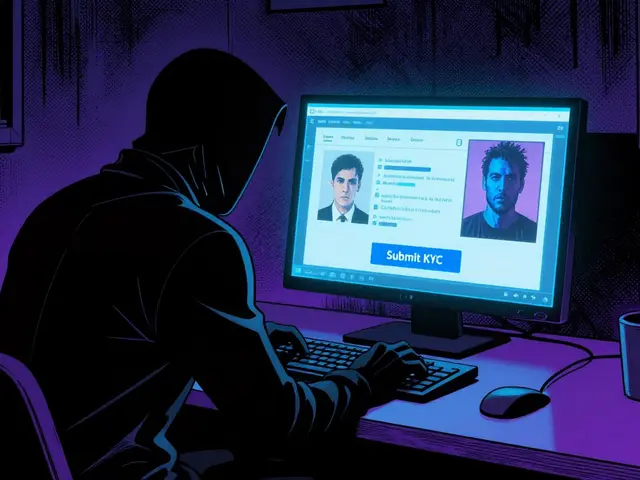
The core idea is simple but powerful: users connect directly to each other via the Tor network to trade Bitcoin for fiat currencies (like USD, EUR, GBP) or other cryptocurrencies. Because the connection is encrypted and routed through Tor, your IP address remains hidden. There is no identity verification-no KYC (Know Your Customer) checks, no selfies with IDs, no bank account linking required by the platform itself.
Bisq functions as a non-custodial wallet and trading interface, meaning you retain full control of your private keys and funds at all times. When you make a trade, the Bitcoin goes into a 2-of-2 multisignature escrow wallet. Neither you nor the counterparty can move the funds alone. Only when both parties confirm the trade is complete do the funds release. If things go wrong, a randomly selected arbitrator from the community steps in to resolve the dispute based on evidence provided.
Who Should Use Bisq? (And Who Should Avoid It)
Bisq is not for everyone. In fact, it might be frustrating for most casual investors. Here is a quick breakdown of who fits the profile:
- Privacy Advocates: If you believe financial sovereignty is a right and refuse to share personal data with corporations or governments, Bisq is built for you.
- Users in Restrictive Regimes: People living in countries with strict capital controls, censorship, or banking bans on crypto often turn to Bisq. For example, traffic analysis shows significant user bases in Nigeria (23%) and Turkey (17%) as of late 2025.
- Technical Users: You need to be comfortable downloading software, configuring networks, and managing seed phrases. The setup takes time.
- Small Traders: Bisq excels at small transactions. New accounts have low limits (e.g., 0.002 BTC to buy). It is not designed for institutional 'whales' moving millions.
Avoid Bisq if:
- You want instant execution and high liquidity for large orders.
- You are a beginner who wants a guided, hand-holding experience.
- You need to trade hundreds of altcoins quickly. Bisq focuses primarily on Bitcoin pairs.
- You rely on customer support tickets for immediate help. Support is community-driven and can be slow.
Bisq Fees and Costs Breakdown
Fees on Bisq are transparent but structured differently than centralized exchanges. You pay in Bitcoin, not percentage-based fees on fiat deposits. Here is what you need to budget for per trade:
- Trading Fee: Fixed at 0.001 BTC.
- Mining Fees: Three separate fees of 0.0003 BTC each (totaling 0.0009 BTC) to process the transaction on the blockchain.
- Total Trade Cost: Approximately 0.0019 BTC per completed trade.
- Withdrawal Fee: 0.0003 BTC (which is below the industry average of 0.0005-0.0008 BTC).
- Security Deposit: A refundable deposit of 0.1 BTC is locked during the trade to prevent fraud. This is returned to you after the trade concludes successfully.
If you hold and use BSQ, the native governance token of the Bisq DAO, you can get discounts on these trading fees. However, the fixed nature of the fees means Bisq is more cost-effective for larger trades relative to the fee amount, though the absolute cost remains high for micro-transactions compared to zero-fee promotional offers on apps like Coinbase.
Security and Privacy: The Core Strengths
Security is why people choose Bisq. Unlike centralized exchanges such as Binance or Coinbase, which hold your funds in hot wallets vulnerable to hacks (remember the $575 million Binance hack in 2024?), Bisq never holds your money. Your Bitcoin stays in your wallet until the moment of trade settlement.
The platform uses end-to-end encryption via Tor. All communications between traders are anonymized. There is no database of user identities to leak. Even if a hacker compromised the entire Bisq network, they would find no personal data to steal-only encrypted public keys and transaction hashes.
The dispute resolution system adds another layer of trust. Arbitrators are elected by BSQ holders and must post a bond. They only intervene when necessary, reviewing chat logs and payment proofs. This 'trustless' model means you don't have to trust the other trader; you trust the code and the economic incentives built into the system.
Bisq vs. Centralized and Other Decentralized Exchanges
To understand where Bisq fits, we need to compare it to the alternatives. Let's look at three key competitors:
| Feature | Bisq | Coinbase | Uniswap |
|---|---|---|---|
| Type | Decentralized P2P | Centralized (CEX) | Decentralized AMM (DEX) |
| KYC Required | No | Yes (Strict) | No (Wallet-only) |
| Custody | Non-Custodial (You hold keys) | Custodial (They hold keys) | Non-Custodial (Smart Contract) |
| Primary Asset | Bitcoin + Fiat Pairs | Wide range of Altcoins & Fiat | Ethereum & ERC-20 Tokens |
| Liquidity | Low ($5-10M monthly volume) | Very High ($100B+ quarterly) | High ($20-30B monthly) |
| User Experience | Complex (Desktop Software) | Simple (App/Web) | Moderate (Web Interface) |
| Best For | Privacy, Censorship Resistance | Beginners, High Volume | DeFi Traders, Token Swaps |
Key Takeaways:
- Bisq vs. Coinbase: Coinbase is easier and faster but requires full identity disclosure and holds your assets. Bisq is harder but gives you total anonymity and self-custody.
- Bisq vs. Uniswap: Uniswap is great for swapping tokens on Ethereum but doesn't handle fiat currency (USD/EUR) directly. Bisq allows you to enter and exit crypto using traditional bank transfers, cash, or gift cards, making it a true on/off ramp.

Getting Started: Setup and Challenges
Setting up Bisq is not a five-minute task. Expect to spend 3-5 hours just to get comfortable, according to expert testing. Here is the general workflow:
- Download: Get the latest version (currently v1.9.13 as of late 2025) from the official GitHub repository. Never download from third-party sites.
- Install Tor: Bisq relies on Tor for connectivity. Ensure your firewall allows Tor traffic.
- Create Wallet: Set a strong password and back up your 12-word seed phrase. Write it down on paper. Store it safely. Losing this means losing your funds forever.
- Connect to Network: Wait for the node to sync. This can take some time depending on your internet speed.
- Make a Trade: Choose a maker offer or create a taker offer. Negotiate payment methods (e.g., SEPA, ACH, Zelle, Gift Cards).
Common Pitfalls:
- Tor Connectivity Issues: Reported in 42% of negative reviews. If you can't connect, check your firewall settings or try a different Tor bridge.
- Payment Verification Delays: Since payments are manual (bank transfers, etc.), delays happen. Always communicate clearly with your counterparty.
- Scams: While rare due to escrow, scammers may try to trick you into sending proof of payment early or using insecure channels. Stick to the Bisq chat window.
Future Outlook and Regulatory Risks
Bisq operates in a growing niche. The no-KYC crypto exchange sector has grown 19% annually since 2022. However, regulatory pressure is mounting. The EU's MiCA regulation, fully implemented in January 2026, may restrict certain fiat payment methods for anonymous platforms. This could push European users toward alternative solutions or drive demand for even more robust privacy tools.
Technologically, Bisq is evolving. Version 1.9.13 added Monero integration, enhancing privacy further. The roadmap includes Lightning Network integration (expected November 2025) and a mobile app beta (January 2026). These updates aim to improve speed and accessibility without compromising decentralization.
Despite its strengths, Bisq faces a paradox: its lack of venture capital funding preserves its independence but limits marketing and development speed. With only ~5,200 active monthly users, it remains a niche tool. Yet, for those who value financial sovereignty above convenience, Bisq remains unmatched.
Is Bisq legal to use?
In most jurisdictions, using Bisq is legal because it is simply software that facilitates peer-to-peer trading. However, local laws regarding unregulated crypto exchanges vary. Some countries ban anonymous trading entirely. Always check your local regulations. Note that while the platform is legal, using it to evade taxes or sanctions is illegal in many places.
Can I lose my money on Bisq?
Yes, risks exist. You could lose funds if you lose your seed phrase, fall for a social engineering scam outside the escrow system, or if a counterparty defaults and the arbitration fails (rare). Unlike centralized exchanges, there is no insurance fund to reimburse you. Self-custody means self-responsibility.
How long does a trade take on Bisq?
Trade duration varies widely. A Bitcoin transfer might take minutes, but fiat payments (like bank transfers) can take hours or days depending on the method chosen (e.g., SEPA vs. Cash in Person). You must wait for both sides to confirm completion before funds are released from escrow.
Does Bisq require KYC?
No. Bisq is proudly anti-KYC. You do not need to provide ID, proof of address, or any personal information to create an account or trade. Your identity is represented only by your cryptographic keys.
What devices can I use to run Bisq?
Currently, Bisq is desktop-only. It supports Windows 7+, macOS 10.12+, and Linux kernel 3.10+. A mobile application is in beta development, expected in early 2026, but it is not yet available for production use.


The liquidity metrics cited here are frankly pathetic. $5-10M monthly volume? That is a rounding error in the macro financial landscape. Bisq is not an exchange; it is a digital museum piece for people who enjoy friction for its own sake. The 'privacy' argument collapses when you consider that the on-chain analysis of the escrow addresses often reveals patterns far more easily than the opaque order books of major CEXs. It is inefficient, archaic, and fundamentally flawed as a trading mechanism.
It's just software. If you can't handle the setup, don't use it.
Oh wow, this is actually fascinating! 🤩 I mean, seriously, who doesn't want to feel like a hacker from the 90s while buying Bitcoin? 😎 The idea of Tor integration is so sleek and mysterious. It’s like playing spy games but with money. 💸 I’m definitely downloading this tonight because being anonymous sounds incredibly chic and rebellious. Who needs Coinbase when you can have... whatever this is? 🙌✨
While the enthusiasm is palpable, one must consider the regulatory implications with extreme precision. The assertion that Bisq is merely 'software' ignores the fact that facilitating unregulated fiat-to-crypto exchanges violates the Financial Action Task Force (FATF) recommendations in numerous jurisdictions. Furthermore, the claim that IP anonymization equates to transactional privacy is a logical fallacy; blockchain forensics remains robust regardless of network layer obfuscation. One should not conflate technical complexity with security efficacy.
I think its really cool that there is an option for people who want more privacy!! Its not for everyone but i love that we have choices in crypto. The fees seem high tho but maybe thats ok if you value your data?? Just my two cents! :)
The structural inefficiency of the P2P model renders it obsolete for any serious market participant. The reliance on manual fiat settlement introduces significant counterparty risk that cannot be mitigated by simple escrow mechanisms. Moreover, the fixed fee structure creates a prohibitive barrier to entry for micro-transactions, effectively pricing out the demographic that supposedly benefits most from censorship resistance. It is a solution searching for a problem that no longer exists in the current DeFi ecosystem.
Let us be clear: using Bisq is not 'smart'; it is performative paranoia. You are paying a premium in time and BTC fees to achieve a level of anonymity that is largely illusory given the sophisticated chain-analysis tools employed by intelligence agencies. Real financial sovereignty comes from understanding macroeconomic trends, not hiding behind a Tor node while executing suboptimal trades. It is the tool of choice for those who lack the sophistication to navigate regulated markets efficiently. :/
its all about the vibe man. you cant put a price on freedom. well you can but its worth it. the whole kyс thing is just big brother watching you eat your cereal. bisq lets you eat your cereal in peace. also the fees are cheap if you look at it right. mostly.
This is absolutely outrageous that anyone would suggest otherwise! 😡 The moral imperative to protect one's financial data from corporate greed cannot be overstated! 🛑 Every time you give your ID to Coinbase, you are complicit in a system designed to exploit you! 💔 We need to stand up for our rights NOW! Don't let them win! Fight the power! ✊🔥
I understand the concerns raised here, and they are valid points to consider. However, it is important to remember that different tools serve different needs. For some individuals, particularly those in restrictive environments, Bisq provides a necessary lifeline. Perhaps we can find a middle ground where both convenience and privacy are respected?
When we contemplate the nature of money, we must ask ourselves what it truly means to hold value without permission. In the grand tapestry of human history, the desire for private exchange has always existed, yet modern systems have sought to erase this fundamental liberty. By using platforms like Bisq, we are not merely trading currency; we are participating in a philosophical dialogue about autonomy versus control. It is a slow process, yes, but like the growth of a tree, the roots must go deep before the branches can reach the sky. The inconvenience is the price of dignity.
I appreciate the detailed breakdown provided in the article. It seems that while Bisq offers unique advantages regarding privacy, it requires a significant commitment of time and technical skill. For those who prioritize these aspects, it may be a viable option, whereas others might prefer more traditional exchanges. Thank you for sharing this information.
i mean if you dont trust the government why trust a random code on your computer? seems sketchy to me. but hey do what u want. just dont come crying to me when you lose your seed phrase lol.
I have spent considerable time analyzing the user experience of decentralized platforms, and Bisq stands out as particularly cumbersome. The requirement to maintain a persistent connection to the Tor network often results in connectivity issues that frustrate even experienced users. Furthermore, the lack of immediate customer support means that disputes can linger for days, creating unnecessary anxiety. While the theoretical benefits are appealing, the practical implementation leaves much to be desired, making it difficult to recommend for anyone other than the most dedicated privacy advocates.