
Crypto Licensing Requirements in Philippines by SEC: A Complete Guide for CASPs
Imagine launching a cryptocurrency exchange that serves thousands of Filipino users, only to receive a shutdown order from the government because you missed a specific licensing step. This isn't a hypothetical scenario; it is the reality for many international platforms operating in the Philippines today. The landscape has shifted dramatically. What was once a relatively open market for digital assets is now one of the most strictly regulated environments in Southeast Asia.
The Securities and Exchange Commission (SEC) of the Philippines has drawn a hard line in the sand. If you are a Crypto Asset Service Provider (CASP) targeting Filipino investors, you need a license. Period. With the enforcement of new rules starting in mid-2025, the days of operating without local authorization are over. This guide breaks down exactly what these requirements mean for your business, how to comply, and what happens if you don't.
The New Regulatory Reality: SEC Memorandum Circulars No. 04 and 05
To understand where we stand in 2026, we have to look at the foundation laid just months ago. On May 30, 2025, the SEC issued Memorandum Circular No. 04 and MC 05, Series of 2025. These documents created the comprehensive regulatory framework for all crypto service providers. Enforcement began on July 5, 2025, marking a definitive end to the era of unregulated crypto trading in the country.
Why did this happen so fast? The numbers tell the story. Cryptocurrency adoption in the Philippines hit a penetration rate of nearly 10.5% in 2025, with user counts expected to surpass 12.79 million by 2026. The market revenue is growing toward ₱1.1 billion annually. When millions of people are moving money through digital channels, the risk of fraud, money laundering, and fund mismanagement skyrockets. The government realized that protecting investors required strict oversight, not just warnings.
The core message from the SEC is clear: they are not banning cryptocurrency. They are regulating the businesses that facilitate it. Trading and investing remain legal, but the platforms enabling these activities must be registered, supervised, and held accountable.
Who Needs a License? Defining the CASP
Not every person holding Bitcoin needs a license. However, any entity providing services related to crypto-assets does. The term used here is Crypto Asset Service Provider (CASP). This definition is broad and catches almost anyone involved in the commercial side of crypto.
You likely need a CASP license if you:
- Operate an exchange platform where users can buy, sell, or trade crypto-assets.
- Provide custody or wallet services for client funds.
- Facilitate the transfer of crypto-assets between parties.
- Offer investment advice or portfolio management involving digital assets.
- Conduct public offerings or initial coin offerings (ICOs) targeted at Filipinos.
If your website allows a user in Manila to deposit pesos and withdraw USDT, you are a CASP. It doesn't matter if your headquarters are in Singapore, Dubai, or Estonia. If you target Filipino users, you fall under the jurisdiction of the Philippine SEC.
Core Licensing Requirements: The Checklist
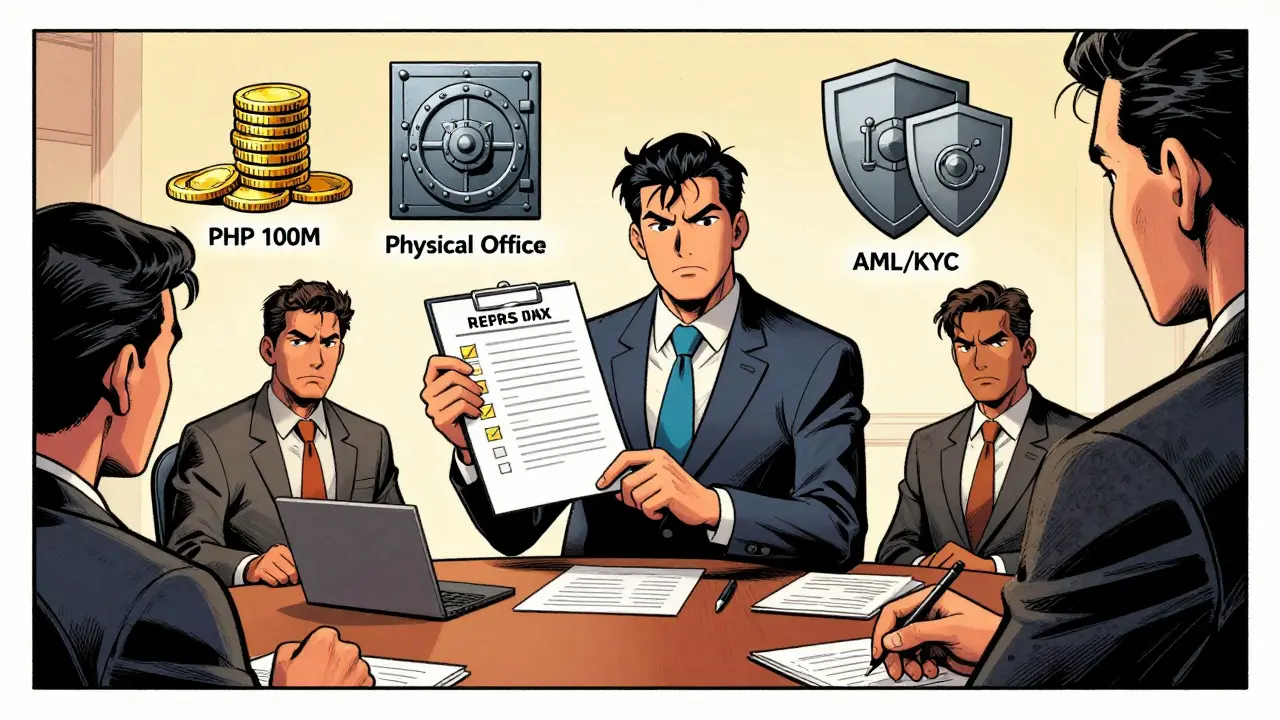
Getting licensed is not a simple paperwork exercise. The SEC has set high barriers to entry to ensure only serious, financially stable players operate in the market. Here is what you need to prepare:
1. Corporate Registration and Physical Presence
You cannot run a Philippine crypto business entirely remotely. You must register as a domestic corporation with the SEC. More importantly, you must maintain a physical office presence within the Philippines. This means leasing real estate, hiring local staff, and establishing a tangible operational footprint. This requirement alone filters out many smaller, fly-by-night operations.
2. Minimum Paid-Up Capital
This is often the biggest hurdle. The regulations mandate a minimum paid-up capital of PHP 100 million (approximately $1.8 million USD). Crucially, this capital must be in fiat currency or equivalent liquid assets. You cannot count crypto-assets toward this requirement. This ensures that the company has sufficient financial backing to handle operational costs and potential liabilities without risking customer funds.
3. Robust Compliance Systems
You need more than just money; you need systems. Your application must demonstrate:
- Anti-Money Laundering (AML) Protocols: Detailed procedures to detect and prevent illicit financial flows.
- Know Your Customer (KYC) Mechanisms: Strict identity verification processes for all users.
- Risk Control Frameworks: Technical and operational safeguards against hacks, system failures, and market manipulation.
4. Documentation and Disclosure
Before you can launch or market any service, you must submit extensive documentation to the PhiliFintech Innovation Office. This includes your business rules, risk disclosures, and marketing plans. Under MC 4-2025, you must publish disclosure documents at least 30 days before commencing any marketing activities or actual offerings. These documents must be available on your website and social media channels. You are prohibited from making assertions about future crypto-asset values unless explicitly allowed under Section 5.3 of the regulations.
Comparison: Licensed vs. Unlicensed Operations
| Feature | Licensed CASP | Unlicensed Platform |
|---|---|---|
| Legal Status | Fully compliant, protected by law | Illegal operation, subject to bans |
| Capital Requirement | PHP 100 Million (Paid-up) | N/A (Often insufficient reserves) |
| Physical Office | Mandatory in Philippines | Remote/Offshore only |
| User Protection | Segregated funds, regular audits | No guarantee, high risk of loss |
| Marketing | Allowed with 30-day disclosure | Prohibited, targets blocked |
| Penalties | Regulatory fees, minor fines for errors | Up to PHP 10M per violation + daily fines |
Enforcement Actions: Lessons from 2025
The SEC didn't just write the rules; they enforced them aggressively. The most significant crackdown occurred on August 1, 2025. On that day, the Commission issued public advisories targeting ten major global exchanges, including OKX, Bybit, KuCoin, and Kraken. These platforms were accused of operating without proper licenses while continuing to serve Filipino users.
This wasn't an isolated incident. It followed the precedent set in 2024 when authorities effectively blocked Binance from the domestic market after giving users 90 days to exit. The message was consistent: if you want access to the Philippine market, you play by the rules. The SEC clarified that these actions are within their legal mandate to protect investors from fraud and money laundering.
For those who complied, the transition was smoother. Platforms like Youholder, Cex.io, Bitget, and Bigone implemented enhanced security protocols and regulatory adherence, positioning themselves as trusted partners in the new environment. They understood that compliance is a competitive advantage, not just a cost.
Penalties for Non-Compliance
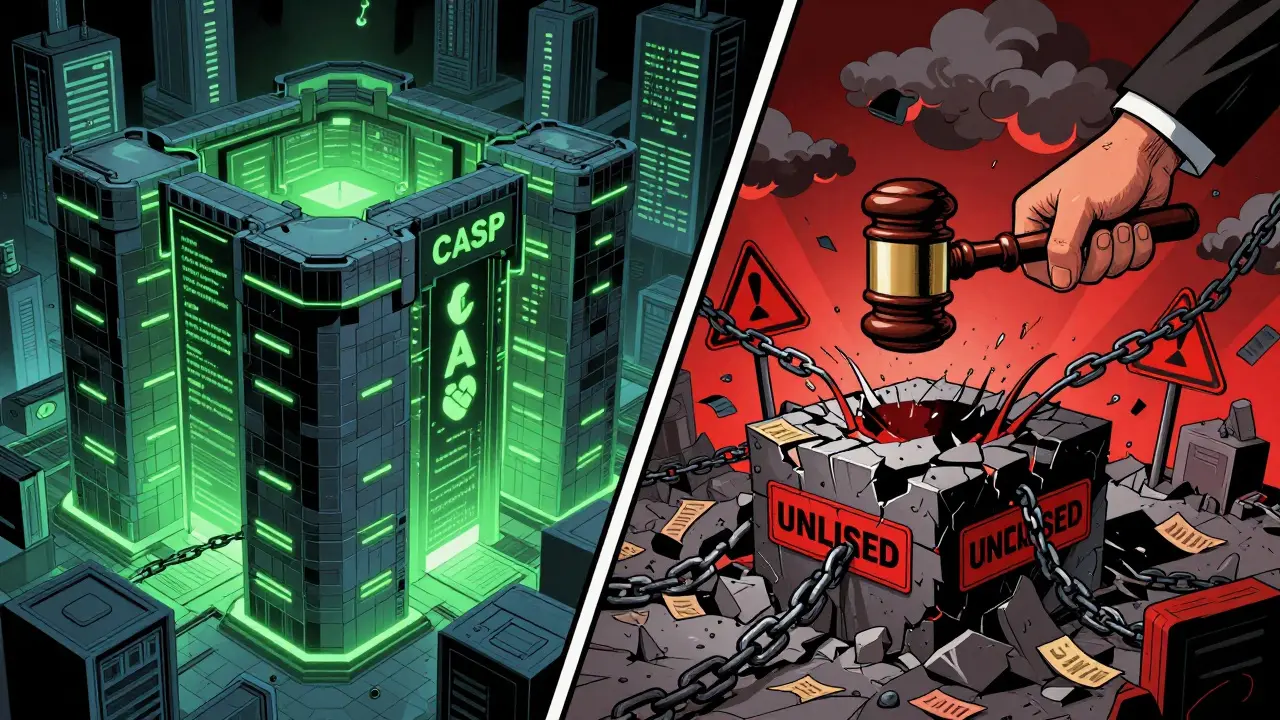
What happens if you ignore the rules? The penalties are severe and designed to deter violations. Under the CASP framework, fines range from PHP 50,000 to PHP 10 million per violation. But it doesn't stop there. For ongoing violations, the SEC imposes additional daily penalties of PHP 10,000.
Beyond fines, non-compliant platforms face website blocking measures. Internet service providers in the Philippines may be ordered to restrict access to your domain. This effectively cuts off your revenue stream from the region overnight. Furthermore, executives of unlicensed entities could face personal liability and criminal charges for facilitating illegal financial activities.
Ongoing Compliance: It's Not a One-Time Thing
Obtaining the license is just the beginning. The SEC requires continuous supervision. Licensed CASPs must:
- Submit Monthly Financial Reports: Detailed reports on gross revenue, transaction volumes, and financial health must be filed regularly.
- Pay Supervision Fees: Fees are calculated based on your gross revenue, ensuring that larger platforms contribute proportionally to regulatory oversight.
- Maintain Fund Segregation: Customer funds must be kept strictly separate from company assets. This prevents losses during exchange collapses and ensures user deposits are safe even if the company goes bankrupt.
- Undergo Regular Audits: Expect frequent reviews of your AML/KYC systems and internal controls.
This ongoing overhead is significant. It requires dedicated compliance teams and robust reporting infrastructure. However, it also builds trust with users who know their funds are being monitored by a reputable regulator.
Market Impact and Future Outlook
Despite the stringent rules, the Philippine crypto market continues to grow. Annual growth rates remain steady at around 4.59%, indicating that regulation hasn't killed demand-it has matured it. The government's stance is regulatory, not participatory; the central bank maintains oversight but holds no government crypto reserves. This neutrality helps build confidence among institutional investors.
The Philippines is positioning itself as a regional crypto hub. By balancing investor protection with market accessibility, the SEC aims to attract high-quality operators. While the high capital requirements create barriers for smaller startups, they favor established platforms capable of meeting compliance costs. This shift may reduce the number of players but increase the overall stability and reliability of the market.
As we move further into 2026, expect the SEC to refine these regulations based on feedback and enforcement experiences. The framework is likely to influence similar approaches across Southeast Asia, setting a benchmark for emerging markets. For businesses, the choice is clear: adapt to the regulations or lose the market.
Do I need a license if my company is based outside the Philippines?
Yes. If your platform targets Filipino users or accepts transactions from Philippine residents, you are considered a CASP and must obtain a license from the SEC, regardless of where your headquarters are located.
Can I use cryptocurrency to meet the PHP 100 million capital requirement?
No. The regulations explicitly state that the minimum paid-up capital of PHP 100 million must be in fiat currency or equivalent liquid assets. Crypto-assets cannot be counted toward this requirement.
What happens if I continue to operate without a license?
You face severe penalties, including fines up to PHP 10 million per violation, daily fines of PHP 10,000 for ongoing offenses, and potential website blocking by internet service providers. Executive liability is also a risk.
How long does the licensing process take?
While exact timelines vary, you must submit disclosure documents at least 30 days prior to commencing activities. The full registration process involves corporate setup, capital verification, and compliance system audits, which can take several months depending on document completeness.
Is cryptocurrency trading still legal in the Philippines?
Yes. The SEC clarified that the CASP Rules do not prohibit cryptocurrency trading or investment. They regulate the service providers to ensure safety and transparency for investors.
Which major exchanges were targeted in the 2025 crackdown?
On August 1, 2025, the SEC issued advisories against OKX, Bybit, KuCoin, and Kraken, among others, for operating without proper licenses. Binance was previously restricted in 2024.