- Home
- Cryptocurrency
- Ecuador Banking Ban on Crypto: Rules, Workarounds & Risks Explained
Ecuador Banking Ban on Crypto: Rules, Workarounds & Risks Explained
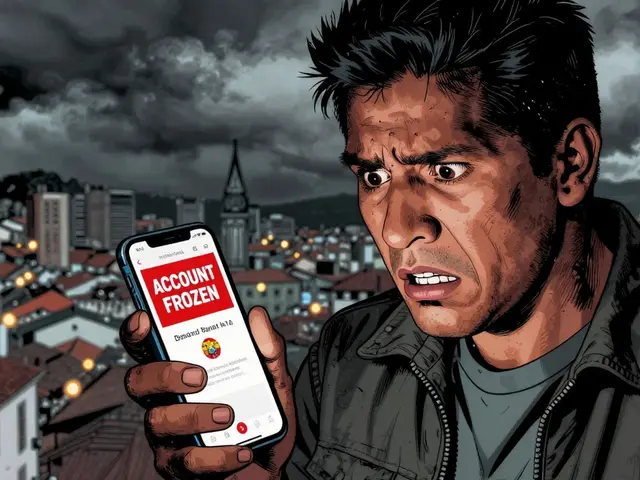
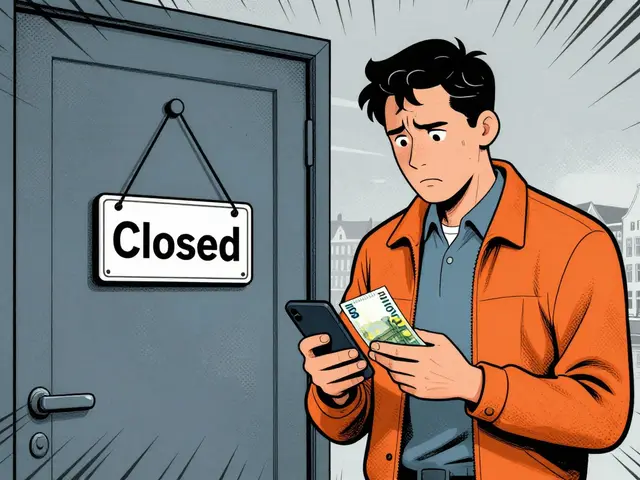
Imagine trying to buy groceries with Bitcoin in Quito or sending money home from abroad using Ethereum. In most countries, you’d just use an app. In Ecuador, that simple act can get your bank account frozen. The Ecuador banking ban on crypto transactions is a strict regulatory framework prohibiting financial institutions from processing digital asset transfers while allowing private ownership. It’s not a total prohibition on owning coins, but it is a massive roadblock for moving them through the formal economy.
If you’re an expat living in Guayaquil, a local trader, or someone sending remittances to family in South America, this landscape affects you directly. The rules are confusing, the enforcement is aggressive, and the workarounds carry real risks. Let’s break down exactly how this system works, why it exists, and what you can actually do without losing your money.
Why Ecuador Banned Crypto in Banks
To understand the ban, you have to look at Ecuador’s unique economic history. Since 2000, Ecuador has used the US dollar as its official currency-a move known as dollarization. This was done to stop hyperinflation and stabilize the economy. Because the country doesn’t print its own money, the government is extremely protective of the dollar’s dominance.
The legal backbone of this protection is Article 94 of the Monetary Code, which states that only the US dollar is legal tender. When cryptocurrencies started gaining popularity globally, regulators saw them as a threat to this stability. They feared people might swap dollars for volatile digital assets, causing capital flight or undermining confidence in the national payment system.
This fear turned into policy through specific resolutions. The Junta de Política y Regulación Monetaria y Financiera (JPRM) issued Resolution 001-22 in January 2022, explicitly excluding cryptocurrencies from authorized payment methods. They tightened the screws further with Resolution 002-23 in March 2023. These documents don’t say "crypto is illegal." Instead, they say banks cannot touch it. If a bank processes a crypto transaction, they risk heavy fines. So, banks block these transactions preemptively to protect themselves.
| Date | Action/Resolution | Impact |
|---|---|---|
| Jan 15, 2022 | JPRM Resolution 001-22 | Excluded crypto from authorized payment methods |
| Mar 3, 2023 | JPRM Resolution 002-23 | Reinforced exclusion; clarified legal tender status |
| Feb 14, 2024 | SRI Circular 007-2024 | Set tax rates up to 35% for individual crypto gains |
| Jan 1, 2025 | TMS Version 3.1 Implementation | Banks required to flag 47 crypto-related patterns |
How the Ban Works in Practice
You might think, "If I just hold Bitcoin in my wallet, am I breaking the law?" Technically, no. The Central Bank of Ecuador (BCE), led by President Rolando Emilio Chica Cordero, has stated they have no power to ban private trading. You can own crypto. You can trade it with friends. But you cannot use the banking system to facilitate it.
Here is where it gets tricky for everyday users. Banks are required to install Transaction Monitoring System (TMS) Version 3.1. This software scans every transfer for 47 specific patterns linked to cryptocurrency exchanges. If you send $200 to an address associated with Binance, OKX, or Mercado Bitcoin, the system flags it.
The Superintendency of Banks (SB) maintains a public registry of unauthorized providers. As of mid-2025, 47 entities were listed. Banks routinely freeze accounts involved in these flagged transactions. Users report freezes lasting anywhere from three days to two weeks. During this time, you can’t access your funds. For many, this means missing rent payments or bill deadlines.
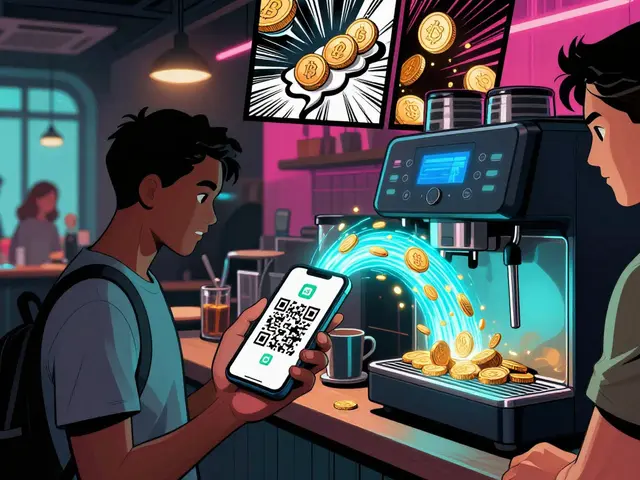
It’s not just about buying coins. Using crypto to pay for goods or services is also prohibited under Article 144 of the Monetary Code. Fines for businesses caught accepting crypto can reach $50,000 per violation. This creates a paradoxical environment: you can own the asset, but you can’t easily spend it, sell it through a bank, or even talk to your banker about it without raising red flags.
The Rise of Peer-to-Peer (P2P) Trading
When the front door is locked, people find windows. With traditional banking channels blocked, approximately 385,000 Ecuadorians-about 2.2% of the population-have turned to peer-to-peer (P2P) networks. This is the primary way most people enter and exit the crypto market today.
P2P platforms like Binance P2P allow users to trade directly with each other. One person sends crypto, and the other sends fiat currency via a method that doesn’t trigger bank alarms immediately. Common methods include:
- Cash deposits: Meeting in person or using trusted intermediaries to hand over physical cash.
- Prepaid cards: Buying dollar-denominated prepaid cards from non-bank entities, which account for about 17% of off-the-books volume.
- Gift card exchanges: Swapping crypto for Amazon or Steam gift cards, representing 22% of over-the-counter (OTC) volume.
- Cross-border services: Using platforms like Wise, which don’t explicitly prohibit crypto-derived funds, handling 31% of workaround volume.
However, this isn’t risk-free. A study by the Pontificia Universidad Católica del Ecuador found that 78% of surveyed crypto users rely on informal channels. While this bypasses the ban, it exposes users to scams. There’s no customer support if a seller takes your cash and doesn’t release the crypto. Trustpilot reviews from Ecuadorian users highlight security concerns, with average ratings dropping significantly compared to direct banking integrations in other countries.
Taxes and Legal Gray Areas
Just because you’re using a workaround doesn’t mean the government forgets you exist. The Internal Revenue Service (SRI) has stepped up its game. Under Circular 007-2024, issued in February 2024, cryptocurrency gains are taxable.
For individuals, the tax rate is progressive, reaching up to 35% on income sourced from Ecuador. Corporations face a flat 25% rate. The challenge here is reporting. How do you declare income from a P2P trade that never touched a bank account? Many users struggle with this. Some try to convert crypto to stablecoins like USDT first, hoping to mask the transaction as a regular USD transfer. This sometimes works, but it carries high chargeback risks. In the second quarter of 2025 alone, 147 users reported frozen funds totaling $382,000 due to such practices.
Furthermore, the legal landscape is shifting. Bill 6538, introduced by National Assembly member Shirley Rivera in May 2025, proposes a formal licensing framework for exchanges. It would require minimum capital of $500,000 and mandatory proof-of-reserves audits. However, analysts predict it will take at least 18 months to pass, if ever. Until then, we remain in this gray area.
Impact on Remittances and Daily Life
Ecuador relies heavily on remittances. Families receive billions of dollars annually from relatives working abroad. Traditionally, services like Western Union charge fees averaging 6.5%. Cryptocurrency offers a cheaper alternative, often under 1%. It’s no surprise that 68% of Ecuador’s estimated $185 million crypto market volume comes from remittance corridors.
But the ban complicates this. Senders abroad might send Bitcoin, but the recipient in Quito needs dollars for rent. Converting that Bitcoin to dollars without triggering a bank freeze is a logistical nightmare. Users spend an average of 8.7 hours monthly managing these complexities, compared to just 2.1 hours in neighboring Colombia, which has a more permissive regulatory framework.
This friction hurts financial inclusion. According to the World Bank’s 2025 Global Findex data, 42% of Ecuadorian adults remain unbanked. Crypto could have been a tool to bring them into the economy. Instead, the restrictive policy pushes them deeper into informal, unregulated channels where they have less protection.
What’s Next for Crypto in Ecuador?
The future remains uncertain. The Central Bank is exploring a Central Bank Digital Currency (CBDC), with prototype testing scheduled for late 2025. A CBDC would be a digital version of the dollar, controlled entirely by the state. This could either complement private crypto use or further restrict it by offering a safer, state-backed digital alternative.
Industry projections vary. Bloomberg Intelligence expects restrictive policies to continue through 2027, citing Ecuador’s historical caution with monetary policy. On the other hand, Chainalysis predicts potential softening by 2026 due to growing evidence of unmet financial needs. Pressure from the large unbanked population and the sheer volume of informal trading may force regulators to reconsider.
For now, the status quo holds. Banks stay away from crypto. Users adapt. And the gap between regulation and reality widens.
Is it illegal to own cryptocurrency in Ecuador?
No, owning cryptocurrency is not illegal in Ecuador. The Central Bank has clarified that it cannot ban private trading. However, using banks to buy, sell, or transfer crypto is prohibited, and using crypto to pay for goods or services is banned.
Will my bank account be frozen if I use Binance?
There is a significant risk. Banks use automated systems (TMS Version 3.1) to flag transactions to known exchanges like Binance, OKX, and Mercado Bitcoin. If flagged, your account may be frozen for 3 to 14 days while the bank investigates.
How much tax do I pay on crypto profits in Ecuador?
Under SRI Circular 007-2024, individuals pay progressive taxes on crypto gains up to 35%. Corporations pay a flat 25%. You are legally required to report these gains, even if obtained through P2P trades.
Can I use crypto to send money to family in Ecuador?
What are the safest ways to trade crypto in Ecuador?
The most common method is Peer-to-Peer (P2P) trading on platforms like Binance. Users trade directly with others using cash, prepaid cards, or cross-border services like Wise. However, this carries higher risks of fraud and lacks consumer protections compared to regulated banking.
Is Ecuador planning to legalize crypto exchanges?
Bill 6538, introduced in May 2025, proposes a licensing framework for exchanges. However, experts estimate it will take at least 18 months to pass, if it passes at all. Currently, no formal licensing exists.
Cormac Riverton
I'm a blockchain analyst and private investor specializing in cryptocurrencies and equity markets. I research tokenomics, on-chain data, and market microstructure, and advise startups on exchange listings. I also write practical explainers and strategy notes for retail traders and fund teams. My work blends quantitative analysis with clear storytelling to make complex systems understandable.
Popular Articles
About
DEX Maniac is your hub for blockchain knowledge, cryptocurrencies, and global markets. Explore guides on crypto coins, DeFi, and decentralized exchanges with clear, actionable insights. Compare crypto exchanges, track airdrop opportunities, and follow timely market analysis across crypto and stocks. Stay informed with curated news, tools, and insights for smarter decisions.