
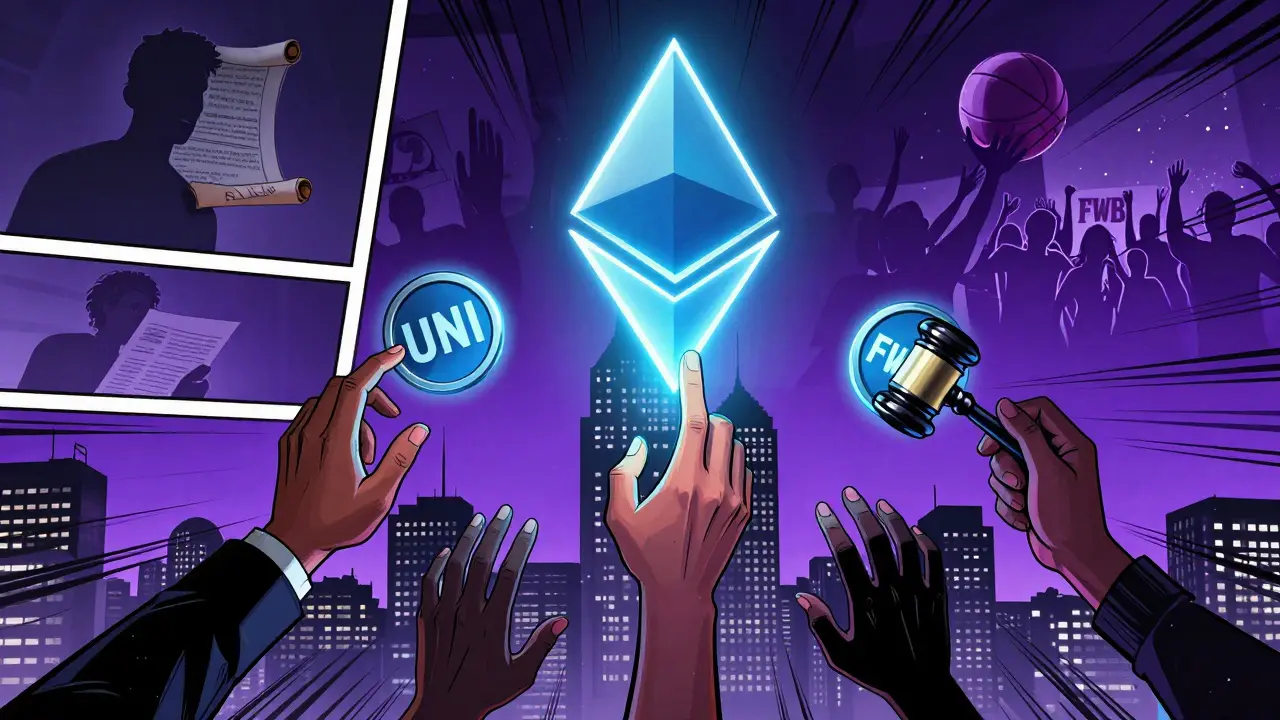
Famous DAO Examples and Case Studies: Real-World Wins and Failures in Decentralized Organizations
Decentralized Autonomous Organizations, or DAOs, aren’t just buzzwords anymore. They’re real structures running on blockchain, making decisions without CEOs, managing millions in funds, and even buying basketball teams. But not every DAO succeeds. Some collapse under their own weight. Others change how we think about ownership and collaboration. This isn’t theory-it’s happening right now.
What Exactly Is a DAO?
A DAO is an organization run by code, not people in suits. It uses smart contracts on a blockchain-mostly Ethereum-to handle rules, voting, and treasury management. Members hold governance tokens, and those tokens give them voting power. Want to spend money? Propose it. Others vote. If it passes, the money moves automatically. No middlemen. No approvals from a board. Just transparent, on-chain decisions.
It sounds simple, but the reality is messier. DAOs need active members, clear rules, and strong community trust. Without those, even the best code fails.
Uniswap DAO: The DeFi Giant That Runs Itself
Uniswap is one of the largest decentralized exchanges in crypto. It handles over $1.2 trillion in trading volume since its launch in 2018. But here’s the twist: it has no company. No headquarters. No CEO.
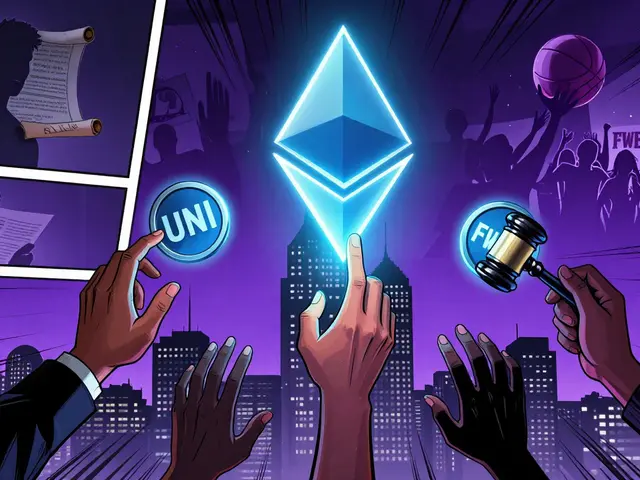
Uniswap is run by its DAO. Anyone who holds UNI tokens can submit proposals or vote on them. Proposals need at least 40 million UNI votes to pass-roughly 10% of the total supply. That’s a high bar, designed to prevent spam and ensure serious participation.
But voter turnout? It’s low. On average, only 3.2% of eligible voters show up for each proposal, according to Defiant’s 2023 analysis. That means a tiny fraction of users can sway decisions. In fact, Nansen found that 51% of Curve DAO proposals were decided by the top 10 token holders. This isn’t democracy-it’s plutocracy in disguise.
Still, Uniswap works. It’s the most used DEX. Its treasury holds over $200 million. Developers keep building. The protocol keeps growing. It proves DAOs can manage complex systems, even if they’re not perfectly fair.
The LAO: When DAOs Become Venture Capital Funds
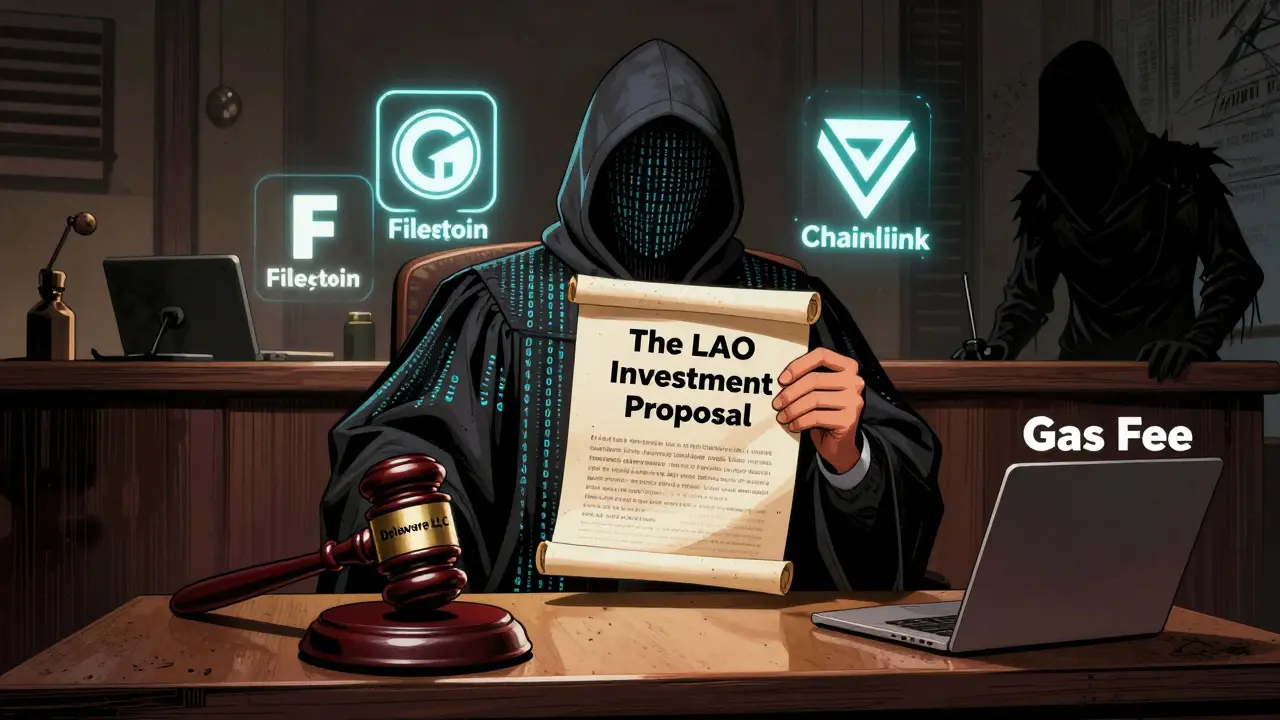
The LAO, launched in 2019, was one of the first DAOs to legally structure itself as a Delaware LLC. That gave it a foot in the real world. It let accredited investors pool money to fund blockchain startups.
By 2023, The LAO had invested in 67 projects, including Filecoin, Arbitrum, and Chainlink. Its treasury held $32 million. Unlike traditional VC firms, members didn’t just hand over cash and wait. They voted on every investment. They debated pitch decks. They reviewed whitepapers. They got updates directly from founders.
But there’s a catch. Only accredited investors-those with $1 million in net worth or $200k income-could join. That limited participation. It also meant The LAO wasn’t truly open. It was a DAO in structure, but not in spirit. Still, it showed that DAOs could work as investment vehicles, blending legal structure with decentralized governance.
Bain & Company found that DAOs using hybrid models-like The LAO’s LLC structure-had a 68% higher survival rate than purely on-chain ones. That’s a big clue: DAOs don’t need to be 100% on-chain to succeed.
ConstitutionDAO: The Million That Couldn’t Buy a Document
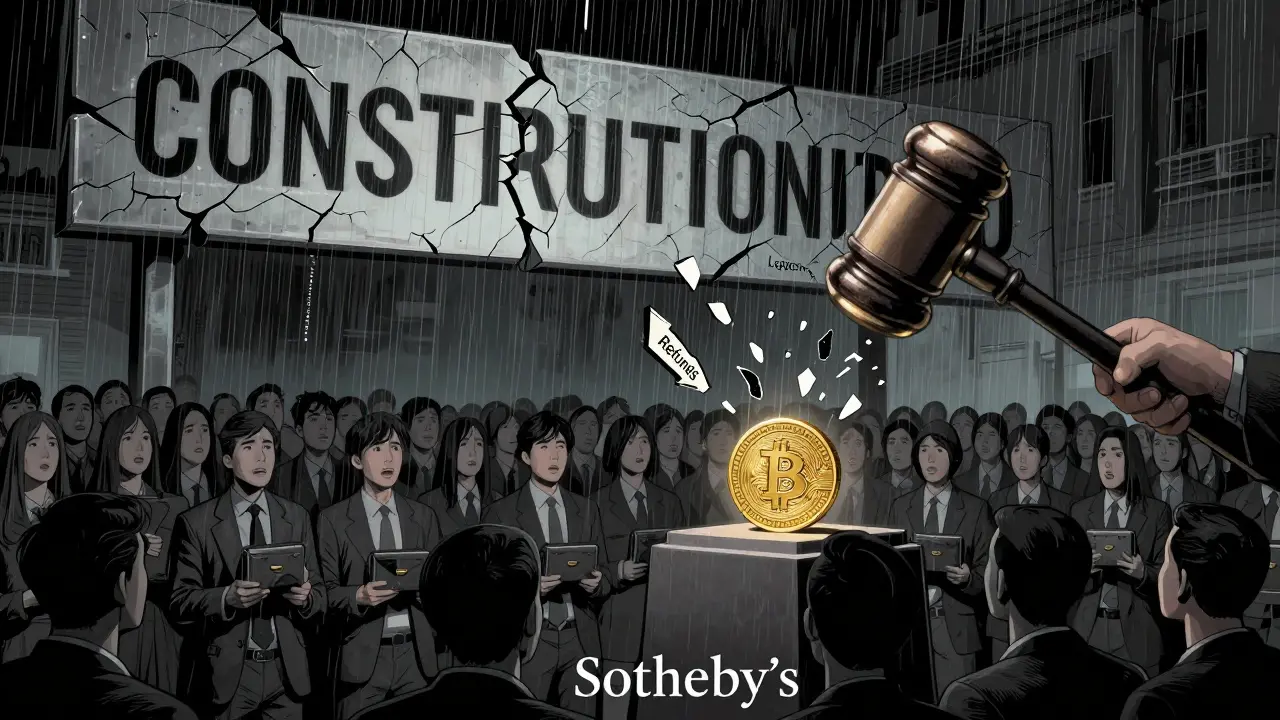
In November 2021, a group of strangers on the internet raised $47 million in just 72 hours. Their goal? To buy one of the 13 surviving copies of the U.S. Constitution at Sotheby’s auction.
They called it ConstitutionDAO. Over 17,000 people donated ETH. They built a website. They hired legal counsel. They even created a physical DAO logo.
They didn’t win the auction. Sotheby’s wouldn’t accept ETH. They needed a bank transfer. And ConstitutionDAO had no legal entity to sign the contract. After the loss, they refunded every donor-minus gas fees. But the real lesson wasn’t about money. It was about limits.
DAOs can raise money fast. They can mobilize global communities. But they can’t easily interact with legacy systems. Banks, auction houses, governments-they don’t recognize smart contracts as legal agents. ConstitutionDAO proved DAOs are powerful, but still isolated from the real world.
Friends With Benefits (FWB): A DAO That’s Also a Party
FWB isn’t about finance. It’s about culture. Founded in 2021, it’s a social DAO with over 12,000 members. To join, you need to hold FWB tokens. But once you do, you get access to private Discord channels, real-world meetups, exclusive NFT drops, and even a members-only music label.
FWB doesn’t vote on treasury spending like Uniswap. Instead, members vote on community events: Who gets to host a party? Who runs the art show? Who gets a grant to make a podcast?
It’s not perfect. Monetization is weak. Most members don’t earn income from FWB. But it’s one of the few DAOs that feels alive. People talk. They create. They show up. It proves DAOs don’t have to be about money to be valuable. Sometimes, they’re about belonging.
Krause House DAO: Buying a Basketball Team
In 2022, Krause House DAO made history. They raised $4.2 million in ETH and bought the Memphis Hustle, a minor league NBA G League team. They didn’t just invest. They became co-owners.
Members voted on everything: jersey designs, game-day experiences, even hiring the team’s social media manager. They held virtual watch parties. They gave away NFT tickets. They even had a DAO member perform the national anthem.
This wasn’t a stunt. It was a blueprint. Krause House showed DAOs could own physical assets, manage them, and involve thousands of people in decisions that affect real people. No corporation could do that so transparently. No board of directors would let fans vote on who gets to be mascot.
Failures and Lessons
Not every DAO thrives. PleasrDAO tried to buy Wu-Tang Clan’s only copy of their album, Once Upon a Time in Shaolin, for $10 million. They won the auction. But internal fights over how to manage the asset led to a public split. The album sat untouched. The DAO fractured.
Another common problem? Voter fatigue. A 2023 survey of Uniswap community members found 82% felt overwhelmed by constant proposals. Too many votes. Too little time. Too little reward.
And then there’s security. Between 2021 and 2023, over $1.3 billion was stolen from DAOs due to code exploits. The DAO hack in 2016 wasn’t an anomaly-it was a warning.
DAOs need better tools. Better onboarding. Better governance. Snapshot 3.0, launched in September 2023, helped by letting people vote off-chain, saving gas fees. But the real fix? Hybrid models. Combine code with legal structure. Let DAOs operate within the system instead of outside it.
What’s Next for DAOs?
By 2025, Gartner predicts 10% of large companies will experiment with DAOs. That’s up from 1.2% in 2022. Why? Because they’re efficient. Transparent. Resilient.
MakerDAO, one of the oldest DAOs, has automated over 100 governance functions. LexDAO has turned legal contracts into smart contracts. Gitcoin uses quadratic voting to prevent rich members from dominating.
The future isn’t pure DAOs. It’s hybrid DAOs-legal entities with on-chain governance. It’s DAOs that integrate with banks, governments, and courts. It’s DAOs that stop trying to replace institutions and start working alongside them.
DAOs aren’t magic. They’re tools. And like any tool, they work best when used for the right job.
Can anyone join a DAO?
Technically, yes. All you need is a crypto wallet and some tokens. But many DAOs restrict participation. The LAO only lets accredited investors join. Others require you to prove you’re a real contributor, not just a speculator. Some DAOs have application processes or voting gates. So while DAOs are open in theory, in practice, access often depends on your wealth, reputation, or activity.
How do DAOs make money?
DAOs don’t make profit like companies. They manage treasury funds. Some earn fees-Uniswap collects trading fees. Others receive donations or grants. Investment DAOs like The LAO make returns by funding startups. Social DAOs like FWB sell NFTs or host paid events. Philanthropy DAOs like Giveth distribute funds directly. Revenue comes from the activity they enable, not from selling products.
Are DAOs legal?
Only in a few places. As of 2023, only Wyoming, Tennessee, and Utah have clear laws recognizing DAOs as legal entities. In most countries, DAOs exist in a gray zone. They’re not illegal, but they’re not protected either. That’s why The LAO structured itself as a Delaware LLC-it needed legal cover. Without it, members could be held personally liable.
Why do DAOs fail?
Most fail because of poor governance, low participation, or lack of clear purpose. Consensys found 78% of enterprise DAOs fail within 18 months. Common reasons: too many proposals, no clear decision-making process, lack of accountability, or internal power struggles. Some fail because they can’t interact with real-world systems-like banks or courts. Others just lose momentum when early contributors move on.
Do I need to be technical to join a DAO?
Not anymore. Tools like Snapshot let you vote without paying gas fees. Wallets like MetaMask are easy to use. But understanding how to read proposals, evaluate risks, and engage in discussions still takes time. The average learning curve is 8-12 weeks. You don’t need to code, but you do need to think critically and participate regularly.


DAOs are wild. I don’t need to understand the code to feel the vibe. FWB? That’s the real deal. People showing up, making art, throwing parties. That’s community. Not just voting on treasury spend.
Uniswap’s governance is a farce. 3.2% turnout? That’s not democracy it’s a cabal of whales with fancy wallets pretending to be decentralized. The whole model is a performance art piece for VCs. We’re all just extras in their blockchain soap opera.
I love how ConstitutionDAO didn’t give up. They lost the auction but won something bigger. People came together for something real. That’s the spirit. Not the money. The connection.
It is quite amusing how Westerners treat blockchain as if it were a panacea. You raise 47 million dollars and cannot even complete a transaction with a traditional auction house? This is not innovation. This is ignorance masquerading as progress.
I understand the frustration with low voter turnout. But let’s not forget: governance is hard. It takes time. It takes energy. And most people have jobs, families, lives outside of crypto. Maybe the problem isn’t apathy. Maybe it’s that we’re asking too much of ordinary humans.
Krause House is the only DAO that actually gets it. You buy a team? You let fans vote on the mascot? That’s not tech. That’s magic. And yeah I know the naysayers say it’s a gimmick. But gimme a gimmick that makes people feel like they belong any day over another soulless corporation.
the thing no one talks about is how hard it is to actually contribute. i joined 3 daos. 2 of them asked for github commits. 1 asked for a 500 word essay on why i deserve to vote. i just wanted to chat about nfts. now i just lurk. it’s exhausting.
FWB made me cry. Not because of the NFTs. But because I finally felt seen. Like I wasn’t just a wallet. I was a person. That’s worth more than any token price.
DAOs are like group chats that got a bank account 😎💸. Some are chaotic. Some are beautiful. Krause House? Pure joy. ConstitutionDAO? Beautiful chaos. Uniswap? A corporate shell with a blockchain sticker. We need more heart. Less spreadsheet.
The fact that we’re even having this conversation… it’s hilarious. We built a system where you can vote on whether to spend $10 million on a basketball team… but you can’t vote on whether to fix the gas fee problem. We’re all just kids with access to a vault and no idea how to lock it.
A critical oversight in most DAO analyses is the lack of distinction between on-chain governance and off-chain coordination. Snapshot and Discord are not interchangeable with smart contracts. The former enables participation; the latter enforces it. Many failures stem from conflating tooling with structure.
Why do people keep pretending DAOs are about equality when the only way to join most is to have money? The LAO. Uniswap. Even FWB. You need ETH. You need tokens. You need access. That’s not decentralized. That’s exclusion with a blockchain logo.
The notion that DAOs are inherently more transparent than traditional organizations is a myth. Most governance proposals are buried in GitHub issues or Discord threads with no public audit trail. The transparency is performative. The power remains concentrated. We are not building a new system. We are rebranding the old one.
Oh look another group of tech bros thinking they can fix democracy with a token. Next they’ll vote on whether the moon is real. I swear if I see one more ‘DAO for climate change’ I’m moving to a cabin in Montana with no internet.
I just wanna say… DAOs are kinda cool but also kinda dumb? 🤷♀️✨ I don’t get why we need to vote on everything. Can’t we just chill? Also why does everyone act like they’re running a startup when they’re just buying memes?
There is a deeper question here. Not whether DAOs work. But whether we are ready for them. We built these systems on the belief that humans are rational actors. But we are not. We are emotional. We are tribal. We are flawed. A DAO cannot fix that. It can only reflect it.
The entire DAO movement is a symptom of a deeper cultural malaise. We don’t trust institutions. We don’t trust leaders. We don’t even trust each other. So we build code to mediate our relationships. But code doesn’t heal. Code doesn’t forgive. Code doesn’t hold space. And yet we pretend it can. We are outsourcing our humanity to algorithms and calling it innovation.
The real innovation isn’t in the smart contracts. It’s in the hybrid models. The LAO’s LLC structure is genius. It doesn’t replace the system. It plugs into it. DAOs need legal personhood. They need liability protection. They need to be able to sign contracts. That’s not a compromise. That’s evolution. The pure on-chain purists are just romanticizing failure.
You think this is about democracy? Think again. This is a tax loophole disguised as a revolution. The ‘decentralized’ part is a marketing trick. Behind every DAO is a VC firm, a legal shell, and a group of people who want to avoid regulation. The blockchain is just a veil. And we’re all too naive to see it.
America built the internet. America built crypto. And now some guy in India is lecturing us about how DAOs are ‘ignorant’? Get real. If you don’t like innovation, stay in your 19th-century bureaucracy. We’re building the future. You can watch from your typewriter.
All these DAOs are just pump-and-dump schemes with a new name. ConstitutionDAO? They raised $47M and lost. Krause House? They bought a minor league team. This isn’t progress. It’s a pyramid scheme with NFTs as tickets. The only thing decentralized is the delusion.
I read this whole thing and felt… hopeful. Not because DAOs are perfect. But because they’re trying. Even when they fail, they leave behind something human. A community. A memory. A group of strangers who once believed in something bigger than profit. That’s rare. And worth protecting.
You know what’s wild? The fact that we even have to explain why DAOs matter. We used to believe in institutions because we had no choice. Now we get to choose. And some of us choose to build. To vote. To show up. That’s not naive. That’s revolutionary. Keep going.
Replying to @2151: You said it. I joined FWB because I was tired of scrolling. Now I’m helping plan a real-life meetup. That’s the magic. Not the token. The moment you stop being a user and start being a part of something.