Bitcoin halving: What it is, why it matters, and what comes next
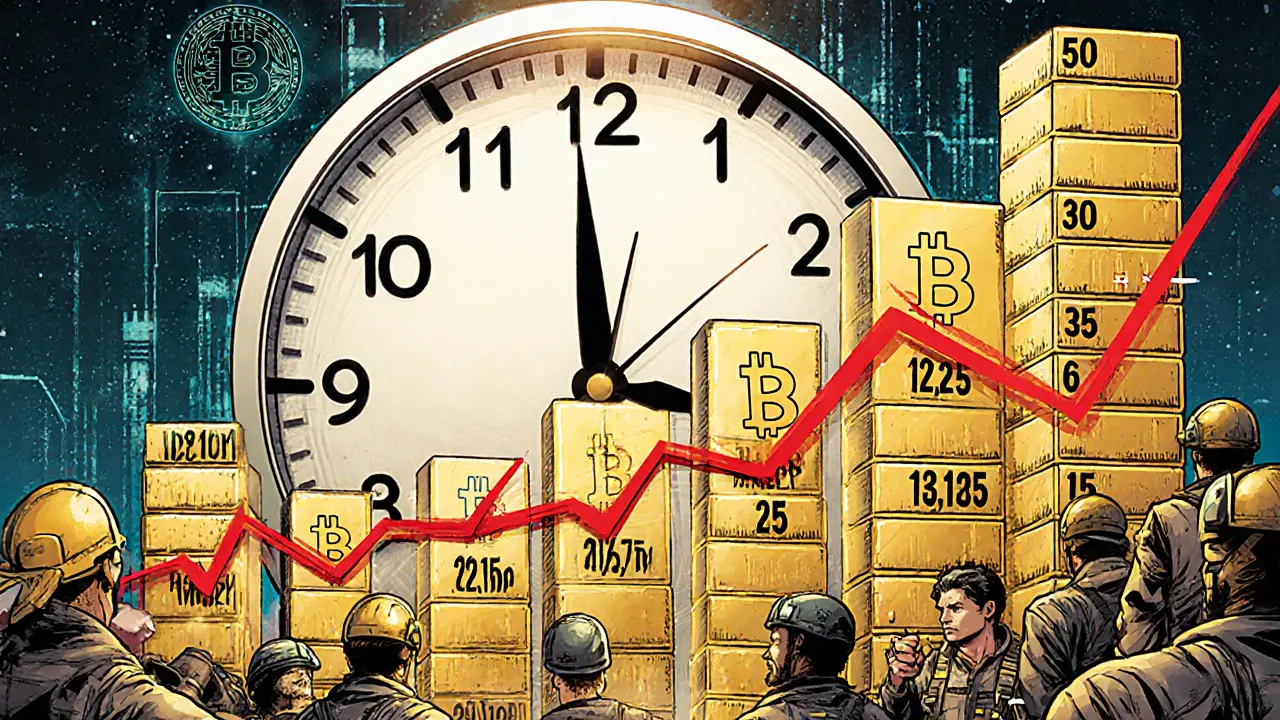
When you hear Bitcoin halving, a scheduled event that cuts the reward for mining new Bitcoin blocks in half. Also known as Bitcoin reward reduction, it’s one of the few predictable events in crypto that directly affects supply and long-term value. Every 210,000 blocks — roughly every four years — the number of new Bitcoins miners earn for validating transactions drops by 50%. It started at 50 BTC per block in 2009. Then 25, then 12.5, then 6.25. The next one, expected in 2028, will bring it down to 3.125 BTC. This isn’t a glitch. It’s coded into Bitcoin’s DNA to mimic the scarcity of precious metals like gold.
The Bitcoin supply, a fixed maximum of 21 million coins. Also known as Bitcoin cap, it’s what makes halving meaningful. Without halving, all 21 million coins would flood out too fast. With it, the last Bitcoin won’t be mined until around 2140. That slow, predictable release is why people call Bitcoin digital gold. It’s not just about scarcity — it’s about trust. You don’t need to believe in a CEO or a central bank. You believe in math. And that math says: fewer coins enter circulation over time. That’s why crypto mining, the process of securing Bitcoin’s network and earning new coins. Also known as Bitcoin mining, it’s directly tied to halving. Miners get paid in new Bitcoin and transaction fees. When the block reward drops, their income shrinks. Many leave the network. Others double down, betting that price will rise to make up the difference. History shows they’re often right.
Look at past halvings — 2012, 2016, 2020. Each time, Bitcoin’s price didn’t jump right away. It took months. Sometimes over a year. But after each event, the market found a new high. Why? Because demand didn’t change. Supply did. Fewer coins were being added to the market while more people wanted them. That’s basic economics. And it’s not just theory. Data from the last three halvings shows clear patterns in trading volume, miner behavior, and investor interest. The blockchain scarcity, the principle that limited supply drives value in decentralized systems. Also known as digital scarcity, it’s the core idea behind Bitcoin’s design. No other asset works this way. Stocks can be diluted. Gold can be mined faster with new tech. Bitcoin? The rules are locked in. No one can change them.
What comes next? That’s what everyone’s watching. Will the next halving trigger another bull run? Or has the market already priced it in? Some say yes — others say the days of massive price spikes are over. Either way, halving isn’t just a technical event. It’s a reminder that Bitcoin isn’t controlled by politicians or Wall Street. It’s controlled by code. And that code is running on schedule. Below, you’ll find real stories from past halvings, how miners reacted, how traders bet on them, and what to watch for when the next one hits. No fluff. Just facts from the blockchain.