RUGAME Price: What You Need to Know About This High-Risk Meme Coin
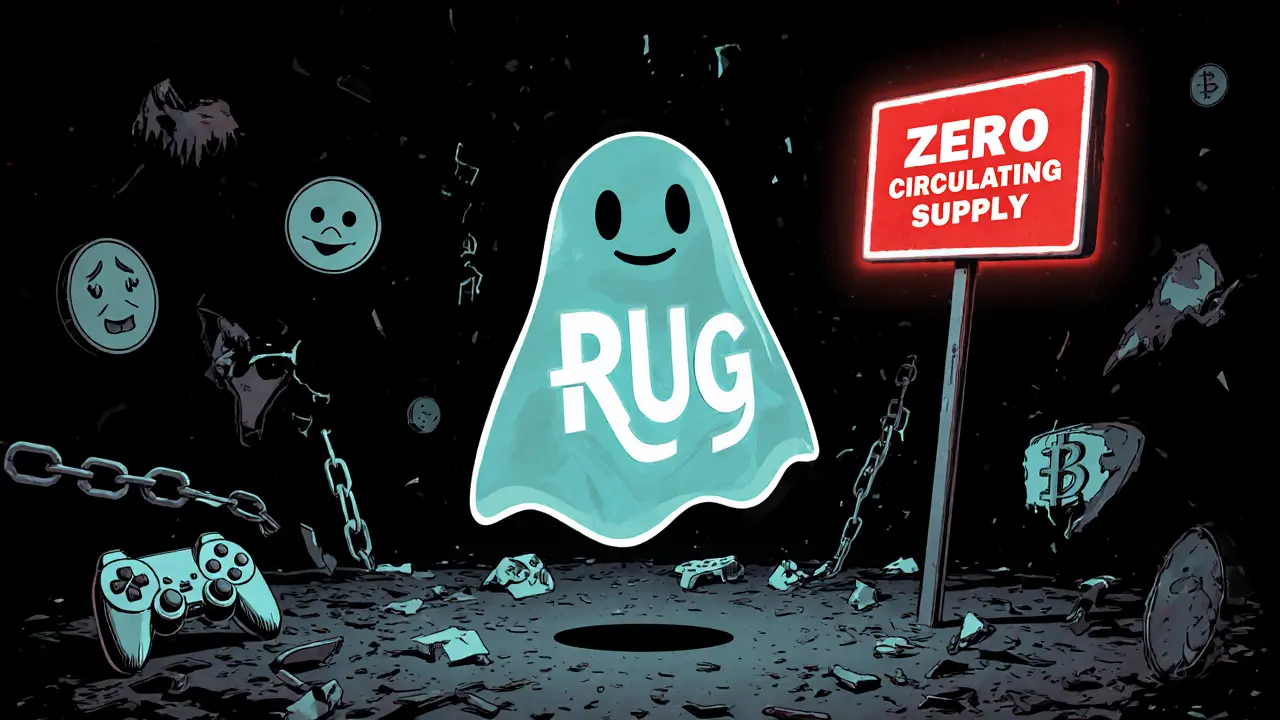
When you see RUGAME, a low-cap meme token with no clear team, roadmap, or exchange listings. Also known as RUGAME coin, it’s one of hundreds of tokens that pop up overnight with hype but vanish just as fast. Unlike Bitcoin or Ethereum, RUGAME doesn’t solve a problem, enable a service, or power a network. It exists because someone created it, marketed it, and hoped people would buy in before the price crashes.
What makes RUGAME dangerous isn’t just its price swings—it’s the lack of transparency. No whitepaper. No team names. No audits. No real trading volume on major exchanges. These are the same red flags you’ll see in BOHR (BR), a token labeled a "zombie coin" with no exchange support, or Project 32 (32), a coin with conflicting price data and zero community. These aren’t investments—they’re gambling chips with no table rules. And just like Mistery On Cro (MERY), a Cronos-based meme coin with massive supply and zero utility, RUGAME’s only real function is to lure buyers with fake charts and Telegram hype.
If you’re seeing RUGAME price spikes, ask yourself: who’s selling? Who’s promoting it? Is there any real reason it should be worth anything? The answer is almost always no. Most of these tokens are pump-and-dump schemes disguised as opportunities. The people who created them already have their profits locked in. You’re the last one in. And when the buying stops, the price doesn’t just drop—it evaporates. That’s why exchanges like TradeOgre got shut down, why BitWell vanished, and why HyperPay Futures is flagged as a scam. The crypto space is full of noise, and RUGAME is just another echo.
Below, you’ll find real stories from people who’ve chased these kinds of tokens—what worked, what didn’t, and how to spot the next one before it’s too late. You won’t find fluff here. Just facts, patterns, and warnings from the front lines of crypto risk.