What is COW (CoW Protocol) Crypto? Token Utility, Price & Mechanics Explained
You’ve probably seen the ticker COW on your portfolio or a price chart and wondered what it actually does. Is it just another meme coin riding the Ethereum hype train, or is there real technology behind it? The short answer: it’s neither. COW is the governance and utility token for the CoW Protocol, a decentralized exchange (DEX) that fundamentally changes how trades are executed on-chain. It doesn’t rely on simple automated market makers; instead, it uses a clever batch auction system to get you better prices and protect your money from predatory bots.
If you are looking to understand why this token exists, how it protects your trades, and whether it holds value beyond speculation, you need to look past the price chart. You need to understand the mechanics of the "Coincidence of Wants" protocol. Let's break down exactly what COW is, how the network operates, and what rights holding the token gives you.
The Core Concept: Coincidence of Wants
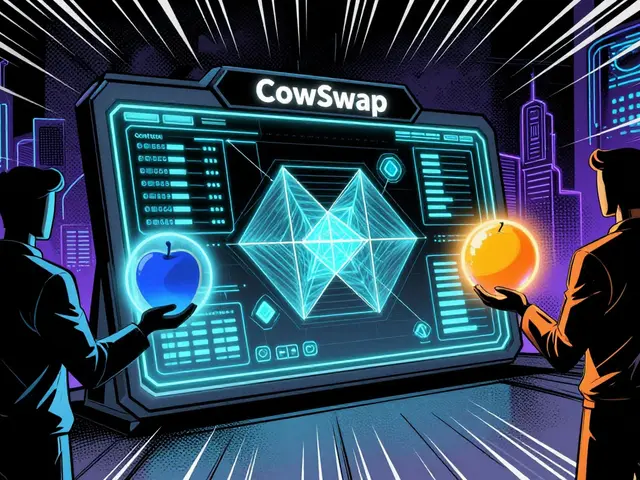
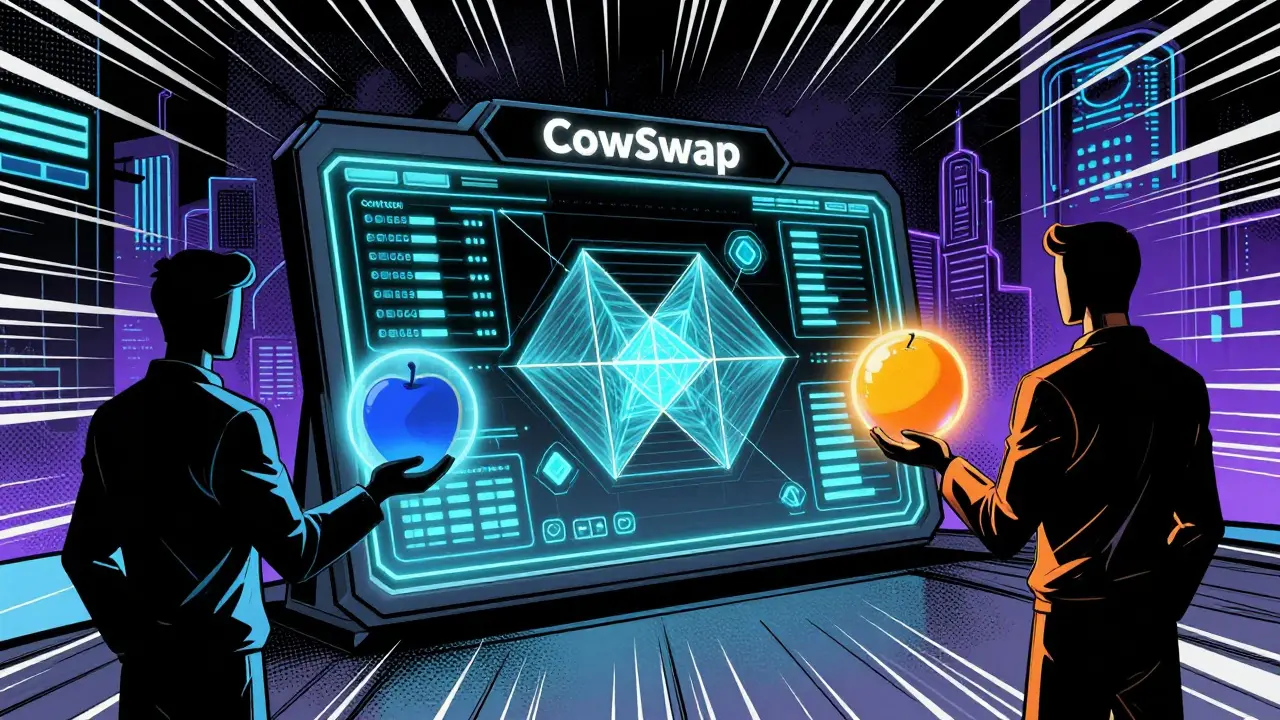
The name "CoW" isn't random. It stands for "Coincidence of Wants." In economics, this concept describes a situation where two parties want to trade something they have for something the other has, without needing a middleman or cash in between. Imagine you have apples and want oranges, while someone else has oranges and wants apples. If you meet, you can swap directly. That is a coincidence of wants.
In the world of cryptocurrency, these direct matches are rare. Most trading happens through Automated Market Makers (AMMs) like Uniswap, where you trade against a pool of funds, paying fees and slippage along the way. The CoW Protocol, developed by the Gnosis team and launched in 2021, aims to recreate that direct swap efficiency at scale. Instead of forcing every single trade into a liquidity pool, the protocol bundles multiple user orders together. By grouping trades, solvers can find offsetting positions-someone buying ETH while another sells ETH-and settle them internally. This reduces the load on external liquidity pools and often results in significantly better execution prices for everyone involved.
Who created the CoW Protocol?
The CoW Protocol was developed by the Gnosis team, a well-known entity in the Ethereum ecosystem focused on secure blockchain infrastructure and decentralized applications. It officially launched in 2021.
How the Trading Mechanism Works
To use the CoW Protocol, you typically interact with CowSwap, the primary trading interface. But unlike swapping on standard DEXs, you don't send your tokens immediately. Here is the process:
- Sign an Order: You specify what you want to trade (e.g., "I want to sell 100 USDC for WETH") and set a minimum acceptable price. You sign this intention digitally but do not broadcast it to the public mempool yet.
- Solver Competition: Your order goes to a group of specialized entities called "solvers." These are professional market makers and algorithms competing to fill your order.
- Batching and Settlement: Solvers bundle your order with others. They might find that User A wants to buy ETH and User B wants to sell ETH. They match these internally. If no internal match exists, they route the trade through the best available AMM or centralized exchange API.
- Execution: The solver that offers the best price wins the right to settle the batch. They submit the transaction to the blockchain. You receive your tokens, and the solver takes their cut from the spread.
This model shifts the burden of finding the best price from the user to the solvers. Because solvers compete fiercely to win the settlement rights, they are incentivized to offer you the absolute best rate possible. If they underperform, they lose money. This creates a market structure that naturally favors the trader.
MEV Protection: Why This Matters
One of the biggest hidden costs in DeFi is Maximal Extractable Value (MEV). When you broadcast a trade on a public blockchain, bots scan the mempool (the waiting area for transactions) to see what you're doing. If they see a large trade coming, they might "front-run" you by buying the asset first, pushing up the price, and then selling it back to you at a higher cost. This is known as sandwich attacks, and it silently drains value from regular users.
The CoW Protocol eliminates this risk. Since your order is signed privately and only revealed to the solvers, it never sits exposed in the public mempool. The solvers execute the trade in a batch, making it nearly impossible for external bots to manipulate the ordering of your specific transaction. This feature alone makes the protocol attractive to high-volume traders who want to avoid slippage caused by malicious actors.

Tokenomics and Supply Structure
The COW token is an ERC-20 token on the Ethereum network. It has a fixed total supply of 1 billion tokens. Unlike Bitcoin, which is mined over time, the entire supply of COW was predetermined at launch. There is no inflationary mining reward mechanism. The distribution was designed to align incentives across different groups:
- Community and Ecosystem: A significant portion is allocated to community members and ecosystem incentives to encourage adoption and development.
- Developers and Contributors: Tokens reserved for the core team and developers who maintain the protocol's codebase.
- DAO Treasury: Funds held for future governance decisions and protocol upgrades.
Because the supply is capped and non-inflationary, the token's value dynamics depend heavily on demand drivers like governance participation and fee discounts, rather than continuous issuance dilution.
Utility of the COW Token
Holding COW isn't just about hoping the price goes up. The token has two primary functions within the ecosystem:
1. Governance via CoW DAO
The CoW Protocol is governed by a Decentralized Autonomous Organization (DAO). COW holders can vote on critical proposals, such as changes to protocol parameters, updates to the solver verification process, and allocation of treasury funds. This ensures the protocol evolves according to the will of its users rather than a central company. As the protocol grows, the influence of the DAO becomes more significant in shaping the future of decentralized trading.
2. Fee Discounts on CowSwap
Users who hold COW tokens often receive discounts on trading fees when using the CowSwap interface. While the base fee structure is already competitive due to the solver model, holding the native token provides an additional economic benefit for active traders. This creates a natural demand for the token among frequent users who want to minimize their transaction costs.
| Feature | Traditional AMM Aggregator (e.g., 1inch) | CoW Protocol (CowSwap) |
|---|---|---|
| Execution Model | On-chain routing through existing pools | Off-chain batching and solver competition |
| MEV Protection | Limited (exposed in mempool) | High (private order signing) |
| Price Discovery | Algorithmic based on pool depth | Competitive bidding by solvers |
| Gas Efficiency | Standard per-transaction gas | Optimized via batching (often lower effective gas) |
| Governance | Varies by platform | Decentralized via CoW DAO |

Market Performance and Context (2026 Outlook)
As we move through 2026, the COW token continues to be a key player in the Ethereum DeFi landscape. Historical data shows significant volatility, which is typical for governance tokens in the crypto space. The all-time high reached approximately $2.22 USD, reflecting periods of intense DeFi optimism. Conversely, the all-time low dipped near $0.04 USD during broader market downturns.
Recent market data from late February 2026 indicated a trading price range between $0.21 and $0.22 USD, with daily volumes exceeding $11 million. This volume suggests healthy liquidity and active interest from both retail and institutional participants. The price stability around this level indicates that the market has found a valuation equilibrium that reflects the protocol's utility without excessive speculative premium.
It is important to note that the value of COW is tied to the success of the CoW Protocol. As more users adopt batch auctions for their daily swaps, the demand for governance rights and fee discounts increases. Additionally, the protocol's ability to integrate with Layer 2 solutions and expand beyond Ethereum mainnet could further drive adoption. However, like all crypto assets, it remains subject to macroeconomic factors and regulatory developments in major jurisdictions.
Is COW Right for You?
If you are a passive investor looking for quick gains, COW might not be the most volatile option compared to newer meme coins. However, if you believe in the long-term evolution of decentralized finance and want exposure to a protocol that solves real technical problems like MEV extraction and poor price execution, COW offers substantial fundamental value.
The project is backed by experienced developers from Gnosis, has a clear utility case, and features a robust governance structure. For active traders, using CowSwap can save money on fees and protect capital from front-running. For investors, holding COW allows participation in the decision-making process of one of the most innovative DEX architectures in existence.
Can I mine COW tokens?
No, COW tokens cannot be mined. The total supply of 1 billion tokens was pre-mined and distributed according to a fixed schedule at launch. You can only acquire them through exchanges or secondary markets.
What is a "solver" in the CoW Protocol?
A solver is a third-party entity or algorithm that competes to execute user trades. They analyze incoming orders, bundle them efficiently, and submit the final transaction to the blockchain. Solvers are incentivized to provide the best possible prices to win the right to settle the batch.
Does CowSwap charge fees?
Yes, but the fee structure is user-friendly. Fees are typically charged only on successful transactions. Failed transactions do not incur fees. Additionally, holding COW tokens can provide discounts on these fees.
Is CoW Protocol safe from hacks?
The protocol uses smart contracts developed by the reputable Gnosis team and undergoes rigorous security audits. While no system is 100% immune to risks, the off-chain order signing and solver-based architecture reduce attack surfaces compared to traditional on-chain DEXs.
Where can I buy COW tokens?
COW is listed on numerous major cryptocurrency exchanges including Binance, Coinbase, Kraken, and decentralized platforms like CowSwap itself. Always verify the contract address before trading to avoid scams.