What is eMetals (MTLS)? A Critical Look at the Token, Risks, and Data Gaps
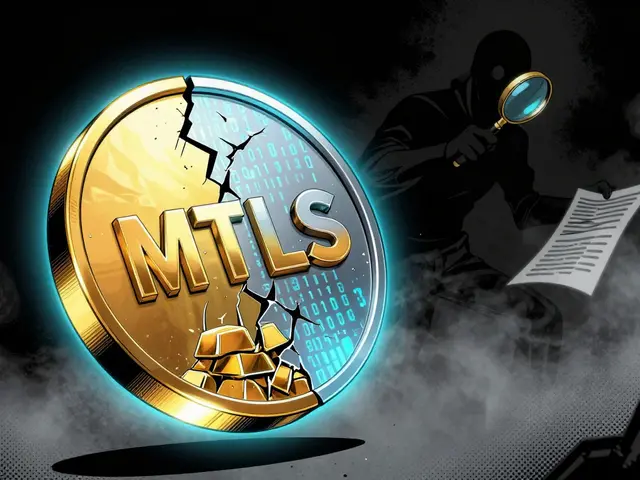
You’ve probably seen the ticker MTLS pop up on a screen lately. Maybe it was in a chat group, maybe on a price tracker. The name eMetals sounds promising-like it connects the stability of gold or silver with the speed of blockchain. But here is the hard truth: right now, there is very little concrete information about what this project actually does.
We are living in an era where 'Real World Assets' (RWA) are the buzzword of the industry. Everyone wants to tokenize commodities. But just because a token exists doesn't mean it has utility. If you are looking into eMetals, you need to separate marketing hype from on-chain reality. This isn't a guide on how to get rich quick; it's a breakdown of what we know, what we don't know, and why that silence matters.
The Basics: What Is eMetals (MTLS)?
At its core, eMetals (MTLS) is a digital token launched in 2024. It lives on the Ethereum blockchain as an ERC-20 standard token. This means it doesn't have its own independent network like Bitcoin or Solana. Instead, it rides on Ethereum’s infrastructure, inheriting both its security model and its transaction fees (gas).
The concept behind eMetals appears to be the digitization of metals trading. In theory, this allows users to buy, sell, or hold fractional ownership of physical metals without needing a warehouse or a bullion dealer. However, the 'how' remains murky. Does holding MTLS give you legal claim to physical metal? Can you redeem tokens for bars of copper or gold? As of mid-2026, no clear documentation explains this mechanism.
| Attribute | Detail |
|---|---|
| Blockchain | Ethereum (ERC-20) |
| Contract Address | 0x197dc7a8a58a7e4f6a5cb82302e8646a125798e7 |
| Launch Year | 2024 |
| Token Type | Utility / Speculative (Unclear Utility) |
| Security Audit | Not Publicly Disclosed |
The Price Puzzle: Volatility and Anomalies
If you look at the numbers, things get interesting-and slightly worrying. Throughout late 2025 and into 2026, MTLS has traded in a narrow but volatile band, roughly between $0.049 and $0.053 USD. You might think that’s stable, but look closer at the market capitalization.
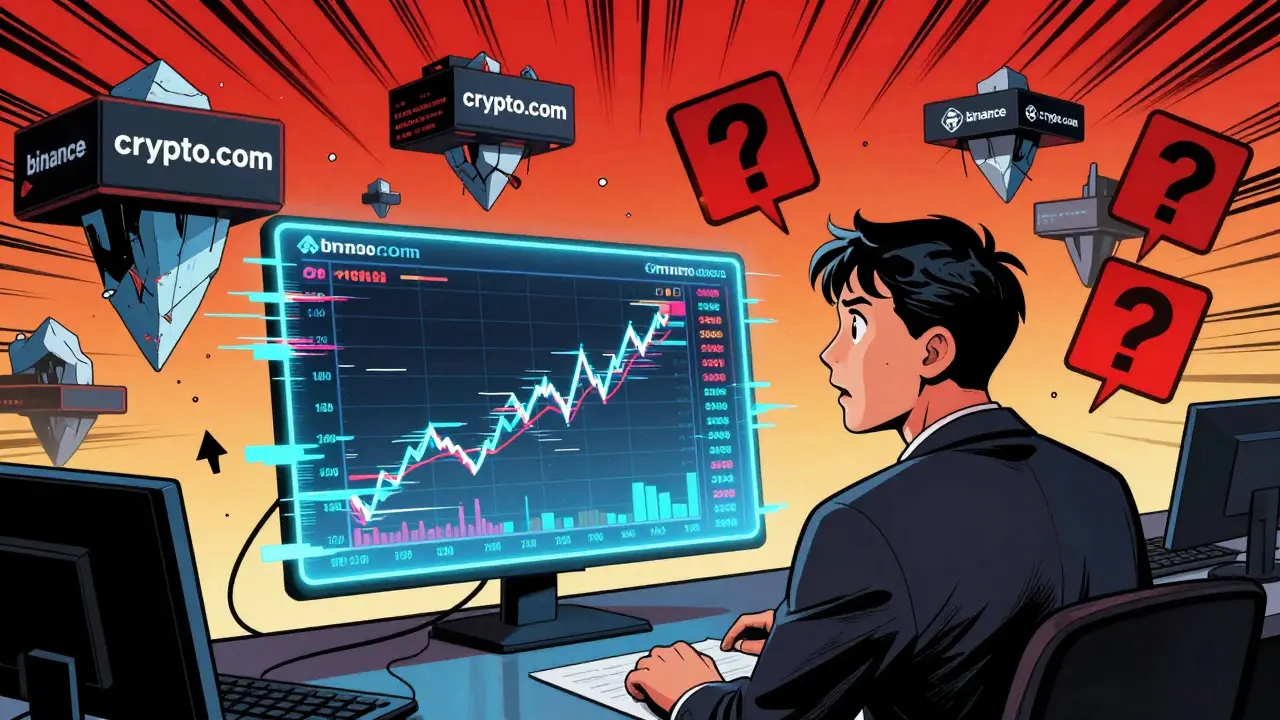
Here is the red flag: some major exchanges, including Binance, have reported a market cap of $0 USD for MTLS despite showing active trading volumes exceeding $130,000 in a single day. How can a token have volume but zero market value? Usually, this indicates one of two things:
- Data Reporting Errors: The exchange hasn't correctly indexed the total supply, making the math break.
- Liquidity Fragmentation: The token is being traded in small pockets across different platforms (like Crypto.com and CoinMarketCap) without a unified order book, creating artificial price discrepancies.
For example, while Binance showed lower prices, Crypto.com listed MTLS higher, sometimes by nearly 7% in a short window. For a serious investor, this arbitrage gap suggests low liquidity. If you try to sell a large amount of MTLS, you could crash the price instantly because there aren't enough buyers waiting in the queue.
Missing Pieces: The Information Gap
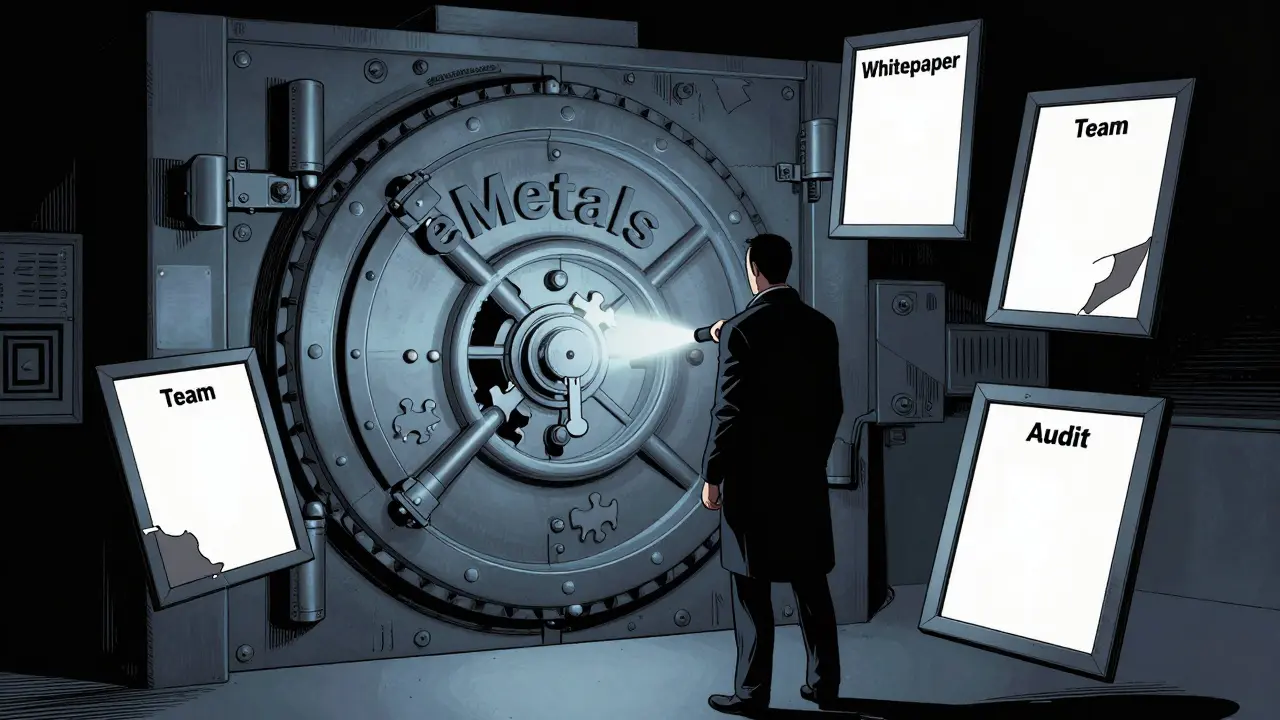
In the crypto world, transparency is currency. When a project launches in 2024 and claims to represent physical assets, you expect a whitepaper, a team page, and a roadmap. With eMetals, these are largely absent from public discourse.
Let’s break down what’s missing:
- The Team: Who built this? Are they anonymous? In the RWA sector, trust is everything. If you can’t find the founders on LinkedIn or Twitter, that’s a risk factor.
- Legal Structure: Selling tokens tied to physical commodities often triggers securities laws. Which jurisdiction regulates eMetals? Is there a custodian holding the actual metals?
- Smart Contract Audits: Since MTLS is an ERC-20 token, its safety depends on its code. Has a firm like CertiK or OpenZeppelin audited it? There is no public record of this. Unaudited contracts are prime targets for exploits.
- Total Supply: We know the circulating price, but we don’t clearly know the maximum supply. Without this, you can’t calculate true valuation metrics.
This lack of data isn't just an oversight; it’s a structural weakness. Compare this to established projects like Paxos Gold (PAXG), which publishes regular audits proving their vault reserves. eMetals offers no such proof.
How to Buy MTLS (If You Decide To)
Despite the risks, trading activity continues. Platforms like Phemex, Crypto.com, and Binance list MTLS. If you decide to proceed, here is the practical path:
- Choose a Supported Exchange: Check if your preferred exchange lists MTLS. Phemex has published guides for purchasing it, indicating some level of support.
- Use an Ethereum Wallet: Since it’s an ERC-20 token, you’ll need a wallet that supports Ethereum, such as MetaMask or Trust Wallet. Ensure you have ETH to pay for gas fees when transferring tokens off-exchange.
- Verify the Contract Address: Never rely solely on the ticker symbol 'MTLS'. Tickers can be reused by scam tokens. Always copy-paste the official contract address:
0x197dc7a8a58a7e4f6a5cb82302e8646a125798e7. - Start Small: Given the liquidity issues mentioned earlier, treat any investment as high-risk speculation. Do not allocate more than you can afford to lose entirely.
Is eMetals a Good Investment?
Let’s be direct. Based on available data, eMetals lacks the fundamental pillars of a safe investment. It has no clear utility, no transparent team, and inconsistent market data. In the broader context of 2026, investors are increasingly savvy. They demand regulatory clarity and proven technology.
eMetals falls into the category of 'high uncertainty.' It might succeed if the team releases a robust whitepaper and partners with a recognized commodity trader. But until then, it operates in the shadows. For most people, sticking to established cryptocurrencies or regulated ETFs for metal exposure is a safer bet.
If you are drawn to the idea of tokenized metals, look for projects that publish monthly reserve reports. Transparency isn't optional in this sector; it's the product.
Final Thoughts on MTLS
Crypto moves fast, and new tokens launch daily. eMetals is one of them. But novelty isn't value. Before putting money into MTLS, ask yourself: do I trust a project that hides its basics? For many, the answer will be no. Keep your eyes on the data, verify the contract addresses, and never invest based on a ticker symbol alone.
What blockchain is eMetals (MTLS) built on?
eMetals is an ERC-20 token built on the Ethereum blockchain. This means it relies on Ethereum’s network for security and transactions, requiring ETH for gas fees.
Why is the market cap of MTLS sometimes listed as $0?
This anomaly likely stems from incomplete data reporting by exchanges or a discrepancy between circulating supply and listed volume. It indicates potential liquidity fragmentation or technical errors in tracking the token's total value.
Is there a whitepaper for eMetals?
As of mid-2026, no widely accessible or authoritative whitepaper has been identified in public sources. This lack of documentation is a significant risk factor for investors seeking to understand the project's utility and team.
Can I redeem MTLS for physical metals?
There is no public information confirming a redemption mechanism. Unlike established tokenized asset platforms, eMetals has not disclosed how or if holders can convert tokens into physical commodities.
Where can I buy MTLS?
MTLS has been listed on exchanges such as Binance, Crypto.com, and Phemex. However, availability may vary by region, and users should always verify the contract address before trading.
Has the eMetals smart contract been audited?
No public audit reports from reputable firms like CertiK or OpenZeppelin have been found. Investing in unaudited smart contracts carries higher security risks.