
What Is Lou (LOU) Crypto? A Deep Dive Into the Solana Meme Token
Have you ever scrolled through your crypto feed and seen a token name that sounds familiar but feels slightly off? You’re not alone. In the wild west of cryptocurrency, names collide constantly. If you are asking what is Lou (LOU) crypto coin, you are likely trying to separate a genuine opportunity from a copycat or a scam. The short answer? Lou (LOU) is a micro-cap meme token on the Solana blockchain, inspired by the viral "dog with a hat" trend. But before you buy, there is a lot more to unpack about its risks, its confusing identity, and why it might be harder to trade than you think.
The crypto market is flooded with thousands of new tokens every day. Most vanish within weeks. Understanding what drives value in these assets requires looking past the cute branding and examining the underlying mechanics. This guide breaks down exactly what LOU is, where it fits in the Solana ecosystem, and how to distinguish it from similarly named projects that could cost you money if mixed up.
Decoding the Lou (LOU) Identity
To understand LOU, we first need to look at its origins. It is not a technology project with a whitepaper, a roadmap, or a development team. Instead, it belongs to the genre of meme coins. These tokens derive their value primarily from community sentiment, viral marketing, and cultural trends rather than utility or cash flow.
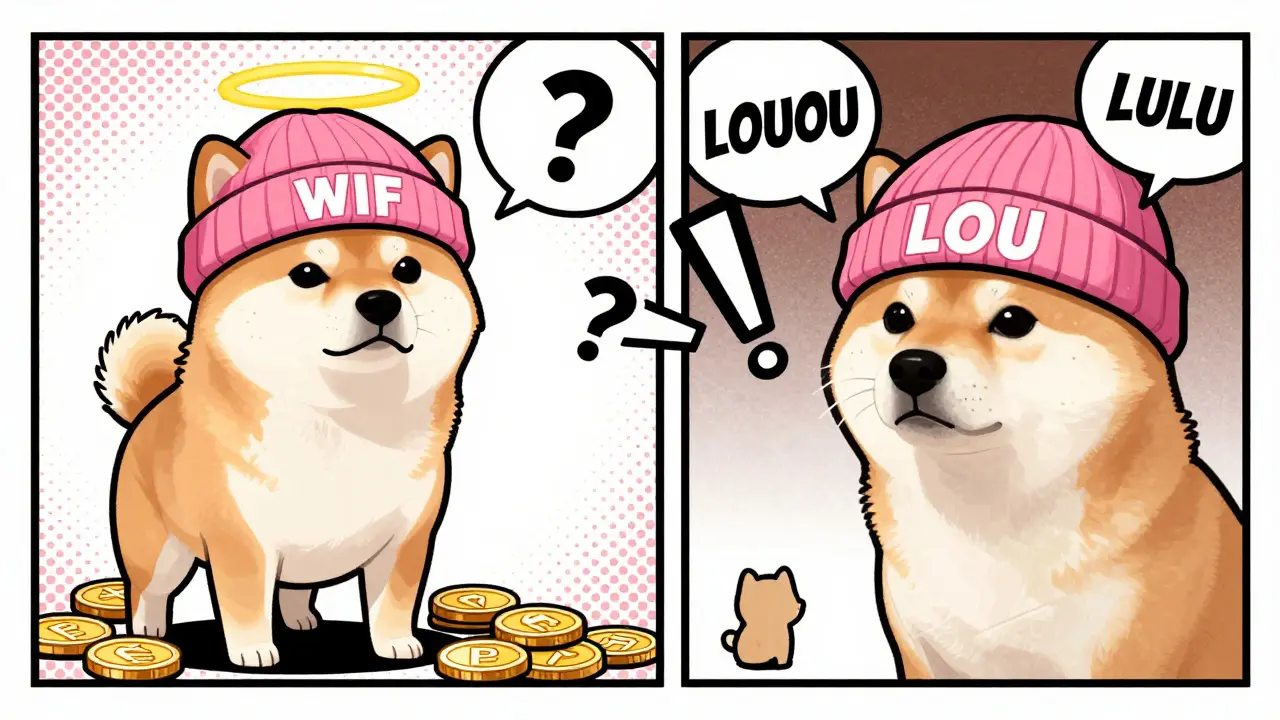
Lou (LOU) specifically rides the coattails of one of the most successful memes in recent crypto history: Dogwifhat (WIF). WIF became famous for its simple image of a Shiba Inu dog wearing a pink knitted hat. LOU attempts to capture similar energy by branding itself around a "dog wearing a hat." However, unlike WIF, which has built a substantial brand presence and exchange listings, LOU remains an obscure asset.
| Attribute | Detail |
|---|---|
| Ticker Symbol | LOU |
| Blockchain Network | Solana (SPL Token) |
| Launch Platform | pump.fun |
| Primary Theme | Dog with a Hat (WIF derivative) |
| Team Status | Anonymous / Community-driven |
The token was launched via pump.fun, a popular launchpad on Solana designed for creating and trading low-cost meme tokens quickly. Pump.fun allows anyone to deploy a token without coding knowledge, leading to a surge in speculative assets. While this democratizes creation, it also means there is no vetting process. There is no formal audit, no legal entity behind the project, and no guarantee of long-term support.
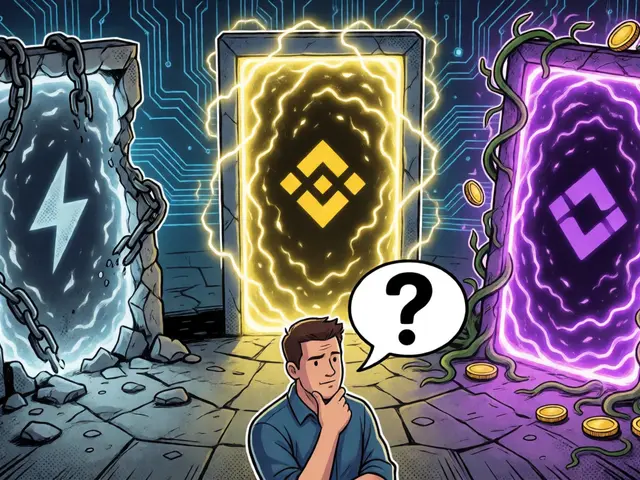
The Critical Confusion: LOU vs. LOULOU vs. LULU
This is the most dangerous part of researching LOU. The ticker symbol "LOU" is easily confused with other tokens. Mistaking one for another can lead to buying the wrong asset entirely. Always verify the contract address before trading.
1. Lou (LOU): The subject of this article. A very small-cap token with negligible liquidity. It trades on minor exchanges like LBank and decentralized platforms. Its market cap is often reported as near zero because data aggregators struggle to track such thin volume.
2. LouLou (LOULOU): Do not confuse LOU with LOULOU. LOULOU is also a Solana-based meme coin, but it has significantly higher visibility. It boasts a circulating supply of 1 billion tokens and much higher trading volumes. When you see news about a "Solana dog coin" gaining traction, it is often LOULOU, not LOU. Mixing them up is a common error for beginners.
3. Lulu (LULU): Another distinct project. LULU operates on the Binance Smart Chain (BSC), not Solana. It is inspired by the Pepe frog meme, not dogs. Despite the similar name, it exists on a completely different blockchain network with different transaction fees and wallet requirements.
If you intend to trade LOU, ensure your wallet shows the correct Solana contract address. Buying LOULOU when you meant LOU means you hold a different asset with different price action and risk profiles.
Market Reality: Liquidity and Price Volatility
Let’s talk numbers. As of mid-2026, LOU is classified as a micro-cap asset. What does that mean for you? It means extreme volatility and potential illiquidity.
Data from trackers like Livecoinwatch and Crypto.com shows LOU trading at fractions of a cent-often below $0.001 USD. The 24-hour trading volume is frequently reported in the low thousands of dollars. For context, major cryptocurrencies like Bitcoin or Ethereum trade in billions daily. Even established altcoins move millions per hour.
Low volume creates two major problems:
- Slippage: If you try to sell a significant amount of LOU, you might not find enough buyers at your desired price. Your sale could drop the market price drastically, resulting in less money than expected.
- Price Manipulation: With thin order books, large holders (whales) can move the price up or down with relatively small trades. This makes technical analysis unreliable and increases the risk of sudden crashes.
Furthermore, discrepancies between data providers are common. One site might list the price at $0.000234 while another shows $0.000098. This inconsistency reflects fragmented liquidity across various small exchanges and decentralized pools. It signals that LOU lacks a single, dominant trading venue where price discovery happens efficiently.
Tokenomics and Supply Mystery
In traditional finance, investors look at earnings reports. In crypto, they look at tokenomics-the economic structure of the token. Unfortunately, LOU offers little transparency here.
Most reputable projects publish their total supply, circulating supply, and allocation details (e.g., how much goes to developers, marketing, or community rewards). LOU does not have a public whitepaper or detailed documentation. Aggregators often report its market capitalization as $0.00 or null. This usually happens when the circulating supply is unknown or unverified.
Without knowing the total supply, you cannot calculate the Fully Diluted Valuation (FDV). This leaves you blind to potential inflation risks. If hidden wallets release millions of tokens into the market later, the price could collapse instantly. This opacity is typical of pump.fun launches but represents a significant red flag for conservative investors.
How to Trade LOU Safely
If you decide to proceed despite the risks, here is how to navigate the practical side of acquiring and holding LOU.
- Choose the Right Exchange: LOU is listed on smaller centralized exchanges like LBank. You will need to create an account, complete any necessary KYC (Know Your Customer) verification, and deposit funds (usually USDT or SOL).
- Use Decentralized Exchanges (DEXs): Since LOU originated on pump.fun, it likely trades on Solana DEXs like Raydium or Jupiter. To do this, you need a Solana-compatible wallet like Phantom or Solflare.
- Verify the Contract Address: Never rely solely on the ticker symbol. Copy the official contract address from a trusted source like the project’s verified social media channels or a reputable aggregator like CoinGecko (if listed). Paste this address directly into your DEX interface.
- Start Small: Given the high risk, only invest what you can afford to lose completely. Treat it as entertainment spending, not savings.
Remember, there is no customer support team for LOU. If you send tokens to the wrong address, they are gone forever. If the liquidity pool dries up, you may not be able to sell. You are operating in an unregulated environment.
Risk Assessment: Why Caution Is Essential
We must be clear about the risks involved with tokens like LOU. It is crucial to differentiate between investment and speculation. An investment implies an expectation of return based on underlying value generation. Speculation is betting on price movement driven by sentiment.
LOU falls squarely into the latter category. Here are the primary dangers:
- No Utility: LOU does not provide governance rights, staking rewards, or access to a service. Its value is purely psychological.
- Anonymous Team: No developers are publicly identified. This means no accountability if issues arise or if the creators abandon the project.
- Copycat Fatigue: The market is saturated with "dog with a hat" variants. Attention shifts quickly. Once the hype moves to the next meme, LOU could become irrelevant overnight.
- Regulatory Uncertainty: Governments worldwide are tightening rules on crypto assets. Tokens lacking clear utility face higher scrutiny and potential delisting from exchanges.
While some early adopters of meme coins have made fortunes, the vast majority lose money. Survivorship bias tricks us into remembering the winners while ignoring the thousands of failed tokens. LOU is statistically more likely to fail than succeed.
Conclusion: Is LOU Worth Your Attention?
So, what is Lou (LOU) crypto coin? It is a niche, high-risk meme token on Solana, riding the wave of internet culture. It lacks the fundamentals, liquidity, and transparency of established cryptocurrencies. It is easily confused with better-known tokens like LOULOU or LULU, adding another layer of complexity.
For experienced traders who understand how to read on-chain data, manage slippage, and mitigate risk, LOU might represent a tiny speculative play. For the average investor seeking growth or stability, LOU offers little value and significant danger. Always prioritize security, verify contract addresses, and never invest based on FOMO (Fear Of Missing Out). The crypto market rewards patience and research, not impulse buys.
Is Lou (LOU) the same as Dogwifhat (WIF)?
No, they are completely different tokens. Dogwifhat (WIF) is a well-established meme coin with a large market cap and wide exchange support. Lou (LOU) is a smaller, newer token inspired by the same "dog with a hat" aesthetic but has no direct connection to the WIF team or project.
Where can I buy LOU token?
LOU is available on smaller centralized exchanges like LBank and on Solana-based decentralized exchanges (DEXs) such as Raydium or Jupiter. You will need a Solana wallet like Phantom to trade on DEXs. Always verify the contract address before purchasing.
What is the difference between LOU and LOULOU?
LOU and LOULOU are distinct tokens. LOULOU generally has higher trading volume, a defined supply of 1 billion tokens, and greater market recognition. LOU is a micro-cap token with lower liquidity and less transparency. Confusing the two tickers can lead to buying the wrong asset.
Does LOU have any real-world utility?
Currently, no. LOU is classified as a pure meme coin. It does not offer staking, governance, or integration with applications. Its value is driven entirely by community speculation and market sentiment.
Is it safe to invest in LOU?
Like all micro-cap meme coins, LOU carries high risk. It has low liquidity, an anonymous team, and no fundamental utility. Prices can swing violently, and there is a risk of losing your entire investment. Only allocate funds you can afford to lose.


People are just greedy. This whole thing is a scam designed to take money from honest folks who dont know better. The system is rigged against the little guy and these anonymous devs are proof that nothing has changed since the beginning of time.
i mean if u read the artical it says its risky but ppl still buy it so maybe they are just stupid? also why do u care about a dog coin its not like it pays ur bills lol. i have better things to do then watch this trash go up or down. stop wasting my time with this nonsense.
hey guys just wanted to say be careful out there. i see a lot of newbies getting burned on pump fun tokens because they dont check the contract address. always double check the hash before you swap. its easy to make a mistake when you are rushing into a trade. take your time and verify everything on solscan first.
I agree with the point about liquidity. In India we see many such tokens that vanish overnight. It is important to understand that without real utility, the price action is purely speculative. We must educate our community to look beyond the meme and see the financial structure behind the token.
This article provides a very clear breakdown of the risks involved. I appreciate how it distinguishes between LOU and similar tokens like LOULOU. Many investors fall into the trap of assuming similarity in name implies similarity in value. It is crucial to perform due diligence before engaging with any micro-cap asset on Solana.
typical crypto garbage :/ why do we even allow these scams to exist in america? should be banned by the government right now. protect our citizens from losing their hard earned cash to some random anon dev. shame on everyone buying this junk instead of investing in real american businesses.
boring read. another dog coin. i would rather invest in gold or stocks than this digital waste of space. people need to grow up and realize that gambling is not investing. end of story.
We need to talk about the psychological aspect of meme coins. It is fascinating how community sentiment drives value where there is none fundamentally. As mentors we should guide newcomers to understand that volatility is a feature not a bug in this sector. Be aware of what you are entering.
The philosophical question here is whether value exists independently of belief. If a tree falls in the forest and no one hears it does it make a sound? Similarly if a token has no users does it have value? Perhaps the answer lies in the collective consciousness of the market participants rather than any intrinsic metric.
I lost money on a similar token last year. The pain of watching it drop to zero was immense. It felt like someone stole from me directly. Please listen to the warnings in this post. Do not let greed blind you to the obvious red flags presented here.
You really fell for the hat dog trend? How quaint. I suppose next you will tell me you believe in unicorns too. The fact that you are even considering putting money into a token launched on pump.fun suggests a lack of basic financial literacy that is honestly embarrassing to witness.
The data clearly shows that 99% of these tokens fail. To ignore statistical probability is foolish. You are not an investor you are a victim waiting to happen. The market does not care about your feelings or your hopes. It only cares about liquidity extraction.
From a technical standpoint the slippage tolerance on DEXs like Raydium can be brutal for low cap assets 📉. Ensure you are using limit orders where possible to mitigate impact cost. Also verify the mint authority is revoked 🔒. Security first always.
In the broader context of decentralized finance this represents the democratization of asset creation. While risky it allows anyone to participate in the issuance process. However the lack of regulatory oversight creates significant asymmetry in information which disadvantages retail participants globally.
It is simply a bad idea. Avoid.
I get why people are excited but let's keep it chill. Just remember to never put in more than you can afford to lose. Treat it like going to the movies not like buying a house. Stay safe out there friends.
you got this! just stay smart and do ur homework. dont let the FOMO get u. take a breath and think before u click buy. good luck everyone!