

Blockchain Charity Platforms: How Crypto Donations Are Transforming Nonprofit Giving
Imagine donating to a charity and knowing exactly where your money goes - not just in theory, but in real time, on a public ledger you can check yourself. That’s not science fiction. It’s happening right now, thanks to blockchain charity platforms.
For years, donors have wondered: Is my donation really helping? Are overhead costs eating up the funds? Did the money even reach the people who need it? These aren’t just suspicions - they’re well-documented concerns. A 2024 survey found that 68% of donors would give more if they could verify how their contributions were used. Blockchain is answering that demand with technology that doesn’t just promise transparency - it enforces it.
How Blockchain Makes Charity Transparent
At its core, blockchain is a digital ledger that records every transaction in a way that’s permanent, public, and impossible to alter. When a charity uses a blockchain platform, every donation - whether it’s $5 or $50,000 - gets logged as a unique, time-stamped entry. No middleman. No hidden fees. No black boxes.
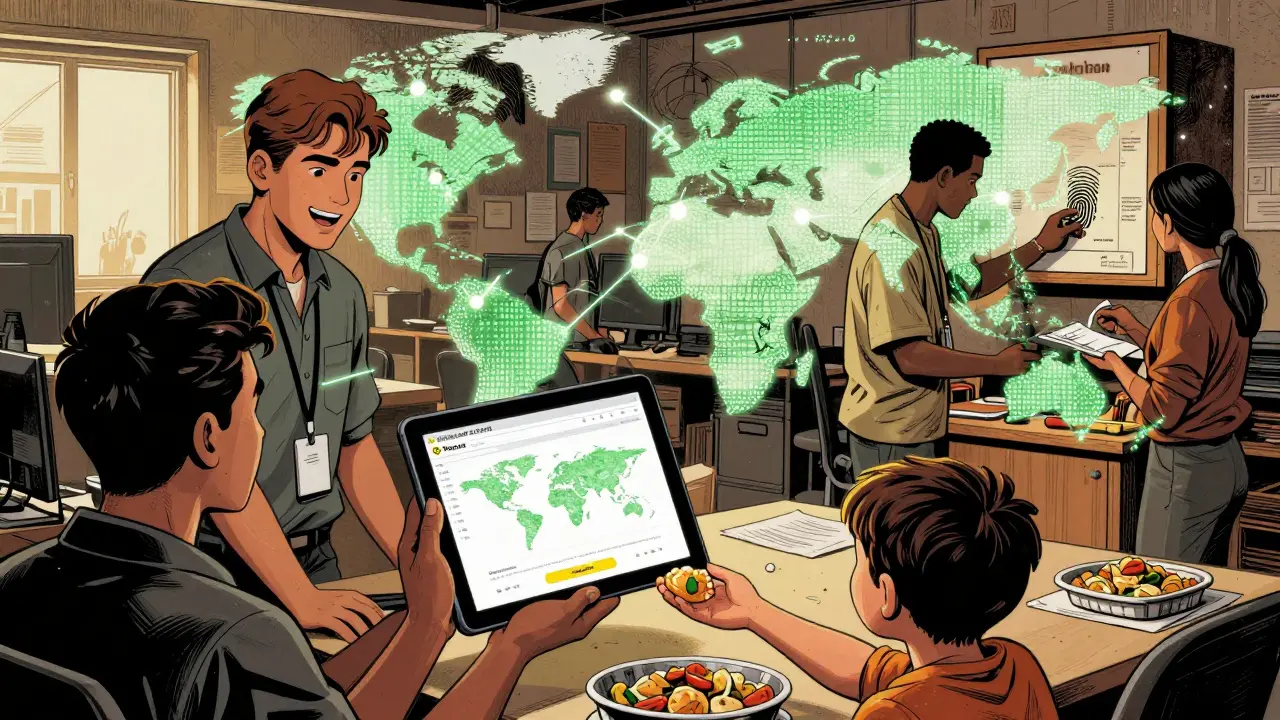
Take the World Food Program’s Building Blocks system in Jordan. Since 2018, over 100,000 refugees have received food assistance using blockchain. Each person scans a retina scan or fingerprint at a local store, and the system automatically deducts the cost of their meal from their digital wallet. The charity knows exactly how much was spent, where, and when. The donor? They can see the same data. No guesswork. No rumors. Just facts.
This isn’t just about tracking money. It’s about rebuilding trust. Traditional donation systems rely on annual reports filled with pie charts and vague percentages. Blockchain replaces those with live, verifiable records. Donors don’t have to take anyone’s word for it. They can check the blockchain themselves.
Top Blockchain Charity Platforms in 2026
Not all platforms are built the same. Some focus on ease of use. Others prioritize compliance. Here are the leading players making real impact right now:
- The Giving Block - The most widely adopted platform for nonprofits. It lets charities accept Bitcoin, Ethereum, and over 20 other cryptocurrencies. It integrates with existing donation systems like WordPress and Salesforce, and even generates automated tax receipts. It also connects nonprofits with crypto donors through curated campaigns and NFT-based fundraising.
- Every.org - Designed for nonprofits that don’t want to handle crypto directly. Donors give in Bitcoin or Ethereum, and Every.org instantly converts it to GBP (or USD) with zero fees for the charity. The platform covers all transaction costs. It’s especially popular among UK charities and donors who want anonymity.
- Engiven - Built for larger organizations and religious groups that need strict financial reporting. It supports multiple cryptocurrencies, auto-converts donations to fiat, and provides HMRC-compliant tax receipts for UK charities. It’s trusted by churches and hospitals managing six-figure crypto donations.
- BitGive - The pioneer. Founded in 2013, it was the first nonprofit to use blockchain for transparent giving. Its GiveTrack platform lets donors watch funds flow in real time. One of its most famous projects raised BTC 1.2 (about $15,000) to build water systems for a primary school in Kenya. Donors saw the project go from crowdfunding to completed infrastructure - with photos and GPS coordinates.
- Binance Charity - Backed by the world’s largest crypto exchange, this platform ensures 100% of donations reach beneficiaries. Binance covers all operational costs. It’s been used for disaster relief in Ukraine, earthquake response in Turkey, and clean water projects in Africa, helping over 1 million people since 2019.
- Alice Funding Platform - A different model. Instead of giving money upfront, Alice only pays charities when they hit measurable goals. If a nonprofit commits to vaccinating 500 children, they get paid only after proof is uploaded and verified on the blockchain. This results-based approach cuts down on fraud and forces accountability.
Why This Matters for Nonprofits
For charities, blockchain isn’t just a shiny new tool - it’s a lifeline. Traditional fundraising is expensive. Payment processors take 3-5% per transaction. International wire transfers cost hundreds of dollars and take days. Crypto donations? Often under 1% in fees, processed in minutes, no matter where the donor is.
Smart contracts automate the rest. Need to release funds only after a school opens? Set a rule. Need to trigger a payment when 1,000 meals are delivered? Code it. No staff needed to manually approve each step. That means less admin, more impact.
And then there’s reach. A donor in Tokyo can fund a clinic in Lagos without ever dealing with banks, exchange rates, or paperwork. In 2025, over 40% of crypto donations to nonprofits came from outside the U.S. - a number that’s growing every year. Blockchain removes borders.
Real Impact: Beyond the Numbers
It’s easy to talk about transparency. But real change shows in human stories.
In 2022, a small nonprofit in Nepal used BitGive to raise funds for solar-powered water pumps. Donors could see each pump being installed, with GPS coordinates and photos uploaded to the blockchain. One donor in Germany tracked his $200 donation all the way to a village where 80 families now had clean water. He didn’t just get a thank-you email - he got proof.
Another example: A church in Texas used The Giving Block to fund a mission trip to Guatemala. Instead of collecting cash envelopes, they accepted crypto. Within two weeks, they raised $18,000 from 127 donors across seven countries. The pastor said, “We didn’t have to chase donations. They came to us - because they could see where it was going.”
Even NFTs are making a difference. A nonprofit in Kenya sold digital art tied to real-world reforestation. Each NFT purchase funded the planting of a tree. Buyers didn’t just own a JPEG - they owned a piece of verified reforestation data, linked to GPS and satellite imagery.
Challenges and Misconceptions
Let’s be honest - blockchain isn’t magic. There are hurdles.
First, not all charities have the tech skills. Setting up a wallet or integrating with a platform can feel overwhelming. That’s why platforms like Every.org and The Giving Block offer white-glove onboarding. They handle the tech so nonprofits can focus on their mission.
Second, crypto volatility. If you accept Bitcoin and its value drops 20% before you convert it, that’s a real loss. That’s why most platforms auto-convert donations to fiat currency immediately. The charity gets stable dollars, euros, or pounds. The donor still gets the tax benefit. Everyone wins.
Third, regulation. The U.S. IRS treats crypto as property. The UK HMRC has specific rules for charities. But platforms like Engiven and Every.org are built for compliance. They handle reporting, receipts, and audits. You don’t need a blockchain expert on staff.
And yes - scams exist. But blockchain doesn’t enable fraud. It exposes it. A fake charity can’t fake blockchain records. If a donation never reached the project, the ledger shows it. That’s why legitimate charities are using blockchain to outshine the bad actors.

What’s Next? AI, NFTs, and the Future
The next wave is even bigger. Charities are now combining blockchain with AI to predict donation trends and personalize outreach. Imagine a donor who gave $50 last year - the system automatically suggests a matching campaign based on their giving history, all tracked on-chain.
NFTs are evolving too. Instead of selling digital art, charities are issuing “impact tokens.” Each token represents a verified outcome - like a child vaccinated or a well drilled. These can be traded, gifted, or held as proof of contribution. It turns giving into a community experience.
And supply chains? A charity sending food aid to Syria can now track every box from warehouse to distribution center using blockchain. No more lost shipments. No more stolen goods. Just proof.
By 2030, analysts predict over 30% of all nonprofit donations will flow through blockchain platforms. That’s not a guess - it’s the math. The market for blockchain charity tools hit $500 million in 2025 and is growing at 25% a year. Traditional platforms like GoFundMe and JustGiving now integrate crypto options. The shift isn’t coming. It’s here.
How Your Charity Can Start Today
You don’t need to be a tech giant to use blockchain. Here’s how to begin:
- Choose one platform to test - The Giving Block or Every.org are the easiest for beginners.
- Set up a crypto wallet (they handle this for you).
- Add a “Donate Crypto” button to your website. Most platforms provide the code.
- Tell your donors. Send an email: “You can now give Bitcoin - and see exactly where it goes.”
- Track the results. You’ll likely see higher average donations and more international support.
Start small. One campaign. One project. One blockchain record. Then watch how trust grows - not because you said it, but because the ledger showed it.
Can nonprofits really accept cryptocurrency without handling it themselves?
Yes. Platforms like Every.org and Engiven automatically convert crypto donations into fiat currency (USD, GBP, EUR) right after they’re received. The charity never touches Bitcoin or Ethereum - they just get clean, bank-ready money. This removes volatility risk and technical barriers.
Are blockchain donations tax-deductible?
Yes - in the U.S., U.K., Canada, and most developed countries. The IRS treats crypto donations as property. If you donate Bitcoin to a registered 501(c)(3), you can deduct its fair market value on your taxes, and you avoid capital gains tax. Platforms like The Giving Block and Engiven generate IRS-compliant tax receipts automatically.
Is blockchain charity only for large nonprofits?
No. In fact, small nonprofits benefit the most. The Giving Block has helped local animal shelters, church ministries, and grassroots education groups raise funds globally. Many platforms offer free or low-cost plans for organizations under $500K in annual revenue.
How is blockchain different from regular donation tracking?
Regular tracking relies on internal accounting systems - which can be edited or lost. Blockchain is public, immutable, and verifiable by anyone. Once a donation is recorded, it can’t be changed. Donors can independently verify fund flows using blockchain explorers like Etherscan or Blockchain.com - no permission needed.
Do donors need a crypto wallet to give?
Yes - but it’s easier than you think. Most platforms let donors give using a simple QR code or link. They don’t need to understand wallets or private keys. Many use apps like Coinbase or MetaMask, which guide them through the process in under 90 seconds.







Blockchain for charity? Bro. This isn't innovation. It's just accounting with a blockchain tattoo. I gave $50 to a vet rescue last month and they sent me a PDF. Now you want me to scan a QR code and pray to Satoshi that my donation didn't get stuck in a mempool? Give me a break.
But honestly? I love that someone finally made donating feel like a video game. I'm down to track my $20 like it's a rare NFT. #CryptoCharityGlowUp
I just want to say how much this gives me hope 🌱
My little sister volunteers at a food bank and she always says, 'People don't trust us because we can't show them where the money went.' This changes everything. Imagine a kid in Kenya seeing a donor from Japan say, 'I saw your pump get installed. Thank you.' That’s not tech. That’s connection.
Also, the Alice Funding Platform? Genius. Pay only when it works. No more 'we lost the funds' excuses. I’m telling my church about this tomorrow.
I think this is beautiful. Not because it’s new, but because it’s honest.
For so long, charities had to beg for trust. Now they can just show it. No begging. No guilt. Just a public ledger that says, 'Here’s what happened. You decide if it matters.'
I’ve donated to nonprofits for 15 years. I’ve never once felt like I knew where my money went. This feels like the first time someone listened.
Ah yes, the inevitable convergence of blockchain, virtue signaling, and naive optimism. How quaint.
Let me guess - the next step is NFTs for humanitarian aid? A JPEG of a water pump that 'proves' you helped? How very 2026.
Meanwhile, real nonprofits are still struggling with payroll, rent, and volunteers who show up late. But hey, at least we can now verify that your $3 donation went to 'a bucket' - which, according to the blockchain, was never actually used.
I just set up The Giving Block on my nonprofit’s site. We’re tiny - $80K/year.
First week: $1,200 in crypto. From Germany. Australia. Japan.
One donor sent 0.04 ETH and wrote, 'I watched the water pump get installed. I cried.'
We didn’t even ask for it. They just… showed up. And now we have proof.
It’s not about the tech. It’s about the trust.
Oh, so now we’re supposed to believe that 'immutable ledger' means 'no fraud'? Please.
Who’s verifying the GPS coordinates? Who’s confirming the 'photos' aren’t from a stock image bank in Manila?
Blockchain doesn’t fix human dishonesty - it just gives it a shiny new coat of digital paint.
And don’t get me started on 'impact tokens.' Next thing you know, we’ll be trading 'vaccinated children' like baseball cards.
Meanwhile, the IRS is still waiting for your Form 8283. Have fun with that.
In my country, we’ve seen how technology can help - or hurt.
When aid came through blockchain after the earthquake, it was faster. Cleaner. But some people didn’t have phones. Some didn’t trust the system.
This isn’t a global solution. It’s a privileged one.
I’m glad it works for some. But don’t call it 'the future' until it works for everyone.
ok so i just tried to donate crypto and my phone crashed and now i think i lost my wallet??
also why does everyone keep saying 'verify' like its a magic spell??
and i dont even know what a mempool is but i think i hate it??
also i gave $10 and now i feel like a genius 🤓💸
This whole thing is just a tax dodge.
People give crypto because they don’t want to pay capital gains. Then they take a deduction. Then they feel good.
Meanwhile, the charity gets $100 after fees. The donor claims $1,000.
And you call that transparency? Nah. That’s just clever accounting with extra steps.
The structural implications of this shift are profound.
By decoupling the transactional layer from the organizational layer, blockchain enables a new paradigm of fiduciary accountability.
Whereas traditional models rely on third-party audits, blockchain permits real-time, cryptographically verifiable provenance - thereby reducing agency costs and increasing donor autonomy.
Moreover, the automation of conditional disbursements via smart contracts represents a significant reduction in administrative overhead, allowing nonprofit personnel to reallocate labor toward mission-critical functions.
This is not merely a technological upgrade. It is a redefinition of trust architecture.
I just donated $50 to a school in Uganda using The Giving Block.
Watched the whole thing go from 'donated' to 'pump installed' in 3 days.
Got a video of the kids drinking water.
My phone blew up with notifications.
My wife said, 'You cried.'
I said, 'I didn't.'
She said, 'Yes you did. You cried on the couch.'
...I cried.
So yeah. This works.
I’ve been giving crypto for 3 years.
First time I saw a donation go from my wallet to a village in Nepal - I felt like I was in a sci-fi movie.
Now I give to three different causes.
One of them? A dog shelter in Detroit.
They sent me a photo of a pup I helped save.
And I can still see the transaction.
It’s not about the money.
It’s about the story.
And now I get to be part of it.
That’s magic.
America’s going to bankrupt itself with this crypto nonsense.
First it’s Bitcoin. Then it’s NFTs. Now we’re giving our charity dollars to some invisible blockchain ledger while the Chinese and Russians laugh at us.
Real Americans give cash. Real Americans trust their local pastor.
This isn’t progress. It’s a cult.