
Decentralized vs Centralized NFT Marketplaces: What Really Matters for Buyers and Sellers
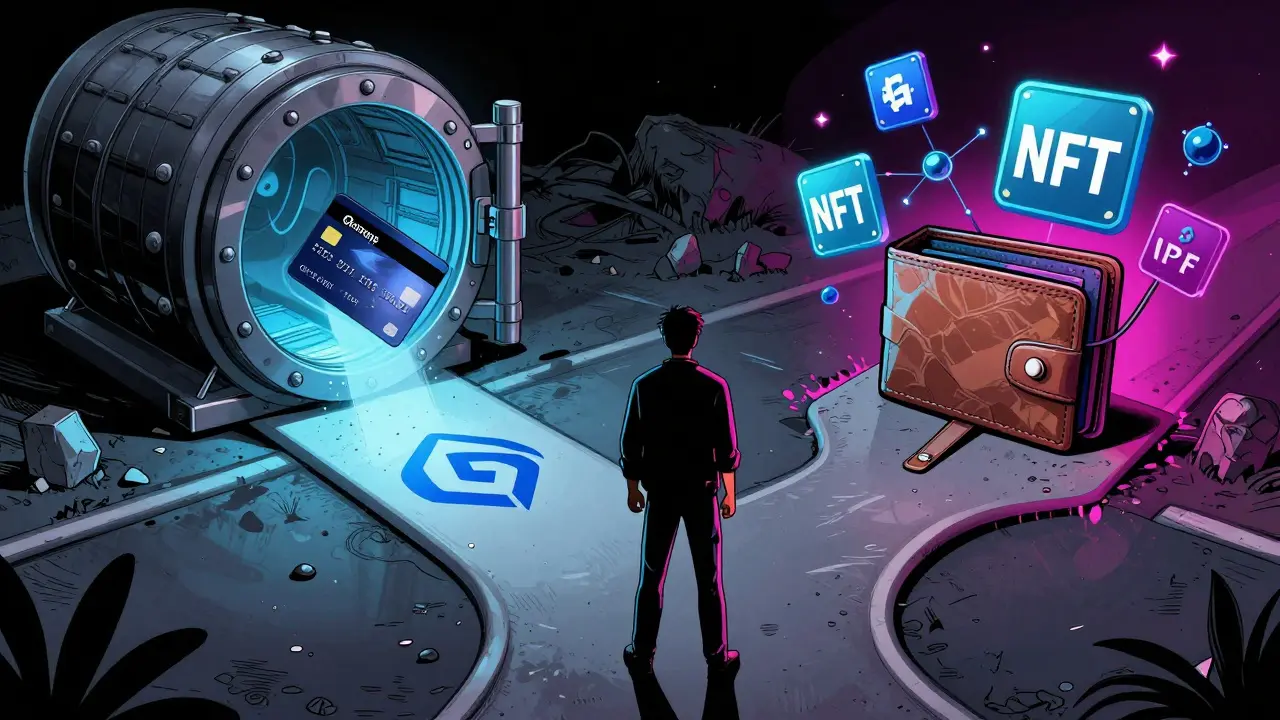
When you buy an NFT, where you buy it matters more than you think. It’s not just about the art or the collectible - it’s about who controls your asset, how much you pay, and whether you can even keep it long-term. Two very different systems dominate the space: centralized and decentralized NFT marketplaces. One feels like Amazon. The other feels like a peer-to-peer swap in a basement. Both work. But only one truly lets you own what you buy.
Centralized NFT Marketplaces: Easy, But Not Yours
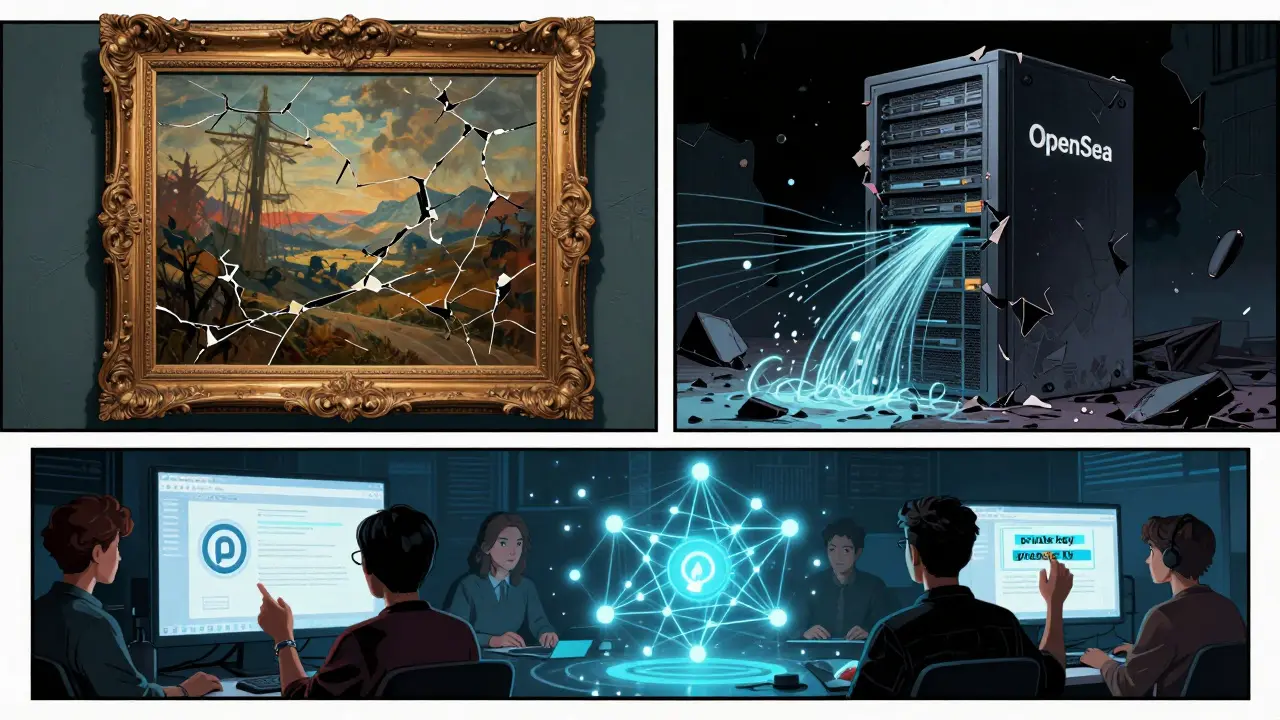
OpenSea, Coinbase NFT, and Blur are the giants. They handle everything: listings, payments, customer service, and even which NFTs stay on the platform. If you’ve ever bought an NFT with a credit card and didn’t need to touch a wallet, you’ve used a centralized system. These platforms are smooth. They look like eBay or Etsy. You sign up, link your wallet, and start browsing. No need to understand gas fees, slippage, or blockchain confirmations. That’s why OpenSea processed $22.73 billion in sales with 1.3 million buyers - most people just want to buy, not debug a blockchain. But here’s the catch: you don’t really own your NFT on these platforms. Your NFT lives on the blockchain, sure. But the image, description, and metadata? Those are stored on OpenSea’s servers. If they go down, or decide to censor your NFT - say, because it’s controversial - it disappears from the marketplace. The token still exists on the blockchain, but the art? Gone. That’s not ownership. That’s renting. And the fees? They’re high. Centralized marketplaces charge 2.5% to 5% per sale. That’s not just a transaction fee - it’s a tax on your digital asset. OpenSea takes a cut every time you resell. No matter how much work you put into building your collection, they pocket a slice.Decentralized NFT Marketplaces: Control, But Complexity
Decentralized marketplaces don’t have CEOs, servers, or customer support teams. They run on smart contracts - self-executing code on blockchains like Ethereum or Solana. Think of them like ATMs for NFTs: you insert your wallet, and the contract handles the trade automatically. Platforms like LooksRare, X2Y2, and Foundation (in its purest form) cut out the middleman. Fees? Often under 1%, sometimes as low as 0.5%. That’s because there’s no company taking a cut - just network fees paid to miners or validators. And since you’re trading directly with other users, your NFTs never leave your wallet. No third party holds your assets. No one can freeze your account. Privacy is another win. No KYC. No ID checks. No tracking. You show up with a wallet, and that’s it. This is how crypto was supposed to work: permissionless, anonymous, and unstoppable. But here’s the reality: it’s harder. You need to know what gas fees are. You need to understand slippage - how much the price can shift between when you click buy and when the transaction confirms. You need to manage your own private keys. Lose them? Your NFTs are gone forever. No “forgot password” button. No customer service rep to call. And liquidity? It’s thinner. On OpenSea, you’ll find thousands of buyers for a Bored Ape. On a decentralized platform, you might wait days for a single offer. Big sellers still rely on centralized platforms because they offer volume.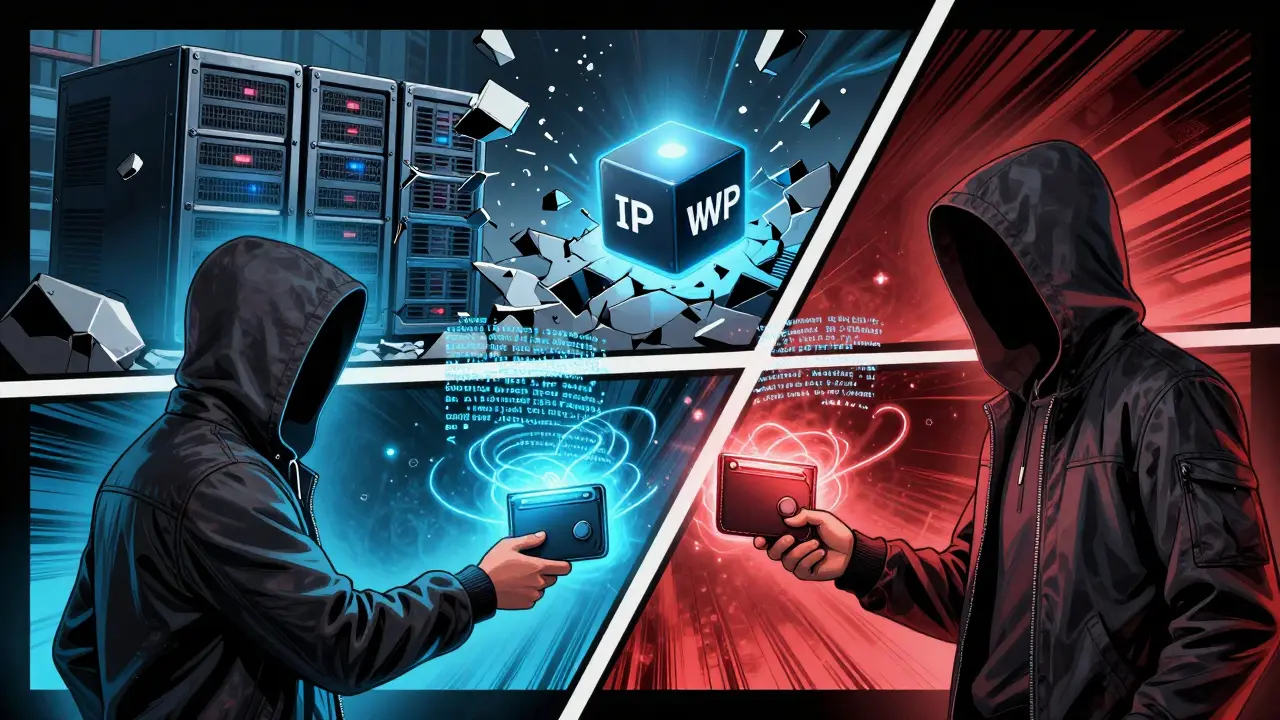
The Hidden Centralization: Metadata Is the Weak Link
Here’s the dirty secret: even if you’re trading on a decentralized marketplace, your NFT might still be centralized. Most NFTs point to a URL - likehttps://api.opensea.io/assets/12345 - to load the image, name, and description. That URL? It’s hosted on a company’s server. If that server shuts down, your NFT becomes a blank image. It’s like owning a painting with no frame - the canvas is real, but the art is gone.
A 2024 study found that over 70% of top-selling NFTs rely on centralized servers for their metadata. That means even if you buy on a “decentralized” platform, you’re still trusting a single company to keep your art alive.
The fix? IPFS (InterPlanetary File System). It’s a peer-to-peer storage network that spreads files across thousands of computers. If one node goes down, others still serve the data. Projects like Art Blocks and CryptoPunks are slowly moving to IPFS. But it’s not easy. You need technical know-how to upload and pin files. Most users don’t - so they stick with the easy option, even if it’s less secure.
Who Wins? Who Loses?
If you’re new to NFTs? Centralized platforms win. They’re simple. They’re safe. You can call support if something goes wrong. You get refunds, dispute resolution, and a familiar UI. For millions, that’s worth the fee and the loss of control. If you’re a serious collector, artist, or believer in crypto’s original vision? Decentralized is the only real choice. You want to own your asset without gatekeepers. You want to sell without paying 5% to a corporation. You want your art to survive even if OpenSea shuts down tomorrow. But here’s the twist: most decentralized platforms still rely on centralized tools. Their websites are hosted on traditional servers. Their mobile apps are built with centralized APIs. Their marketing is run by a team in San Francisco. True decentralization isn’t just about the blockchain - it’s about every part of the system.The Future: Hybrid Systems Are Taking Over
The smartest projects aren’t choosing sides anymore. They’re building hybrids. NFT collections like Bored Ape Yacht Club now let owners trade directly on decentralized marketplaces - but they also partner with OpenSea to reach casual buyers. The result? Artists get the low fees of decentralization. Buyers get the ease of OpenSea. Some projects are even launching their own white-label marketplaces. Think of it like a Shopify store for NFTs. The collection owner hosts the trading platform, keeps 100% of fees, and uses decentralized infrastructure. That’s the future: communities owning their own economies. And as storage improves - with IPFS becoming faster, cheaper, and easier - the metadata problem will fade. Soon, you’ll be able to mint an NFT, store its art on a distributed network, and trade it peer-to-peer - all without touching a centralized server. Until then, the choice is yours: convenience or control. You can’t have both.Can I lose my NFT if OpenSea shuts down?
Yes - but only partially. Your NFT token (the unique code on the blockchain) will still exist. But if the image, description, or metadata is hosted on OpenSea’s servers, those parts will disappear. Your NFT becomes a broken link. That’s why storing metadata on IPFS or similar decentralized systems is critical for true ownership.
Are decentralized marketplaces safer than centralized ones?
It depends. Decentralized platforms eliminate single points of failure - no hacker can take down the whole system. But they shift risk to you. If you lose your private key, or accidentally approve a malicious smart contract, there’s no recovery. Centralized platforms can be hacked (and have been), but they often offer account recovery and fraud protection. Your safety depends on your technical skill.
Why do decentralized marketplaces have lower fees?
Because there’s no company taking a cut. On OpenSea, 2.5%-5% goes to the platform as profit. On decentralized platforms, you only pay blockchain transaction fees (gas), which go to miners or validators - not a corporation. Some platforms charge a small fee (0.5%-1%) to fund development, but it’s still far less than centralized rivals.
Do I need a wallet to use a decentralized NFT marketplace?
Yes - and you must control it. You need a wallet like MetaMask, Phantom, or Rabby, and you must keep your private key or seed phrase safe. Unlike centralized platforms, there’s no email reset or password recovery. If you lose access, your NFTs are gone forever.
Is OpenSea really centralized?
Yes. OpenSea controls the platform, sets fees, moderates content, and hosts metadata on its own servers. Even though it connects to the Ethereum blockchain, the marketplace itself operates as a single company. That’s why it’s called a centralized marketplace - not because of the blockchain, but because of its structure.
Can I move my NFT from OpenSea to a decentralized marketplace?
Yes - and you should. Your NFT is already on the blockchain, so you can list it anywhere. Just connect your wallet to a decentralized platform like LooksRare or X2Y2, and transfer the listing. But remember: if the metadata is still hosted on OpenSea’s servers, your art might disappear if they go offline. Always check where your NFT’s image and data are stored.

So let me get this straight - you're telling me I paid $50k for a monkey JPEG, and the only thing keeping it alive is some guy in San Francisco not hitting the delete button? Cool. I'll just keep my money and buy a real painting. At least my Monet doesn't vanish when the CEO has a bad day.
opensea is a fedgov backdoor. they're storing ur nfts on servers that can be seized under executive order. they're already working with the irs to track every transaction. next thing u know, ur bored ape gets flagged as 'suspicious digital asset' and poof - gone. this is how they're building the digital id system. wake up sheeple.
The idea that decentralization is about 'ownership' is the most hilarious delusion in crypto. You don't own anything. You're just gambling on a codebase that could be forked, abandoned, or replaced by a better-looking monkey. And the people who scream 'IPFS!' are the same ones who still use Cloudflare for their dApp frontend. True decentralization? It doesn't exist. It's a marketing term for people who hate customer service.
Centralized platforms are the only rational choice. Why would anyone voluntarily take on the responsibility of managing private keys when a corporation can do it better? The myth of self-sovereignty is just bourgeois fantasy wrapped in blockchain jargon. Most users aren't technologists. They're people who want to enjoy art without becoming sysadmins.
The metadata issue is the real bottleneck. Even if you're trading on a decentralized exchange, if your image is hosted on AWS, you're still vulnerable. The real innovation isn't the marketplace - it's the storage layer. IPFS, Arweave, Filecoin - those are the unsung heroes. The rest is just trading mechanics.
America is the only place where people think owning a digital token is freedom. Meanwhile, the rest of the world just wants to buy art without the tech headache. Stop romanticizing chaos.
I've been in crypto since 2017, and I've watched this debate evolve. The truth is, most users don't care about decentralization. They care about whether their NFT shows up when they open the app. The hybrid model is the future - decentralized settlement, centralized UX. It's not betrayal. It's evolution. We didn't abandon cars because we invented electric engines. We improved them.
You think you own your NFT? Bro you're just a renter with a fancy wallet. The second you use OpenSea, you're signing away your digital rights. And don't even get me started on how they blacklist artists. That's not a marketplace. That's a dictatorship with a blockchain logo.
If you're new to NFTs, start with OpenSea. It's fine. But once you're comfortable, migrate your assets to IPFS-hosted collections. It's not hard - there are guides. And if you're an artist, always pin your metadata. It takes five minutes and saves your legacy. Small steps matter.
Decentralized marketplaces are for people who think 'gas fees' are a personality trait. Meanwhile, the rest of us just want to buy a digital Bored Ape without reading a 10-page whitepaper. The elitism here is exhausting. Not everyone wants to be a blockchain engineer.
I love how this post frames it as 'convenience vs control' - but the truth is, most people don't even realize they've given up control. That's the real tragedy. The system is designed so you never notice you're being locked in. Start checking where your NFTs' metadata lives. It's not optional. It's survival.
If you're an artist, host your metadata on IPFS. It's free. It's permanent. And if you're a collector, support projects that do this. Don't just buy - vote with your wallet. The future of digital art isn't in corporate servers. It's in distributed networks. We just need more people to care.
The whole 'decentralized ownership' thing is a scam. You think you're free? You're just a node in someone else's protocol. The real power isn't with the blockchain - it's with the devs who control the frontend, the API, the analytics, the marketing. The blockchain is just the ledger. The real control is still centralized. Always has been.
All this talk about 'ownership' ignores one thing: 99% of NFT buyers don't even know what a smart contract is. They're buying for hype. They're not collectors. They're gamblers. And the marketplaces know it. That's why they make it easy. Because dumb money is the only money that matters.
If you're just starting out, don't panic. Start with OpenSea. Learn. Then, when you're ready, move one NFT to an IPFS-hosted marketplace. See how it works. Don't let fear stop you from exploring. Crypto is still new. Everyone was confused at first. You're not behind. You're just learning.
Let's not forget - decentralization isn't just about tech. It's about power. Who gets to decide what art is valuable? Who gets to ban what? Centralized platforms answer to shareholders. Decentralized ones answer to code. And code? It doesn't have biases. It doesn't have a CEO who hates your politics. That's the real win.
The notion that users are 'free' on decentralized platforms is statistically absurd. The majority of users still rely on centralized wallets, centralized gateways, and centralized social media to even discover NFTs. True decentralization requires a complete stack. We're not even close.
They're all lying. OpenSea doesn't just host metadata - they're the ones who decided which NFTs get promoted, which get banned, which get 'verified'. They're the gatekeepers. And the 'decentralized' platforms? They're just rebranded. Look at their founders. Look at their VC backers. Look at their offices. The blockchain is just the front. The real power? Still in Silicon Valley. Always has been.