
CEX vs DEX: Geographic Crypto Restrictions Explained
Imagine you're in Wellington, trying to buy Bitcoin on a Friday afternoon. You open your favorite centralized exchange app, only to find a stark message: "Service unavailable in your region." Frustrating, right? Now imagine doing the same thing on a decentralized exchange (DEX). No ID check, no geo-block, just connect your wallet and trade. This isn't hypothetical-it's the daily reality for millions of crypto users worldwide. The core difference between Centralized Exchanges (CEX) and Decentralized Exchanges (DEX) often comes down to one critical factor: where you live.
While both platforms let you swap digital assets, their approach to geographic crypto restrictions is worlds apart. CEXs operate like traditional banks-they need licenses, they check your passport, and they block countries that don't fit their regulatory mold. DEXs, by contrast, run on code. They don't care about your nationality; they care about your private key. But is this freedom absolute? Not quite. As regulators catch up, the lines are blurring. Let's break down exactly how these restrictions work, why they exist, and what it means for your portfolio.
The Regulatory Anchor: Why CEXs Block Your Location
Centralized Exchanges are entities that hold custody of your funds. Because they control the money, governments can easily point a finger at them and say, "You must follow our rules." This makes them highly susceptible to geographic restrictions based on local financial laws. If a country bans crypto trading or imposes strict capital controls, the CEX will simply geofence its service, blocking IP addresses from that nation.
Think of Binance, Coinbase, or Kraken. These companies spend billions on compliance teams. They know exactly which jurisdictions allow spot trading but ban derivatives, or which require full Know Your Customer (KYC) verification before allowing fiat withdrawals. For example, if you reside in the United States, you cannot use the global version of Binance; you must use Binance.US, a separate entity with different tokens and lower liquidity. Similarly, China banned all crypto exchanges in 2021, forcing major players to shut down operations entirely in the region.
The mechanism is straightforward: IP address detection combined with document verification. When you sign up, you upload a passport or driver's license. The system checks this against a database of approved countries. If your residence doesn't match an allowed list, your account gets frozen or restricted. This creates a fragmented experience. A user in Singapore might have access to leverage trading, while a neighbor in Indonesia faces different limits due to varying national securities laws.
The Borderless Promise: How DEXs Bypass Geography
Now, look at Decentralized Exchanges. Platforms like Uniswap or PancakeSwap operate on smart contracts deployed on blockchains like Ethereum or BNB Chain. There is no company headquarters to sue, no bank account to freeze, and no CEO to subpoena. Technically, anyone with an internet connection and a compatible wallet can interact with these protocols.
This architecture removes the primary vector for geographic blocking: the intermediary. Since trades happen peer-to-peer via Automated Market Makers (AMMs), there is no central authority to verify your identity. You don't provide a name, address, or social security number. You simply connect MetaMask or Trust Wallet, approve the transaction, and swap tokens. For users in restrictive regimes-like Iran or Myanmar-this has been a lifeline, allowing access to global liquidity without exposing personal data to hostile governments.
However, calling DEXs completely "borderless" is a simplification. While the protocol itself is permissionless, the front-end websites often implement client-side restrictions. Many DEX interfaces detect your IP address and warn you that using the service may violate local laws. In some cases, they block access to the web interface entirely, though savvy users can still interact directly with the blockchain contract. Furthermore, stablecoins used on DEXs, such as USDC or USDT, are issued by centralized companies (Circle and Tether) that can blacklist specific addresses. So, while the swap engine is open, the fuel running through it can be regulated.
Fiat On-Ramps: The Choke Point for Both Sides
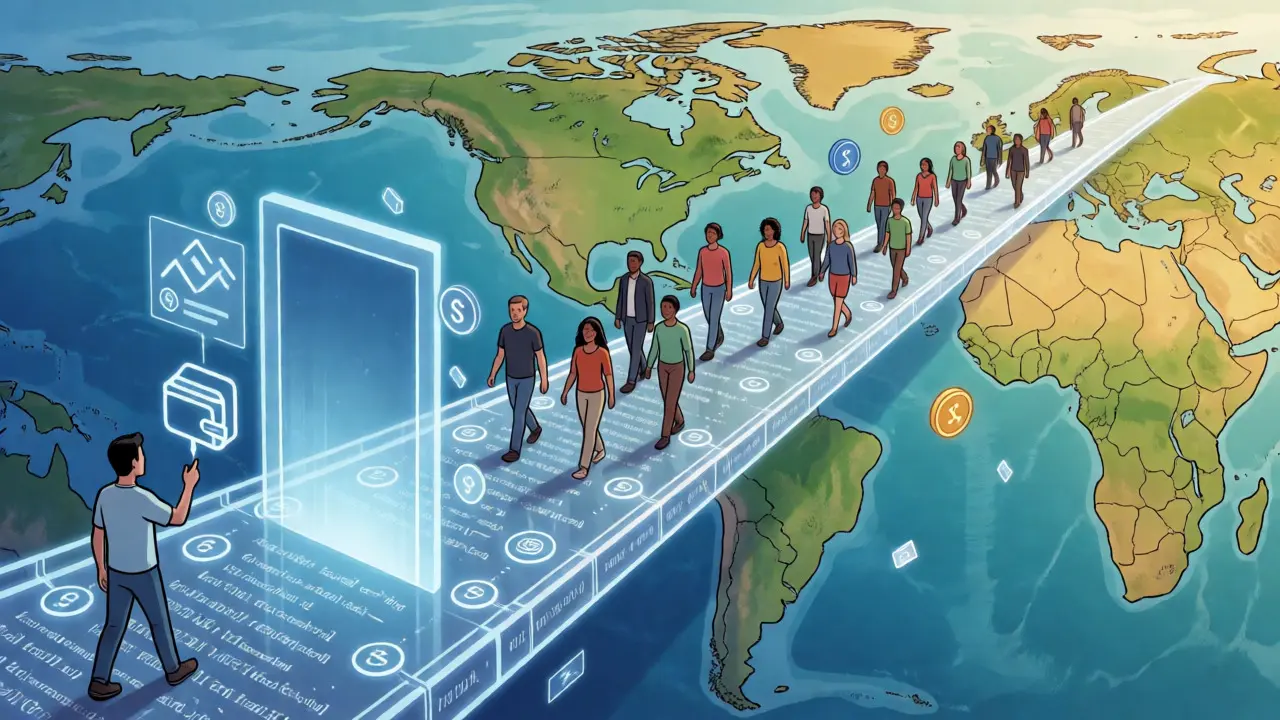
Here is where the distinction becomes practical rather than theoretical. Most people don't start with crypto; they start with cash. Getting that first dollar into the ecosystem is where geographic restrictions hit hardest for both CEXs and DEXs.
CEXs excel here because they have banking partnerships. They offer direct bank transfers, credit card purchases, and PayPal integrations. But these services are strictly bound by geography. A European user can deposit EUR via SEPA transfer instantly, while a user in Brazil might face high fees and delays due to local banking incompatibilities. If your local bank blocks crypto transactions, your CEX account becomes useless for new deposits.
DEXs generally do not support fiat currency directly. You must already own cryptocurrency to trade on them. This creates a two-step process: first, buy crypto on a CEX or P2P platform (subject to those same geographic rules), then bridge or withdraw it to a DEX-compatible wallet. For users in countries where banks are hostile to crypto, this initial step is the biggest hurdle. However, once you have ETH or SOL in your wallet, moving between DEXs is frictionless, regardless of where you physically stand.
Regulatory Evolution: Are DEXs Losing Their Anonymity?
For years, DEXs operated in a regulatory gray area. Regulators struggled to apply traditional securities laws to anonymous code. But that era is ending. The European Union’s Markets in Crypto-Assets (MiCA) regulation and recent actions by the US SEC are signaling a shift. Authorities are increasingly targeting the developers and governance token holders behind major DEXs, arguing that even decentralized platforms facilitate unregistered securities offerings.
We are also seeing technical adaptations. Some newer Layer 2 solutions and compliant DEX wrappers are beginning to integrate optional KYC modules. These allow users to prove their residency without giving up custody of their keys. It’s a compromise: keep your privacy, but show you aren’t from a sanctioned country. Additionally, sanctions screening tools are being integrated into DEX aggregators. If you try to swap tokens involving a blacklisted address, the interface might flag the risk, even if the blockchain allows the transaction.
Consider the case of Tornado Cash, a privacy mixer. While technically a protocol, its developers faced legal action in the US, leading many exchanges to delist its associated tokens. This sets a precedent: if a DEX facilitates trades for sanctioned entities, it could face pressure to implement front-end filters. The trend suggests that while the base layer remains open, the user experience is becoming more curated and geographically aware.

Security and Control: Who Holds the Keys?
Geographic restrictions also dictate who holds your assets during a crisis. With a CEX, if your country changes laws overnight, your funds might be locked in a custodial account. You cannot withdraw until compliance clears. This happened recently when several Asian nations tightened crypto regulations, causing temporary withdrawal freezes on major exchanges.
With a DEX, self-custody is king. If you hold your assets in a hardware wallet, no government can seize them without your physical device and seed phrase. This sovereignty is the primary reason many users prefer DEXs despite higher gas fees and complex UX. However, this autonomy comes with responsibility. If you lose your seed phrase, there is no customer support line to call. You are your own bank, regulator, and IT department.
| Feature | Centralized Exchange (CEX) | Decentralized Exchange (DEX) |
|---|---|---|
| Identity Verification | Mandatory KYC (Passport/ID) | Generally None (Wallet Connect) |
| Geo-Blocking Method | IP Address + Document Check | Frontend UI Filters (Optional) |
| Fiat Access | Direct Bank/Card Integration | Indirect (Requires prior crypto) |
| Asset Custody | Custodial (Exchange holds funds) | Non-Custodial (User holds keys) |
| Regulatory Risk | High (Direct target for fines) | Low (Protocol level hard to ban) |
Navigating the Landscape: Practical Tips for Users
So, how do you navigate this patchwork of rules? First, always check the Terms of Service for any CEX you plan to use. Look specifically for the "Eligible Jurisdictions" clause. It’s boring reading, but it saves headaches later. If you live in a country with ambiguous laws, assume the worst-case scenario: your account could be frozen.
Second, diversify your storage. Keep long-term holdings in a hardware wallet interacting with DEXs. Use CEXs only for active trading or fiat conversion. This hybrid approach minimizes exposure to sudden geographic bans. If a CEX blocks your region, your main stack remains safe in cold storage.
Third, stay updated on local news. Regulations change fast. What was legal in Vietnam last year might require a license today. Following local crypto associations or regulatory bodies gives you early warning signs. Remember, technology moves faster than law, but eventually, the law catches up. Being prepared means having a backup plan for accessing liquidity when borders close digitally.
Can I use a VPN to bypass CEX geographic restrictions?
Technically yes, but it’s risky. Most CEXs require KYC, linking your real identity to your account. If they detect inconsistent login locations or suspect VPN usage violates their Terms of Service, they can freeze your funds and demand additional proof of residence. It’s safer to use a CEX licensed in your actual jurisdiction.
Are DEXs completely free from geographic restrictions?
The underlying blockchain protocol is permissionless, meaning no one can stop you from sending a transaction. However, the website interface you use to interact with the DEX may block your IP address. Additionally, stablecoin issuers can blacklist addresses involved in sanctioned activities, effectively restricting the usability of certain assets on the DEX.
Why do some countries ban CEXs but allow DEXs?
Governments find it easier to regulate CEXs because they have physical offices, employees, and bank accounts. Banning a CEX involves shutting down a business. Banning a DEX is harder because it requires regulating every individual user or developer globally. Many countries focus enforcement on the entry points (CEXs) where fiat converts to crypto, leaving the secondary market (DEXs) less policed for now.
Do I pay taxes differently on CEX vs DEX?
Tax obligations depend on your country of residence, not the platform type. However, CEXs often provide detailed transaction history reports that simplify tax filing. DEX transactions require you to track every swap manually or use third-party analytics tools, which can be more challenging if you live in a jurisdiction with strict capital gains reporting requirements.
What happens if my country suddenly bans crypto?
If you use a CEX, your funds may be frozen pending liquidation or withdrawal windows. If you use a DEX and self-custody, your assets remain under your control. You can still send them to other wallets or sell them on international OTC desks, provided you can find a buyer willing to ignore local prohibitions.