How to Follow Whale Trading Strategies: A Practical Guide for 2026
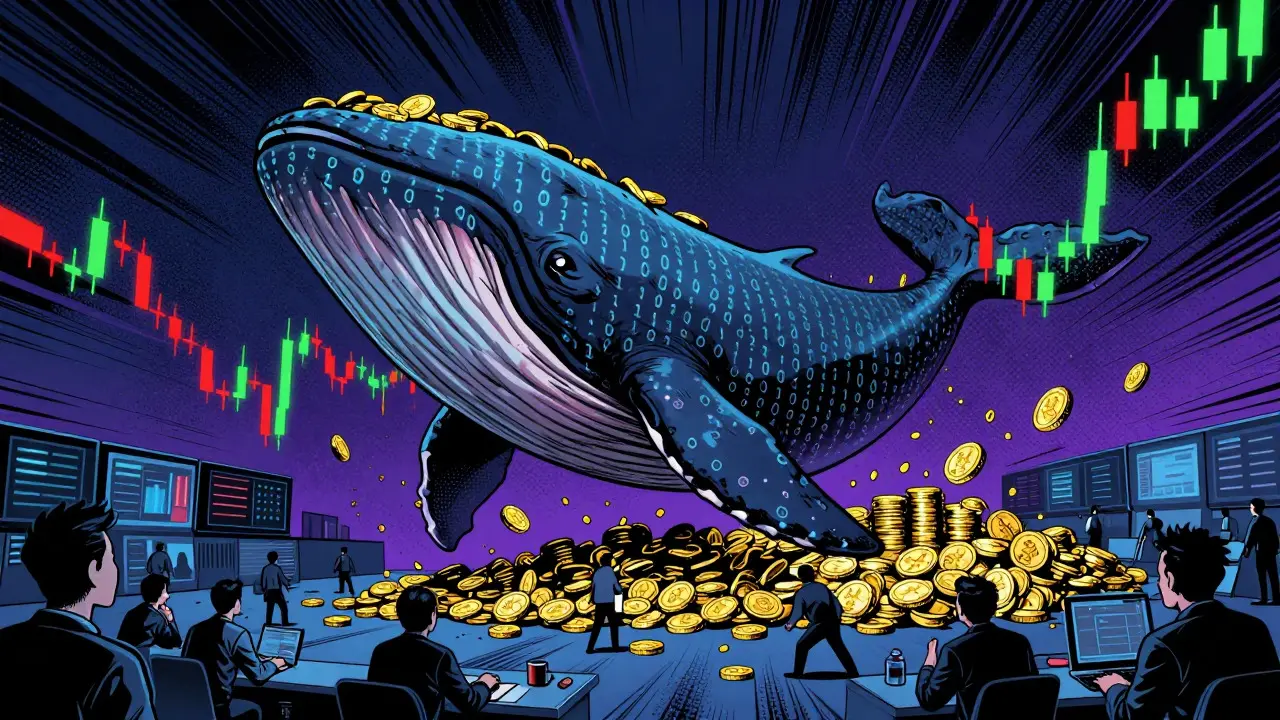
Have you ever watched a massive price spike happen out of nowhere, only to see it reverse just as quickly? You aren't imagining things. In the world of cryptocurrency and high-volume stock markets, these sudden moves are often orchestrated by "whales." These are large institutional traders or ultra-high-net-worth individuals who hold enough capital to shake the entire market. For years, retail traders felt like they were playing against a house that always won. But today, thanks to the transparency of blockchain technology, which records every transaction publicly, you can actually see what the big players are doing. Following whale trading strategies involves tracking these massive movements to anticipate price changes before the rest of the market reacts.
This isn't about guessing where the market is going; it's about reading the footprints left behind by those with millions or billions in assets. By understanding how whales operate, you can stop chasing green candles and start positioning yourself ahead of major trends. However, it’s not as simple as copying every large trade you see. Many of those trades are internal transfers or decoys. To succeed, you need to know how to filter noise from signal, use the right tools, and understand the psychology behind whale behavior.
What Defines a Crypto Whale?
Before you can follow them, you need to know who you're looking at. The term "whale" isn't an official financial designation, but the industry has settled on a practical definition. Generally, a wallet holding more than 1% of a specific cryptocurrency's circulating supply is considered a whale. For Bitcoin (BTC), this means holding over 210,000 BTC, though in practice, analysts often look at wallets holding anywhere from 1,000 BTC upwards as significant influencers.
Why does their size matter? Because of liquidity. When a regular trader buys $1,000 worth of Bitcoin, the price doesn't move. When a whale buys $10 million worth, they might eat up all the available sell orders at the current price, forcing the price up to fill their order. According to data from Coinbase, a single whale transaction exceeding 1,000 BTC can cause immediate price fluctuations of 2-5%. This creates a ripple effect that smaller traders can ride if they spot it early enough.
It's important to distinguish between different types of large holders. Some whales are long-term investors who buy and hold for years. Others are active traders who move money frequently to exploit short-term volatility. Your strategy will depend heavily on which type you are tracking. Long-term accumulation signals bullish sentiment for months, while rapid movement between exchanges often signals an imminent trade within hours or days.
The Mechanics of Whale Scoop Trading
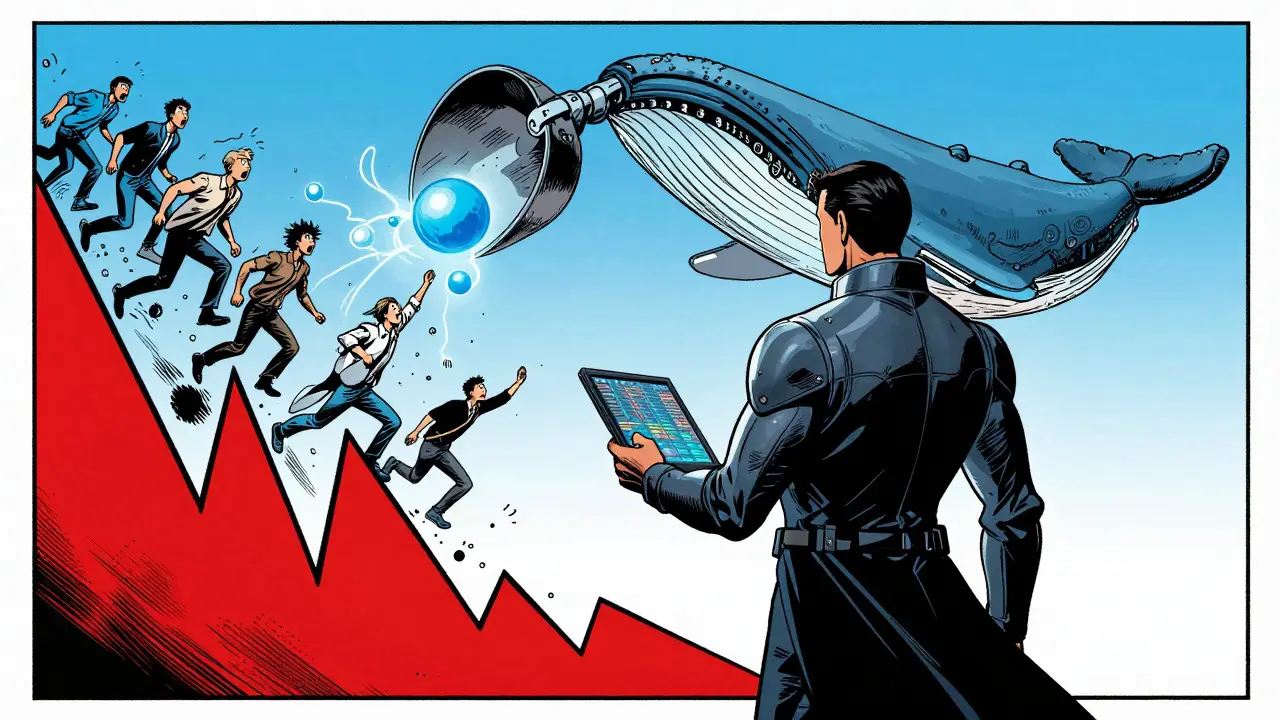
One of the most common-and dangerous-patterns you'll encounter is the "Whale Scoop." This strategy relies on exploiting the predictable behavior of retail traders. Here is how it typically plays out:
- Liquidity Sweep: Whales push the price down sharply below a key support level. This triggers the stop-loss orders of many retail traders who are long positions.
- Accumulation: As retail traders panic-sell, whales step in and buy up the cheap assets. They are scooping up the liquidity created by the panic.
- Reversal: Once they have accumulated enough volume, they let the price bounce back up, often reversing the trend within 30 to 60 minutes.
If you don't recognize this pattern, you get stopped out at the bottom, watching your position vanish just as the price rockets upward. Recognizing a scoop requires monitoring volume profiles and order book depth. You are looking for a sharp drop in price accompanied by unusually high volume, followed by a quick stabilization. If the price breaks support but fails to continue dropping despite high volume, it’s a classic sign that someone big is absorbing the selling pressure.
Essential Tools for Tracking Whale Activity
You can't track whales manually by scrolling through block explorers. It’s too slow and too much data. You need specialized tools that aggregate on-chain data and provide real-time alerts. Here are the primary platforms used by serious traders in 2026:
| Platform | Key Feature | Cost Model | Best For |
|---|---|---|---|
| Whale Alert | Real-time social media notifications for large transactions | Free / Pro ($29.99/mo) | Quick awareness of major moves |
| Glassnode | Deep on-chain analytics and exchange flow data | Premium subscription | Technical analysis and trend confirmation |
| Arkham Intelligence | Entity labeling and wallet clustering | Freemium / Enterprise | Identifying specific institutions or funds |
| Nansen | Smart Money labels and token flow tracking | $99+/month | DeFi and altcoin alpha hunting |
Most traders start with Whale Alert, which sends Telegram or Twitter notifications when large amounts of crypto move between wallets. However, free alerts can be noisy. A transfer from one exchange to another doesn't necessarily mean a trade is happening; it could just be rebalancing. Premium tools like Nansen and Arkham go further by labeling wallets. Instead of seeing a random string of characters, you might see "Binance Hot Wallet" or "Grayscale Bitcoin Trust." This context is crucial for interpreting intent.

Interpreting Intent: Not All Moves Are Trades
This is where most beginners lose money. Seeing a 5,000 BTC transfer doesn't automatically mean the price will go up or down. You must interpret the intent behind the move. Here are three scenarios to watch for:
- Exchange Inflow: When a whale sends coins to a centralized exchange (like Binance or Coinbase), it often signals an intent to sell. Why else would they give up custody of their keys? This is generally bearish.
- Exchange Outflow: When coins move from an exchange to a private wallet, it usually signals accumulation or long-term holding. This removes supply from the market and is generally bullish.
- OTC Transfers: Large institutions often trade Over-The-Counter (OTC) to avoid slippage. These transactions appear on the blockchain but don't impact the public order book immediately. About 42% of large transactions are OTC deals. If you see a huge transfer between two known institutional wallets, ignore it for short-term trading purposes.
To improve your accuracy, combine whale tracking with traditional technical analysis. If a whale accumulates Bitcoin while the price is bouncing off a strong Fibonacci retracement level, your confidence in a bullish move increases significantly. Relying on whale data alone can lead to false positives, especially if the whale is using multiple wallets to obscure their true holdings-a tactic known as "wallet fragmentation," which has increased by 45% year-over-year according to Arkham Intelligence.
Risk Management and Pitfalls
Following whales is powerful, but it carries unique risks. First, there is the information lag. Even with premium tools, you might receive an alert 2-5 minutes after the transaction occurs. In fast-moving markets, that delay can mean the difference between a profitable entry and buying the top. Second, whales can spoof. They may deliberately create patterns to trigger retail stop-losses or lure buyers into a trap. Dr. David Lifchitz noted that 30% of apparent whale accumulation in recent years was later revealed to be wash trading or misleading activity.
To protect yourself, never risk more than 1-2% of your capital on a single whale-following trade. Use stop-loss orders placed beyond typical liquidity pools-usually 1.5 to 2 times the Average True Range (ATR). Also, avoid trading during major news events, such as Federal Reserve announcements or regulatory updates, as whale behavior becomes unpredictable during high-volatility news cycles.
Finally, remember that correlation is not causation. Just because a whale bought doesn't mean the price will rise immediately. They might be dollar-cost averaging over weeks. Patience is key. Wait for confirmation, such as a break above resistance or sustained volume, before entering your position.
Is following whale trading strategies legal?
Yes, tracking public blockchain data is completely legal. Since blockchains are public ledgers, anyone can view transactions. However, using this data to manipulate the market (spoofing) is illegal. Retail traders simply observing and reacting to public data face no regulatory restrictions, though platforms providing this data must comply with surveillance rules.
Which cryptocurrencies are best for whale tracking?
Bitcoin (BTC) and Ethereum (ETH) are the best options due to their high liquidity and transparent on-chain data. Smaller altcoins can be risky because a single whale transaction can represent 10-20% of daily volume, causing extreme volatility and slippage that makes entering and exiting trades difficult.
How do I distinguish between a whale trade and an internal transfer?
Use labeled wallet tools like Arkham Intelligence or Nansen. If both the sender and receiver are identified as the same entity (e.g., Binance moving funds between its own cold and hot wallets), it is likely an internal transfer. Look for transfers between distinct entities or from unknown wallets to exchanges for genuine market-moving potential.
Can whales hide their activities?
Yes, whales increasingly use "wallet fragmentation," spreading their holdings across dozens of addresses to avoid detection. They also use privacy coins or mixers. While harder to track, sophisticated tools now use machine learning to cluster these fragmented wallets, improving detection rates.
What is the "Whale Scoop" strategy?
The Whale Scoop is a tactic where whales push prices down to trigger retail stop-loss orders, accumulating cheap assets before reversing the price upward. Traders identify this by watching for sharp dips with high volume that fail to break lower, indicating absorption by large buyers.