
Crypto Wealth Tax in Switzerland: A Complete Guide for Investors
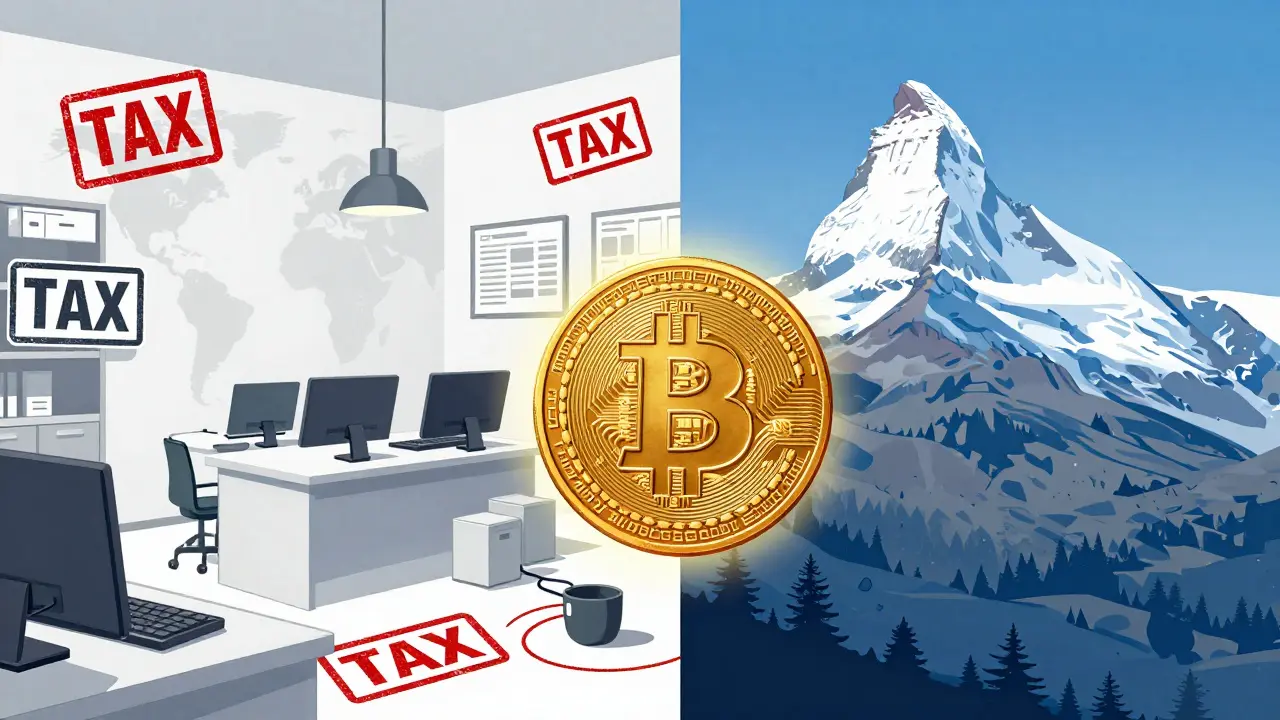
Most countries treat cryptocurrency like a gamble or a business venture, slapping heavy taxes on your profits the moment you sell. Switzerland does things differently. Instead of focusing solely on what you make, the Swiss system looks at what you have. This means that while you might not pay a dime in capital gains tax, you'll still need to account for your digital holdings in your yearly wealth statement. If you're moving to Switzerland or already living there, understanding the distinction between wealth tax and income tax is the key to keeping your portfolio healthy.
The Basics of Swiss Crypto Wealth Tax
In Switzerland, Cryptocurrency is classified as crypto-based assets (kryptobasierte vermögenswerte). The Swiss Federal Tax Administration (FTA) doesn't view Bitcoin or Ethereum as legal tender, but rather as private wealth assets, similar to how they treat stocks or bonds.
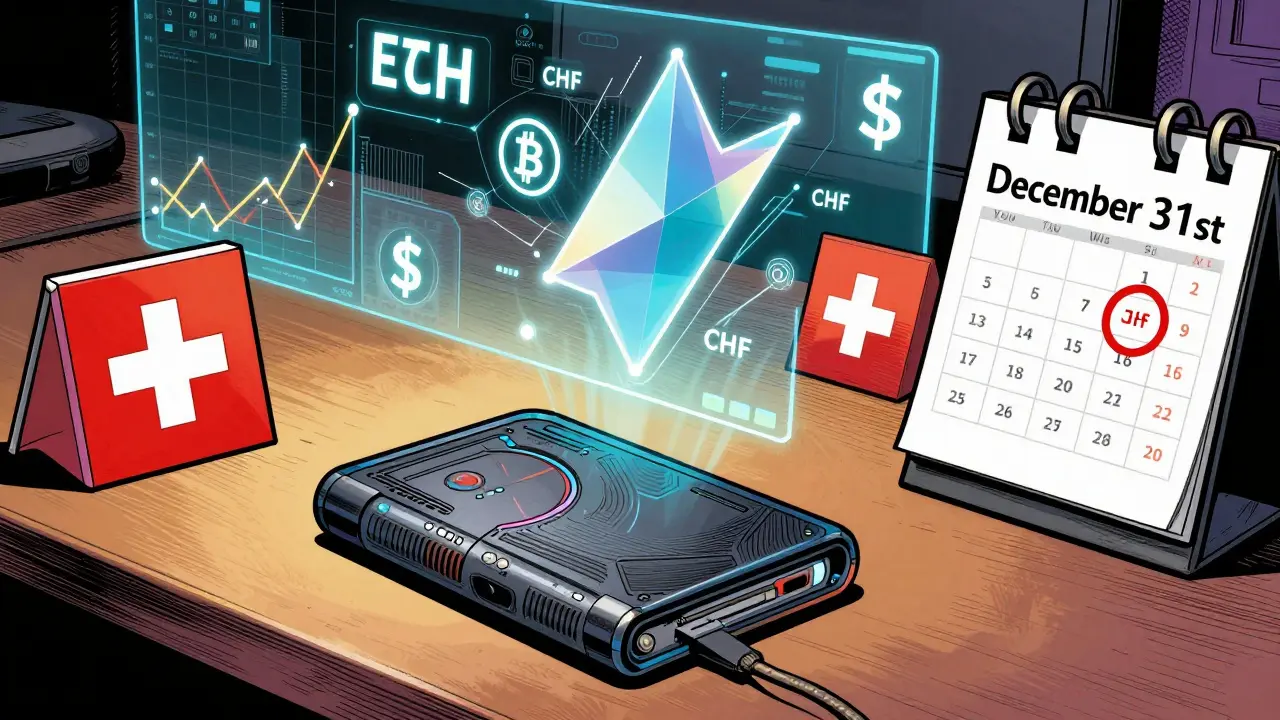
Because these are considered assets, they fall under the Switzerland wealth tax crypto umbrella. This is a recurring tax based on the total value of your global assets as of December 31st each year. You don't pay this tax because you made a profit; you pay it simply because you own the asset. The rates aren't uniform across the country. Since Switzerland is divided into 26 cantons, your specific tax burden depends on where you reside. Most cantons charge between 0.3% and 1% annually on your total declared wealth.
| Tax Type | Applies To | Typical Rate/Treatment |
|---|---|---|
| Wealth Tax | Total value of holdings on Dec 31 | 0.3% to 1% (varies by Canton) |
| Capital Gains Tax | Private individual profits | 0% (Exempt) |
| Income Tax | Professional traders/Mining income | Standard progressive rates |
How to Value Your Crypto for the FTA
When December 31st rolls around, you can't just pick a random price from a random exchange. The Swiss Federal Tax Administration provides official year-end conversion rates for the "big players" like Bitcoin, Ethereum, Ripple, Bitcoin Cash, and Litecoin. If you hold these, you must use the FTA's specific rate to convert your holdings into Swiss francs.
But what happens if you're holding a niche altcoin or a new DeFi token that isn't on the official list? You have two options:
- Platform Price: Use the year-end price provided by the trading platform where you bought or sell the asset.
- Acquisition Cost: If no current market value can be reliably determined, you declare the asset at the original price you paid for it in Swiss francs.
The administrative side can be a headache. Many investors find that tracking dozens of small tokens across multiple wallets requires meticulous record-keeping. If you're using a hardware wallet or a DEX, you'll need to manually document the prices to avoid red flags during an audit.
Private Investor vs. Professional Trader
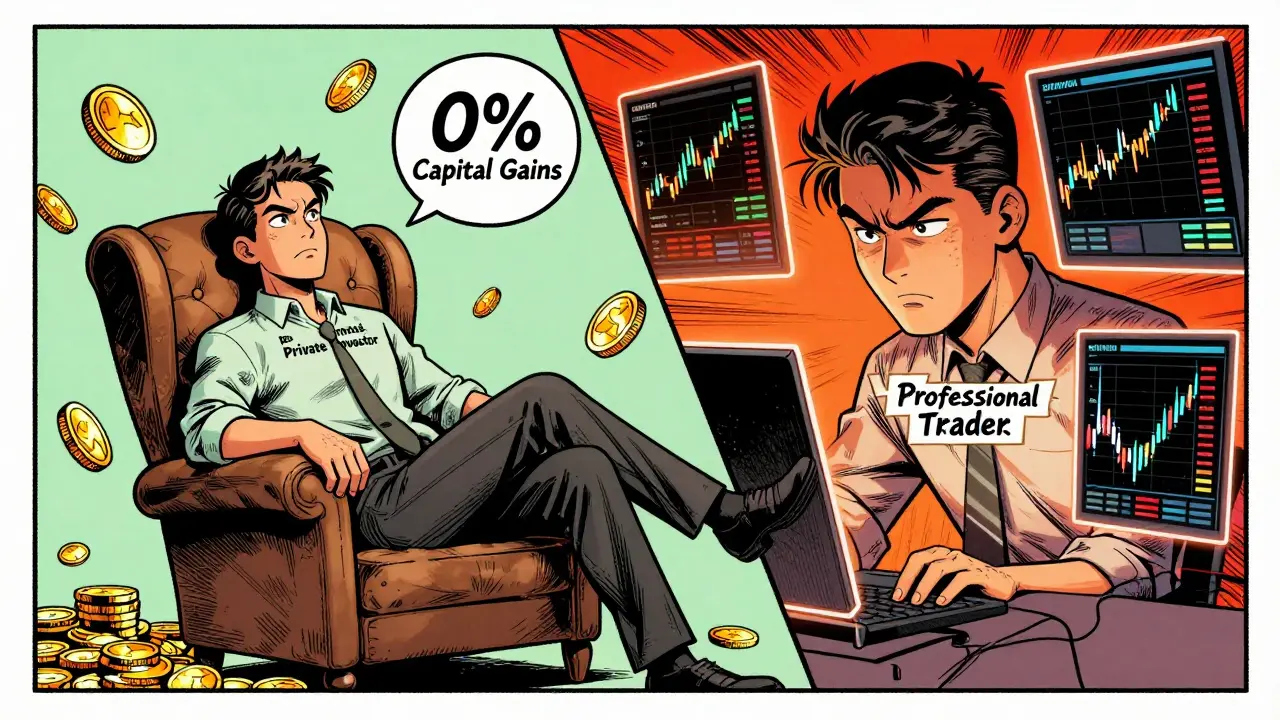
This is where Switzerland becomes a paradise for most crypto holders. There is a massive difference between being a "private investor" and a "professional securities trader." For the vast majority of people, holding crypto is a private wealth activity. This means you are 100% exempt from capital gains tax on your investments. You could turn 1 BTC into 10 BTC, and you wouldn't owe the government a penny in profit tax.
However, the FTA isn't fooled by labels. If your activity looks like a business, they'll tax you like one. Under FTA Circular No. 36, you might be classified as a professional trader if you meet certain criteria, such as high trading frequency, using leverage/margin, or spending a significant portion of your professional time trading. In this case, your gains are treated as income and taxed at federal, cantonal, and municipal rates, which can be significantly higher.
Understanding Token Classifications
Not all tokens are created equal in the eyes of FINMA (the Swiss Financial Market Supervisory Authority). The way a token is classified changes its regulatory-and sometimes tax-profile. The DLT Act, which launched in 2021, provided the legal backbone for this system.
- Payment Tokens: These are used as a means of payment (like Bitcoin). They are the most straightforward: include them in your wealth tax, but enjoy the capital gains exemption as a private investor.
- Utility Tokens: These provide access to a digital service. Their treatment can vary depending on whether they act more like a payment method or a security.
- Asset Tokens: These represent ownership of an underlying asset (like digital shares). These are generally treated similarly to traditional securities.
If you're into Staking or Mining, be careful. While holding the coin is about wealth, the act of earning new coins through mining is usually seen as taxable business income. The rewards you earn are added to your yearly income, even if you don't sell them immediately.
Strategies for Minimizing the Tax Burden
While you can't avoid the wealth tax entirely if you live in Switzerland, there are legal ways to manage the impact. The most common strategy is domicile selection. Because each canton sets its own rates, moving from a high-tax canton to a lower-tax one can save you thousands of francs if you have a large portfolio.
Other investors look into family structuring or timing their asset disposals. Since the wealth tax is a snapshot of your holdings on December 31st, some people optimize their liquid assets or shift them into different categories before the year ends. However, always consult a local tax expert; Swiss authorities are pragmatic, but they value strict compliance.
Do I pay tax when I sell my Bitcoin in Switzerland?
If you are a private investor, the answer is generally no. Switzerland does not charge capital gains tax on private wealth assets. You only pay the annual wealth tax based on the value of the Bitcoin you hold at the end of the year.
What is the wealth tax rate for crypto?
The rate varies by canton, typically ranging from 0.3% to 1% of your total global wealth, including your cryptocurrency holdings, as of December 31st.
How do I value an altcoin that isn't listed by the FTA?
You should use the year-end price from the trading platform where you trade the asset. If no market price is available, use the original purchase price (cost of acquisition) in Swiss francs.
Is crypto mining taxed differently?
Yes. While holding the coins is subject to wealth tax, the actual activity of mining is considered taxable business income, meaning the coins produced are taxed as part of your annual income.
Could I be classified as a professional trader?
Yes, if you trade frequently, use high leverage, or treat trading as your primary profession according to FTA Circular No. 36. Professional traders must pay income tax on their capital gains.
Next Steps for Crypto Holders
If you're currently holding digital assets in Switzerland, your first priority should be data organization. Start a spreadsheet or use a tax software that can export CSVs from your exchanges. Ensure you have a record of every acquisition price and the specific exchange used.
Next, check your current canton's wealth tax bracket. If your portfolio has grown significantly, it might be worth researching the tax laws in other cantons to see if a move makes financial sense. Finally, if you're engaging in complex DeFi activities or high-volume trading, get a professional review to ensure you aren't accidentally crossing the line into "professional trader" territory, which would strip away your capital gains exemption.






This is just basic stuff, basically a glorified brochure for Switzerland.
Oh sure, because paying a percentage of your total wealth every year is just a "small burden." Totally fair lol.
The whole DLT act is just a front for the globalist elite to track every single satoshi we move... its all a trap to bring in the CBDC surveillance state via the back door!!
Typical. They tell you it's a paradise, but they still want a cut of your holdings even if the market crashes. It's a wealth tax, meaning they tax you on money you might not even have if the coins go to zero.
Very clear summary!! Moving to Zug seems like the best play here...
I've been thinkin about how this kinda reflects the way we view ownership in the modern age, like how the Swiss are basically just acknowledgin the existance of the digital asset rather than the act of profiting from it, which is kinda deep if you really dwell on it because it shifts the focus from the gamble to the state of being wealthy in a virtual space and i feel like people dont realize how much that changs the psycholgy of investing long term when you aren't scared of a capital gains hit but just chillin with a small annual fee for the privilege of livin in a nice place.
I really think the point about the professional trader classification is the most critical part of this whole discussion because many of us are just trying to make a living and might inadvertently trigger that FTA Circular No. 36 without even realizing we've crossed the threshold into a business entity. It's absolutely vital to keep a meticulous log of your trade frequency and the amount of leverage you're using, as the difference between a 0% capital gains tax and a progressive income tax is literally the difference between keeping your life savings and handing a huge chunk of it back to the state just because you were too active on the exchanges.
Keep in mind that if you are using DeFi protocols, the 'acquisition cost' rule for unlisted tokens can be a lifesaver, but you have to be absolutely honest about your entry price or you'll face a nightmare during a Swiss audit.
Absolute goldmine of info! If you're not optimizing your canton, you're literally throwing money into a shredder, people! Get moving and get those gains secured in the right zip code!
Wealth tax is still bad.
It's great to see such a clear breakdown. For anyone feeling overwhelmed by the record-keeping, just start small with a simple CSV export; you'll get the hang of it!
One must consider that the pursuit of tax avoidance is a spiritual vacuum 🧘♂️. While the Swiss system is logically structured, the greed associated with "minimizing burdens" often outweighs the virtue of contributing to a stable society. It is an ethical imperative to declare all assets with utmost honesty. 🌌
The author correctly identifies the legal framework, yet fails to mention the moral bankruptcy of those seeking to "optimize" their domicile merely to avoid a fraction of a percent in taxes. It is quite distasteful to treat a nation's infrastructure as a menu of options based on the lowest price.
Oh please, as if anyone actually cares about the moral implications of a wealth tax in Switzerland! I'll move to whatever canton lets me keep my coins without the government breathing down my neck!
It is simply appalling that one must navigate such a labyrinthine system of cantonal variations to ensure financial solvency! The sheer audacity of the FTA to classify a private hobby as a professional venture is an absolute travesty!
Just a heads up for everyone, the December 31st snapshot is really the only date that matters, so don't stress too much about the fluctuations during the year.
Man, this is such a win for the crypto community! Just imagine the freedom of having 0% capital gains tax. It really opens up a lot of possibilities for long-term holders!
Very helpful guide. Simple and clean.
Switzerland's vibe is just different. Low key but efficient.
Wait, if the FTA provides rates for the 'big players,' does that mean they have a specific methodology for the exchange rate used or are they just pulling from a specific aggregator like CoinGecko?
This is the energy we need! 🚀 Turning the complex world of Swiss taxes into something we can actually use to grow our portfolios is just genius. Let's all just focus on the goal and get that financial freedom! ✨
The absolute agony of tracking niche altcoins on a spreadsheet is enough to make anyone lose their mind! I can practically feel the stress of an FTA audit just thinking about the manual documentation required for a few DeFi tokens!
Everyone needs to realize that professional advice isn't optional if you're doing high-volume trading. Don't gamble with your residency status just to save a few francs.
It's honestly so wonderful that there's a path for private investors to keep their profits. I think it encourages people to be more mindful of their investments and hold for the long term instead of panic selling every time the market dips, which is a great way to approach wealth building in general if you just stay positive and keep a broad perspective on the global economy and how these different countries are adapting to the digital age!
They probably just want you to use the FTA rates so they can cross-reference your wallets with their own data... it's a honey pot for the tax man to see who's actually hiding millions in cold storage while claiming to be a "private investor."