
How Liquidity Mining Rewards Work: A Simple Guide to Earning in DeFi
Imagine lending your money to a bank and getting interest. Now imagine doing that on the internet, without a bank, and getting paid in cryptocurrency instead of dollars. That is the basic idea behind liquidity mining, a mechanism where users are rewarded for providing funds to decentralized finance (DeFi) protocols. It sounds too good to be true, and for some people, it has been. But for others, it remains one of the most effective ways to earn passive income in the crypto world. Understanding how these rewards work is not just about making money; it is about understanding the engine that keeps decentralized exchanges running.
The concept exploded during the "DeFi Summer" of 2020, when projects like Uniswap started handing out governance tokens to anyone who provided liquidity. Since then, the landscape has changed dramatically. What was once a wild west of high-risk, high-reward schemes has evolved into a more structured, though still complex, financial system. Today, we will break down exactly how liquidity mining works, what you actually get paid, and the hidden risks that could wipe out your profits if you are not careful.
The Core Mechanism: How Liquidity Pools Function
To understand liquidity mining, you first need to understand the pool itself. Traditional stock markets use an order book, where buyers and sellers match their orders. Decentralized exchanges (DEXs) like Uniswap or SushiSwap do not use order books. Instead, they use automated market makers (AMMs). An AMM relies on liquidity pools-smart contracts that hold pairs of cryptocurrencies, such as ETH and USDC.
When you want to trade ETH for USDC on these platforms, you are not trading with another person. You are trading against the pool. For this to work smoothly, the pool needs enough money in it. This is where you come in. By depositing equal values of both assets (for example, $1,000 worth of ETH and $1,000 worth of USDC), you become a liquidity provider (LP). In return, you receive LP tokens, which act as a receipt proving your share of the pool. These tokens allow you to withdraw your original assets plus any earned fees later.
Liquidity mining takes this a step further. Simply holding LP tokens earns you a cut of the trading fees generated by the pool. However, liquidity mining adds a second layer of reward. Protocols incentivize you to lock up those LP tokens in a "farm" or staking contract. In exchange for locking your liquidity, the protocol pays you additional rewards, usually in its own native token. This dual-income stream-trading fees plus protocol tokens-is what makes liquidity mining so attractive.
The Two Types of Rewards You Earn
It is crucial to distinguish between the two sources of income in liquidity mining, as they behave very differently.
- Trading Fees: Every time someone trades against the pool you funded, a small fee is charged (typically 0.3% on standard pools). This fee is distributed proportionally to all liquidity providers. If you provide 1% of the total liquidity in a pool, you earn 1% of the trading fees generated. This is real revenue generated from actual usage of the platform.
- Protocol Token Rewards: This is the "mining" part. The project issues new tokens and distributes them to those who stake their LP tokens. For example, if you stake your ETH/USDC LP tokens in a SushiSwap farm, you might earn SUSHI tokens. These rewards are often much higher than trading fees initially, but they represent inflationary pressure on the token price.
The combination of these two can result in annual percentage yields (APYs) that range from 5% to over 100%, depending on the volatility of the assets and the generosity of the protocol. However, high APYs are never free. They come with significant risks that we will explore next.
The Hidden Cost: Impermanent Loss Explained
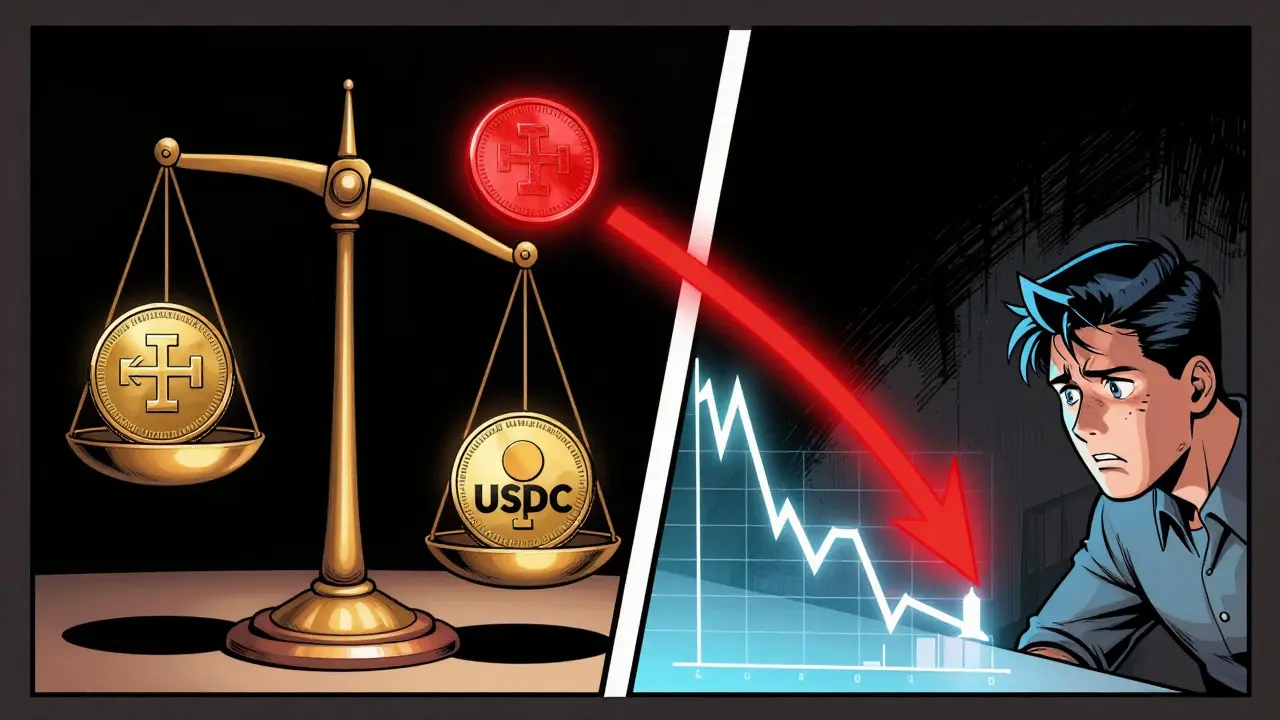
If liquidity mining were risk-free, everyone would do it. The biggest risk is called impermanent loss. This term sounds scary, but it is simply a mathematical reality of how AMMs work. Impermanent loss occurs when the price of your deposited tokens changes compared to when you deposited them.
Let us look at a concrete example. Suppose you deposit $1,000 worth of ETH and $1,000 worth of USDC into a pool. At that moment, ETH is priced at $2,000. So, you have 0.5 ETH and 1,000 USDC. Now, imagine the price of ETH doubles to $4,000. Because the AMM must maintain a constant product formula (x * y = k), the pool automatically sells some of your ETH for USDC to balance the ratio. When you go to withdraw, you will have less ETH than you would have had if you just held it in your wallet, and more USDC. While you made money from trading fees and rewards, the value of your principal investment may be lower than simply holding the assets separately.
This loss is "impermanent" only if the price returns to its original level. If the price continues to move away, the loss becomes permanent. Stablecoin pairs (like USDC/DAI) have minimal impermanent loss because their prices stay relatively fixed. Volatile pairs (like ETH/BTC or ETH/Altcoin) carry much higher risk. Always calculate potential impermanent loss before entering a pool.
Mercenary Capital and Token Sustainability
Another major issue in liquidity mining is what experts call "mercenary capital." This refers to liquidity providers who chase the highest yields, moving their funds from one protocol to another as soon as better rewards appear. This creates instability for protocols. When rewards stop or decrease, mercenaries leave, draining the pool and causing slippage for traders.
Protocols struggle to design sustainable reward systems. Early models distributed fixed amounts of tokens regardless of actual value provided. More sophisticated models, like those used by Curve Finance, use vote-escrowed tokens (veCRV). In this model, users lock CRV tokens for long periods to gain voting power and boosted rewards. This aligns incentives, encouraging long-term commitment rather than quick flips. Multicoin Capital’s analysis suggests that future successful protocols will tie rewards directly to fees paid, ensuring that emissions are justified by actual economic activity.
| Strategy Type | Risk Level | Potential Reward | Best For |
|---|---|---|---|
| Stablecoin Pairs (e.g., USDC/DAI) | Low | Low to Moderate | Conservative investors seeking steady income |
| BTC/ETH Pairs | Medium | Moderate | Investors bullish on major crypto assets |
| Volatile Altcoin Pairs | High | Very High | Aggressive traders comfortable with high impermanent loss |
| Concentrated Liquidity (Uniswap V3) | Variable | High (if managed well) | Active managers who can monitor price ranges |
Gas Fees and Network Costs
One practical hurdle many beginners face is gas fees. On networks like Ethereum, every transaction costs money. Depositing, withdrawing, and claiming rewards all require gas. During periods of high network congestion, a single transaction can cost $50 or more. If you are earning $10 a week in rewards, paying $50 in gas to claim them destroys your profitability.
This has led to the rise of Layer 2 solutions like Polygon and Arbitrum, as well as alternative chains like BNB Chain. These networks offer much lower transaction costs, making smaller positions economically viable. When choosing where to mine liquidity, always consider the network efficiency. A 100% APY on Ethereum might be worse than a 20% APY on Polygon after accounting for gas costs.
Smart Contract Risks and Security
Beyond market risks, there is the risk of code failure. Liquidity mining involves interacting with smart contracts. If a contract has a bug or is exploited by hackers, your funds can be drained. While major protocols undergo rigorous audits, no system is 100% secure. History is full of examples where seemingly safe farms turned out to be scams or suffered critical vulnerabilities.
To mitigate this, stick to established, audited protocols. Check if the project has a history of transparency and active development. Never invest more than you can afford to lose. Use hardware wallets for signing transactions to protect against phishing attacks. Remember, in DeFi, you are your own bank, which means you are also your own security team.
Getting Started: A Practical Checklist
If you decide to try liquidity mining, follow these steps to minimize risk:
- Educate Yourself: Understand impermanent loss and how AMMs work before depositing a single dollar.
- Start Small: Begin with stablecoin pairs on a reputable platform like Uniswap or Curve to test the waters.
- Calculate Costs: Factor in gas fees and impermanent loss when estimating potential returns.
- Diversify: Do not put all your capital into one pool or one protocol.
- Monitor Regularly: Liquidity mining is not entirely passive. You need to track performance and adjust positions as market conditions change.
Liquidity mining is a powerful tool in the DeFi ecosystem, offering opportunities for significant returns. However, it requires knowledge, caution, and active management. By understanding the mechanics, risks, and strategies involved, you can make informed decisions and potentially benefit from the growth of decentralized finance.
Is liquidity mining legal?
The legality of liquidity mining varies by jurisdiction. In many countries, it is treated as a form of investment or trading activity. However, regulatory bodies like the SEC in the United States have scrutinized token rewards for potential securities violations. Always consult local regulations and tax laws before participating.
What is the difference between liquidity mining and yield farming?
These terms are often used interchangeably, but there is a subtle distinction. Liquidity mining specifically refers to providing liquidity to DEX pools and earning rewards. Yield farming is a broader term that includes liquidity mining but also encompasses other strategies like lending, borrowing, and leveraging across multiple DeFi protocols to maximize returns.
Can I lose all my money in liquidity mining?
Yes, it is possible. You can lose money through impermanent loss if asset prices diverge significantly. Additionally, smart contract exploits, rug pulls (in scam projects), or extreme market crashes can lead to total loss of principal. Diversification and due diligence are essential to mitigate these risks.
Which blockchain is best for liquidity mining?
Ethereum offers the deepest liquidity and most established protocols but has high gas fees. Layer 2 solutions like Arbitrum and Polygon, as well as chains like BNB Chain and Solana, offer lower fees and faster transactions, making them popular for smaller-scale liquidity mining. The best choice depends on your risk tolerance and capital size.
How do I claim my liquidity mining rewards?
Rewards are typically claimed through the protocol's interface. After staking your LP tokens in a farm, you will see an option to "Claim Rewards" or "Harvest." Clicking this button triggers a transaction that sends the accumulated tokens to your wallet. Be mindful of gas fees when claiming small amounts.