
The Future of State Channels: Scaling Blockchain Beyond Rollups
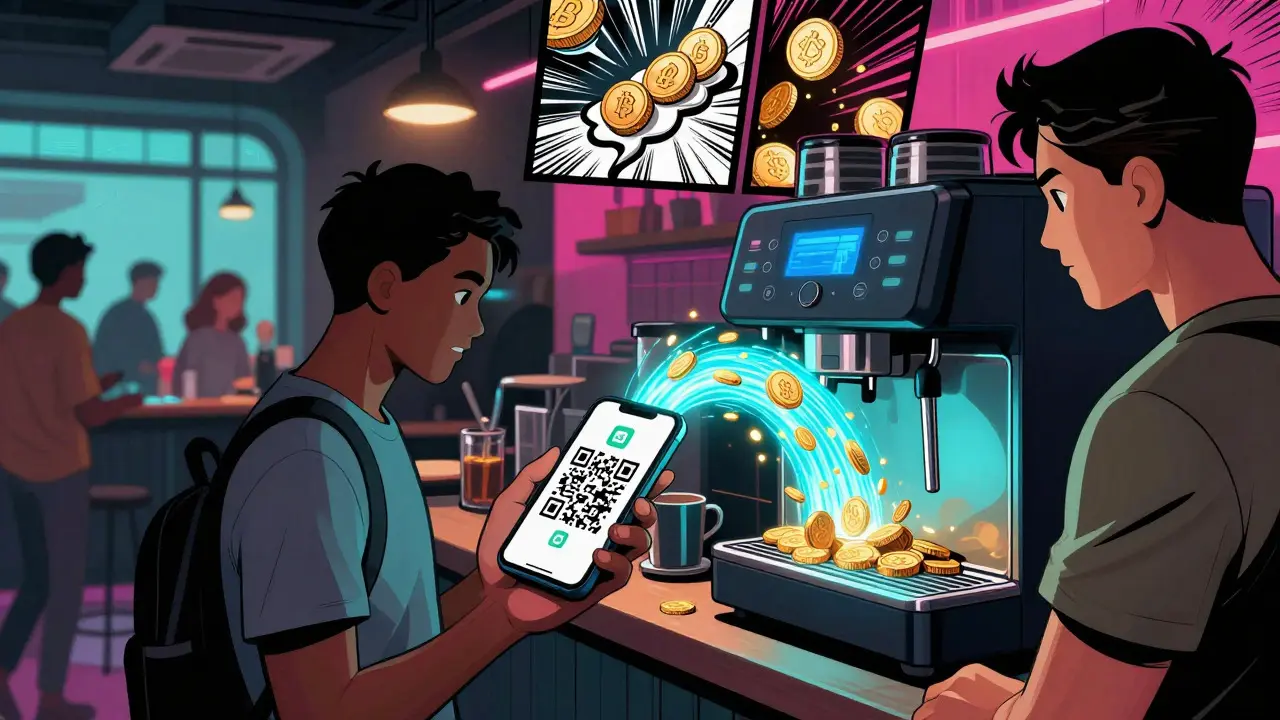
Imagine paying for your morning coffee without waiting for a blockchain confirmation. You scan a QR code, the transaction settles instantly, and you walk away. No gas fees, no network congestion, just pure speed. This isn't science fiction; it is what State Channels are designed to achieve.
While most headlines focus on rollups or sidechains, state channels represent a different approach to solving the blockchain trilemma. They allow participants to conduct thousands of transactions off-chain while keeping the security guarantees of the main chain. But are they the future of scalable crypto, or a niche technology stuck in development hell? The answer lies in understanding where the technology stands today and where it is heading in the coming years.
What Are State Channels and How Do They Work?
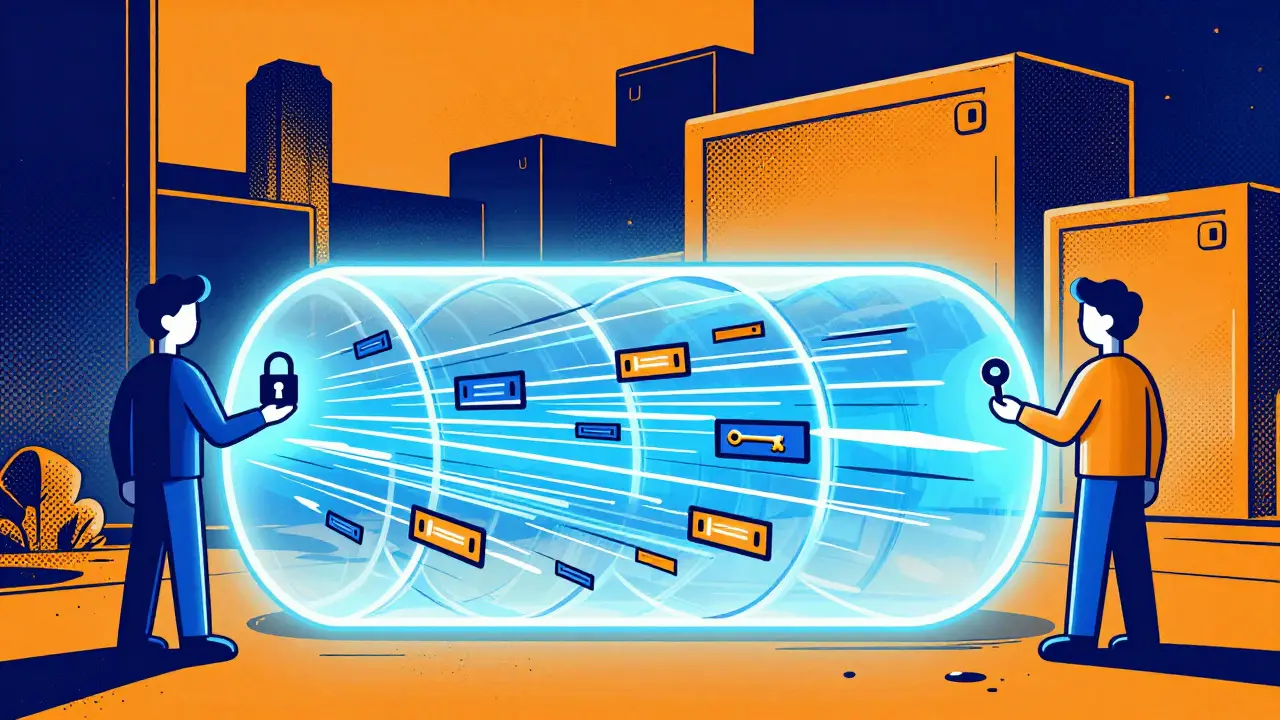
To understand the future, we first need to grasp the mechanics. A state channel is a mechanism that allows two or more parties to exchange multiple blockchain transactions between themselves with only two actual transactions recorded on the blockchain.
Here is the simple breakdown:
- Opening: Participants lock collateral (like Bitcoin or Ether) into a multi-signature smart contract on the main chain.
- Off-Chain Updates: They exchange cryptographically signed messages updating their balances. These updates never touch the main blockchain.
- Closing: When finished, one party submits the latest state to the blockchain. The funds are distributed according to that final state.
The beauty here is efficiency. If you play a game of chess online where each move costs $10 in gas fees, the game becomes unplayable. With state channels, you pay once at the start and once at the end. The moves in between are free and instant.
This concept was popularized by the Lightning Network, which is the most prominent implementation of state channels built on top of Bitcoin. First conceptualized in 2015 by Joseph Poon and Thaddeus Dryja, the Lightning Network has processed over $200 million in cumulative volume. As of late 2023, it maintained an average transaction fee of less than $0.001, compared to Ethereum’s average mainnet fee of $1.50 during peak times.
The Current Landscape: Strengths and Bottlenecks
State channels are not perfect. In fact, their limitations are as significant as their benefits. Understanding these bottlenecks is crucial to predicting their evolution.
Capital Inefficiency One major hurdle is liquidity. To open a channel, you must lock up capital. If you want to send $100, you typically need to have $100 locked in the channel. This ties up value that could be used elsewhere. According to Paradigm analyst Dr. Georgios Konstantopoulos, channels often require 3-5x more locked value than equivalent rollup solutions for similar throughput.
Online Requirement Unlike rollups, where you can go offline and trust the protocol to handle disputes, state channels generally require participants to be online to monitor the channel. If your counterparty tries to cheat by submitting an old state update, you need to detect it quickly and broadcast the correct state before a time-lock expires. This creates a "watchtower" dependency.
Routing Complexity For payments between strangers, the network relies on multi-hop routing. Your payment might travel through five different nodes before reaching the recipient. Currently, the success rate for these multi-hop payments hovers around 68%, according to IEEE research from March 2023. Failed payments frustrate users and hinder adoption.
| Feature | State Channels | Optimistic Rollups | ZK-Rollups |
|---|---|---|---|
| Finality Speed | Instant (off-chain) | ~1 hour (challenge period) | Minutes (proof generation) |
| User Experience | Complex (liquidity management) | Simple (wallet-like) | Simple (wallet-like) |
| Best For | Micropayments, Gaming, IoT | General DeFi, NFTs | High-value transfers, Privacy |
| Capital Efficiency | Low (locked collateral) | High | High |
Key Innovations Shaping the Future
Despite these challenges, the technology is evolving rapidly. Several breakthroughs are addressing the core weaknesses of early implementations.
Liquidity Splicing
One of the biggest complaints about the Lightning Network is the inability to easily add or remove funds without closing the channel. This is changing with splicing. Proposed by co-creator Joseph Poon, splicing allows users to dynamically adjust channel capacity. Imagine adding money to your Venmo balance without deleting and recreating the account. Lightning Network v2 aims to implement this by late 2024, drastically improving capital efficiency.
Eltoo Protocol
Current state channels use Hashed Timelock Contracts (HTLCs), which are complex and prone to timing errors. The Eltoo protocol is a proposed upgrade that simplifies state updates using SIGHASH_NOINPUT signatures. Eltoo removes the need for relative timelocks, making channels easier to manage and reducing the risk of human error during closure. It essentially makes opening a channel as easy as sending a regular transaction.
Non-Custodial Liquidity Providers
Aeternity and other projects are exploring "state channel hubs." These act like automated market makers (AMMs) for liquidity. Instead of finding a specific person to open a channel with, you connect to a hub that provides instant liquidity. Early simulations suggest this could reduce capital requirements by 40-60% by pooling resources efficiently.
Real-World Use Cases Driving Adoption
Where will state channels actually thrive? They are not replacing Ethereum for swapping tokens. Their strength lies in high-frequency, low-value interactions.
- Micropayments: Streaming video content, paying per article, or tipping creators. With fees under $0.001, state channels make sub-cent transactions economically viable. Bitrefill, a gift card platform, processes $500 million annually via Lightning, reporting 99.2% uptime.
- Gaming: In-game asset trading requires instant settlement. Platforms like Gods Unchained report 40% higher player retention when using state-channel-like mechanisms because players don’t wait minutes for trades to confirm.
- IoT and Machine-to-Machine Payments: Sensors communicating with each other need lightweight protocols. A pilot project between Aeternity and Bosch handled 12,000 sensor payment transactions per hour, demonstrating the viability of machine economies.
- Telecommunications: Telefónica and Ripple have piloted real-time billing using state channels, handling 500,000 micropayments daily. This eliminates the batch-processing delays inherent in traditional telecom billing.
Challenges Remaining for Mass Adoption
Even with technical improvements, user experience remains a barrier. A Stackbit survey of 1,247 Lightning users found that 62% experienced at least one failed payment due to liquidity issues in the previous month. For the average consumer, managing channel liquidity is too complex.
Furthermore, regulatory uncertainty looms. The U.S. SEC’s 2023 guidance suggested that state channels could face securities regulation if used for certain tokenized assets. However, the European MiCA framework explicitly exempts them from payment service regulations when used for non-financial transactions, providing a clearer path for enterprise adoption in Europe.
Developers also face a steep learning curve. ConsenSys Academy reports that specialized training takes 3-6 months. While tools like the Lightning Development Kit (LDK) have reduced setup time from 40+ hours to 8 hours, deep cryptographic knowledge is still required for robust implementations.
Conclusion: A Specialized but Vital Role
State channels are not going to replace rollups. Rollups are better for general-purpose computation and DeFi. State channels are better for point-to-point, high-frequency interactions. The future is likely a hybrid ecosystem where both coexist.
Vitalik Buterin noted in January 2023 that state channels remain essential for specific high-frequency patterns. Galaxy Digital projects that state channels will capture 25-30% of all Layer 2 transaction volume by 2025, particularly in vertical-specific applications like gaming and IoT.
The key to their success lies in abstraction. Users should not know they are using a state channel. They should just see fast, cheap transactions. As protocols like Eltoo and splicing mature, that abstraction layer will become thinner, bringing us closer to a truly scalable blockchain internet.
Are state channels safer than mainnet transactions?
Yes, state channels inherit the security of the underlying blockchain. Since the final state is settled on-chain, a participant cannot steal funds unless they can break the cryptography of the main chain. However, there is a risk if a participant goes offline and fails to dispute a fraudulent state update submitted by the other party within the time-lock window.
What is the difference between state channels and rollups?
Rollups batch many transactions together and post a summary to the main chain, allowing for public verifiability and composability between different contracts. State channels are private agreements between specific parties. Rollups are better for general-purpose apps like DEXs, while state channels are better for direct peer-to-peer payments and high-frequency interactions.
Why do I need to be online for state channels?
In current implementations, if your counterparty tries to close the channel with an outdated balance (cheating), you must detect this and submit the correct, newer state to the blockchain before a deadline. If you are offline, you lose the funds. Watchtowers help mitigate this, but the requirement for active monitoring remains a UX challenge.
Can state channels work across different blockchains?
Currently, state channels are mostly confined to single chains (e.g., Lightning on Bitcoin). However, cross-chain atomic swaps and interoperability protocols are being developed to allow channels to bridge assets between different blockchains, though this adds complexity and potential points of failure.
What is 'splicing' in the context of state channels?
Splicing is a feature that allows users to add or remove liquidity from an existing state channel without closing it. This solves the problem of capital inefficiency, where users currently have to close a channel to withdraw funds or open a new one to add more, locking up capital unnecessarily.



I must say, this is a rather illuminating piece on the technical nuances of blockchain scalability! It is truly fascinating how state channels offer an alternative to rollups, don't you think? The efficiency gains are quite remarkable, indeed.
you fools still believe in this centralized narrative pushed by the big tech elites trying to control our digital sovereignty through these so-called 'state channels' which are nothing more than surveillance tools disguised as innovation because they want to track every micropayment you make while pretending it's decentralized freedom when really it's just another layer of corporate control over your financial data streams
boring. too long. didnt read.
its just hype again same old story every year they promise instant transactions and zero fees but then reality hits hard with liquidity issues and complex setups that only nerds understand so why bother reading this unless you want to waste time chasing ghosts in the machine
i find myself wandering through the labyrinth of possibilities that state channels present, considering how they might reshape our daily interactions with digital currency in ways we haven't fully imagined yet, especially when you think about the potential for seamless micropayments that could revolutionize content creation and consumption patterns across the globe, isn't it wonderful to ponder?
everyone here is blind to the obvious flaws in this technology because theyre too busy worshipping at the altar of decentralization without questioning whether its actually practical for real world usage or just a toy for geeks who dont understand basic economics
oh darling let me tell you something about these state channels theyre not just code theyre poetry written in cryptography dancing on the edge of chaos and order simultaneously creating a symphony of transactions that sing songs of freedom while whispering secrets of efficiency into the ears of those willing to listen closely enough to hear the melody beneath the noise
hey there! great article :) i think many people overlook the importance of watching towers but its crucial for security :D keep learning!
LISTEN UP PEOPLE!!! THIS IS THE FUTURE OF PAYMENTS!!! STATE CHANNELS ARE GOING TO CHANGE EVERYTHING!!! YOU NEED TO UNDERSTAND THIS NOW OR BE LEFT BEHIND IN THE DUST OF PROGRESS!!! WAKE UP!!!
yo check this out splicing is gonna be huge for liquidity management no need to close channels anymore thats pretty sweet huh? imagine adding funds dynamically without any hassle its like magic for your wallet balance
😒 another day another crypto bro explaining why his favorite tech will save the world meanwhile regular folks are just trying to pay bills without losing their minds over gas fees 😤
it makes me wonder if the true essence of state channels lies not in their speed but in their ability to foster trust between strangers in a digital realm where anonymity often breeds suspicion, doesn't it?
man this gives me hope for the future of payments everywhere imagine if everyone used state channels for small things like buying coffee or tipping artists it would be amazing to see such widespread adoption happening globally
i just sit back and watch the drama unfold in these comments while enjoying my tea knowing that eventually the dust will settle and the best technologies will rise to the top regardless of what anyone says here today
the epistemological implications of off-chain settlement mechanisms challenge our conventional understanding of transactional finality suggesting that truth itself becomes subjective within the closed loop of participant verification rather than absolute consensus achieved through network-wide agreement protocols
theyre lying to you about the security benefits because deep down they know that state channels create single points of failure that can be exploited by insiders working with government agencies to monitor and control citizen spending habits under the guise of technological advancement