Is There an Underground Crypto Market in Ecuador? The Truth About Restrictions and Risks
Imagine trying to buy Bitcoin in a country that once tried to ban it entirely. That was the reality for many Ecuadorians not long ago. Today, you might hear whispers of an underground crypto market in Ecuador-a shadow network where traders bypass rules to move money freely. But does this black market actually exist, or is it just a myth born from old fears and new confusion?
The short answer is: there is no significant, organized underground crypto market in Ecuador today. Instead, what looks like "underground" activity is often just savvy citizens using legal peer-to-peer (P2P) platforms to navigate strict banking systems. To understand why, we need to look at how Ecuador went from banning digital assets to embracing them cautiously, and how everyday people are trading without breaking the law.
From Total Ban to Cautious Acceptance
To grasp the current landscape, you have to look back at the radical experiment of 2014. Under then-President Rafael Correa, Ecuador became the first country in the world to adopt Bitcoin as official legal tender. It sounded revolutionary. In practice, it was chaotic. Banks resisted, merchants didn't accept it, and the government's own digital wallet system struggled with technical glitches.
By 2018, the government had quietly abandoned the idea. Bitcoin was no longer legal tender, but it wasn't illegal either. The Superintendencia de Bancos (Superbank) clarified that cryptocurrencies were not currency, but they weren't banned from private ownership or trade. This created a gray zone that persists today. Citizens can hold Bitcoin, but they can't use it to buy bread at the local bodega. They can trade it, but banks often treat these transactions with suspicion.
This regulatory ambiguity is exactly why rumors of an "underground" market thrive. When the rules aren't crystal clear, people assume the worst. In reality, the market has moved above ground into regulated exchanges and P2P platforms, driven by necessity rather than rebellion.
Why People Seek Alternatives: The Banking Bottleneck
If there's no active black market, why do so many Ecuadorians feel like they're operating in the shadows? The answer lies in the banking sector. Ecuador uses the US dollar, which should make international transfers easy. However, local banks are notoriously slow and expensive when it comes to cross-border payments.
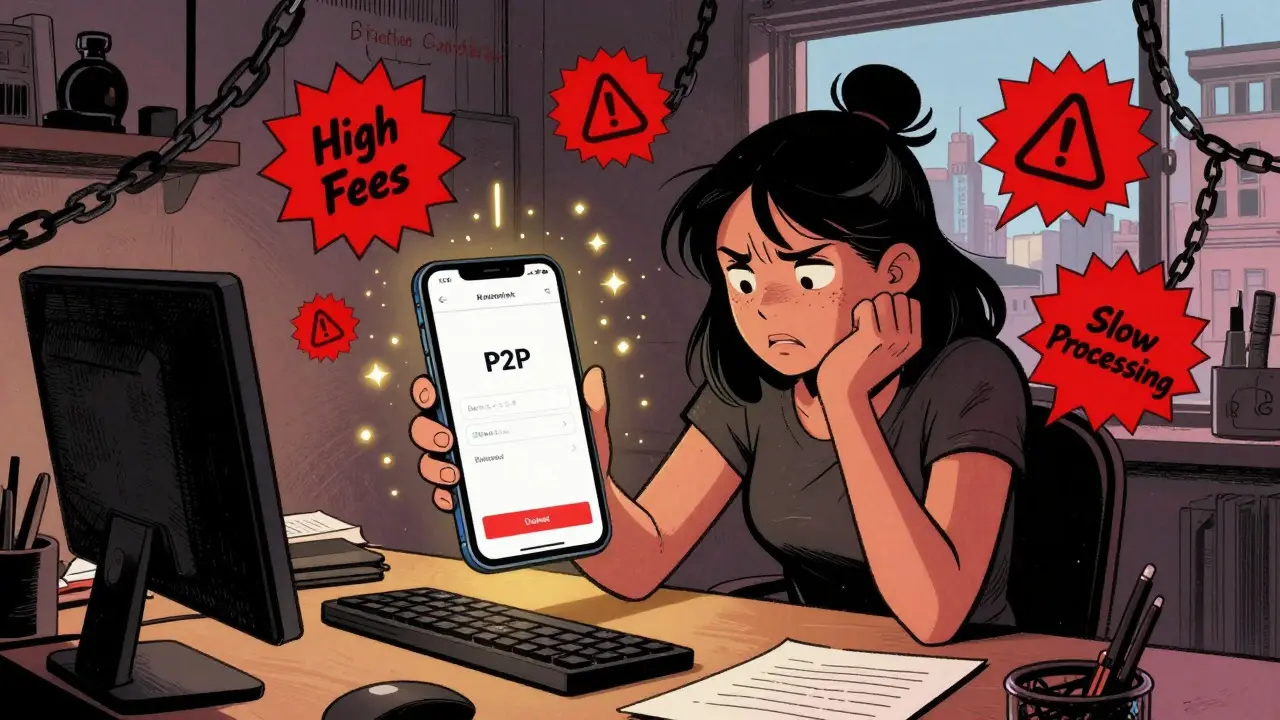
Consider Maria, a freelance graphic designer in Quito. She gets paid in USDT (Tether) by clients in Europe. If she tries to convert that directly through her local bank, she faces high fees, delayed processing times, and sometimes outright rejection because the bank doesn't recognize the source of funds. For Maria, the "underground" isn't about hiding from the police; it's about avoiding a broken financial system.
This frustration drives users toward Peer-to-Peer (P2P) platforms. These aren't illicit networks; they are legitimate services like Binance P2P, LocalCoinSwap, or Bybit. On these platforms, Maria can sell her USDT to another Ecuadorian user who needs crypto, while paying via a local bank transfer or mobile payment app like PayPhone or Kushki. The transaction happens instantly, with minimal fees, and both parties stay within the bounds of the platform's terms of service.
The Real "Underground": P2P Trading Networks
What outsiders mistake for an underground market is actually the vibrant P2P ecosystem. In countries with capital controls or restrictive banking, P2P trading becomes the lifeblood of crypto adoption. Ecuador fits this profile perfectly.
| Method | Speed | Fees | Banking Friction | Legality |
|---|---|---|---|---|
| Traditional Bank Transfer | Slow (3-5 days) | High ($15-$50+) | Very High | Fully Legal |
| Centralized Exchange (CEX.IO, Gemini) | Medium (1-2 days) | Medium (1-3%) | Medium | Fully Legal |
| P2P Platforms (Binance, LocalCoinSwap) | Fast (Minutes) | Low (0.1-1%) | Low | Legal (if KYC compliant) |
| Informal Cash Deals | Instant | Negotiable | None | Gray Area / Risky |
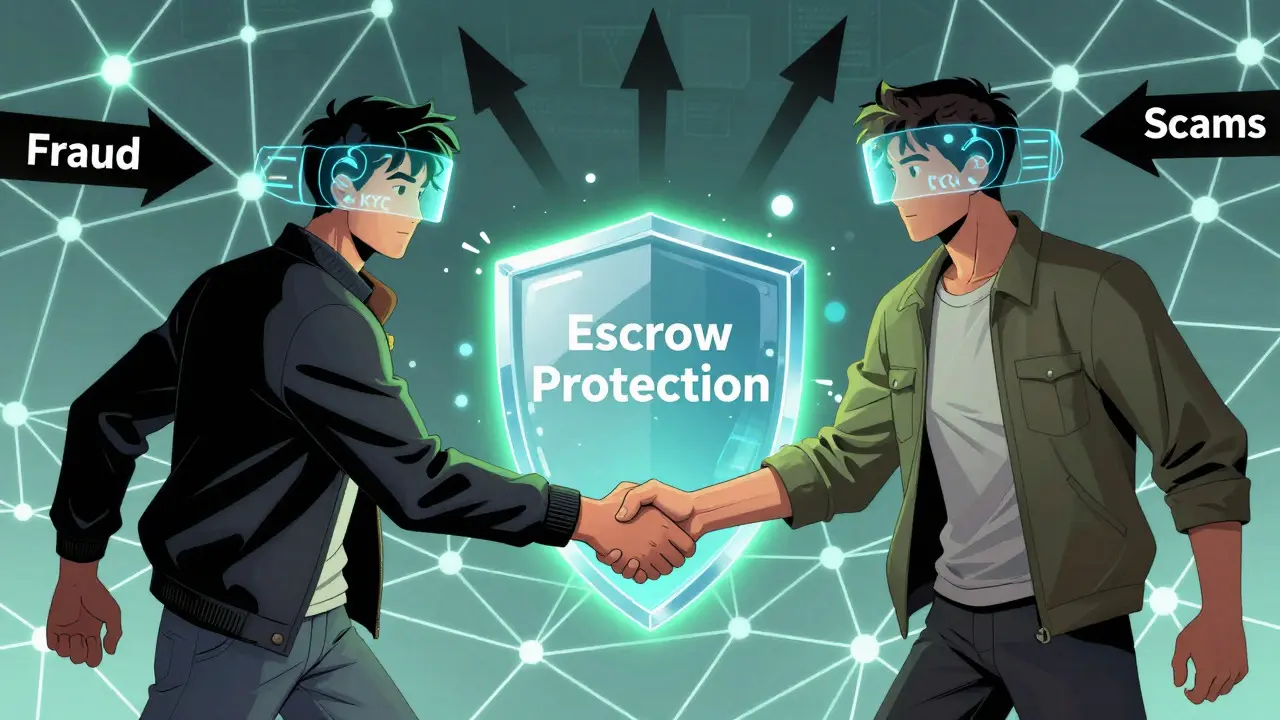
P2P platforms require Know Your Customer (KYC) verification. You upload your ID, verify your phone number, and build a reputation score. This creates a layer of accountability that true underground markets lack. For example, on Binance P2P, if a seller fails to release crypto after receiving payment, the buyer can open a dispute. The platform holds funds in escrow until the issue is resolved. This structure makes large-scale fraud difficult, reducing the need for secretive, unregulated channels.
However, risks remain. Triangulation fraud-where a third party tricks a seller into releasing crypto based on fake proof of payment-is a common threat. Users must ensure transfers come only from registered account holders matching their name. This vigilance is part of the P2P experience, not evidence of an illegal underworld.
Regulatory Compliance: AML and KYC Rules
Ecuador's financial regulators take anti-money laundering (AML) seriously. Any entity operating as a crypto exchange within the country must comply with strict AML/KYC regulations. This means that major platforms serving Ecuadorian users, such as CEX.IO, Bybit, and Bit2Me, implement robust identity checks.
For individual traders, this compliance is a double-edged sword. On one hand, it protects against scams and freezes accounts linked to criminal activity. On the other hand, it limits anonymity. If you want total privacy, you might turn to decentralized exchanges (DEXs) like Uniswap or PancakeSwap. But even here, the bottleneck is fiat on-ramps. To get dollars into a DEX, you still need to pass through a centralized service or a P2P dealer, bringing you back into the regulated sphere.
The absence of specific enforcement actions against "crypto criminals" in recent years suggests that the market is largely compliant. Authorities focus on traditional money laundering through banks and real estate, not on individuals buying Bitcoin for savings. As long as traders declare income and pay taxes, the government turns a blind eye to the asset class itself.
Risks of True Underground Activity
While a massive black market doesn't exist, small-scale informal trading does. Think of it as the "cousin" of the underground market. Neighbors trading cash for crypto, or Facebook groups where strangers meet to exchange Bitcoin for USD. These transactions carry higher risks:
- No Escrow Protection: If you hand over cash and the seller doesn't send the crypto, you have no recourse.
- Counterfeit Currency: Physical cash deals risk receiving fake bills.
- Legal Ambiguity: While owning crypto is legal, acting as an unlicensed exchange could attract regulatory scrutiny.
- Security Threats: Meeting strangers in public places to exchange valuable assets invites theft or robbery.
Most experienced traders avoid these informal routes unless necessary. The convenience and security of P2P platforms have made face-to-face cash trades obsolete for most users. The few who still do it usually operate in tight-knit communities where trust is established over time, not through anonymous online forums.
How to Trade Safely in Ecuador
If you're navigating the Ecuadorian crypto scene, safety starts with choosing the right tools. Here’s a practical checklist for staying out of trouble and keeping your assets secure:
- Use Reputable Exchanges: Stick to platforms like CEX.IO, Gemini, or Bit2Me for initial fiat on-ramps. They offer customer support and regulatory compliance.
- Leverage P2P Wisely: Use Binance P2P or LocalCoinSwap for faster, cheaper conversions. Always check the seller's completion rate and number of orders.
- Enable Two-Factor Authentication (2FA): Never rely solely on passwords. Use an authenticator app like Google Authenticator or Authy.
- Withdraw to Cold Storage: Don't leave large amounts on exchanges. Move your crypto to a hardware wallet like Ledger or Trezor.
- Keep Records: Save transaction receipts and tax documents. Ecuadorian tax authorities may ask for proof of income sources.
- Avoid "Too Good to Be True" Offers: If someone promises high returns with zero risk, it's likely a scam. Legitimate trading involves market volatility.
Education is your best defense. Platforms like Bit2Me Academy offer free resources to help beginners understand blockchain technology and security best practices. Knowledge reduces fear, and fear is what drives people toward risky, unverified channels.
The Future of Crypto in Ecuador
As global adoption grows, Ecuador's stance is likely to evolve. The government may introduce clearer guidelines for crypto businesses, potentially licensing local exchanges. This would further reduce the need for any form of "underground" activity. For now, the market thrives on innovation within existing laws.
The narrative of a hidden, rebellious crypto underground in Ecuador is largely outdated. What exists instead is a resilient, adaptive community using modern tools to overcome financial friction. By understanding the legal framework and leveraging safe, regulated platforms, Ecuadorians can participate in the digital economy without stepping into the shadows.
Is Bitcoin illegal in Ecuador?
No, Bitcoin is not illegal in Ecuador. While it is not recognized as legal tender (meaning you can't use it to pay taxes or buy goods officially), citizens are free to buy, sell, and hold cryptocurrencies without penalty.
What is the best way to buy crypto in Ecuador?
The safest methods are using reputable centralized exchanges like CEX.IO or Gemini, or utilizing P2P platforms like Binance P2P. These options provide security features like escrow services and customer support.
Do I need to pay taxes on crypto profits in Ecuador?
Yes, income generated from cryptocurrency trading is subject to personal income tax in Ecuador. You should keep detailed records of your transactions to report gains accurately during tax season.
Are there any underground crypto casinos in Ecuador?
There is no widespread evidence of a structured underground crypto casino industry in Ecuador. Most gambling activities, including those involving crypto, operate in a legal gray area similar to the rest of the financial sector, but they are not a dominant feature of the market.
Can I use my Ecuadorian bank card to buy crypto?
Yes, many international exchanges accept Visa and Mastercard issued by Ecuadorian banks. However, some local banks may block transactions related to crypto purchases. If this happens, P2P platforms are a reliable alternative.
Is P2P trading safe in Ecuador?
P2P trading is generally safe if you use established platforms with escrow services. Always trade with verified sellers, communicate only through the platform's chat, and release funds only after confirming receipt of payment.