Music Rights Management on Blockchain: How Smart Contracts Fix Royalties
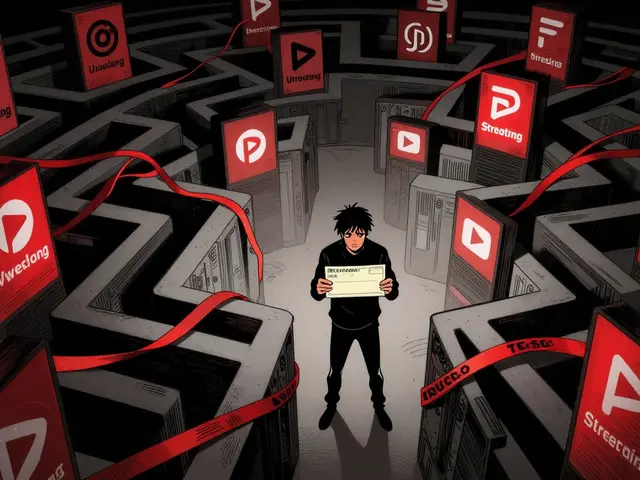
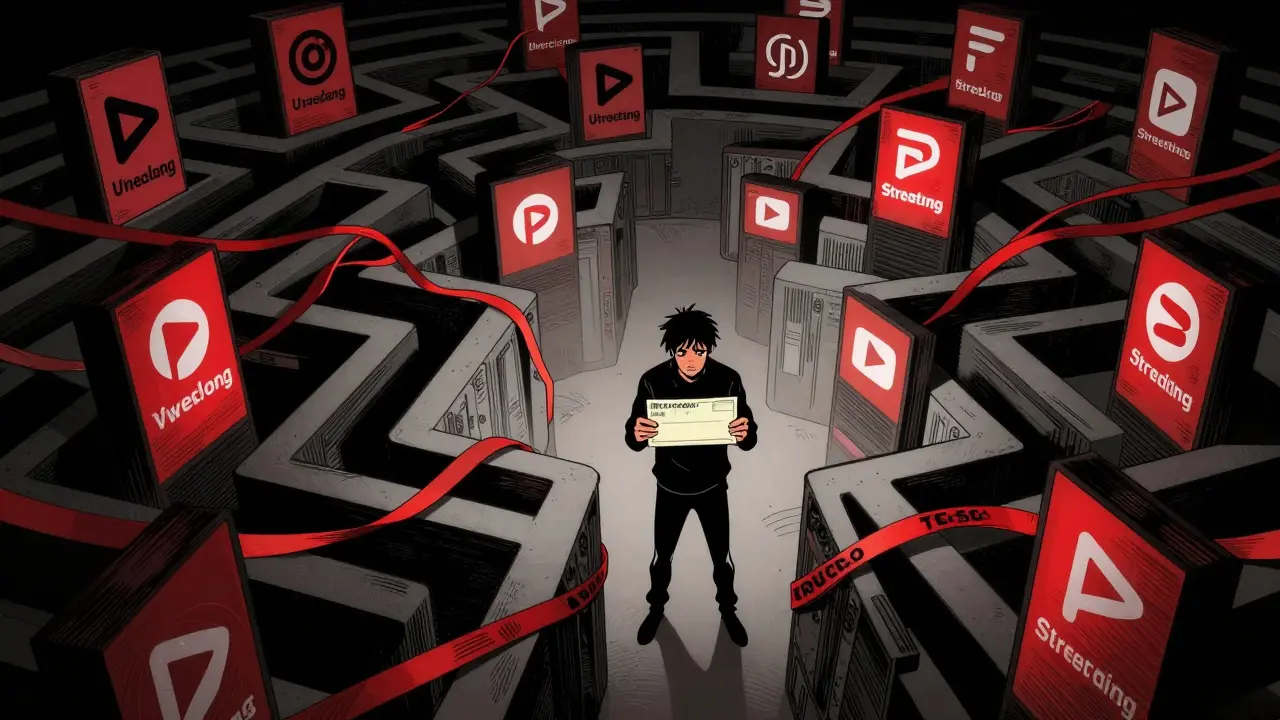
Imagine writing a hit song and waiting two years to get paid for it. That is the harsh reality for many musicians in today's industry. You stream your track millions of times, but the money gets stuck in a maze of record labels, collection societies, and streaming platforms. By the time the cash reaches you, it has been sliced up so many times that there is barely anything left. This broken system relies on outdated databases and opaque accounting practices that favor intermediaries over creators.
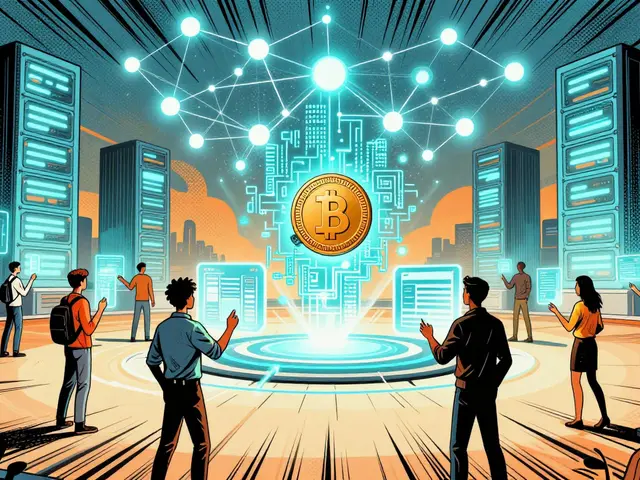
Now, picture a world where every play triggers an instant payment directly to your digital wallet. No middlemen taking cuts. No black-box accounting. Just transparent, automated transactions recorded on an immutable ledger. This is not a sci-fi dream; it is the promise of Music Rights Management on Blockchain, which uses distributed ledger technology to rewrite how we handle copyright ownership and royalty distribution.
The Core Problem: Why Traditional Music Rights Fail
To understand why blockchain matters, we first need to look at what is wrong with the current setup. The traditional music industry operates on a centralized model that is fundamentally flawed. When you release a song, the rights are split into mechanical rights, performance rights, and synchronization rights. Each of these involves different entities: publishers, record labels, PROs (Performance Rights Organizations), and DSPs (Digital Service Providers).
The issue is fragmentation. There is no single global database that tracks who owns what. If a songwriter changes their publisher or sells a stake in their catalog, updating this information across dozens of international organizations is a nightmare. It often takes months or even years for these updates to propagate. During this lag, royalties go unpaid or are sent to the wrong people, creating "black box" funds where unclaimed money sits indefinitely.
Furthermore, the divisibility of copyrights is endless. A single song might have four writers, three producers, and one label. In the old system, splitting a $0.003 per-stream payment among eight parties requires complex manual calculations and reconciliation processes. These administrative costs eat into the artist's share. The lack of transparency means artists rarely know exactly how much they are owed or when they will be paid.
How Blockchain Solves Ownership and Transparency
Blockchain technology is a decentralized, immutable ledger that records transactions across a network of computers without a central authority. In the context of music, this acts as a universal source of truth. Instead of relying on siloed databases from Sony, Universal, or local PROs, all participants access the same synchronized data.
Here is how it works in practice:
- Immutable Record of Title: When a song is registered on the blockchain, its metadata-including writer shares, producer credits, and label stakes-is hashed and stored in a block. Once written, this record cannot be altered. This creates a permanent chain of title that proves ownership history.
- Real-Time Updates: If a songwriter sells their publishing rights, the smart contract updates the ledger instantly. All downstream distributors see the new ownership structure immediately, eliminating the lag time that causes payment errors.
- Global Accessibility: Because the ledger is distributed, anyone with permission can verify rights status. A sync agent looking to license a song for a movie can check the blockchain to see exactly who holds the rights and contact them directly, bypassing bureaucratic gatekeepers.
This transparency solves the "black box" problem. Every transaction is visible to authorized parties. Artists can see exactly how many times their song was played, by whom, and how much was generated. It turns the opaque back-end of the music business into a clear, auditable process.
Smart Contracts: Automating Royalty Payments
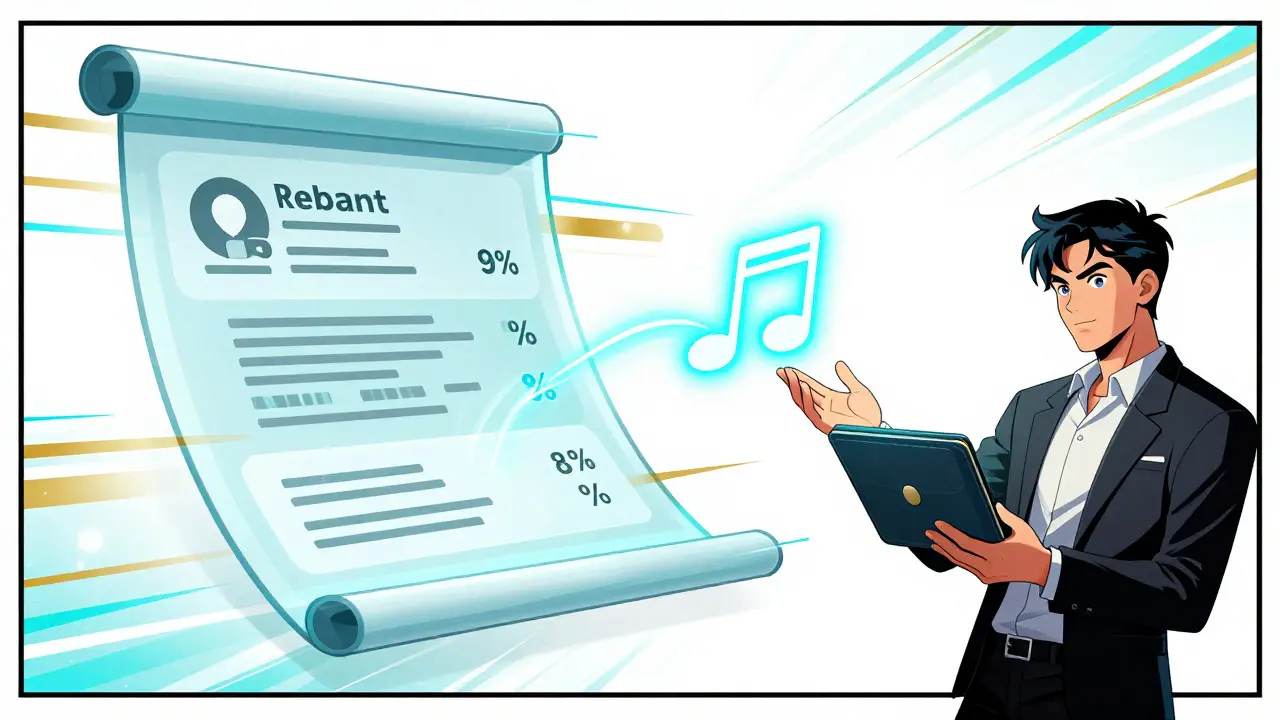
The real magic happens with Smart Contracts are self-executing contracts with the terms of the agreement between buyer and seller being directly written into lines of code. These programs live on the blockchain and trigger actions automatically when predefined conditions are met.
In traditional licensing, a streaming platform sends monthly reports to a distributor, who sends them to a label, who then pays the artist. This cycle can take six months to two years. With smart contracts, the process is instantaneous.
Consider this scenario: A user streams a song on a decentralized platform. The smart contract detects the play event. It checks the registry to identify the rights holders and their percentage splits. Then, it executes the payment. If the artist is owed 70% of the revenue and the stream generates $0.01, the artist receives $0.007 immediately in cryptocurrency or stablecoin. No invoices. No waiting periods. No minimum thresholds to reach before payout.
This automation extends to complex scenarios too. If a remix is created, the smart contract can automatically allocate a portion of the new work's earnings to the original rights holders, provided the licensing terms were encoded correctly. This reduces friction for derivative works and ensures everyone gets paid fairly and quickly.
Licensing and Derivative Works Made Easy
Licensing music for films, ads, or video games is notoriously slow and expensive. Agents spend weeks negotiating terms and clearing rights. Blockchain streamlines this through automated licensing protocols.
Platforms like Dot Blockchain have experimented with systems that record usage-based licensing on media blockchains. Here is how it improves the workflow:
- Discovery: A filmmaker searches a blockchain-based library for a specific mood or genre. They find a track and view its full ownership breakdown.
- Negotiation: The smart contract displays pre-set licensing fees for different use cases (e.g., YouTube background vs. TV commercial). The filmmaker accepts the terms digitally.
- Execution: Upon acceptance, the smart contract locks the license, transfers the fee to the rights holders, and grants the filmmaker a verifiable proof of license.
This eliminates the need for lengthy email chains and legal reviews for standard licenses. For remixes and mashups, creators can easily locate rights holders and request permissions. The blockchain provides a traceable audit trail, protecting both the original artist and the remixer from future disputes.
Challenges and Limitations
While the potential is huge, blockchain is not a silver bullet. Several significant hurdles remain before widespread adoption occurs.
The Garbage-In, Garbage-Out Problem: Blockchain ensures data cannot be changed once entered, but it does not guarantee the initial data is correct. If someone uploads a song with false ownership claims, the ledger will permanently record that error. Verification mechanisms are still developing. We need robust identity verification and perhaps AI-assisted audio fingerprinting to ensure only legitimate rights holders register content.
Legal Recognition: Smart contracts are code, not law. While they execute payments automatically, courts in various jurisdictions may not yet recognize blockchain records as legally binding evidence of ownership. Clearer copyright laws that acknowledge distributed ledgers are necessary to resolve disputes effectively.
Interoperability: There are multiple blockchain platforms (Ethereum, Hyperledger, private consortiums) competing for dominance. If Spotify uses one chain and Apple Music uses another, we risk creating new silos. Industry-wide standards for data formats and cross-chain communication are essential for a truly unified ecosystem.
| Feature | Traditional System | Blockchain System |
|---|---|---|
| Payment Speed | 6-24 months | Instant / Real-time |
| Transparency | Opaque, proprietary databases | Public, immutable ledger |
| Intermediaries | Many (Labels, PROs, Distributors) | Few or None (Disintermediated) |
| Ownership Tracking | Fragmented, slow updates | Centralized ledger, instant updates |
| Cost Efficiency | High administrative fees | Low gas/transaction fees |
The Role of NFTs in Music Rights
NFTs (Non-Fungible Tokens) are unique digital assets verified on a blockchain that prove ownership of a specific item. While often associated with digital art, NFTs play a crucial role in music rights management. They allow artists to tokenize portions of their master recordings or publishing rights.
An artist can sell an NFT that represents a 1% stake in a song's future royalties. Fans buy the NFT, becoming micro-investors. As the song earns revenue, the smart contract distributes dividends to NFT holders automatically. This democratizes investment in music, allowing fans to support artists directly while giving artists upfront capital without signing away long-term control to major labels.
Additionally, NFTs can serve as certificates of authenticity for limited edition releases. Unlike standard MP3s, an NFT-backed release comes with verifiable scarcity and provenance, adding collectible value beyond just the audio file.
Future Outlook: What Comes Next?
We are currently in the early adoption phase. Major players like Universal Music Group have invested in blockchain startups, signaling industry interest. However, mass disruption requires solving the legal and technical gaps mentioned earlier.
Expect to see hybrid models emerge first. Traditional companies may integrate blockchain back-ends for internal tracking while maintaining familiar front-end interfaces for users. Over time, as legal frameworks catch up and interoperability standards solidify, fully decentralized autonomous organizations (DAOs) could manage entire catalogs, governed by token-holding stakeholders rather than corporate boards.
For artists, the immediate benefit is greater control. You can choose to distribute via blockchain-native platforms to capture higher margins and faster payments. For fans, it means deeper engagement and direct support channels. The era of waiting years for a royalty check is ending. The question is no longer if blockchain will change music rights management, but how fast the industry will adapt to survive.
What is music rights management on blockchain?
It is a system that uses distributed ledger technology and smart contracts to track music ownership, automate licensing, and distribute royalties instantly. It replaces opaque, slow traditional databases with a transparent, immutable record accessible to all rights holders.
How do smart contracts pay artists faster?
Smart contracts are self-executing code. When a song is streamed, the contract detects the event, calculates the split based on pre-defined ownership percentages, and transfers the payment directly to the artist's digital wallet. This removes the need for monthly reporting cycles and manual processing by intermediaries.
Can blockchain solve copyright disputes?
Yes, by providing an immutable chain of title. Since every transfer of rights is recorded on the ledger with a timestamp, it becomes easy to prove who owned the rights at any given moment. This reduces ambiguity and speeds up dispute resolution, though legal recognition of these records is still evolving.
What are the risks of using blockchain for music rights?
The main risk is inaccurate initial data entry. If false ownership info is uploaded, the blockchain permanently records the error. Additionally, legal enforceability varies by jurisdiction, and interoperability between different blockchain networks remains a challenge.
How do NFTs relate to music royalties?
NFTs can represent fractional ownership of a song's masters or publishing rights. Holders of these NFTs receive automatic royalty distributions via smart contracts. This allows artists to raise funds from fans and gives fans a financial stake in the artist's success.