Brazil Crypto Regulations 2026: What You Need to Know About Restrictions and Consumer Protection
Buying Bitcoin or Ethereum in Brazil feels normal now. You download an app, verify your ID, and start trading. But behind that smooth user experience sits one of the strictest regulatory frameworks in Latin America. If you are a business operating here, or even just a savvy investor trying to understand why certain features are missing from your exchange app, you need to look at Brazil crypto regulations and consumer protection laws designed to curb fraud and money laundering while integrating digital assets into the national financial system. The landscape changed drastically after the enactment of Law No 14.478/2022, known as the Brazilian Virtual Assets Law (BVAL). This law didn't just legalize crypto; it built a cage around it. As we move through mid-2026, the rules have tightened further, especially regarding how you move money across borders and how stablecoins operate. Here is what is actually happening on the ground.
The Core Framework: Who Is Watching?
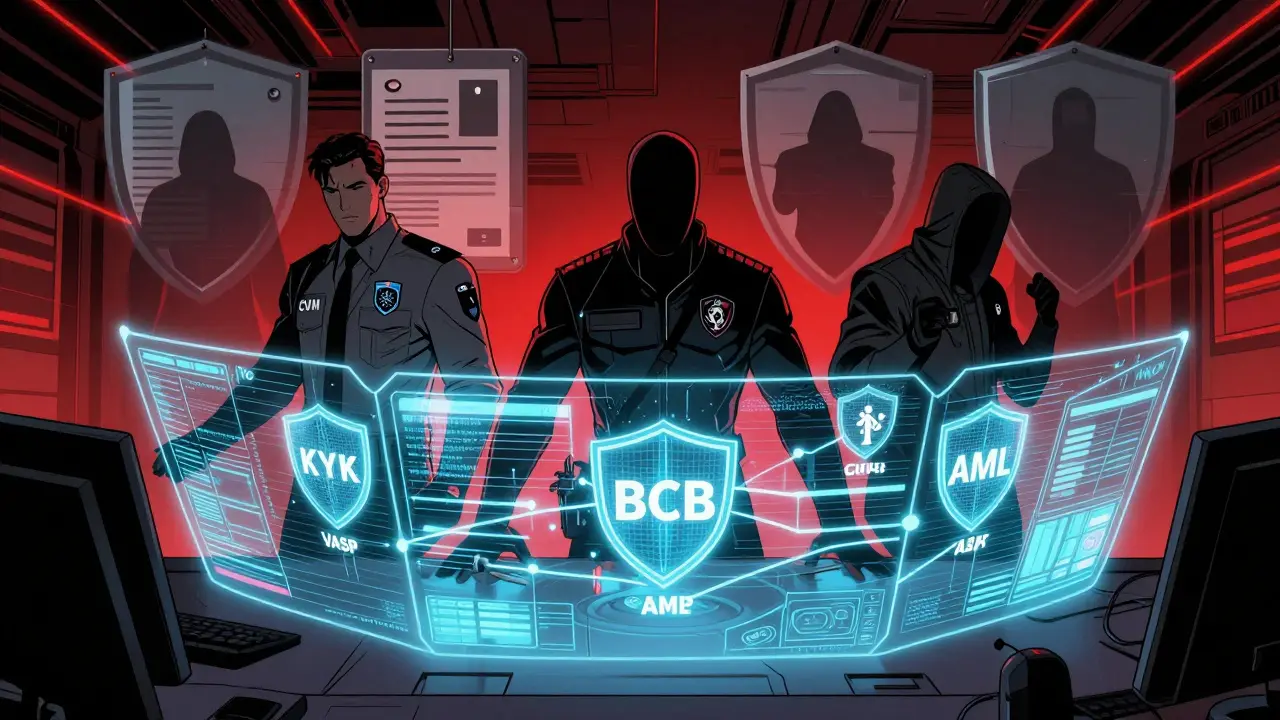
You might think the government is just watching from afar, but in Brazil, the oversight is multi-layered and aggressive. The primary authority is the Central Bank of Brazil (BCB) the main regulator for virtual asset service providers, responsible for licensing and monitoring compliance. They don't work alone. They team up with the Securities and Exchange Commission (CVM regulates cryptoassets classified as securities, ensuring investor protection for tokenized stocks or bonds) and the Financial Activities Control Council (COAF receives reports of suspicious transactions to combat money laundering and terrorist financing). This structure means there is no gray area. If you run a platform where people buy, sell, or exchange crypto, you are a Virtual Asset Service Provider (VASP). Under Decree No 11,563/2023, you must be authorized by the BCB. There is no "wild west" anymore. Every major exchange operating legally in Brazil has gone through this rigorous authorization process. If a platform isn't on the BCB's list, you should probably stay away.
Consumer Protection Through Licensing and KYC
In many countries, consumer protection comes from specific laws that say exchanges must hold insurance or refund lost funds. In Brazil, the approach is different. The primary shield for consumers is the mandatory registration system itself. By forcing all VASPs to get licensed, the BCB ensures that only entities meeting strict capital and operational standards can touch your money. But the real teeth are in the Anti-Money Laundering (AML) and Know Your Customer (KYC) requirements. When you sign up for a Brazilian exchange, you aren't just giving them your name. You are undergoing a verification process that creates a permanent paper trail. This serves two purposes:
- Fraud Prevention: It makes it harder for scammers to create anonymous accounts to drain funds.
- Dispute Resolution: If something goes wrong, regulators can trace the transaction history back to verified identities.
The Stablecoin Problem and Systemic Risk
Here is where things get interesting for 2026. Data from the Central Bank shows that stablecoins make up about 90% of crypto transaction volume in Brazil. People love using USDT or USDC because they avoid the volatility of Bitcoin and the slowness of traditional bank transfers. But regulators see this as a systemic risk. If a stablecoin issuer fails, it could ripple through the entire Brazilian economy. Because of this dominance, the BCB has prioritized stablecoin oversight. In 2025, they began preparing formal mechanisms to control these assets. The Deputy Governor of the BCB explicitly flagged the dangers of unregulated stablecoin use in a speech on May 20, 2025. The message was clear: if you want to issue or trade stablecoins in Brazil, you will follow the same strict rules as banks. Meanwhile, the CVM is launching a public consultation on tokenization frameworks by September 2025. This complements the BCB’s work by focusing on asset-backed tokens. The goal is to bring everything-from payments to investment products-under a unified legal umbrella.
| Entity / Concept | Primary Regulator | Key Requirement | Impact on Users |
|---|---|---|---|
| Virtual Asset Service Providers (VASPs) | Central Bank of Brazil (BCB) | Mandatory licensing, AML/KYC compliance | Higher security, less anonymity |
| Stablecoins | BCB | Strict reserve audits, systemic risk monitoring | Reduced risk of collapse, potential usage limits |
| Tokenized Securities | CVM | Securities law compliance, investor disclosure | Clearer rights, protected investments |
| Suspicious Transactions | COAF | Mandatory reporting by all VASPs | Transactions may be frozen during investigation |
New Foreign Exchange Rules: The Hidden Trap
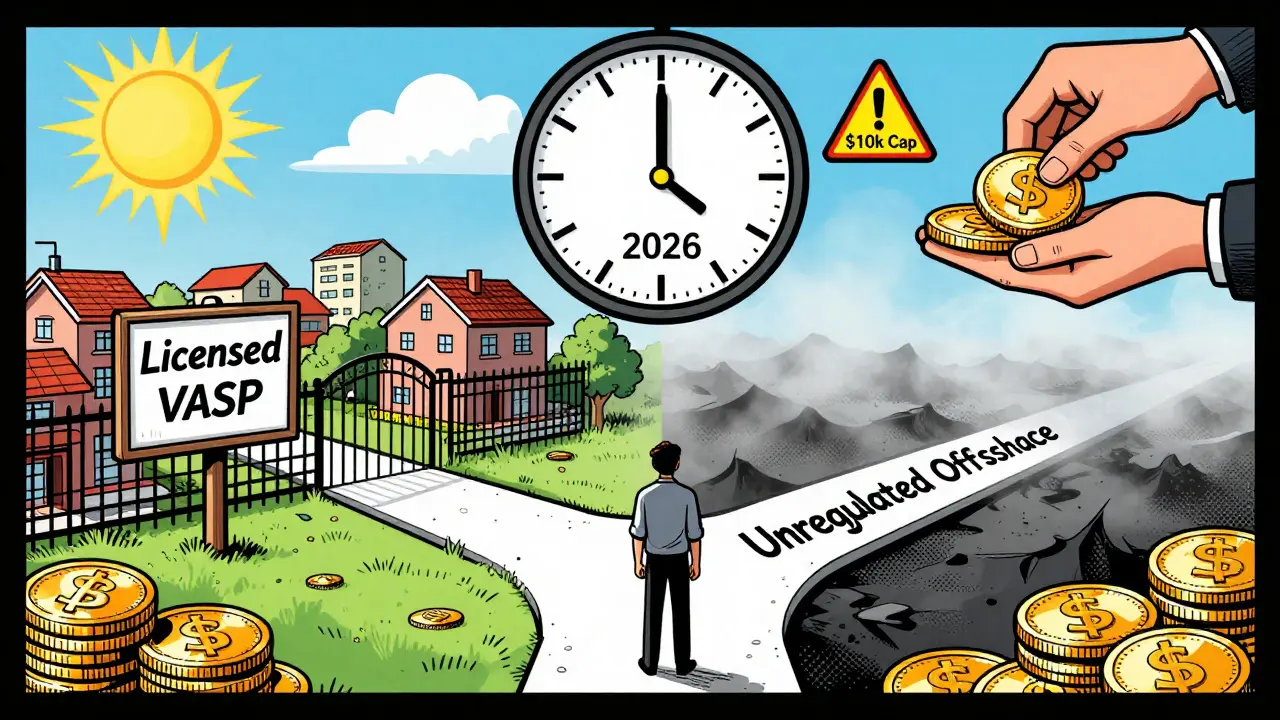
If you thought the BVAL was the end of the story, think again. On September 24, 2025, the Central Bank introduced new foreign exchange regulations that hit crypto exchanges hard. These rules didn't mention "Bitcoin" or "crypto" once. Instead, they targeted the broader forex industry. But since many crypto platforms allow you to buy crypto with dollars or euros, they fell into the net. The key restrictions include:
- Licensing for Forex Providers: Any entity facilitating currency conversion must apply for a license.
- Data Submission: Platforms must submit detailed customer transaction data to authorities.
- Transaction Caps: Single transactions conducted through designated entry and exit points are capped at $10,000.
- Entry/Exit Points: All cross-border flows must go through approved channels.
How Brazil Compares to the Rest of the World
It helps to look outside Brazil to understand why these rules matter. While the United States has recently moved toward lighter-touch regulation, creating a fragmented and uncertain environment, Brazil has chosen clarity over flexibility. This contrast creates unique risks for global firms. For example, a company maintaining robust compliance for Brazil might find itself over-regulated compared to its US operations. Conversely, a firm used to lax rules elsewhere might find Brazil’s emphasis on fraud investigations and links to criminal organizations overwhelming. The BCB treats cryptocurrency as integral to national financial infrastructure, not as a niche hobby. This structured, consultative approach involves continuous dialogue with market participants, aiming to align with international standards like those from the Financial Action Task Force (FATF). This divergence means that "global" crypto strategies don't work in Brazil. You need a local strategy that respects the BCB’s timeline and priorities. The integration of crypto regulation into the BCB’s Regulatory Agenda 2025-2026 signals that this is not a temporary crackdown but a long-term commitment to digital asset oversight.
What This Means for You in 2026
So, what should you do? If you are a consumer, stick to licensed VASPs. Check the BCB’s official list before depositing money. Understand that your privacy is limited, but your funds are safer from outright theft by unregulated actors. Be aware of the $10,000 cap on certain cross-border transactions if you are moving large sums. If you are a business, the days of operating in the shadows are over. The final regulations following the February 2025 public consultations provide definitive operational guidelines. You need agile compliance systems that can adapt to rapid changes, especially regarding stablecoin rules and forex data reporting. The cost of non-compliance is high: loss of license, heavy fines, and potential criminal liability. Brazil’s framework acknowledges that crypto is fully legal but not legal tender. It is a digital asset subject to strict rules. This legal certainty is a double-edged sword. It attracts serious investors and institutional players who want stability, but it pushes out casual users who value anonymity. As the CVM finalizes its tokenization framework and the BCB tightens stablecoin oversight, expect more clarity but also more constraints. The era of easy, unmonitored crypto in Brazil is officially over.
Is cryptocurrency legal in Brazil in 2026?
Yes, cryptocurrency is fully legal in Brazil. It is recognized as a digital asset under the Brazilian Virtual Assets Law (Law No 14.478/2022). However, it is not considered legal tender, meaning businesses are not required to accept it as payment. All activities must comply with regulations set by the Central Bank of Brazil (BCB).
Do I need a license to trade crypto in Brazil?
Individuals do not need a license to trade crypto for personal use. However, any business acting as a Virtual Asset Service Provider (VASP)-including exchanges, brokers, and custodians-must obtain authorization from the Central Bank of Brazil (BCB). Operating without this license is illegal and subject to severe penalties.
What are the new foreign exchange rules affecting crypto?
Introduced in September 2025, new forex regulations require platforms facilitating currency conversions to hold licenses and report transaction data. A single transaction cap of $10,000 applies to transfers through designated entry and exit points. This affects crypto exchanges that allow buying crypto with foreign fiat currencies, requiring them to integrate strictly with Brazil’s supervised forex infrastructure.
How does Brazil protect consumers in the crypto market?
Consumer protection is primarily achieved through mandatory VASP licensing and strict AML/KYC requirements. The Central Bank ensures only compliant entities operate, while identity verification creates a paper trail for dispute resolution. The Regulatory Sandbox also allows new services to be tested safely before full market release, reducing exposure to risky or fraudulent products.
Are stablecoins regulated differently in Brazil?
Yes, stablecoins receive heightened scrutiny due to their dominance in transaction volume (approx. 90%). The BCB views them as systemic risks and has implemented specific oversight mechanisms. Issuers and traders of stablecoins face stricter reserve audits and compliance checks compared to volatile cryptocurrencies like Bitcoin.