

Seed Phrase vs Private Key: Key Differences Explained
Imagine you have a single key that opens one specific door in a massive building. Now imagine having a master code that generates keys for every single room in that entire building. In the world of crypto, these are the two concepts you need to understand: the private key and the seed phrase. Confusing them is one of the most common mistakes new users make, and getting it wrong can lead to lost funds or total wallet compromise.
If you’ve ever held a hardware wallet like a Ledger or used software like MetaMask, you’ve likely seen both terms. But what exactly is the difference? A private key is a unique string of characters that controls one specific address on a blockchain. A seed phrase, on the other hand, is a list of words that acts as a backup for your entire digital asset portfolio. One is a direct access tool; the other is a restoration mechanism. Understanding this distinction is crucial for keeping your assets safe.
The Core Definition: What Are They?
Let’s start with the basics. A Private Key is a unique cryptographic number that grants direct control over a specific cryptocurrency address. Think of it as a digital signature. When you want to send Bitcoin or Ethereum, your wallet uses this key to sign the transaction, proving to the network that you are the rightful owner of those coins. It is typically represented as a long string of hexadecimal characters (letters and numbers), such as "B0183D69E6D87DC0FB6A5778633389F4453213303DA61F20BD67FC233AA33262".
A Seed Phrase is a human-readable sequence of 12 to 24 words that serves as a master backup for an entire wallet. Also known as a recovery phrase or mnemonic, it was introduced by the BIP39 standard to make wallet backups easier for humans. Instead of memorizing a random string of 64 characters, you write down twelve common English words. This phrase doesn’t sign transactions directly. Instead, it is used to regenerate all the private keys associated with your wallet.
The fundamental difference lies in scope. A private key controls one address. A seed phrase controls the entire ecosystem of addresses derived from it. If you lose a private key, you lose access to that specific address. If you lose your seed phrase, you lose access to everything.
Technical Structure and Standards
Under the hood, these two components rely on different mathematical structures. Private keys are 256-bit numbers. This means there are approximately 2^256 possible combinations, making the chance of guessing someone else’s key virtually zero. These keys are generated using complex cryptographic algorithms to ensure randomness and uniqueness.
Seed phrases, however, follow the BIP39 standard, which defines a list of 2,048 specific words. When you create a wallet, the system generates entropy (randomness) and converts it into these words. A 12-word phrase provides 128 bits of entropy, while a 24-word phrase offers 256 bits. The more words, the higher the security margin, though 12 words are generally considered sufficient for most users today.
The magic happens through Hierarchical Deterministic (HD) wallets. This technology allows a single seed phrase to derive multiple private keys in a predictable sequence. This means if you enter your seed phrase into any compatible wallet, it will generate the exact same set of private keys and addresses in the same order. This interoperability is why seed phrases have become the industry standard for backup.
| Feature | Private Key | Seed Phrase |
|---|---|---|
| Format | 64-character hex string | 12-24 word sequence |
| Scope | Single address | Entire wallet (multiple addresses) |
| Function | Signs transactions | Regenerates private keys |
| Loss Impact | Lose funds in one address | Lose access to all wallet funds |
| Human Readability | Low (hard to memorize) | High (easy to write down) |
Security Implications: What Happens if You Lose Them?
This is where the stakes get real. Let’s say you store your private key on a piece of paper and accidentally throw it away. Do you lose your entire crypto portfolio? Not necessarily. If you have your seed phrase, you can restore your wallet and recover that specific address along with all others. The private key was just one piece of the puzzle.
Now flip the scenario. You lose your seed phrase but keep your individual private keys. You still have access to the specific addresses you saved the keys for. However, if you have dozens of addresses generated by your HD wallet, you’ll only be able to access the ones whose private keys you explicitly exported and stored. Any new addresses created after the loss would be inaccessible without the seed.
On the security front, exposure risks differ significantly. If a hacker steals a single private key, they can drain that specific address. But if they steal your seed phrase, they have the master key to your entire digital life. They can scan the blockchain for every address derived from your seed and move all your assets. For this reason, security experts often warn that protecting your seed phrase is more critical than protecting individual private keys, simply because the blast radius of a leak is much larger.
Usability and User Experience
From a user perspective, seed phrases win on convenience. Writing down twelve words is far less intimidating than copying a 64-character alphanumeric string. Most modern wallets, including MetaMask, Trezor, and Exodus, prioritize seed phrase backup during setup. They hide the complexity of private key management behind a simple interface.
However, usability comes with a catch. Because seed phrases are easy to read, they are also easy to photograph, screenshot, or type into a cloud document. Many users mistakenly back up their seed phrases digitally, thinking it’s safer than writing them down. In reality, digital backups are vulnerable to hacking, malware, and cloud service breaches. Physical storage-such as metal plates or fireproof safes-is widely recommended for both private keys and seed phrases.
For advanced users who manage multiple independent wallets, private key management might feel more granular. You can export specific keys for auditing or legacy purposes. But for the average investor, the seed phrase model simplifies life dramatically. You don’t need to track hundreds of keys; you just need to protect one list of words.
Recovery and Restoration Capabilities
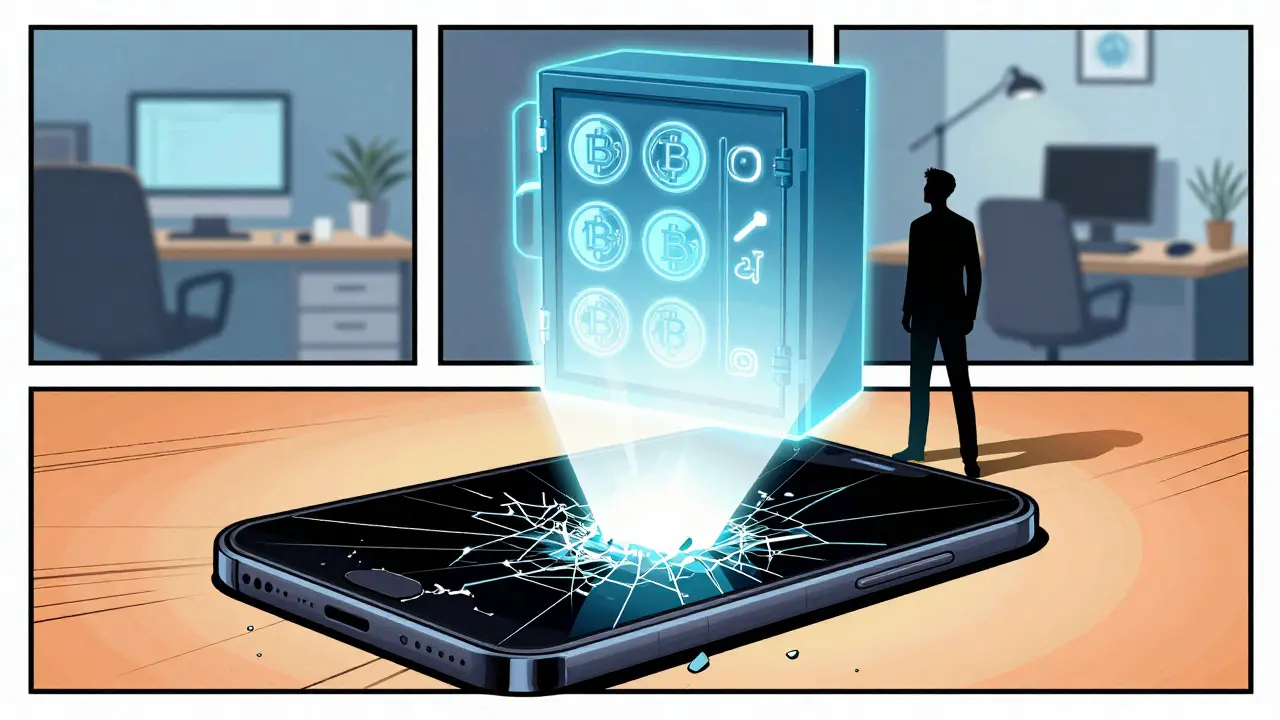
One of the biggest advantages of the seed phrase system is cross-device compatibility. If your phone breaks, or you switch from a Mac to a Windows PC, you can install a new wallet app and enter your seed phrase. Within minutes, your entire portfolio is restored. All your tokens, NFTs, and transaction history are back.
With private keys, restoration is more manual. You have to import each key individually into the new wallet. If you forgot to export a specific key before your device failed, that asset is effectively locked unless you have the seed phrase to regenerate it. This is why relying solely on private keys is risky for anyone holding significant amounts of crypto across multiple addresses.
It’s worth noting that not all wallets support the same derivation paths. While BIP39 is universal for the word list, the way keys are derived (the path) can vary between standards like BIP44 and BIP49. Fortunately, most major wallets handle this automatically, but it’s good to know that the seed phrase is the source of truth, regardless of the specific wallet software you use.
Best Practices for Securing Your Assets
So, how should you approach securing these credentials? First, never store your seed phrase or private keys in a password manager, email, or cloud drive. Second, consider using physical media. Metal backup plates are becoming popular because they resist fire, water, and corrosion better than paper. Third, verify your backup. After writing down your seed phrase, try restoring a test wallet on a different device to ensure you wrote the words correctly. A single typo can render your backup useless.
If you hold large amounts of crypto, you might consider a multi-signature setup, where transactions require multiple signatures. In this context, understanding the relationship between seed phrases and private keys becomes even more important, as you may be managing several sets of keys for different signers.
Finally, stay informed. As blockchain technology evolves, standards may update. Keep an eye on developments in wallet security, but remember that the core concept remains: the seed phrase is your master backup, and the private key is your daily driver for specific addresses.
Can I use a seed phrase to sign a transaction directly?
No. A seed phrase is used to generate private keys. Your wallet software uses the derived private key to sign the transaction. You rarely interact with the seed phrase directly except during wallet creation or recovery.
Is it safer to keep a private key or a seed phrase?
Both require high-level security. However, losing a seed phrase is more catastrophic because it affects all addresses in the wallet. Losing a single private key only affects that one address. Therefore, the seed phrase requires stricter physical security measures.
What is the difference between a 12-word and a 24-word seed phrase?
A 12-word phrase provides 128 bits of entropy, while a 24-word phrase provides 256 bits. The 24-word option offers slightly higher security against brute-force attacks, but 12 words are currently considered secure enough for most users.
Do all cryptocurrencies use the same seed phrase format?
Most major cryptocurrencies follow the BIP39 standard for seed phrases, meaning the word list is universal. However, the way keys are derived for specific chains (like Bitcoin vs. Ethereum) may use different derivation paths, though most wallets handle this automatically.
What should I do if I forget my seed phrase?
If you have no backup and haven’t exported individual private keys, you likely lose access to your funds. Try to recall if you wrote it down anywhere. There is no central authority to reset a seed phrase, so prevention is key.