What is PINO Crypto? A Realistic Guide to the Solana Meme Coin in 2026
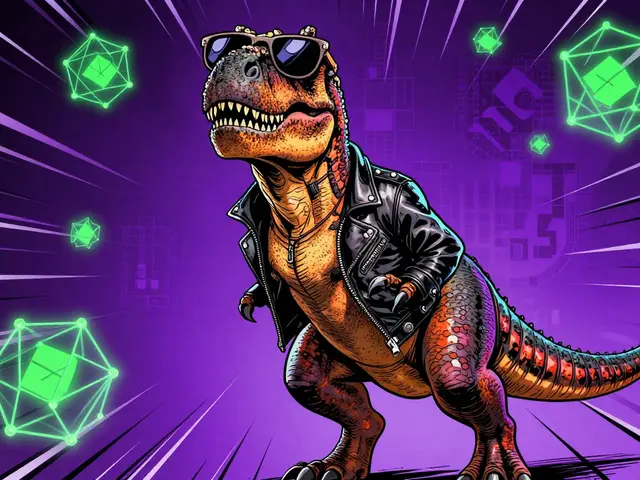
You’ve probably seen it flash across your screen or heard about it in a Telegram group: PINO is a dinosaur-themed meme cryptocurrency launched on the Solana blockchain in June 2024. It bills itself as the "Bad Boy of Solana" and claims to be the world's most successful dinosaur coin. But does that marketing hype translate into actual value, or is it just another speculative asset waiting for the next pump? If you are looking at the charts right now, you see a micro-cap token with a price hovering around fractions of a cent. That’s the reality of PINO in mid-2026.
This isn’t a tutorial on how to get rich quick. It’s a breakdown of what PINO actually is, where it came from, and why its price swings so wildly. We’ll look at the numbers, the technology behind it, and the specific risks you face if you decide to buy in. By the end, you’ll know exactly whether this "community emoji token" fits your portfolio-or if it’s best left for those who enjoy high-stakes gambling.
The Origin Story: From PumpFun to Raydium
To understand PINO, you have to understand how it was born. Unlike major cryptocurrencies like Bitcoin or Ethereum, which were built with whitepapers and years of development, PINO emerged during the mid-2024 Solana memecoin boom. It launched via PumpFun, a platform designed for rapid memecoin launches using a bonding-curve mechanism.
Here is how that works in plain English: When a token launches on PumpFun, early buyers drive up the price through a mathematical curve rather than traditional order books. Once enough liquidity is raised, the token migrates to decentralized exchanges (DEXs) like Raydium, one of the largest automated market makers on the Solana network. This migration happened for PINO, shifting its trading from the initial bonding curve to standard AMM pools.
The team behind PINO remains anonymous. They describe themselves as community-driven, focusing on intellectual property (IP), NFT linkages, and social interaction rather than complex code upgrades. This lack of a formal roadmap or identifiable founders is typical for meme coins but adds a layer of uncertainty. You aren’t investing in a company with quarterly reports; you’re betting on a brand mascot-a digital dinosaur named Pino.
Tokenomics and Supply: The Numbers Game
Let’s look at the hard data. As of August 2026, PINO has a fixed supply structure that is fully circulating. There are no locked tokens, no vesting schedules for developers, and no hidden reserves. Here is the breakdown based on recent market tracker data:
- Total Supply: Approximately 989.7-990 million PINO tokens.
- Circulating Supply: ~100% of total supply is in circulation.
- Blockchain: Solana (SPL Token standard).
- Contract Address Verification: Critical due to multiple assets sharing the "PINO" ticker.
Because the entire supply is already in the hands of traders, there is no future inflation risk from new token minting. However, this also means there is no centralized entity buying back tokens to support the price. The price moves purely based on supply and demand dynamics in the open market.
| Metric | Value | Source Context |
|---|---|---|
| Price Range | $0.0005 - $0.0009 | Varies by exchange and day |
| Market Cap | $500k - $625k | Micro-cap classification |
| All-Time High | $0.003255 | Historical peak |
| Rank | #2181 - #4252 | Deep outside top 1000 |
Trading PINO: Where and How
If you want to trade PINO, you need to navigate the Solana ecosystem. Most volume occurs on decentralized exchanges. Raydium is the primary venue for swapping SOL for PINO. On active days, daily trading volume can spike over $50,000, but on quieter days, it may drop below $1,000. This volatility in liquidity is a double-edged sword: it allows for massive percentage gains during pumps but causes severe slippage when you try to sell large amounts.
Centralized exchanges like Binance and Coinbase list PINO for price tracking and sometimes for direct spot trading, though availability varies. Bitget offers swap routes, allowing users to convert USD directly to PINO. However, always check the interface carefully. Some platforms only provide charts without enabling actual trades, meaning you’d still need to move funds to a DEX.
Crucial Warning: Do not assume every "PINO" you see is the same coin. There is an unrelated PINO token on the XRP Ledger with a tiny market cap of under $200. Always verify the contract address. For the Solana version, watch for addresses associated with PumpFun origins or Raydium pairs. Mistaking one for the other could cost you everything.
Risks and Realities: Is PINO Worth It?
Let’s be blunt. PINO is a high-risk, speculative asset. It lacks utility beyond being a community symbol. There is no protocol revenue, no staking rewards, and no governance power attached to holding PINO. Its value is derived entirely from narrative-specifically, the "dinosaur theme" and the "Bad Boy" branding.
Consider the price history. In late 2024, PINO traded near $0.0019. By mid-2026, it hovered around $0.0005. That’s a drawdown of roughly 70%. While some might call this a "buying opportunity," others see it as a slow bleed. Without fundamental drivers like user growth or product adoption, recovering to all-time highs requires a massive influx of new retail interest.
Furthermore, the anonymity of the team means accountability is low. If the project stalls or the community loses interest, there’s no CEO to answer to. This is the nature of PumpFun-born memes: they rise fast on hype and often fall just as quickly when attention shifts to the next viral character.
How to Start Trading PINO Safely
If you’ve decided to take the plunge, follow these steps to minimize technical errors:
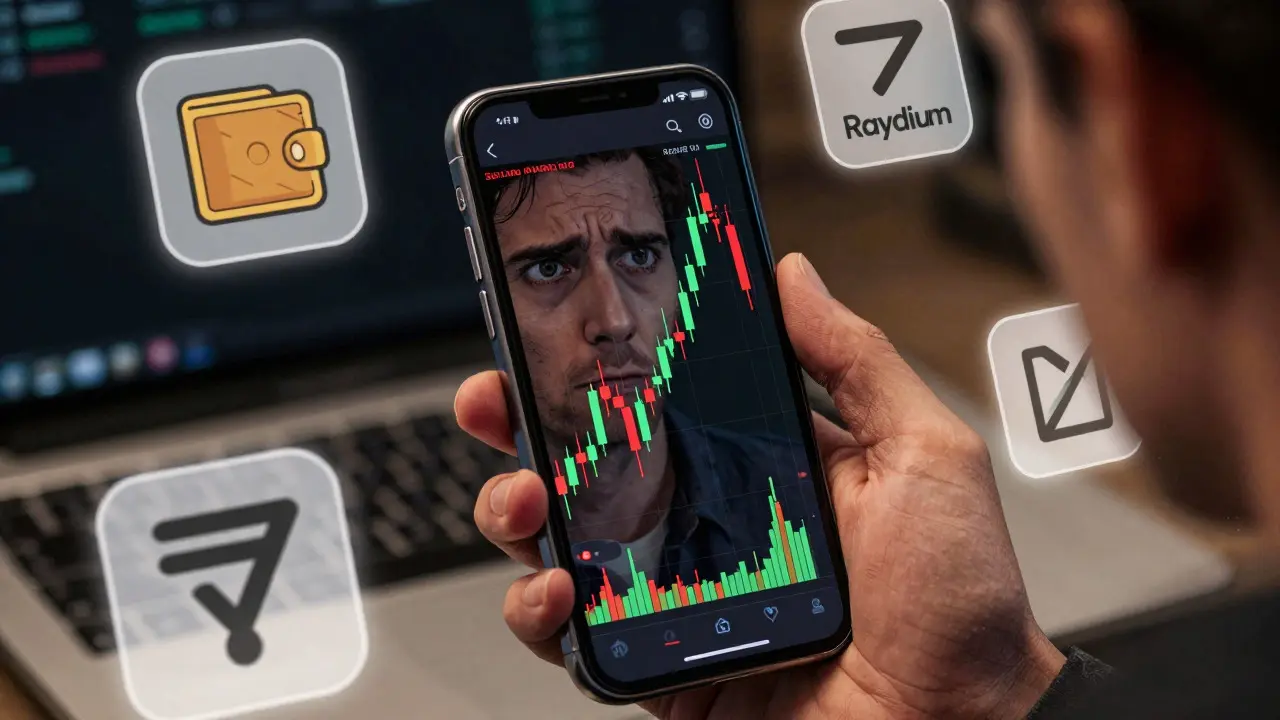
- Set Up a Solana Wallet: Use Phantom or Solflare. Ensure you have SOL for transaction fees (gas).
- Acquire SOL: Buy SOL on a reputable centralized exchange and transfer it to your wallet.
- Connect to Raydium: Navigate to Raydium.io and connect your wallet.
- Verify the Contract: Paste the correct PINO contract address. Double-check it against trusted aggregators like CoinGecko or CoinMarketCap.
- Swap Carefully: Set a slippage tolerance (often 1-2% for volatile tokens) and execute the swap. Start small.
Keep your expectations grounded. Treat any money spent on PINO as entertainment budget, not investment capital. The goal isn’t necessarily long-term holding but participating in short-term momentum waves.
Conclusion: The Verdict on PINO
PINO is a legitimate entry in the crowded Solana memecoin space, but "legitimate" doesn’t mean "safe." It’s a micro-cap asset driven by community sentiment and brand identity rather than technological innovation. With a fully circulating supply of nearly 990 million tokens and a market cap under $1 million, it remains vulnerable to extreme volatility.
For seasoned degens who understand how to read order books and manage risk, PINO offers the thrill of the hunt. For beginners, it serves as a harsh lesson in liquidity and market depth. Before you buy, ask yourself: Are you betting on the dinosaur mascot, or do you understand the mechanics of Solana DEX trading? Know the difference, and trade accordingly.
What is the current price of PINO?
As of August 2026, PINO trades between $0.0005 and $0.0009, depending on the exchange and daily volatility. Check real-time prices on CoinGecko or Raydium for the latest figures.
Is PINO a good investment?
PINO is considered a high-risk speculative asset rather than a traditional investment. It lacks utility and relies on community hype. Only invest what you can afford to lose.
Where can I buy PINO?
You can trade PINO on decentralized exchanges like Raydium using SOL. Some centralized platforms like Bitget and Binance may offer swap options or price tracking.
What is the total supply of PINO?
The total supply is approximately 990 million PINO tokens, and nearly 100% of this supply is currently in circulation.
Is PINO different from other meme coins?
PINO distinguishes itself with a dinosaur theme and "Bad Boy of Solana" branding. However, technically, it functions similarly to other PumpFun-launched tokens on the Solana network.