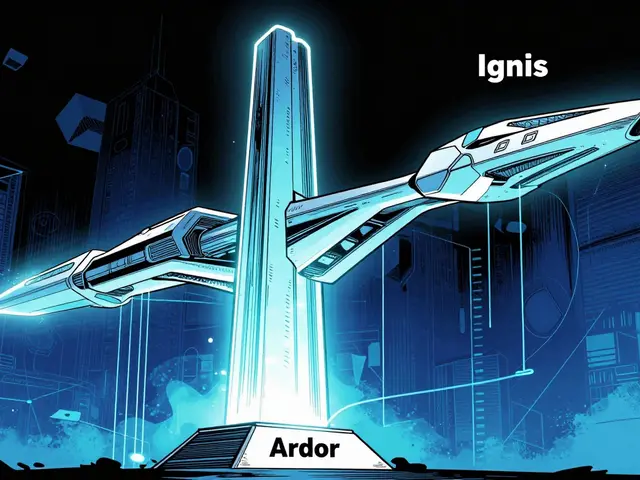
What is Ignis (IGNIS)? The Core Child Chain of Ardor Explained
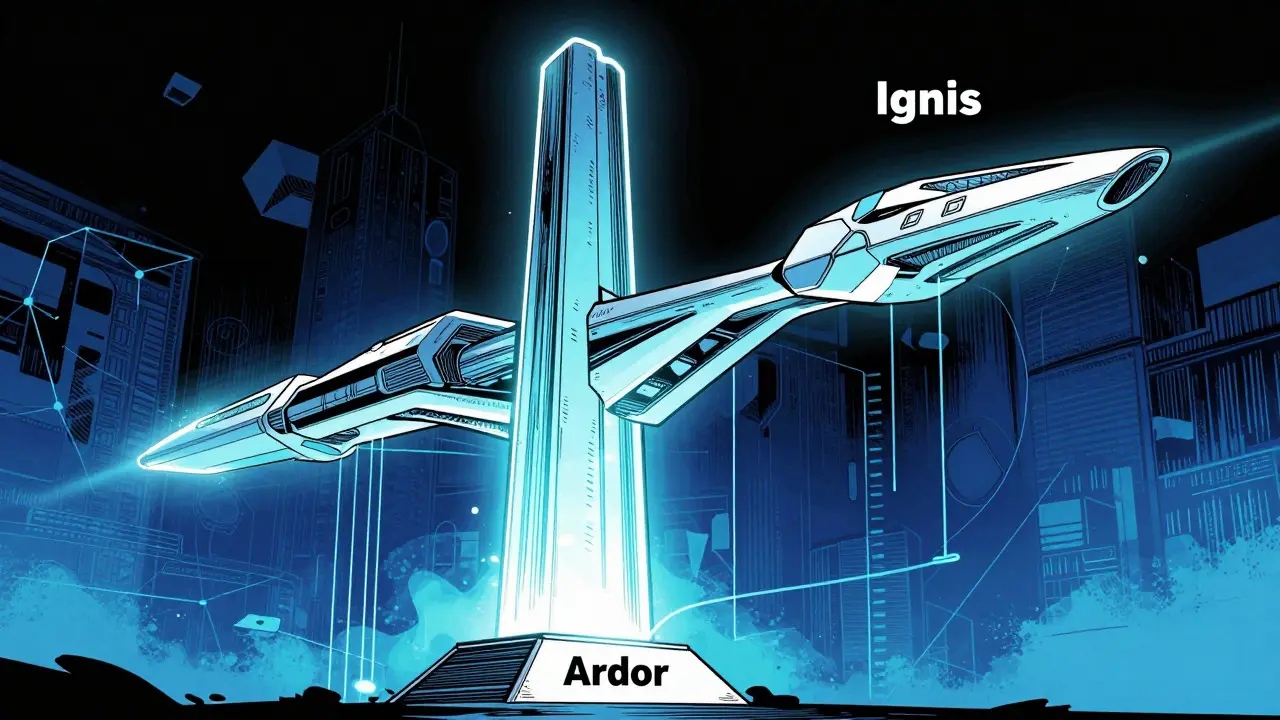
You might have stumbled upon Ignis, often referred to by its ticker symbol IGNIS, and wondered if it's just another forgotten altcoin from the 2017 boom. It isn't. While its market cap sits in the micro-cap range today, Ignis holds a unique structural position in the blockchain world that most other coins don't have. It is not an independent blockchain trying to compete with Ethereum or Solana for raw speed. Instead, it is the "core" public child chain of the Ardor blockchain platform.
If you are looking to understand what makes IGNIS special, why it exists, and how it functions differently from standard cryptocurrencies, this guide breaks down the architecture, economics, and utility of the project as it stands in 2026.
The Architecture: Why Ignis Is Not a Standalone Blockchain
To grasp what Ignis is, you first need to understand the concept of a child chain. In traditional blockchain design, every network runs its own nodes, has its own consensus mechanism, and requires its own security infrastructure. This leads to fragmentation. Ardor solved this by creating a parent-child model.
Ignis operates as a permissionless core child chain of the Ardor blockchain platform, designed for everyday low-fee transactions and advanced on-chain functionality without maintaining its own independent ledger. Here is what that means for you:
- No Independent Security: IGNIS does not secure itself. It relies entirely on the Ardor main chain for block production and finality.
- Inherited Consensus: Because it rides on Ardor’s back, Ignis inherits Ardor’s 100% Proof-of-Stake (PoS) consensus. This means no energy-intensive mining rigs are needed to keep Ignis running.
- Data Pruning: One of the biggest technical advantages is scalability. Non-essential historical data from child chains like Ignis can be pruned (removed) from the main network after a certain period, reducing storage overhead while keeping the critical security anchors intact.
This architecture allows Ignis to be highly efficient. You get the benefits of a dedicated blockchain environment-custom features, specific transaction types-without the massive cost and complexity of launching a new Layer 1 network.
What Can You Actually Do With Ignis?
If Ignis doesn't have its own miners, what gives it value? The answer lies in its functionality. Jelurida, the development team behind Nxt and Ardor, designed Ignis to be the "main child chain." It is fully featured and permissionless, meaning anyone can use it without asking for approval.
Unlike specialized private child chains that might only handle one type of asset, Ignis exposes all available Ardor transaction types. As of mid-2026, these capabilities include:
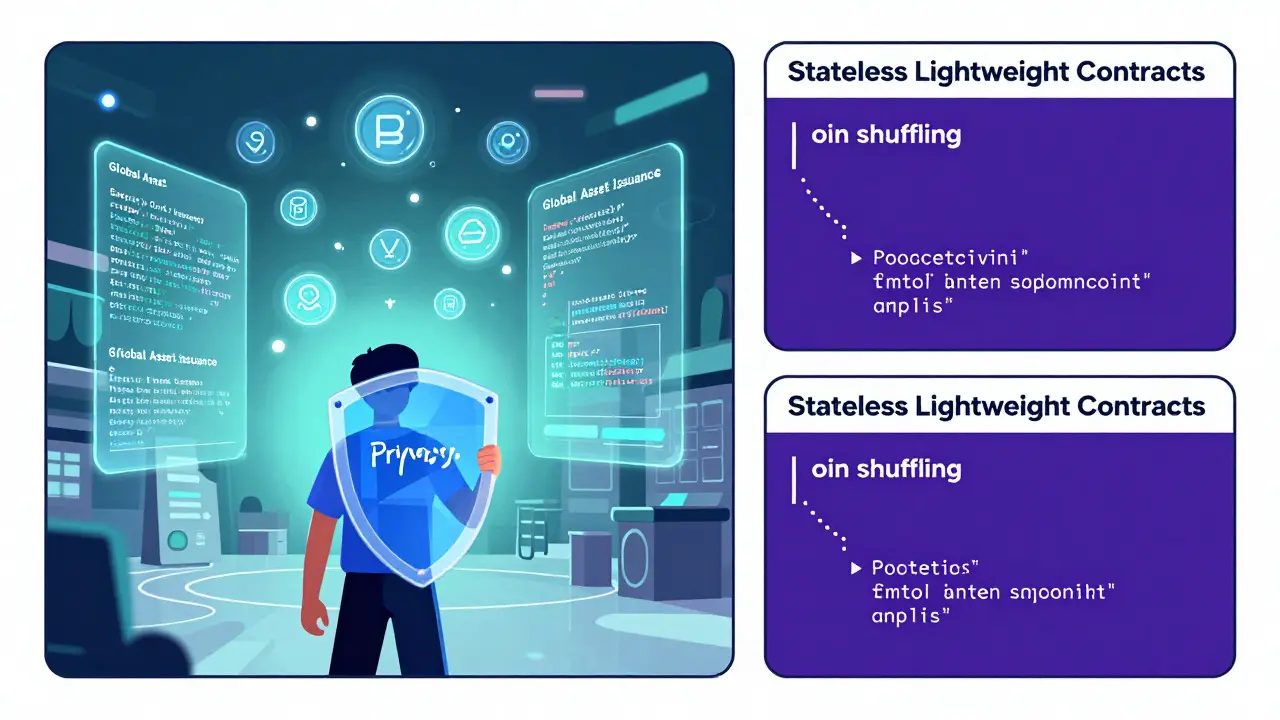
- Global Asset Issuance: You can create tokens on Ignis that are interoperable across other Ardor child chains. If you issue a loyalty point token on Ignis, users on a different child chain can potentially hold and trade it.
- Stateless Lightweight Contracts: These allow for customizable on-chain logic. Think of them as simplified smart contracts that execute based on predefined conditions without needing complex programming languages like Solidity.
- Privacy Enhancements: Ignis supports coin shuffling, token shuffling, and asset shuffling. These mechanisms help obscure transaction trails, offering a layer of privacy that is built directly into the protocol rather than relying on third-party mixers.
- Marketplace and Exchange: Built-in order books allow for peer-to-peer trading of assets without needing a centralized exchange.
Essentially, Ignis acts as the default public playground for the Ardor ecosystem. If you want to experiment with advanced blockchain features in a decentralized environment, Ignis is the place to do it.
Token Economics and Supply Details
Understanding the supply dynamics of IGNIS is crucial for evaluating its market position. The token distribution was carefully planned during the Initial Coin Offering (ICO) phase in 2017.
| Metric | Value / Detail |
|---|---|
| Total Max Supply | 999,449,694 IGNIS |
| Circulating Supply (as of June 2025) | ~761,143,950 IGNIS |
| Initial Distribution Model | 50% Airdropped to NXT holders (1 NXT = 0.5 IGNIS); 50% via ICO/Jelurida reserve |
| Fee Utility | Used to pay for transactions within the Ignis child chain |
The total supply is fixed near one billion tokens. About half of this initial supply was distributed to holders of NXT, the predecessor cryptocurrency, at a snapshot taken before Ardor launched. The other half was sold during the ICO or reserved for the developers, Jelurida, to fund ongoing maintenance.
As of recent market data from mid-2025, the price of IGNIS hovered around $0.0011 USD. This results in a relatively small market capitalization compared to major cryptos. However, for a niche technical component of a larger platform, this reflects its role as a utility token rather than a speculative store of value.
How Fees Work: The Bundler Mechanism
This is where things get interesting technically. If you send IGNIS or trade assets on Ignis, you pay fees in IGNIS. But remember, Ignis doesn't secure the chain; Ardor does. So who pays Ardor?
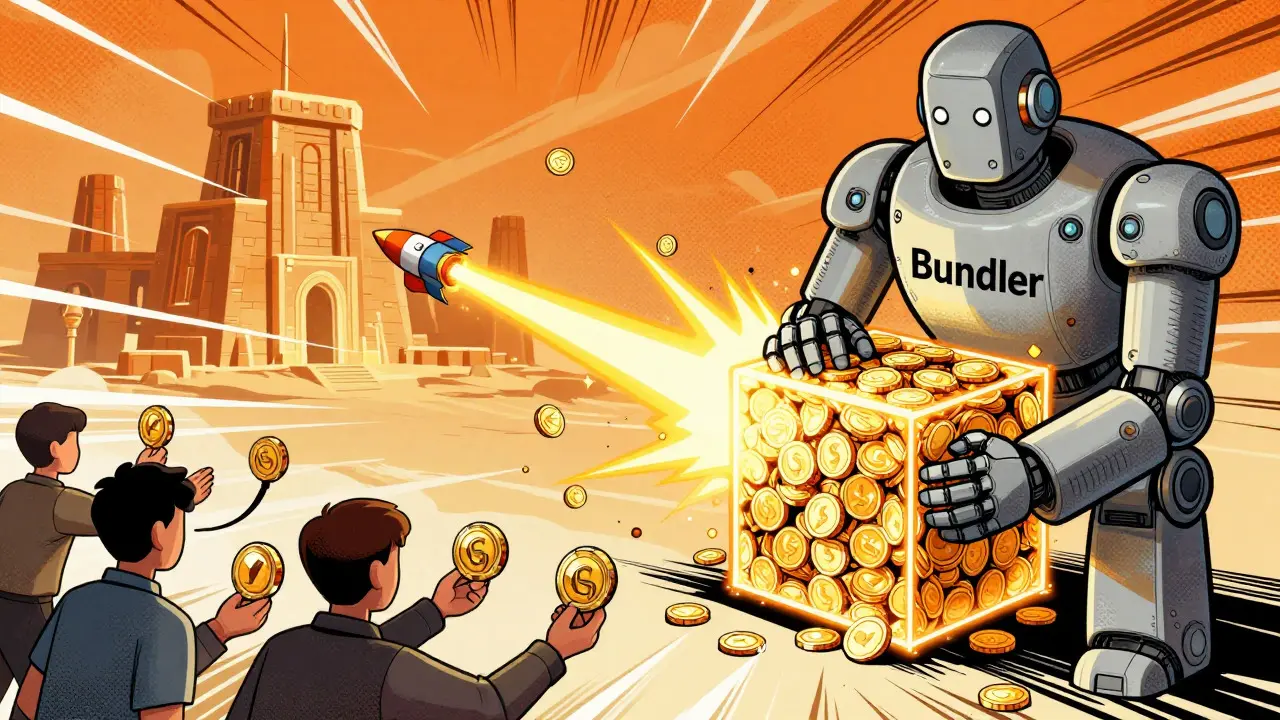
The answer is bundlers. Bundlers are special accounts or nodes that perform two jobs:
- Aggregation: They collect pending transactions from the Ignis child chain.
- Payment Conversion: They bundle these transactions together and submit them to the Ardor main chain. To do this, they pay the required fees in ARDR (the native token of the Ardor main chain).
Bundlers earn revenue from the IGNIS fees paid by users. This creates a symbiotic economic loop. Users enjoy low fees in their local currency (IGNIS), bundlers profit from the spread and volume, and the Ardor main chain receives payment in ARDR to maintain security. Data from Ardor.World shows active bundlers processing hundreds of thousands of transactions, proving this mechanism works in practice.
Ignis vs. Other Blockchains: Where Does It Fit?
You might ask, "Why not just use Ethereum or Polkadot?" That is a fair question. Ignis does not try to beat Ethereum at being Ethereum. Its competitive advantage is not high-throughput DeFi or NFTs in the mainstream sense. Its advantage is structural efficiency and interoperability within the Ardor family.
| Feature | Ignis (Child Chain) | Typical L1 Blockchain (e.g., ETH, BTC) |
|---|---|---|
| Security Source | Inherited from Parent (Ardor) | Own Network (Miners/Stakers) |
| Scalability Method | Data Pruning + Multi-chain architecture | Sharding, Layer 2 solutions, or higher TPS hardware |
| Asset Interoperability | Native cross-chain support within Ardor ecosystem | Requires bridges or wrapped tokens |
| Permissioning | Public/Permissionless (Core Chain) | Varies (Mostly Public) |
If your goal is to build an application that needs deep integration with other Ardor-based projects, or if you value a lightweight, PoS-only environment with built-in privacy tools, Ignis offers a streamlined path. If you are looking for the deepest liquidity pools or the largest developer community, you will likely look elsewhere. Ignis is a specialist tool, not a generalist hammer.
Current Status and Future Outlook (2026)
Is Ignis dead? Absolutely not. Documentation updates from Jelurida as recently as July 2026 confirm that Ignis remains an essential part of the Ardor platform. The codebase is maintained, and the bundler ecosystem is active.
However, it is important to manage expectations. Ignis is not trending on social media. It does not have the viral marketing budget of newer meme coins or hyped Layer 1 launches. Its survival depends on the continued relevance of the Ardor multi-chain architecture. For enterprise clients or communities that require a customizable, secure, and private blockchain solution without the headache of managing node infrastructure, Ignis provides a ready-made template.
For investors, IGNIS represents a high-risk, low-market-cap asset tied closely to the technological success of Ardor. For developers, it is a robust sandbox for testing child-chain mechanics, stateless contracts, and cross-chain asset issuance in a live, permissionless environment.
Is Ignis (IGNIS) a good investment in 2026?
Investing in IGNIS carries significant risk due to its low market capitalization and niche utility. It is not a mainstream cryptocurrency. Its value is tied directly to the adoption and technological success of the Ardor blockchain platform. If you believe in the long-term viability of child-chain architectures and Ardor's specific approach to scalability, IGNIS may be worth a small speculative allocation. However, it lacks the liquidity and broad institutional interest found in top-tier assets.
What is the difference between NXT, Ardor, and Ignis?
Think of them as generations. NXT was the first proof-of-concept blockchain created by Jelurida. Ardor is the second-generation platform built on NXT's lessons, introducing the multi-chain (parent-child) architecture. Ignis is the primary public child chain operating within the Ardor ecosystem. NXT provided the foundational tech, Ardor provides the infrastructure, and Ignis provides a specific user-facing environment for transactions and assets.
Do I need ARDR to use Ignis?
No. As a regular user, you pay transaction fees on Ignis using IGNIS tokens. You do not need to hold ARDR. Behind the scenes, specialized nodes called "bundlers" convert your IGNIS fees into ARDR to pay for the security services provided by the Ardor main chain. This abstraction allows you to interact with Ignis seamlessly without managing multiple token types.
Can I mine Ignis (IGNIS)?
No, you cannot mine IGNIS. The entire Ardor ecosystem, including Ignis, uses a 100% Proof-of-Stake (PoS) consensus mechanism. There is no mining involved. New blocks are forged by stakers holding ARDR on the main chain, which secures the Ignis child chain indirectly. All IGNIS tokens were issued during the initial launch and subsequent distributions; there is no inflationary mining reward.
What are "stateless lightweight contracts" on Ignis?
These are simplified smart contracts that do not require storing complex state changes on the blockchain for every execution step. They allow for customizable logic-such as automated payments or conditional transfers-to run efficiently on the child chain. They are less powerful than full Turing-complete smart contracts on Ethereum but are more gas-efficient and easier to deploy for specific, predictable tasks.