1DOGE Finance Airdrop: What It Is, Why It’s Likely a Scam, and How to Spot Fake Crypto Airdrops
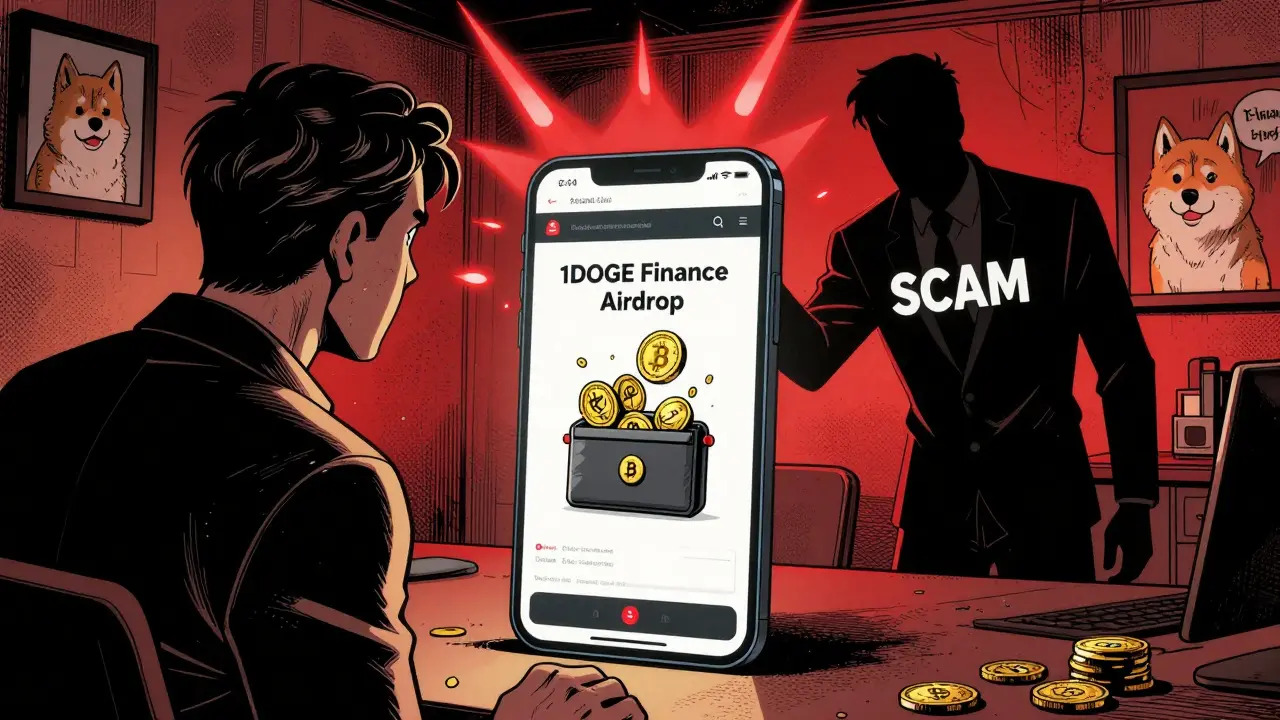
When you hear about a 1DOGE Finance airdrop, a free token distribution tied to a project claiming to be a decentralized finance platform built on Dogecoin-inspired mechanics. Also known as DOGE Finance airdrop, it’s one of dozens of similar names popping up every week—each promising quick riches with zero effort. The truth? There’s no official 1DOGE Finance project, no whitepaper, no team, and no live product. Just a website with a countdown timer and a wallet address asking you to connect your crypto wallet. That’s not an airdrop. That’s a trap.
Fake airdrops like this rely on one thing: urgency. They copy the names of real projects—like Dogecoin or DeFi platforms—to trick you into thinking they’re legit. They’ll ask you to sign a transaction, connect your wallet, or pay a tiny gas fee to "claim" tokens. Once you do, they drain your funds. Real airdrops don’t ask for your private key. They don’t require you to send crypto first. And they’re never announced on random Telegram channels with no verifiable links. The crypto airdrop scam, a fraudulent scheme where fake tokens are distributed to steal user funds or personal data is growing faster than legitimate projects. Look at the posts below: SecretSky.finance, Berry Data, RVLVR Revolver Token—all had the same red flags. Zero trading volume. No team. No exchange listings. Just a website and a promise.
Scammers don’t even need to build a real token. They just need you to believe one exists. That’s why you’ll see fake Twitter accounts pretending to be from CoinMarketCap, or cloned websites that look like Binance. The fake token airdrop, a deceptive campaign designed to mimic real token distributions to harvest wallet information or funds works because people want to believe they’ve found a shortcut. But crypto doesn’t work that way. If it sounds too easy, it’s a scam. And if you’re being asked to act fast, it’s even worse.
There’s a reason every single post in this collection warns about the same thing: no real project gives away free money without a reason. Legit airdrops reward early users, testers, or community members. They’re announced on official blogs. They have documentation. They’re listed on CoinGecko or CoinMarketCap. And they never, ever ask you to send crypto to get more crypto. The decentralized finance scam, a fraudulent DeFi project that mimics real yield farming or staking platforms to steal user assets thrives on confusion. But you don’t need to be an expert to avoid it. You just need to pause, check, and ask: "Who’s behind this?" and "What’s the proof?"
Below, you’ll find real examples of how these scams play out—what they look like, how they fool people, and how to spot them before it’s too late. No fluff. No hype. Just facts from projects that either disappeared or got exposed. If you’re looking to earn from crypto airdrops, this is the guide you need. Because the next one might be the one that takes everything.