Token-Weighted Voting: How Crypto Governance Really Works
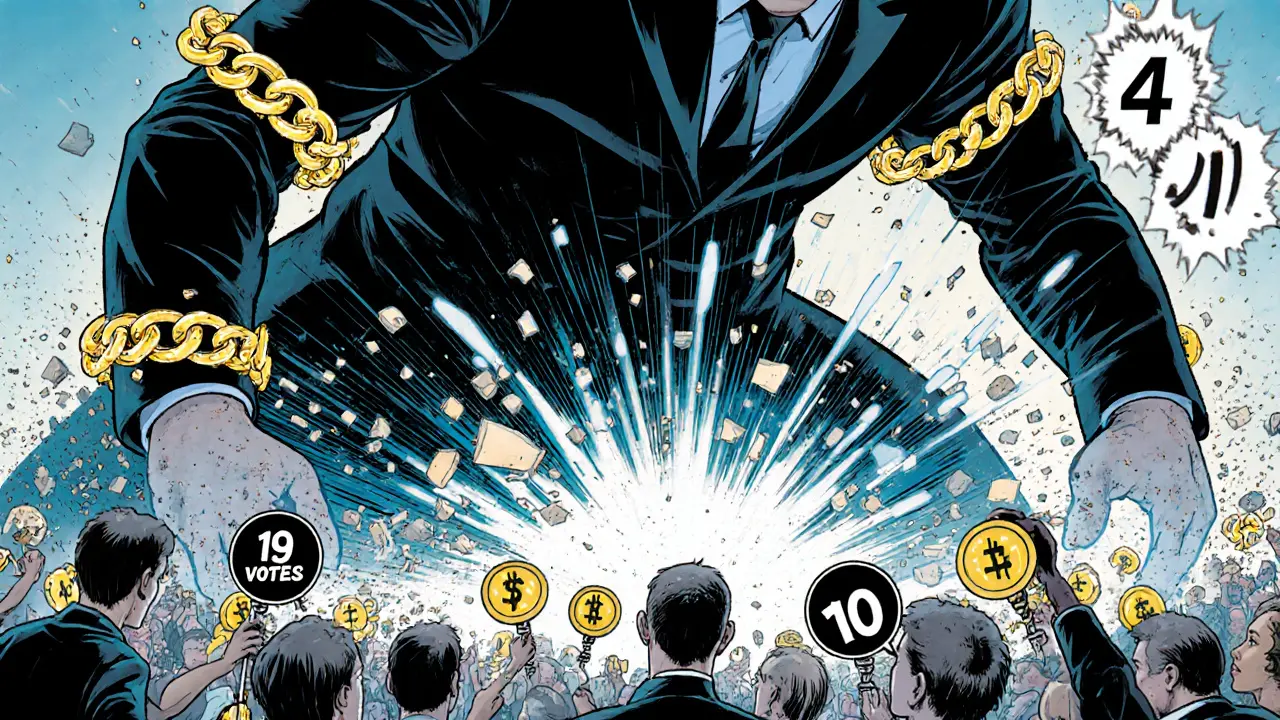
When you hold tokens in a decentralized autonomous organization, a community-run digital entity that operates without central leadership, often governed by smart contracts and member votes. Also known as a DAO, it relies on token-weighted voting to make decisions—from funding new features to changing rules. This system gives voting power proportional to how many tokens you hold, meaning the more you own, the louder your voice. It sounds fair on paper, but in practice, it often means a small group of big holders calls the shots.
DAO voting, the process where token holders cast votes on proposals using their holdings as influence. Also known as governance voting, it’s the backbone of projects like Uniswap, Aave, and Compound. But here’s the catch: if 1% of users own 80% of the tokens, that 1% controls everything. You might have 100 tokens, but if someone else has 100,000, your vote barely matters. This isn’t theoretical—it’s happened in real DAOs where whales pushed through changes users didn’t want, and regular holders had no power to stop them. That’s why some projects are testing alternatives like quadratic voting or reputation-based systems. But for now, blockchain governance, the set of rules and processes that determine how decisions are made on decentralized networks. Also known as crypto governance, it still mostly runs on token weight. It’s the same system that lets you vote on whether a project should spend its treasury on marketing, hire a new developer, or fork its code. If you’re holding tokens in any DeFi protocol, you’re already part of this system—even if you never voted.
Most of the posts here touch on this in some way. You’ll find reviews of exchanges where governance tokens are traded, guides on claiming airdrops that give you voting rights, and deep dives into tokens that give you influence over protocol changes. Some projects, like Genshiro and ETHPAD, offer tokens that come with governance power. Others, like Unbound and ORI, are shrouded in mystery—making you wonder if their tokens even have real voting rights at all. And then there’s the flip side: when a token has no utility beyond speculation, its voting power is meaningless. Token-weighted voting only works if the token has value, adoption, and real use. Without that, it’s just digital noise.
What you’ll find below aren’t just articles—they’re real-world examples of how token-weighted voting plays out. Some show it working as intended. Others show how easily it can be broken. Whether you’re holding a few tokens or managing a wallet full of governance assets, understanding this system isn’t optional. It’s how you protect your stake in the future of crypto.