What is DeFinity (DEFX)? Tokenomics, Utility, and Price Analysis for 2026
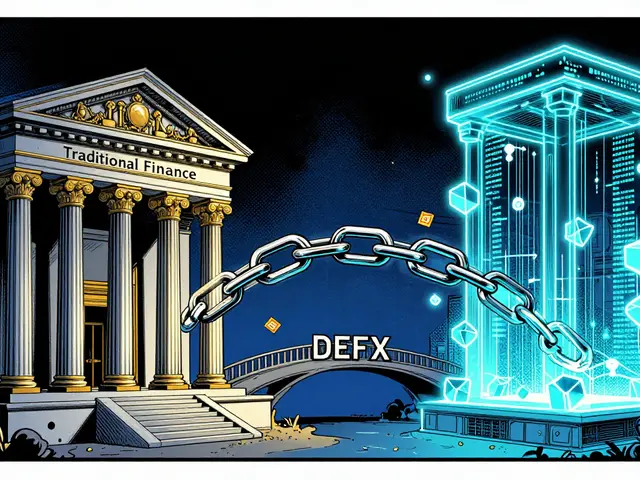
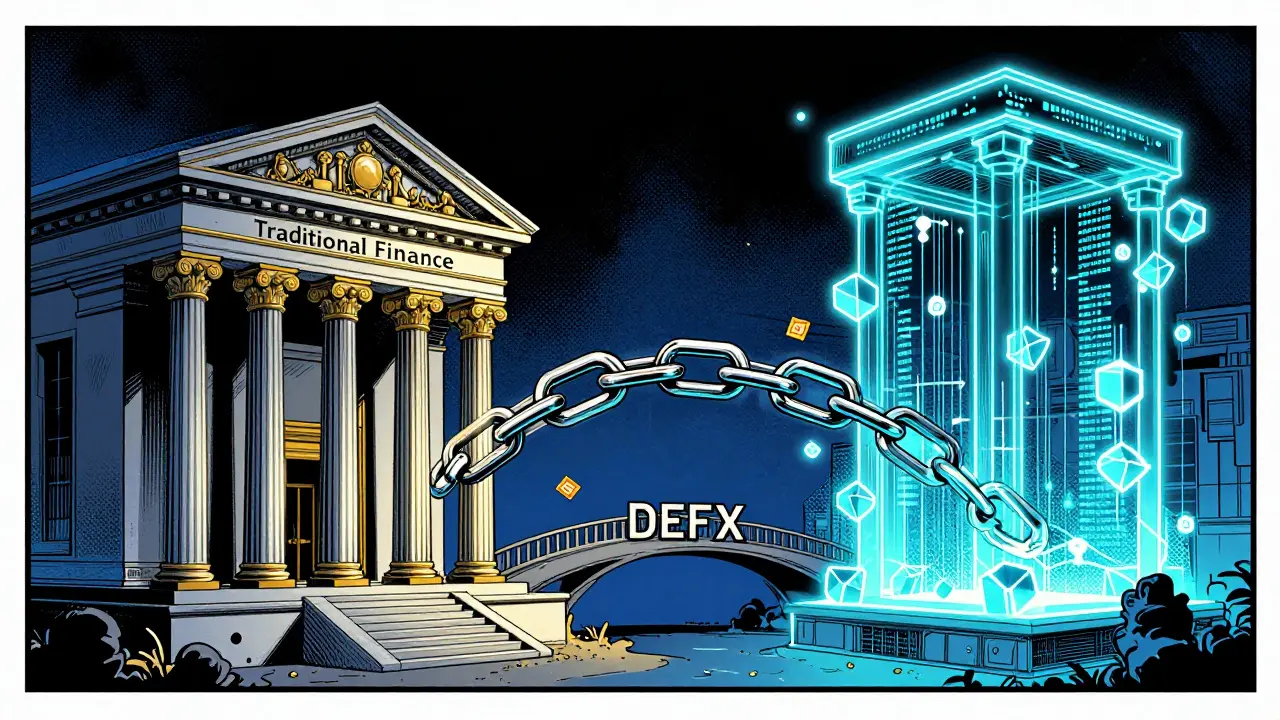
Most people think of crypto as Bitcoin or Ethereum. But there is a smaller corner of the market trying to do something very different: bringing traditional foreign exchange (FX) onto the blockchain. That is exactly what DeFinity (DEFX) is a utility token powering a decentralized finance protocol designed for real-time settlement of fiat FX pairs and digital assets. If you have stumbled upon this ticker on a chart or heard it mentioned in niche trading circles, you are probably asking if it is worth your attention. The short answer is that DEFX is not a typical meme coin or retail-focused exchange token. It is an infrastructure play aimed at institutions, with a specific focus on bridging the gap between centralized banking systems and decentralized ledgers.
Quick Summary / Key Takeaways
- Core Purpose: DEFX powers the DeFinity Network, a hybrid platform combining DeFi liquidity pools with an institutional-grade Electronic Communication Network (ECN) for forex trading.
- Token Utility: Holders use DEFX for governance, staking to earn network fees, and securing up to a 20% discount on trading invoices for institutional clients.
- Supply Dynamics: The token has a hard cap of 171.5 million tokens. As of mid-2026, about 89% of these are already in circulation, with plans for deflationary burns.
- Market Status: DEFX is a micro-cap asset, trading around $0.007-$0.008 USD in July 2026, with low daily volume and high volatility compared to its 2021 all-time high.
- Institutional Focus: Unlike most DEXs, DeFinity integrates with Fireblocks for custody and targets regulated entities, aiming to support future Central Bank Digital Currencies (CBDCs).
Who Built DeFinity and Why?
To understand DEFX, you need to look at who stands behind it. This isn't a project launched by anonymous developers in a basement. DeFinity Network is a joint venture between two established players: DMALINK, a foreign-currency trading and liquidity platform serving institutional clients, and WeOwn, a technology company focused on layer‑1 and layer‑2 blockchain solutions for financial assets.
This partnership matters because it gives the project roots in traditional finance (TradFi). While many DeFi projects start with code and try to find users later, DeFinity started with existing liquidity providers and brokers. Their goal was to build a bridge. They wanted to allow professional traders to access the speed and transparency of blockchain settlement without leaving the familiar environment of an Electronic Communication Network (ECN). The result is DeFinity Markets, the brand name used for their institutional-facing front end.
The vision extends beyond just swapping dollars for euros today. The team has explicitly stated that the architecture is geared toward supporting Central Bank Digital Currencies (CBDCs) in the future. This positions DEFX not just as a tool for current crypto traders, but as a potential component in the next generation of global currency infrastructure.
What Can You Actually Do With DEFX?
Tokens often suffer from "utility theater," where they claim to be useful but don't really change how the platform works. DEFX tries to avoid this by embedding itself into the economic engine of the network. Here is how the token functions in practice:
- Governance: Holding DEFX gives you a voice. You can vote on protocol upgrades, parameter changes, and major strategic decisions. This ensures the community has control over the direction of the network rather than just being passive investors.
- Staking and Fee Sharing: This is one of the more attractive features for holders. Participants can stake DEFX against specific trading pairs. In return, they receive a percentage of the network fees generated within those pools. According to documentation, stakers can receive up to 0.25% of network fees. This creates a direct link between the platform's usage and your rewards.
- Fee Discounts: For institutional clients using DeFinity Markets, holding DEFX offers a tangible financial benefit. Institutions are not forced to hold the token, but if they choose to settle their invoices in DEFX, they get a 20% discount. The team argues this is simple arithmetic: if the savings exceed the cost of buying the token, it makes economic sense to hold it.
- Referral Rewards: Retail users can also benefit. If you bring new users to the ecosystem, you earn referral rewards paid in DEFX, incentivizing community growth.
The key takeaway here is that DEFX is designed to slow down token velocity. Instead of being bought and immediately sold, the incentives encourage holding it to earn fees or save on costs. This is a classic strategy to reduce sell pressure over time.
Tokenomics: Supply, Distribution, and Deflation
Let’s talk numbers, because in crypto, supply dynamics drive value. When DEFX launched on May 26, 2021, it had an initial supply of roughly 8.76 million tokens. However, the total supply is strictly capped at 171,516,755 DEFX. No more tokens can ever be minted. This hard cap is crucial for long-term scarcity.
| Allocation Category | Percentage | Purpose |
|---|---|---|
| Rewards & Incentives | 50% | Staking rewards, liquidity provision, and ecosystem incentives |
| Token Sales | 27% | Initial public and private sales to fund development |
| Development & Marketing | 10% | Ongoing technical development and promotional activities |
| Team | 10% | Compensation for core development and management staff |
| Advisors | 3% | Compensation for strategic advisors and consultants |
As of mid-2026, the circulating supply has risen to approximately 150-153 million DEFX. This means about 88-89% of all possible tokens are already in the hands of investors and users. There is no massive reserve of tokens waiting to be dumped on the market by early insiders, which is a common risk in newer projects. Furthermore, the team has implemented a deflationary mechanism. Certain utilities involve burning tokens, permanently removing them from circulation. Combined with the fixed supply, this aims to increase scarcity as adoption grows.
Price History and Market Reality in 2026
If you look at the chart for DEFX, you will see a story of extreme volatility, which is typical for small-cap altcoins. The token reached an all-time high of $1.79 during the bull run of 2021-2022. Since then, like many non-Bitcoin assets, it has faced a severe drawdown.
As of July 2026, DEFX is trading in the range of $0.0071 to $0.0075 USD. This represents a drop of nearly 98% from its peak. The market capitalization hovers between $1.15 million and $1.29 million, placing it around rank #1876 on major aggregators like CoinMarketCap. To put this in perspective, DEFX is a micro-cap asset. Its share of the total global crypto market is effectively 0.00%.
Daily trading volumes are also quite low, often dipping below $1,000 on quiet days and reaching up to $24,000 on active ones. This low liquidity means that large orders can cause significant price slippage. If you are looking to move millions of dollars in DEFX, you will face execution risks. However, for retail investors buying smaller amounts, the entry price is accessible. The tight correlation between its circulating market cap and fully diluted valuation (FDV) indicates that there is little hidden inflation risk, but also that the current price reflects the market's cautious view on its near-term growth potential.
How Does It Compare to Other DeFi Tokens?
It is easy to compare DEFX to giants like Uniswap (UNI) or Aave (AAVE), but that comparison misses the point. Those protocols are primarily retail-focused, permissionless markets for swapping crypto assets. DeFinity is different.
Think of it this way: Uniswap is a public supermarket open to everyone. DeFinity Markets is more like a private wholesale club with a digital membership card. It focuses on institutional order flow, regulated compliance, and deep liquidity in fiat pairs. The integration with Fireblocks, a leading institutional custody platform, is a key differentiator. Banks and asset managers cannot easily send funds directly to smart contracts due to security and compliance rules. By integrating with Fireblocks, DeFinity allows these institutions to trade within their existing secure workflows. This makes DEFX one of the smallest tokens by market cap integrated into such a major institutional infrastructure, which could be a unique advantage if institutional adoption accelerates.
Risks and Considerations
No investment is without risk, and DEFX carries several specific ones you should weigh carefully:
- Liquidity Risk: With low daily volume, exiting a large position quickly without impacting the price is difficult. You might get stuck holding the bag if sentiment turns negative.
- Execution Risk: Slippage can be high. What you see on the quote might not be what you get when you execute a trade, especially on decentralized exchanges like Uniswap or PancakeSwap.
- Adoption Uncertainty: The entire value proposition hinges on institutions actually using the ECN. If banks and brokers prefer other solutions or if CBDC development stalls, the demand driver for DEFX weakens.
- Competitive Landscape: Traditional forex platforms are evolving, and other DeFi projects are entering the institutional space. DeFinity needs to maintain its technological edge and regulatory standing.
- Lack of Independent Audits: While the team emphasizes security through Fireblocks integration, publicly available information lacks detailed third-party smart contract audit reports from firms like CertiK or Trail of Bits. This is a gap in due diligence for tech-savvy investors.
Where and How to Buy DEFX
If you decide to proceed, acquiring DEFX is relatively straightforward, though options are limited compared to top-tier coins. You can find DEFX on both centralized and decentralized exchanges.
Centralized Exchanges (CEX): MEXC is currently one of the most active venues, offering a DEFX/USDT pair. Other platforms may list it intermittently, but availability can change. Always check current listings before attempting to trade.
Decentralized Exchanges (DEX): DEFX is available on Uniswap V2 (on the Ethereum network) and PancakeSwap v2 (on the BNB Chain). To trade here, you will need an EVM-compatible wallet like MetaMask, some ETH or BNB for gas fees, and the correct contract address to ensure you are swapping the genuine token. Be cautious of fake tokens with similar names.
For institutional players, the path is through DeFinity Markets’ ECN, utilizing Fireblocks for custody and settlement. This route requires accreditation and adherence to their compliance procedures.
Final Thoughts on DeFinity
DeFinity (DEFX) occupies a unique niche in the crypto landscape. It is not trying to be the next Bitcoin or the next viral meme coin. It is a specialized tool built for a specific job: facilitating institutional-grade forex trading on-chain. The backing by DMALINK and WeOwn, combined with Fireblocks integration, lends it credibility that many pure-play DeFi projects lack.
However, the market data tells a sobering story. After a massive run-up in 2021, the token has lost most of its value and remains a micro-cap asset with thin liquidity. Investing in DEFX is a bet on the future of institutional DeFi and CBDC integration. If you believe that banks will increasingly adopt blockchain-based settlement layers and that DeFinity will capture a share of that flow, DEFX could offer asymmetric upside. If you are looking for quick gains or stable performance, this token likely does not fit your profile. Always do your own research, consider the liquidity risks, and never invest more than you can afford to lose.
Is DeFinity (DEFX) a good investment in 2026?
Whether DEFX is a good investment depends entirely on your risk tolerance and belief in institutional DeFi adoption. As a micro-cap token with low liquidity and a history of significant drawdowns, it carries high risk. However, its unique positioning in the FX market and partnerships with firms like Fireblocks offer potential upside if institutional usage grows. It is not suitable for conservative investors.
What is the maximum supply of DEFX?
The maximum supply of DEFX is capped at 171,516,755 tokens. No additional tokens can be minted. As of mid-2026, approximately 150-153 million tokens are already in circulation, representing about 89% of the total supply.
Can I stake DEFX to earn rewards?
Yes. DEFX holders can stake their tokens against specific trading pairs on the DeFinity Network. In return, they receive a portion of the network fees generated by those pools. Reports indicate stakers can earn up to 0.25% of network fees, providing a passive income stream tied to platform activity.
Why is DEFX price so low compared to its all-time high?
DEFX reached an all-time high of $1.79 during the 2021-2022 bull market. Like many altcoins, it experienced a severe correction during the subsequent bear market. Additionally, as a micro-cap token with limited institutional adoption so far, it faces lower demand and liquidity issues, keeping the price in the sub-cent range in 2026.
Is DeFinity safe for institutional trading?
DeFinity aims to provide a safe environment for institutions by operating as a non-custodial ECN and integrating with Fireblocks, a leading institutional custody solution. This setup helps manage counterparty risk and aligns with regulatory requirements. However, users should always conduct their own due diligence regarding smart contract audits and platform security practices.
Where can I buy DEFX?
You can buy DEFX on centralized exchanges like MEXC, or on decentralized exchanges such as Uniswap V2 (Ethereum) and PancakeSwap v2 (BNB Chain). Ensure you verify the correct contract address when trading on DEXs to avoid scams.
Does DEFX have a deflationary mechanism?
Yes. The DeFinity team has stated that certain utilities within the ecosystem involve burning DEFX tokens. Since the total supply is fixed, these burns permanently remove tokens from circulation, creating a deflationary pressure that could theoretically increase value over time if demand remains steady or grows.
What is the role of DMALINK and WeOwn in DeFinity?
DeFinity Network is a joint venture between DMALINK, which brings expertise in institutional FX trading and liquidity, and WeOwn, which provides blockchain technology and layer-1/layer-2 infrastructure. This combination allows DeFinity to bridge traditional finance with decentralized technologies.
Will DEFX support CBDCs?
Yes, the DeFinity protocol is specifically designed to support future Central Bank Digital Currencies (CBDCs). The architecture is built to handle regulated fiat flows and integrate with central bank systems, positioning it as a potential infrastructure provider for the next generation of digital currencies.
What are the main risks of investing in DEFX?
Key risks include low liquidity leading to high slippage, extreme price volatility, uncertainty around institutional adoption rates, competition from other DeFi and TradFi platforms, and the lack of widely publicized third-party smart contract audits. Investors should be prepared for the possibility of losing their entire investment.