
Cross-border Crypto Transfers from China: How to Move Bitcoin Abroad in 2026
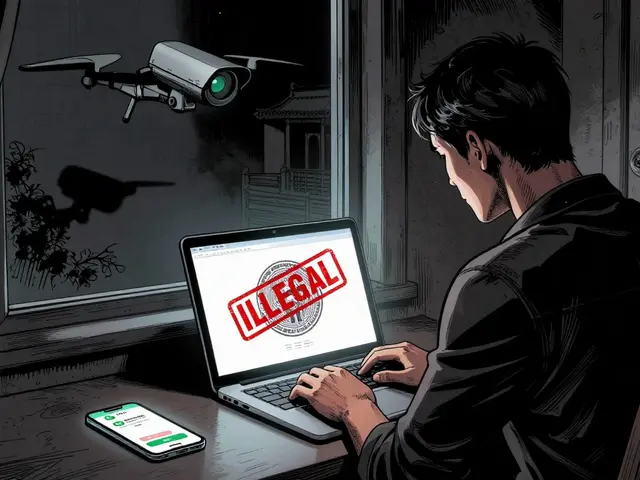
As of June 1, 2025, it is illegal to own, trade, or transfer Bitcoin or any other cryptocurrency from China. Not just difficult. Not just monitored. Not just discouraged. Illegal. The People’s Bank of China shut down every legal pathway for Chinese residents to hold or send crypto overseas. This isn’t a gray area. There’s no loophole. No workaround that won’t put you at serious risk.
If you’re in China and trying to move Bitcoin abroad, you’re not navigating a complex financial system-you’re breaking the law. The government doesn’t just block transactions. It seizes assets. It tracks wallets. It punishes people. And it’s not just targeting big traders. Ordinary people who bought Bitcoin years ago, kept it in a wallet, or sent a small amount to a friend overseas are being caught.
What Changed in June 2025?
Before June 2025, China had banned crypto exchanges, mining, and trading platforms. But individuals could still hold Bitcoin in personal wallets. That changed with the new rule: all ownership of cryptocurrency by Chinese citizens is illegal. It doesn’t matter if you bought it in 2017, 2021, or last week. If you have Bitcoin in a wallet tied to your identity, it’s now considered an illegal asset.
The Ministry of Public Security started seizing wallets linked to known personal IDs. Banks were ordered to freeze any account that showed even a single transaction with a crypto address. Payment apps like WeChat Pay and Alipay now automatically block any outgoing transfer that matches known crypto patterns-even if it’s labeled as "gift" or "loan."
Overseas exchanges like Binance, Coinbase, and Kraken are legally barred from serving Chinese residents. If you log in from a Chinese IP address, your account gets locked. If you try to withdraw Bitcoin to an overseas wallet, the transaction gets flagged and reported to authorities.
How They Track You
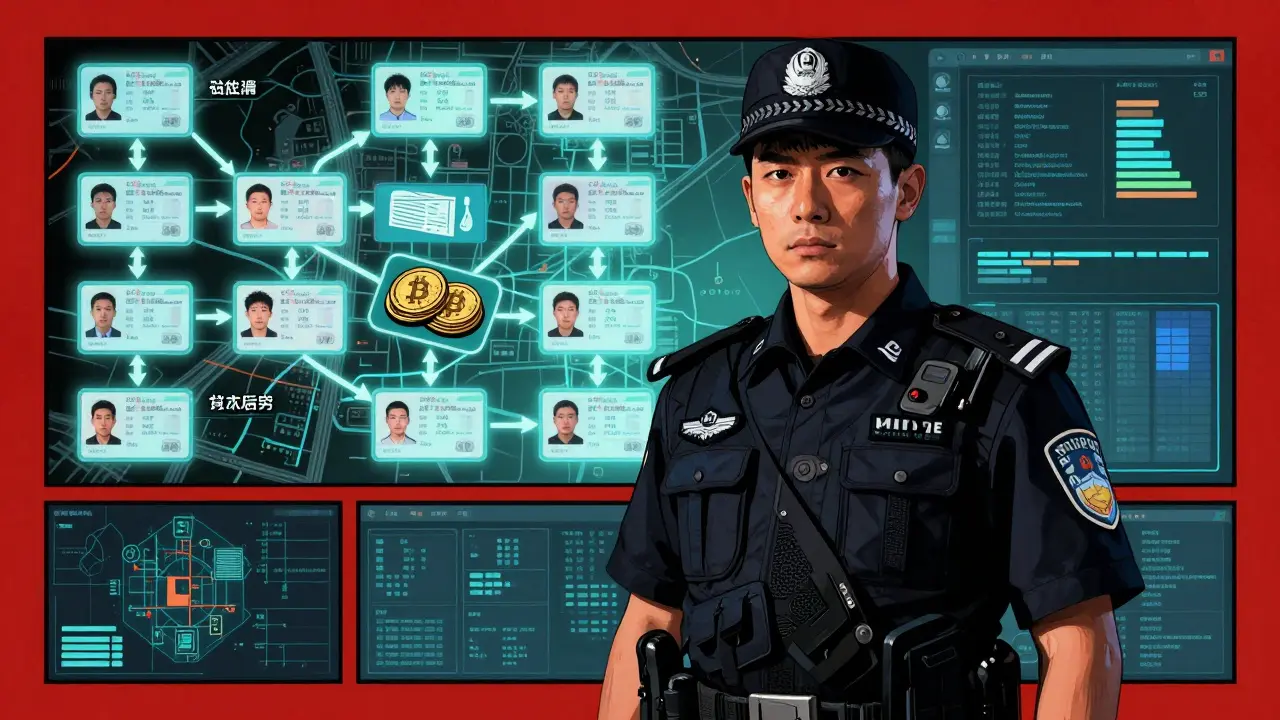
People think Bitcoin is anonymous. That’s true in theory. But in China, anonymity doesn’t exist. Authorities combine blockchain analysis with real-world data:
- They match wallet addresses to phone numbers, ID cards, and bank accounts you’ve used before.
- They monitor traffic through domestic internet gateways-any connection to a crypto website or app triggers an alert.
- They use AI to detect patterns: sending 0.01 BTC to a friend, then receiving 5,000 RMB in cash from them the next day? That’s money laundering under Chinese law.
- They’ve trained local police to recognize crypto-related slang. Phrases like "send to cold wallet," "HODL," or "P2P trade" are now flagged in chat logs.
There are no secret tools. No untraceable methods. Even using Tor or a VPN won’t help. The government doesn’t need to break into your wallet. They just need to prove you had Bitcoin and tried to move it. That’s enough for asset seizure and criminal charges.
What Happens If You Get Caught?
The penalties aren’t fines. They’re not warnings. They’re criminal.
- First offense: Asset seizure. Your Bitcoin is confiscated. Your bank account is frozen for 12 months.
- Second offense: Criminal investigation. You could face up to 3 years in prison under anti-money laundering laws.
- Businesses or influencers promoting crypto transfers: Fines up to 5 million RMB ($700,000 USD) and permanent bans from financial services.
There are documented cases. In Shanghai, a 34-year-old engineer tried to send 2.3 BTC to a wallet in Singapore. He used a friend’s overseas account to receive it. Within 48 hours, police showed up at his door. He lost all his crypto. His savings were frozen. He was charged with "illegal financial activity." He’s still waiting for trial.
What About the Digital Yuan (e-CNY)?
China isn’t banning digital money. It’s just controlling it. The digital yuan is the government’s answer to Bitcoin. It’s not decentralized. It’s not anonymous. It’s programmable.
The e-CNY can be set to expire after 30 days. It can be restricted to only spend in certain stores. It can be blocked from going overseas. The government controls every transaction. There’s no way to move it abroad without approval.
Some people think, "Maybe I can convert Bitcoin to e-CNY and then send it?" That’s impossible. You can’t convert Bitcoin to e-CNY. Not legally. Not even through licensed channels. The system doesn’t allow it. The government wants to replace crypto-not merge with it.
What About Hong Kong?
Hong Kong allows crypto trading. But if you live in mainland China, you can’t legally use Hong Kong exchanges. Capital controls are still in place. Sending money from mainland to Hong Kong for crypto trading is treated as an illegal outbound transfer. Even if you fly to Hong Kong, open an account, and buy Bitcoin, bringing it back to mainland China is still illegal.
Some try to use relatives in Hong Kong. They send RMB to a family member, who buys Bitcoin, then sends the crypto back. That’s a direct violation. Authorities monitor cross-border fund flows. Any unusual pattern-like a Hong Kong account suddenly receiving RMB from mainland, then buying Bitcoin-triggers an automatic review.
Why Does China Do This?
It’s not about Bitcoin. It’s about control.
The Chinese government sees decentralized money as a threat to the renminbi. If people start using Bitcoin to pay for goods, send money overseas, or store wealth, it weakens the state’s grip on the economy. Dollar stablecoins like USDT are seen as especially dangerous-they let people bypass capital controls entirely.
China’s solution? Build its own digital currency. The e-CNY lets the state track every transaction, limit spending, and stop money from leaving the country. It’s not about innovation. It’s about control.
Is There Any Legal Way?
No.
There is no legal way to move Bitcoin out of China in 2026. Not through banks. Not through exchanges. Not through P2P. Not through gifts. Not through family. Not through hardware wallets. Not through VPNs. Not through offshore accounts.
Any service claiming to help you transfer crypto from China is either a scam or operating illegally. They’ll take your money, disappear, or turn you in to authorities.
What Should You Do?
If you’re in China and own Bitcoin:
- Don’t try to move it. The risk far outweighs any potential reward.
- Don’t talk about it. Don’t post about it. Don’t ask others for advice.
- Don’t use it to pay for anything. Even online.
- Don’t convert it to e-CNY. That’s not possible.
If you’re outside China and someone asks you to receive Bitcoin from a person in China:
- Don’t do it. You could be charged with aiding illegal financial activity.
- Report it to authorities if you suspect fraud.
The safest choice is to do nothing. Hold your Bitcoin. Don’t touch it. Don’t move it. Don’t talk about it. Wait for policy changes. But don’t expect them soon.
What’s Next?
Some experts think China might one day allow licensed crypto trading-maybe in special zones like Hainan or Shanghai. But that’s speculation. No official policy has been announced. No draft law has been leaked. The June 2025 ban is still fully active.
The government’s focus is on the digital yuan. Until e-CNY is fully rolled out nationwide, crypto remains banned. And even if crypto is allowed again in the future, it will likely be under strict state control-with no cross-border freedom.
For now, the message is clear: Bitcoin doesn’t exist in China. And trying to move it out is the fastest way to lose it-and possibly your freedom.





I've been following this closely since the June 2025 crackdown. It's not just about Bitcoin-it's about sovereignty. China's building a financial firewall, and they're not playing around. The digital yuan isn't just a currency, it's a surveillance tool wrapped in code. People think they're protecting freedom, but they're just trading one kind of control for another. Still, I feel for those holding BTC in China. They didn't ask for this. They just believed in the tech. Now they're stuck with digital ghosts.
There's no legal path. No gray area. Even if you move your coins to Hong Kong, the moment you try to bring value back, the system flags it. I've talked to folks on the ground-quiet, scared, but still holding. No one's talking. No one's moving. Just waiting. And hoping.
LMAO 🤡 people still think crypto is "free money"? China just pulled the plug on the whole fantasy. You think your "private wallet" is safe? Nah. Your phone number, your ID, your WeChat history-all linked. They don't need to hack your wallet. They just need to see you sent 0.001 BTC to your cousin. That's a criminal record. You're not a pioneer. You're a target.
I just feel so sad for the people in China who bought BTC years ago. They believed in it. They didn't know it would become a crime. Now they're stuck. No way out. No help. Just silence. I hope they're okay.
The real story here isn't Bitcoin-it's the end of financial autonomy. China didn't ban crypto because it's dangerous. They banned it because it's uncontrolled. The e-CNY isn't innovation. It's a leash. Every transaction tracked, every limit set, every cross-border move blocked. It's not about money. It's about who gets to decide what you can do with your own wealth. And right now? The state does.
It is of considerable importance to note that the legal framework established by the People’s Bank of China in June 2025 represents a definitive and comprehensive cessation of private cryptocurrency ownership. The absence of any statutory exceptions, even for long-term holders, underscores the state’s commitment to centralized monetary authority. One must acknowledge that such measures, while severe, align with broader macroeconomic stability objectives.
China just turned Bitcoin into a felony. Not a joke. Not a gray zone. A felony. And the dumbest part? People still think they can outsmart a government that built a digital surveillance state so tight even your grandma’s WeChat messages get scanned. You think your VPN is magic? Nah. They don’t need to see your wallet. They just need to see you bought noodles with a QR code that once touched a crypto address. Boom. You’re on a list. Good luck explaining that at the DMV.
I keep thinking about the 34-year-old engineer in Shanghai. He didn’t try to get rich. He just held on to something he believed in. And now he’s waiting for trial. I wonder if he still has his old phone. If he still looks at the wallet address sometimes. Just to remember what it felt like to own something the state couldn’t touch.
It’s not about money. It’s about memory. And they’re trying to erase that too.
I don’t know if I should feel angry or just… tired. It’s like they took away something that didn’t belong to them in the first place. But what can you do? Talk about it? That’s risky. Try to move it? That’s worse. Just… wait? That’s the only option. And it feels like giving up. But maybe… giving up is the bravest thing left.
chinese govt is just scared of real money man. they control everything else so they gotta control the money too. btc is the one thing they cant stop. but they can stop you. so they did. they dont want you to have power. they want you to be broke and obedient. and the e-cny? its just a digital leash. lol
The architecture of capital control in this context is a fascinating case study in state-centric financial architecture. The integration of blockchain analytics with domestic biometric and transactional metadata creates a closed-loop surveillance infrastructure. The e-CNY’s programmability allows for dynamic monetary policy enforcement at the microtransactional level, rendering decentralized alternatives functionally obsolete within the jurisdictional perimeter. This is not merely regulation-it’s systemic replacement.
I’m not surprised. Most people who hold Bitcoin are just trying to escape responsibility. They don’t want to pay taxes. They don’t want to play by the rules. China’s doing the world a favor. If you can’t control your own finances, you shouldn’t be allowed to hold them. The e-CNY is elegant. Bitcoin? Chaotic. Amateurish. A relic.
This is all part of the deep state’s plan. The PBOC didn’t act alone. The NSA, CIA, and some shadowy fintech consortium are behind this. They want to create a global digital currency standard. China’s just the front. They’re using this crackdown to test the tech. Next, it’ll be the EU. Then the US. Your bank account? Soon, it’ll be locked unless you use the approved system. Don’t trust the narrative. They’re not banning crypto. They’re weaponizing it.
So… you’re telling me the guy who bought 1 BTC in 2013 and just wanted to give it to his daughter in Canada is now a criminal? Congrats, China. You turned a grandparent’s gift into a prison sentence. That’s not control. That’s cruelty. And you call this progress?
Honestly, I’m just disappointed. I thought Bitcoin was supposed to be about liberation. But now it’s just another symbol of human failure. People get attached to things that can be taken. That’s not wisdom. That’s weakness. The e-CNY? At least it’s honest. It says: "I own you." Bitcoin? It whispered "maybe you’re free." And now? Everyone’s crying. Pathetic.
As someone who has lived and worked in both mainland China and abroad, I can say this policy reflects a deep cultural and institutional prioritization of collective stability over individual financial autonomy. While Western observers may frame this as repression, within the Chinese context, it is a logical extension of centuries of centralized economic governance. The digital yuan is not an imposition-it is an evolution.
they just took away bitcoin. like it was nothing. and now everyone is just… quiet. no one’s talking. no one’s doing anything. it’s so weird. like we all just accepted it. like it was always like this. but it wasn’t. it was never like this.
So let me get this straight. You can’t move Bitcoin out of China… but you can move 500k RMB out to buy a house in Vancouver? Hmm. Funny how "capital flight" only matters when it’s in crypto. Guess the state doesn’t mind if you’re rich… as long as you’re not free.
why is everyone shocked? china always does this. they ban stuff then pretend it never existed. btc was never real. it was just a game. now the game is over. move on.
This is textbook authoritarian economic behavior. The PBOC is not regulating-it’s monopolizing. By eliminating Bitcoin, they’re eliminating competition for the e-CNY. This isn’t about financial security. It’s about market dominance. Anyone who thinks otherwise is delusional. The blockchain is decentralized. The state is not. They know this. And they’re terrified.
I’ve seen this before. In the 90s, people said the internet would break governments. Then governments learned to use it. Now they’re doing the same with crypto. China didn’t lose the battle. They rewrote the rules. The digital yuan isn’t the enemy-it’s the new normal. And maybe, just maybe, that’s okay. Not because it’s fair. But because it’s real. The question isn’t whether Bitcoin should exist. It’s whether we still want to believe in a world where money isn’t owned by someone else.
I don’t have an answer. But I’m listening.