

What is VestChain (VEST)? The Reality Behind This Defunct ERC-20 Token
You might have stumbled upon the ticker VEST or the name VestChain while digging through old portfolio data, scanning a list of obscure altcoins, or perhaps you inherited some digital assets from years past. It’s natural to wonder: what is this coin? Is it a hidden gem waiting to explode in value? Or is it just another ghost town on the blockchain?
The short answer is that VestChain is effectively a defunct cryptocurrency. It is an ERC-20 token that operates on the Ethereum blockchain, launched back in July 2018 during the peak of the Initial Coin Offering (ICO) boom. Today, it trades with virtually zero volume, sits at a fraction of its all-time high, and lacks any active development or community support. Understanding VestChain isn’t about finding investment opportunities; it’s about learning how to identify projects that have lost their momentum.
The Origin Story: A Product of the 2018 ICO Boom
To understand where VestChain stands today, we need to look at where it started. The token was created on July 9, 2018. If you were in the crypto space then, you remember the atmosphere. Every day seemed to bring a new whitepaper promising to revolutionize finance, real estate, or asset management using blockchain technology. Thousands of projects launched, many with little more than a website and a smart contract.
VestChain positioned itself as a utility token for asset management and financial services. The idea was sound on paper: use blockchain to streamline how assets are tracked and managed. However, execution is everything in this industry. While the concept had merit, the project failed to build a functional ecosystem around it. Unlike successful platforms that evolved into decentralized exchanges or lending protocols, VestChain remained largely static after its launch.
This era of 2017-2018 ICOs produced a massive amount of noise. According to industry analysis from Diar Research, approximately 95% of ICO projects launched between 2017 and 2018 had failed by 2020. VestChain falls squarely into this statistic. It represents the thousands of tokens that captured initial hype but never delivered long-term value or utility to users.
Technical Specifications: What You Need to Know
If you are holding VEST tokens or considering interacting with them, you need to know the technical details. These facts determine compatibility, security, and potential liquidity.
| Attribute | Value / Detail |
|---|---|
| Blockchain Network | Ethereum (Layer 1) |
| Token Standard | ERC-20 |
| Total Supply | 3,945,951,380.8970037 (Fixed) |
| Circulating Supply | ~3.94 Billion (No burn mechanism) |
| All-Time High (ATH) | $0.2313 (July 18, 2020) |
| Current Price Range | $0.000187 - $0.000983 USD |
| Mineable? | No (Pre-minted supply) |
As an ERC-20 token, VEST relies entirely on the Ethereum network for security and transaction processing. This means you can store it in any wallet that supports Ethereum-based tokens, such as MetaMask, Trust Wallet, or Ledger. However, just because you *can* hold it doesn’t mean you *should*. The lack of a burning mechanism means the supply remains fixed at nearly 4 billion tokens. In a healthy market, a fixed supply can create scarcity, but only if there is demand. With no demand, the supply is just a number sitting idle on the ledger.
The smart contract address for VEST has been partially documented by major aggregators like Binance (starting with 0x37f0...), but there is no active GitHub repository associated with the project. For developers, this is a red flag. It means there is no code being updated, no bugs being patched, and no new features being added. The codebase is frozen in time.
Market Performance: The Signs of a Dead Coin
Let’s talk numbers, because they tell the clearest story. When analyzing any cryptocurrency, three metrics matter most: price action, trading volume, and market capitalization. VestChain fails on all three fronts.
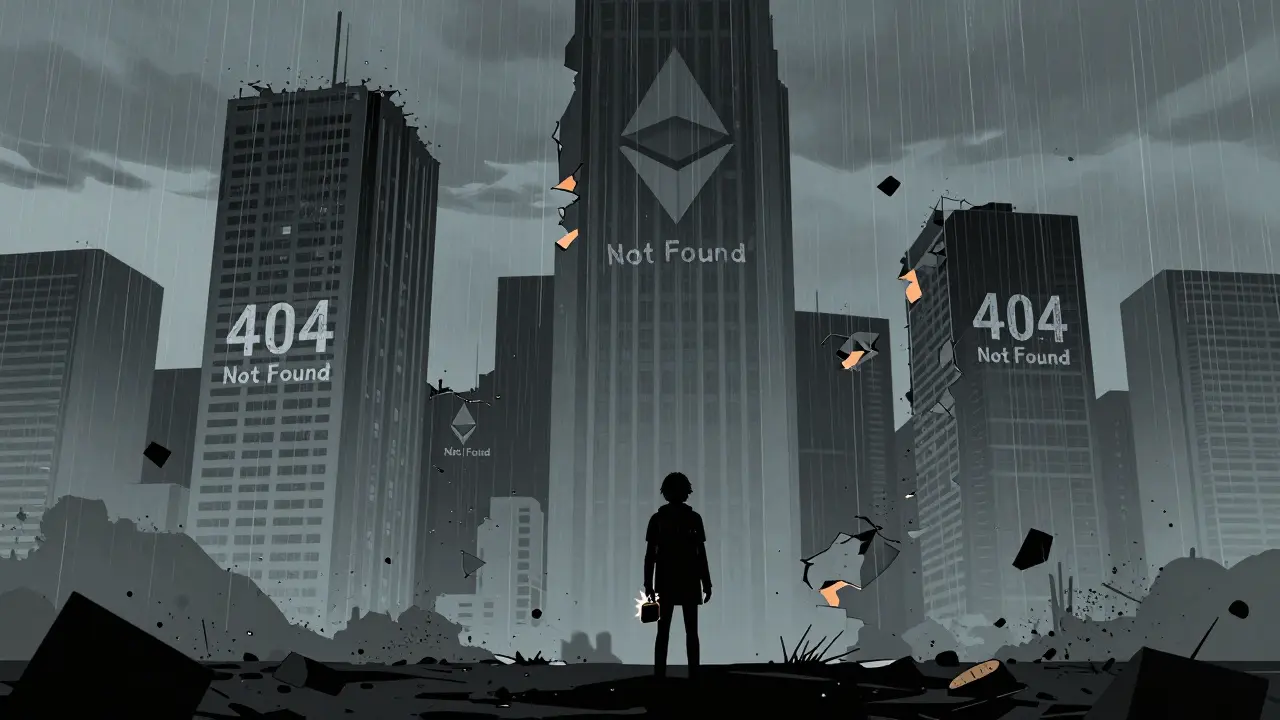
First, look at the price depreciation. VestChain reached its all-time high of $0.2313 on July 18, 2020. As of mid-2026, it trades at approximately $0.000983. That is a decline of roughly 99.58%. Most cryptocurrencies experience bear markets, but even failed projects usually retain a small percentage of their peak value due to speculative interest. VestChain has lost almost all of it.
Second, consider the trading volume. This is the most critical indicator of life or death for a token. Major tracking platforms like CoinLore, Coinbase, and Binance consistently report zero 24-hour trading volume for VEST. No volume means no buyers and no sellers. You cannot easily enter or exit a position. If you try to sell your tokens on a decentralized exchange (DEX), you would likely face extreme slippage, meaning you’d receive pennies for your holdings, or the trade would fail entirely due to lack of liquidity.
Third, examine the market capitalization discrepancies. Depending on which platform you check, the market cap ranges from $777,000 to $3.88 million. These inconsistencies arise because different aggregators use different methodologies to calculate value when liquidity is near zero. Some may use stale last-trade prices, while others estimate based on residual order books. Regardless of the exact figure, VestChain ranks outside the top 5,000 cryptocurrencies, placing it in the bottom percentile of the entire digital asset market.
Why Did VestChain Fail? Analyzing the Pitfalls
It’s easy to say a project failed, but understanding why helps you avoid similar traps in the future. VestChain’s demise wasn’t caused by a single event but by a combination of structural weaknesses common to many 2018-era ICOs.
- Lack of Clear Utility: While the whitepaper mentioned "asset management," the product never materialized into a usable platform. Users couldn’t do anything practical with VEST tokens. Without utility, a token is just a speculative bet, and speculation fades quickly without news or developments.
- Absence of Community Engagement: A strong crypto project needs a vocal community. Reddit threads, Twitter discussions, and Discord channels drive awareness. For VestChain, these spaces are silent. There are no organic conversations, only automated bot mentions. The absence of user feedback indicates complete abandonment by retail investors.
- No Developer Activity: Innovation requires constant work. Smart contracts need audits, interfaces need updates, and partnerships need nurturing. VestChain shows no signs of active development since 2021. The team appears to have moved on, leaving the token to drift.
- Exchange Delistings: Liquidity dries up when exchanges remove a token. Major platforms like Binance explicitly state that VEST is "not listed" for trading. Without access to centralized exchanges, retail investors lose the ability to buy or sell easily, accelerating the token’s irrelevance.
These factors create a feedback loop. Low volume leads to delistings, which reduces visibility, which kills community interest, which stops development. Once a project enters this cycle, recovery is statistically improbable.
Security Risks and Practical Implications
If you still hold VEST tokens, you might be wondering about security. Since VEST runs on Ethereum, it inherits the base layer security of the Ethereum network. Your funds are safe from hacking in the sense that the blockchain itself is secure. However, "security" in crypto also involves the risk of counterparty failure and liquidity traps.
The primary risk here is not theft, but obsolescence. Holding VEST exposes you to the risk of total loss of value. There is no guarantee that the token will ever regain liquidity. Furthermore, interacting with dormant tokens on decentralized platforms can sometimes expose wallets to outdated interfaces or unverified contracts, though the risk is lower if you simply hold the asset in a reputable non-custodial wallet.
From a regulatory perspective, VestChain’s inactivity likely shields it from current scrutiny. The SEC and other global regulators focus on active securities-like tokens that promise profits to investors. A dead token with no active promotion or trading is generally ignored, but this doesn’t add value to the holder-it just means there won’t be legal intervention to revive it either.
Comparison: VestChain vs. Active Altcoins
To put VestChain’s status into perspective, let’s compare it to a typical active mid-cap cryptocurrency. This highlights what makes a project "alive" versus "defunct."
| Feature | VestChain (VEST) | Active Mid-Cap Project |
|---|---|---|
| Trading Volume (24h) | $0 | Often >$100,000 |
| Development Status | Inactive / Abandoned | Active GitHub commits |
| Community Presence | None / Bots only | Engaged social media & forums |
| Exchange Listings | Delisted from majors | Listed on Tier 1 & 2 exchanges |
| Utility | Non-functional | Working product or protocol |
The contrast is stark. Active projects maintain liquidity, update their software, and engage with users. VestChain does none of these things. It serves as a cautionary example of what happens when a token launches without a sustainable roadmap.
What Should You Do With VEST Tokens?
If you find VEST tokens in an old wallet, your options are limited. Here is a realistic assessment of your choices:
- Sell on a DEX: You could attempt to swap VETH for ETH on a decentralized exchange like Uniswap. However, due to zero liquidity, you will likely receive nothing or a negligible amount of ETH. Be wary of gas fees; paying Ethereum network fees to sell worthless tokens is a net loss.
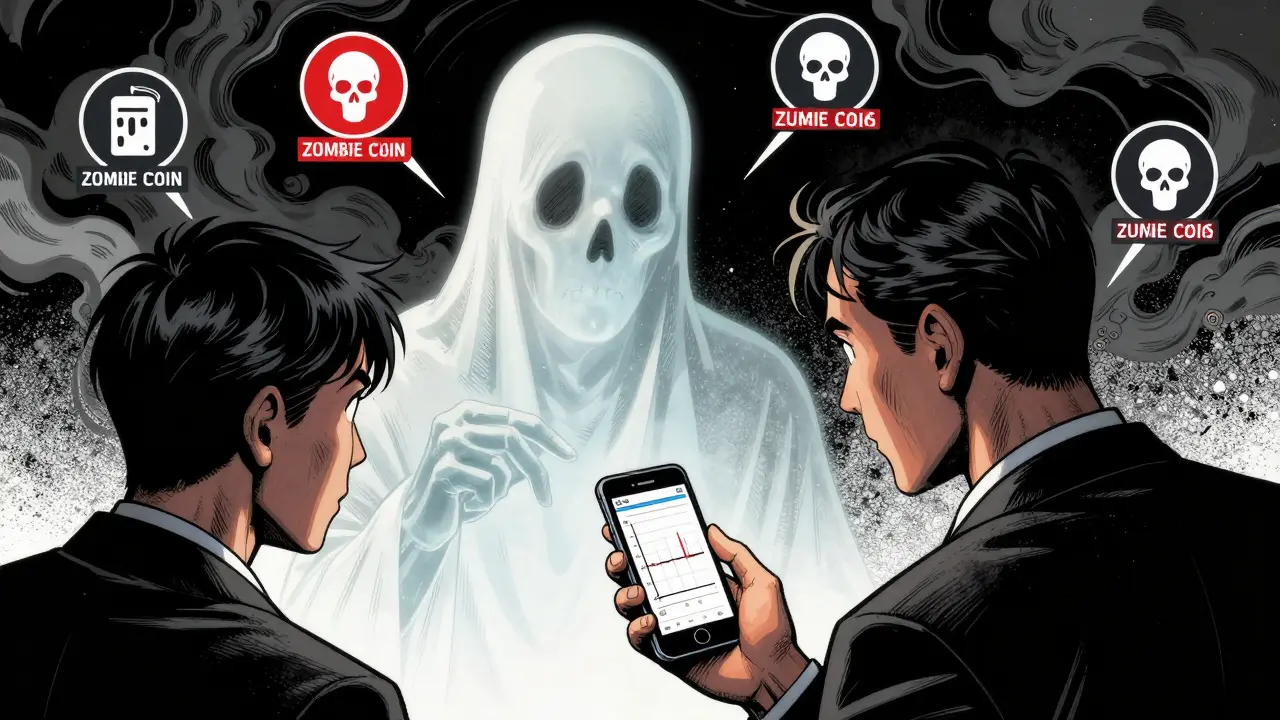
- Hold for Speculation: Some investors hold "zombie coins" hoping for a sudden revival or meme-driven pump. This is extremely risky. The probability of VestChain recovering from a 99.5% drawdown with no catalyst is near zero.
- Ignore/Accept Loss: For many, the best course of action is to accept the loss as a lesson from the 2018 ICO era. Move on to projects with transparent teams, active development, and clear utility.
There is no customer support to contact, no refund process, and no official channel to voice concerns. The project is effectively closed.
Lessons for Future Investors
VestChain is more than just a failed coin; it’s a teaching tool. The crypto market is ruthless, and survival depends on continuous value creation. Before investing in any token, ask yourself these questions:
- Is there a working product, or just a whitepaper?
- Are there regular updates from the development team?
- Is there genuine community engagement, not just paid shills?
- Does the token have a clear use case beyond speculation?
If the answers are vague or negative, proceed with extreme caution. The graveyard of dead coins is vast, and VestChain is just one marker among millions.
Is VestChain (VEST) a scam?
While there is no definitive proof of malicious intent or fraud, VestChain exhibits all the characteristics of a failed project rather than a deliberate scam. It launched legally as an ERC-20 token but failed to deliver on its promises, resulting in market abandonment. The lack of transparency and communication contributes to its negative reputation.
Can I buy VestChain on Binance or Coinbase?
No. Major exchanges like Binance and Coinbase do not list VestChain for trading. Binance explicitly states that VEST is "not listed" for their services. Any claims suggesting otherwise should be treated with skepticism, as they may lead to phishing sites or fraudulent platforms.
Where did VestChain go wrong?
VestChain failed due to a lack of tangible utility, absent developer activity, and loss of community interest. Launched during the 2018 ICO bubble, it couldn't sustain relevance once the hype faded. Without a working product or active marketing, liquidity dried up, leading to delistings and eventual market irrelevance.
Is it safe to store VEST tokens in MetaMask?
Is it safe to store VEST tokens in MetaMask?
Yes, storing VEST in MetaMask is technically safe because it is a standard ERC-20 token on the Ethereum network. The risk lies not in the storage method but in the asset's value. Your private keys remain secure, but the tokens themselves hold negligible economic value and no liquidity.
Will VestChain ever recover?
The likelihood of VestChain recovering is extremely low. With zero trading volume, no active development, and a 99.5% drop from its all-time high, the project shows no signs of revival. In the crypto market, tokens that lose this much value without a fundamental change rarely bounce back.






The sheer incompetence of the 2018 ICO cohort is staggering, really. It’s almost insulting to one’s intelligence that anyone still holds these digital IOUs. VestChain isn’t just dead; it’s a fossilized reminder of how little due diligence existed back then. The fact that you’re even reading this suggests you might be part of the problem-hoarding worthless assets instead of engaging with actual value creation in the blockchain space.
its so sad ppl lose money on scams like this. we should all be more responsible and not invest in shady projects. its wrong to let greed win.
I totally get why people are upset!! It's okay to feel bad about losing money, but please don't be too hard on yourself!!! We can learn from this experience and move forward with kindness!!! I hope everyone finds peace in letting go of these tokens!!! Sending positive vibes your way!!!
It is important to approach this situation with respect for those who have lost funds. While the project is defunct, the emotional impact remains significant for many investors. We should maintain a respectful dialogue regarding the lessons learned from this era of cryptocurrency development.
The liquidity crunch evident in VEST's market cap discrepancies highlights a fundamental failure in tokenomics design. Without active burn mechanisms or utility-driven demand, the fixed supply becomes a liability rather than an asset. This is a classic case of market inefficiency where price discovery fails completely due to lack of order book depth.
In my country, we often see similar stories with local startups that fail to deliver. It is a universal lesson in business. People should focus on real work and not just crypto hype.
You claim it is safe to store in MetaMask, but what about the security risks of interacting with old contracts? I demand a more thorough analysis of the smart contract vulnerabilities that may exist in dormant codebases!
Boring article. Nothing new here. Everyone knows ICOs were trash. Why write 2000 words about zero?
🤔 The irony of holding 'asset management' tokens that manage nothing is palpable. 📉 Perhaps the true utility was teaching us humility. 🙏
they dont want you to know the truth about vestchain. it was sabotaged by big banks to keep us poor. wake up sheeple :)
This is moral failure of developers. They took money and ran. Shame on them.
Listen up noobs! If you're holding VEST you're dumb as rocks! Sell now before gas fees eat your soul! 🚀💎 (jk sell it)
Hey guys! Let's stay positive! Even if the coin is dead, we can find strength in community! Don't give up on life just because a token failed! You got this!
Oh wow, what a tragedy! The tears flow like rivers for this dead coin! But hey, maybe someone will revive it tomorrow! Who knows?! Life is unpredictable!
i hear you. it sucks. just leave it alone.
My heart bleeds for the VEST holders! It’s a symphony of silence in the blockchain graveyard! Such a poignant end to a once-promising melody!
im sorry you lost money. its hard when projects fail. please take care of yourself and dont blame others too much.
The grammatical structure of the whitepaper likely mirrored the structural integrity of the project: non-existent. A thorough linguistic analysis would reveal the hollowness of their promises long before the market did.
Let’s dissect the failure matrix. The absence of GitHub commits is not merely negligence; it is a systemic collapse of operational continuity. This project represents the nadir of decentralized promise versus centralized execution failure.