
Zero-Confirmation Transaction Risks in Cryptocurrency
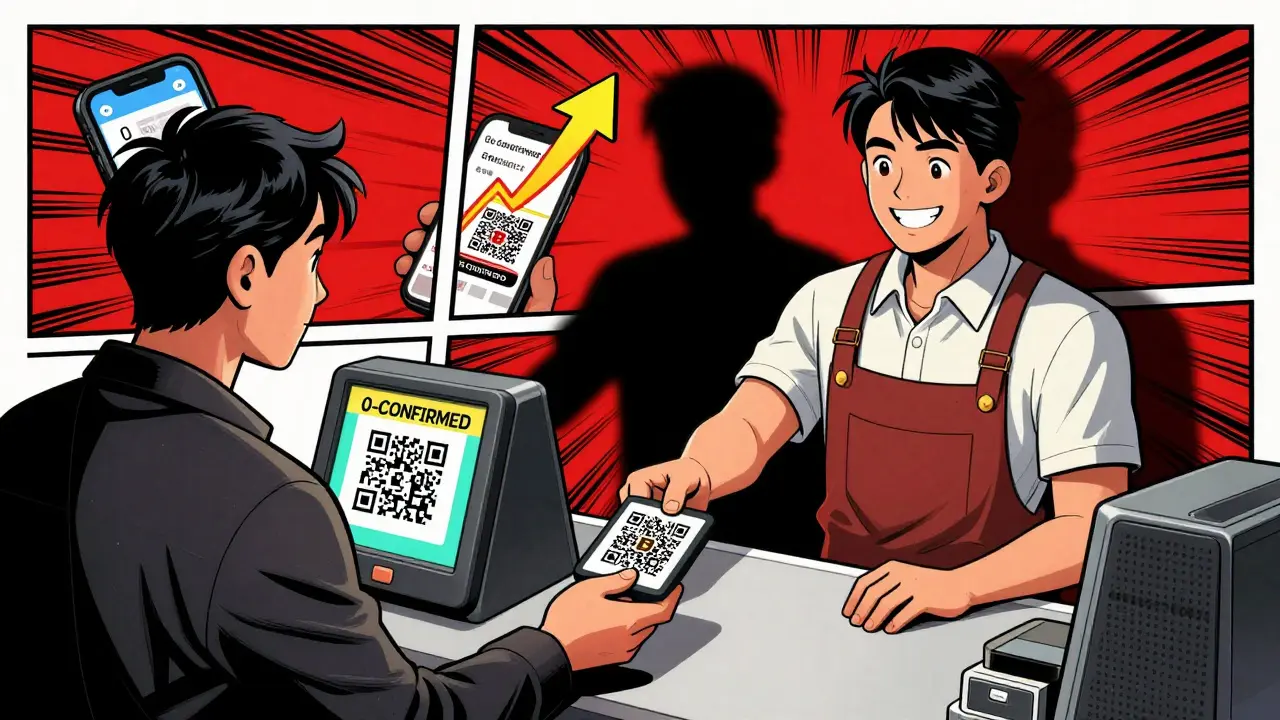
When you pay for a coffee with Bitcoin, and the barista says "payment received" before the screen even updates, you’re experiencing a zero-confirmation transaction. It feels instant. It feels safe. But it’s not. Not really.
Zero-confirmation, or zero-conf, means accepting a cryptocurrency payment before it’s written into a block on the blockchain. The transaction is floating in the mempool - a digital holding area - waiting for miners to pick it up. For the merchant, it’s fast. For the buyer, it’s convenient. But underneath that speed is a dangerous loophole: double-spending.
How Double-Spending Works
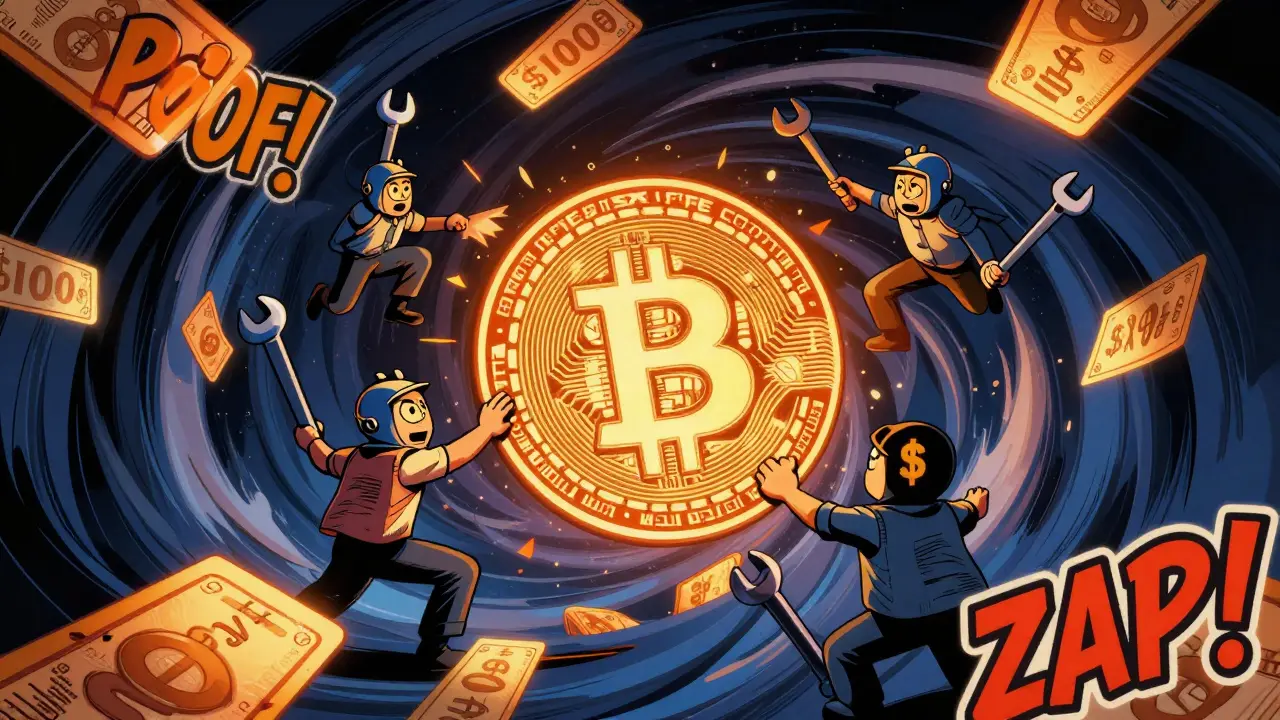
Imagine you walk into a convenience store and buy a $50 vape pen using Bitcoin. You send the payment. The store sees the transaction broadcast, assumes it’s real, and hands over the product. Five seconds later, you broadcast a second transaction - same coins, but this time sent to another wallet you control. You bump up the fee to 5x the original. Miners, always chasing higher fees, grab the second transaction first. The first one? It vanishes. Poof. The store gets nothing. You keep the vape pen and your coins.
This isn’t theory. It’s happened. In 2018, a researcher demonstrated a double-spend attack on a Bitcoin merchant using just $10 in fees to overwrite a $1,000 transaction. The cost of the attack? Less than the price of a good lunch. The profit? $990. For attackers, low-value transactions are boring. High-value ones? Gold.
Why Zero-Conf Is Tempting
Bitcoin blocks take about 10 minutes to mine. That’s too long for a checkout line. For vending machines, digital downloads, or online gaming microtransactions, waiting 10 minutes kills the experience. Zero-confirmation fixes that. It’s why services like BitPay, Coinbase Commerce, and even some Bitcoin ATMs allow it - for small amounts.
Merchants use it because:
- Customers expect instant service
- Transaction fees are low
- Most people aren’t malicious
But here’s the problem: most people aren’t malicious doesn’t mean no one is. And when one person is, the cost isn’t just lost coins - it’s lost trust.
The Hidden Risks Beyond Double-Spending
Double-spending gets all the attention, but zero-conf has other silent killers:
- Transaction drops: If a transaction has a too-low fee, nodes may drop it from the mempool after a few hours. No confirmation. No refund. Just gone.
- Miner manipulation: Some miners (or mining pools) can choose which transactions to include. A dishonest miner might ignore your payment and prioritize others - especially if they’re paid more.
- Network congestion: When the mempool gets full, low-fee transactions get pushed to the back of the line. Your $3 coffee payment might wait 40 minutes… if it’s picked up at all.
These aren’t edge cases. In late 2024, Bitcoin mempool congestion hit record levels. Over 120,000 unconfirmed transactions sat waiting. Many were small payments. Most never made it.
When Zero-Conf Is Acceptable (and When It’s Not)
Not all zero-conf transactions are equal. Risk depends on three things: value, context, and timing.
Safe for zero-conf:
- Under $10 - The cost to attack outweighs the reward
- High-frequency, low-value sales - Coffee, snacks, digital content
- Known customers - Repeat buyers with verified wallets
- Networks with fast blocks - Litecoin (2.5 min), Dogecoin (1 min)
Never use zero-conf:
- Over $100 - Too much to lose
- One-time buyers - No history, no trust
- Physical goods with high resale value - Electronics, jewelry, luxury items
- Bitcoin mainnet - Slow blocks, high volatility
There’s no universal rule. But there’s a simple heuristic: If you’d be okay losing it, go ahead. If you’d panic, wait for confirmation.
How to Reduce the Risk
If you’re running a business and still want zero-conf, don’t just accept it blindly. Layer in defenses:
- Watch for conflicting transactions: Use tools that scan the mempool for competing spends of the same input. If another transaction with the same coins pops up, pause delivery.
- Require higher fees: Set a minimum fee rate (e.g., 15 sat/vB on Bitcoin). Low-fee transactions are more likely to be dropped or double-spent.
- Delay delivery by 30-60 seconds: Even if you accept zero-conf, don’t hand over the product until the transaction has been seen by at least 5-10 nodes. This reduces the chance of a rushed double-spend.
- Use multi-sig for high-value items: Require two signatures - one from you, one from a trusted third party. It adds friction but kills double-spend risk.
- Switch to Layer 2: Lightning Network offers instant, secure, off-chain payments. No mempool. No zero-conf risk. Just settled channels.
Some businesses combine zero-conf with a 10-minute grace period. They deliver the product immediately but hold the order in "pending" status. If the transaction doesn’t confirm within 15 minutes, they issue a refund and notify the buyer. It’s not perfect, but it’s honest.
The Bigger Picture: Speed vs. Security
Zero-confirmation isn’t going away. People want instant payments. Crypto’s whole promise is decentralization - but that comes with trade-offs. Bitcoin prioritizes security over speed. That’s why it takes 10 minutes. Other chains tried to fix it - faster blocks, different consensus - but they didn’t solve the core problem: unconfirmed transactions are inherently reversible.
The real solution isn’t better zero-conf. It’s alternatives. Lightning Network, sidechains, and payment channels are the future. They’re fast, cheap, and secure - because they don’t rely on the main blockchain for every single transaction.
Until then, treat zero-conf like a credit card with no fraud protection. It works… until it doesn’t. And when it doesn’t, you’re on your own.
Are zero-confirmation transactions safe for small purchases like coffee?
Yes, for transactions under $10, zero-confirmation is generally considered low-risk. The cost of launching a double-spend attack usually exceeds the value of the purchase, making it economically irrational for attackers. Many Bitcoin merchants accept zero-conf for coffee, snacks, or digital downloads without issues. Still, always pair it with basic safeguards - like checking network propagation and setting a minimum transaction fee.
Can a zero-confirmation transaction be reversed after it’s accepted?
Yes - and that’s the whole point. Zero-confirmation means the transaction hasn’t been finalized on the blockchain. If a conflicting transaction with a higher fee gets confirmed first, the original one is invalidated and removed from the network. The merchant loses the payment. There’s no appeal, no chargeback, no recovery. That’s why it’s never considered final.
Why don’t miners just confirm zero-conf transactions right away?
Miners don’t care about your transaction - they care about fees. Each block has limited space. Miners pick transactions with the highest fee-per-byte to maximize their reward. A zero-conf payment with a low fee might sit in the mempool for hours or get dropped entirely. There’s no obligation to confirm it. You’re at the mercy of the fee market.
Is zero-confirmation used only in Bitcoin?
No. Any cryptocurrency with a mempool and block confirmation system can have zero-conf transactions - including Litecoin, Dogecoin, and Bitcoin Cash. But Bitcoin is the most common case because of its 10-minute block time. Networks with faster blocks (like Dogecoin’s 1-minute) reduce the window of vulnerability, but they don’t eliminate the risk. The vulnerability is structural, not technical.
What’s the difference between zero-confirmation and one-confirmation?
Zero-confirmation means the transaction is only visible in the mempool - no block has recorded it yet. One-confirmation means it’s been included in the first block. That’s when it becomes permanent. One confirmation reduces double-spend risk dramatically - but it’s not 100% safe either. For high-value payments, six confirmations (about an hour on Bitcoin) are recommended. Zero-conf is convenience. One-conf is caution. Six-conf is certainty.
Can I use Lightning Network to avoid zero-confirmation risks?
Yes. Lightning Network is designed specifically for instant, secure payments without relying on blockchain confirmations. Transactions happen off-chain between payment channels, settle instantly, and only touch the main blockchain when opening or closing the channel. It removes mempool delays and double-spend risks entirely. If you’re serious about fast, safe crypto payments, Lightning is the real solution - not zero-conf.





Zero-conf is just crypto’s version of ‘trust me bro’ with a blockchain.
People act like it’s some revolutionary hack when it’s just gambling with unconfirmed mempool dust.
If you’re okay losing money because a miner picked the wrong tx, you’re not a merchant-you’re a masochist.
There’s a lot of nuance here that’s being overlooked. Zero-confirmation isn’t inherently dangerous-it’s context-dependent.
For example, a coffee shop accepting $8 Bitcoin payments with a 15 sat/vB minimum fee and a 45-second delay before handing over the drink? That’s actually a well-calibrated risk model.
Most attacks target high-value, low-fee transactions. The real issue is merchants who don’t understand fee dynamics or fail to monitor mempool conflicts.
Tools like BitPay’s mempool watcher or BTCPay’s double-spend detection can reduce risk by over 90%.
Also, stacking multiple node validations (not just one) makes rushed double-spends nearly impossible.
And yes, Lightning is the future-but until it’s universally adopted, zero-conf with smart guardrails is the pragmatic middle ground.
It’s not about eliminating risk-it’s about managing it like you would with credit card chargebacks.
Most businesses already accept some level of fraud risk. Bitcoin just makes it transparent.
Stop treating zero-conf like a bug. Treat it like a feature with conditions.
And if you’re running a business, don’t just copy-paste someone’s Reddit advice. Test your own thresholds. Track your losses. Adjust.
It’s not magic. It’s math. And math doesn’t care if you’re ‘pro-Bitcoin’ or ‘anti-crypto.’ It just works-or it doesn’t.
I love how this post breaks down the real-world trade-offs instead of just screaming ‘DANGER!’
As someone who’s run a small digital art store, I’ve used zero-conf for $5 downloads for years.
Only lost one transaction out of 2,000+-and it was because the buyer used a wallet with a 2 sat/vB fee.
Now I require 12 sat/vB minimum and auto-notify buyers if their tx is stuck.
It’s not perfect, but it’s honest, fast, and works.
Also, shoutout to Lightning Network-I’ve been using it for everything over $20 and it’s been flawless.
The entire premise of zero-confirmation is a philosophical failure of decentralized systems.
One cannot have speed without sovereignty.
To accept an unconfirmed transaction is to surrender the foundational axiom of blockchain: immutability.
You are not ‘accepting a payment.’
You are accepting a *possibility*-a probabilistic illusion dressed in cryptographic garb.
It is not commerce.
It is wishful thinking with a digital signature.
And those who defend it do so not out of pragmatism-but out of a profound unwillingness to confront the truth: Bitcoin was never meant for coffee.
It was meant to be a settlement layer.
Not a point-of-sale terminal.
Stop confusing convenience with integrity.
So basically, zero-conf is crypto’s version of ‘I’ll pay you back tomorrow’… but you gave them the TV already.
And then they send you a text saying ‘lol jk my tx got dropped.’
Classic.
But hey-at least it’s faster than Venmo.
I just want to say I’ve been using zero-conf for my Etsy shop for months and I’m so tired of people acting like it’s a scam
Like I’m some reckless idiot for letting people pay with BTC for $3 stickers
It’s not like I’m letting someone walk out with a Rolex
And yes I know about double-spends
But guess what
My total losses in 2024 were $12
And I processed over 8000 transactions
So maybe stop yelling at people who are trying to make it work
And start helping them do it better
Thanks
I love that this post includes both the risks and the practical workarounds.
It’s rare to see crypto content that doesn’t just scream ‘HODL’ or ‘FUD’.
Real talk: if you’re a small business, you don’t need perfection.
You need sustainable, low-friction options.
Zero-conf + fee floor + 30-second delay = 99% safe for under $10.
And if you’re still nervous? Use a Lightning invoice.
It’s free, instant, and zero-conf risk is gone.
Why make things harder than they need to be?
While the technical analysis is sound, I must emphasize the cultural implications.
Zero-confirmation transactions reflect a global shift toward immediacy, particularly in emerging economies where banking infrastructure is weak.
In India, where mobile payments dominate but traditional banking access remains inconsistent, Bitcoin zero-conf provides a critical bridge.
It is not merely a technical compromise-it is an economic lifeline.
Those who dismiss it as ‘risky’ often fail to recognize that for millions, the alternative is not ‘perfect security’-it is exclusion.
Therefore, the solution is not to abandon zero-conf, but to democratize its safeguards.
Education, open-source tools, and community-driven fee recommendations must be prioritized.
Security should not be a privilege of wealth.
It must be accessible to the barista, the street vendor, the student in Delhi who pays for lunch with crypto.
lol zero conf is for noobs
if you dont wait for 1 conf you deserve to get rekt
also why are you even using bitcoin for coffee
its like using a hammer to open a soda
use litecoin or doge or something
or better yet just use apple pay
why are you even here
you forgot to mention that some wallets auto-replace low fee txs with higher ones if they're stuck
so if you're a merchant and you're not checking the mempool for conflicts
you're basically just trusting the buyer's wallet to be honest
which is a recipe for disaster
also if you're using a hardware wallet
you're probably fine
but if you're using a phone wallet
good luck
also i lost $47 last month because my customer's tx got dropped
and i didn't have a delay
lesson learned
now i wait 45 seconds and require 18 sat/vb
it's not perfect
but it's better
Zero-conf adoption requires a layered risk mitigation stack.
First, enforce a minimum fee rate-15 sat/vB is the current threshold for Bitcoin mainnet resilience.
Second, implement mempool conflict monitoring via open-source APIs like Blockstream’s or Mempool.space.
Third, enforce a propagation delay-wait for 5+ node confirmations before delivery.
Fourth, consider dynamic fee estimation based on mempool congestion.
Fifth, integrate Lightning Network for transactions over $10.
These aren’t optional best practices-they’re baseline operational requirements for any entity accepting unconfirmed transactions.
Failure to implement these layers transforms convenience into systemic vulnerability.
Don’t gamble on the mempool. Engineer your defense.
One-confirmation is not 100% safe either. It’s just less likely to be reversed. The blockchain is probabilistic, not absolute. Six confirmations are the industry standard for high-value transfers because they reduce the probability of reversal to less than 1 in 10^18. Zero-conf is not ‘risky’-it’s mathematically reversible. The distinction matters.
Lightning Network is the answer
no more mempool drama
no more double spends
just pay and go
why are we still talking about this