
Crypto Prohibition Enforcement in Algeria: What You Need to Know
On July 24, 2025, Algeria didn’t just tighten rules-it erased an entire industry overnight. Law No. 25-10 made it illegal to possess cryptocurrency, mine it, trade it, promote it, or even talk about it publicly. This isn’t a gray-area regulation. It’s a full criminal ban, with prison time and heavy fines for anyone caught breaking it. And unlike other countries that try to regulate crypto, Algeria chose to bury it under the law.
What Exactly Is Banned?
The law doesn’t just target exchanges or traders. It goes after every single part of the crypto ecosystem. Article 6 bis lists out the prohibited activities in brutal detail:
- Possessing Bitcoin, Ethereum, or any digital asset-even if you bought it before the ban
- Buying, selling, or trading crypto through peer-to-peer platforms
- Mining cryptocurrency using computers, GPUs, or ASICs
- Operating or using crypto wallets, whether hot or cold
- Running or promoting crypto exchanges or trading platforms
- Advertising crypto services, even as a social media influencer
- Creating YouTube videos, blog posts, or podcasts explaining how crypto works
This isn’t about stopping fraud. It’s about erasing the entire concept from public life. Even holding crypto in a private wallet for years could land you in court. And if you ever posted a TikTok video saying “Bitcoin is the future”? You’re now a criminal under Algerian law.
Who’s Enforcing It?
Algeria didn’t leave enforcement to one agency. It built a multi-layered system to hunt down violations:
- The Bank of Algeria monitors banks and financial institutions to ensure no crypto transactions slip through.
- The Banking Commission shuts down any bank account linked to crypto activity, even indirectly.
- Judicial authorities handle prosecutions, with cases moving through regular courts-not special tribunals.
- Financial crime units track suspicious transfers and digital footprints tied to crypto wallets.
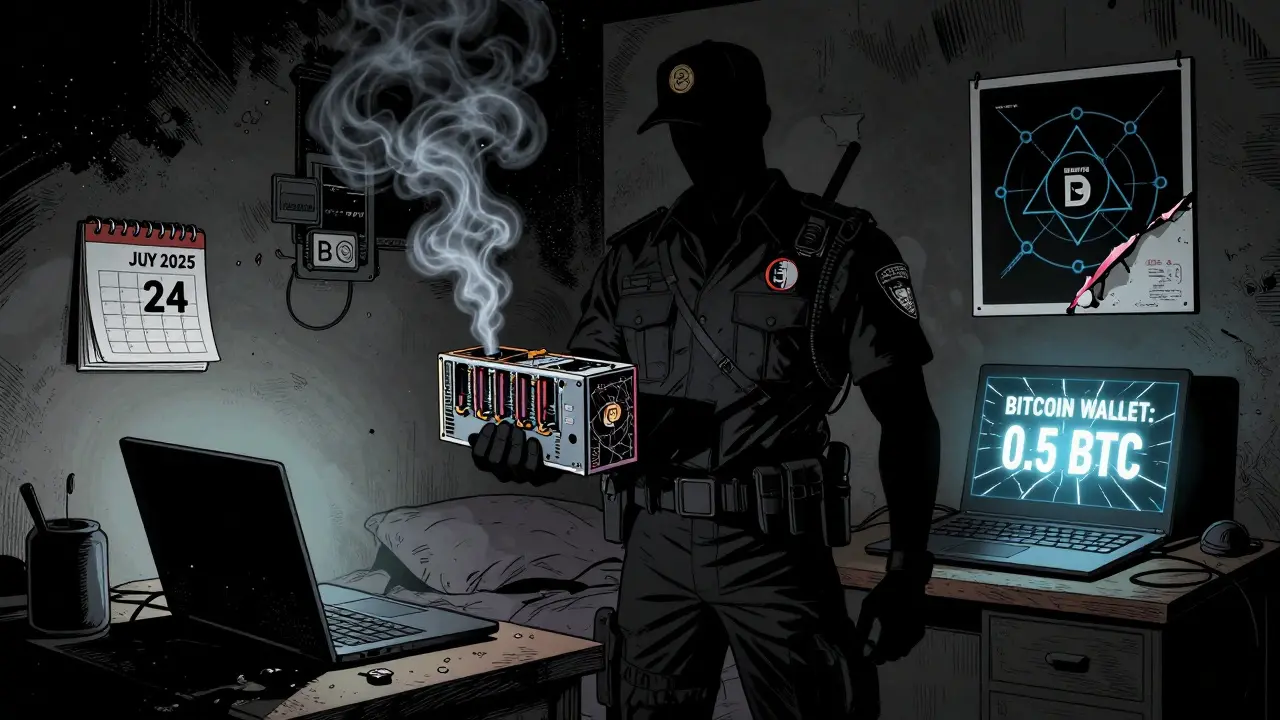
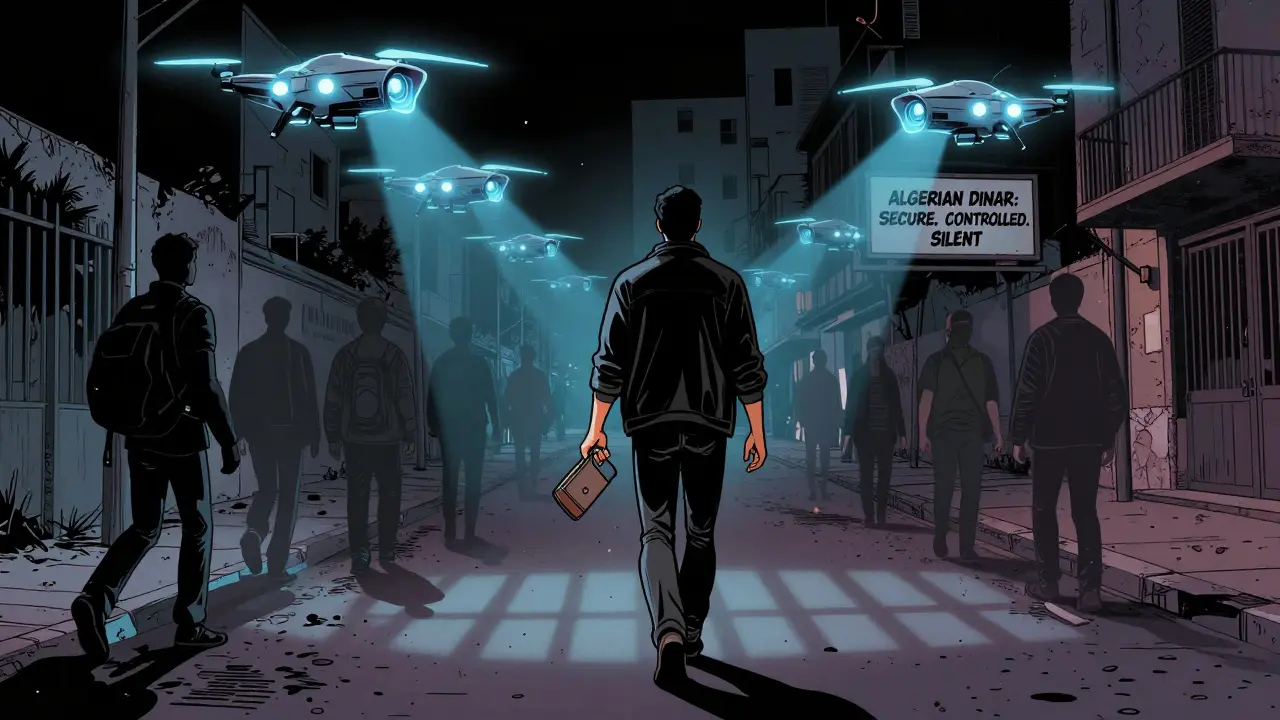
- Security services use digital surveillance to detect mining rigs, encrypted communication, and crypto-related online content.
There’s no warning. No grace period. If your IP address shows you accessed a crypto forum, or if your electricity bill spikes for no reason, authorities can investigate. And they’re already doing it.
The Penalties Are Real
The law doesn’t just say “don’t do this.” It spells out punishment:
- Prison: 2 months to 1 year for any violation, even minor ones like holding crypto
- Fines: 200,000 to 1,000,000 Algerian dinars (roughly $1,540 to $7,700 USD)
- Confiscation of devices used for mining, trading, or promoting crypto
- Criminal record that follows you for life, affecting jobs, travel, and banking access
There’s no leniency for first-time offenders. No plea deals for people who didn’t know the law. Ignorance isn’t a defense. If you had a Bitcoin wallet in 2024, you’re already in violation.

Why Did Algeria Do This?
The government says it’s about protecting the Algerian Dinar and stopping money laundering. Officials claim crypto is a tool for terrorists and criminals. They point to the Financial Action Task Force (FATF) guidelines as justification.
But here’s the contradiction: Algeria was one of the fastest-growing crypto markets in North Africa just a year before the ban. Chainalysis reported that peer-to-peer trading volumes surged in 2024, with Algerians using crypto to bypass inflation, send remittances, and invest outside the crumbling local economy. People weren’t using it for crime-they were using it because the system failed them.
The real motive? Control. The state wants to keep every dollar, every transaction, under its watch. Crypto is decentralized. It’s anonymous. It’s outside the government’s grip. And in Algeria, that’s unacceptable.
What Happened to the Crypto Community?
Before the ban, Algeria had a thriving blockchain scene. Developers built DeFi tools. Miners used cheap energy to run rigs. Educators ran free workshops. Recruiters hunted for blockchain talent.
Now? It’s gone.
Miners have dismantled their setups. Developers have left the country. Influencers deleted their channels. Crypto meetups vanished. The brain drain is real. Professionals with years of experience in smart contracts, node operation, and blockchain security now have no legal way to work in their field.
Some have moved to Morocco, Tunisia, or the UAE-places that are building crypto hubs. Others went underground, trading in person with cash, but even that’s risky. The noose is tightening.
How Does This Compare to the Rest of the World?
While Algeria bans everything, most countries are doing the opposite:
- The European Union passed MiCA, a clear legal framework for crypto assets.
- The United States is working on federal regulations to bring crypto into the financial system.
- Bahrain and the UAE have licensed crypto exchanges and allowed stablecoin use.
- Nigeria and Kenya still let people trade crypto, even with some restrictions.
Algeria is now one of the strictest places on Earth-alongside China and a few others. But unlike China, which quietly pushed crypto underground, Algeria is openly prosecuting its own citizens for holding digital money.
What’s Next?
There’s no sign the ban will loosen. The government has invested in surveillance, trained prosecutors, and built enforcement pipelines. They’ve made it clear: crypto has no place in Algeria’s future.
For residents, that means one thing: avoid crypto entirely. No wallets. No discussions. No mining. No even reading about it online. The risk isn’t just financial-it’s personal freedom.
For the global blockchain community, Algeria’s move is a warning. It shows how far some governments will go to crush innovation when they feel threatened. And it leaves a question: when a country bans technology because it can’t control it, who really loses?
Is it illegal to hold cryptocurrency in Algeria even if I didn’t trade it?
Yes. Under Law No. 25-10, simply possessing digital assets-whether you bought them, mined them, or received them as a gift-is a criminal offense. You don’t need to have traded or sold anything. Just having a wallet with Bitcoin, Ethereum, or any other crypto on your device qualifies as a violation.
Can I be prosecuted for talking about crypto online?
Absolutely. The law explicitly bans the promotion, advertising, or dissemination of information about cryptocurrencies. This includes social media posts, YouTube videos, blog articles, podcasts, or even public lectures. If your content explains how crypto works or encourages others to use it, you’re at risk of prosecution.
Are there any exceptions for businesses or developers?
No. The law makes no distinction between individuals and businesses. Developers building blockchain applications, companies offering crypto-related services, or even tech startups using smart contracts are all subject to the same penalties. There are no licenses, no exemptions, and no grandfather clauses.
What happens if I used crypto before the ban was passed?
The law is retroactive in practice. Even if you bought Bitcoin in 2023 or mined Ethereum in 2024, you are still in violation. Authorities are not required to prove when you acquired the assets-possession at the time of enforcement is enough for prosecution. There is no amnesty period.
Can I still use cryptocurrency outside Algeria?
If you’re physically outside Algeria, you’re not subject to its laws. However, if you return to Algeria with crypto assets-whether in a wallet on your phone or a hardware device-you can be arrested upon entry. Algerian authorities have the power to search electronic devices at borders, and possession of crypto on any device is grounds for prosecution.
Is mining cryptocurrency illegal in Algeria?
Yes. Mining is explicitly banned under Article 6 bis. This includes using personal computers, GPUs, or industrial-scale rigs to validate blockchain transactions and earn cryptocurrency. Even if you’re using electricity from state-subsidized sources, the act of mining is a criminal offense. Authorities have raided homes and businesses to seize mining equipment.
What about crypto-related jobs? Can I still work in blockchain?
If you’re employed by a company inside Algeria and your job involves blockchain technology-even if you’re not directly handling crypto-you’re at risk. Employers are being pressured to fire staff with crypto expertise. Many developers have left the country. Those who remain are either working in non-crypto roles or operating illegally, with no legal protection.
Is there any way to appeal a conviction under this law?
Legally, yes-you can appeal through the court system. But in practice, convictions are almost certain. The law is broadly written, enforcement is aggressive, and judges have little discretion. Appeals rarely overturn verdicts, and fines or prison sentences are typically upheld. Legal representation is available, but few lawyers are willing to take on these cases due to political pressure.



This is the dumbest thing I've ever read. People are going to jail for having Bitcoin? Who wrote this? A 1984 fanfic? Algeria thinks it's the USSR now? LOL.
I feel bad for the miners... I know a guy in Algiers who built a whole rig out of old PS5s. Now he's selling his gear for scrap metal. What a waste.
The real tragedy here is that people turned to crypto because the economy failed them. Banning it doesn't fix inflation. It just punishes the desperate.
This... this is a textbook example of authoritarian overreach. The state's obsession with control, its pathological fear of decentralization-it's not about economics, it's about power. And yet, the irony is palpable: in suppressing digital freedom, they're revealing their own fragility. How quaint.
I'm crying. I had a friend who was a blockchain dev in Algiers. She posted a video explaining DeFi. Now she's in hiding. This isn't policy. This is persecution. They're erasing people.
i read this and just... wow. i mean, i get the fear of money laundering but banning possession? like... you cant even have it? thats like banning owning a hammer because someone used it to break a window. its insane. my cousin in algeria just deleted all his wallets. he says hes scared to even look at his phone now.
The Algerian government has demonstrated a lucid, systematic, and constitutionally unassailable commitment to national economic sovereignty. The Financial Action Task Force guidelines are not suggestions; they are mandates. To permit crypto is to invite systemic collapse. This is not repression. It is governance.
I mean, I get why they did it. Crypto is chaos. It’s unregulated. It’s wild. But banning people from even *talking* about it? That’s not control. That’s fear. And fear doesn’t build a future. It just makes people quiet. And quiet people don’t innovate. They just disappear.
I'm curious how they're tracking possession. Are they scanning phones at the border? What if someone has crypto in a wallet they forgot about? Is there a grace period? Or are they just assuming guilt?
I’ve been following crypto for years. The fact that Algeria banned even *talking* about it is wild. I get the fear of capital flight, but this feels like burning the library because someone stole a book. What’s next? Banning calculators?
This law is a disaster. It’s not just ineffective-it’s self-sabotaging. You can’t ban an idea. You can only drive it underground. And then you lose all control. Congratulations, Algeria. You’ve just created a black market.
So let me get this straight. You can’t mine crypto. You can’t own it. You can’t explain it. But you can still buy a $2000 iPhone? That’s the real red flag. The government’s scared of knowledge, not money.
This isn’t about crypto. It’s about the state’s terror of autonomy. People using crypto weren’t criminals-they were survivors. They were using tech to bypass a system that failed them. Now they’re being criminalized for using tools the state can’t control. That’s not justice. That’s tyranny dressed in legal robes.
I just want to say to anyone in Algeria reading this: you're not alone. I know it feels scary, but your curiosity, your desire to learn, your courage to even think differently-that matters. The world hasn't forgotten you. We're still here. Keep your light on, even if it's just in your head.
In India, we also had people scared of crypto at first. But we talked. We learned. We adapted. Algeria’s fear is understandable, but silence doesn’t solve problems. Dialogue does. I hope they come to see that.
This is all a distraction. The real reason they banned crypto is because they’re about to devalue the dinar. They knew people would flee to stable assets. So they made it illegal to flee. Classic. This is stage one of a full economic collapse. Watch.
Algeria’s move is a masterclass in irony. They claim to protect the dinar, yet they’re actively destroying their own human capital. Developers leaving. Engineers fleeing. Innovation dying. You don’t preserve currency by silencing the future. You preserve it by embracing it.
The Algerian government has enacted a policy of unprecedented clarity and moral fortitude. The preservation of national monetary integrity is not negotiable. The use of unregulated digital assets poses an existential threat to economic sovereignty. This law is not extreme. It is necessary.
The systemic implications here are profound. The ban on crypto infrastructure effectively dismantles the emergent Web3 ecosystem in North Africa. Without access to decentralized identity, permissionless finance, or compositional smart contracts, Algeria is voluntarily opting out of the next economic paradigm. This isn't regulation-it's obsolescence.
I mean, let’s be real-how are they even enforcing this? Are they sending drones to check people’s phones? Are they monitoring electricity usage? Are they hiring hackers to scan every device in the country? This isn’t a law-it’s a surveillance state fantasy. And the worst part? It’s not even working. People are still trading. They’re just doing it in basements with cash. So now you’ve got a black market AND a police state. Congrats.
I think people forget that crypto wasn’t about getting rich. For a lot of Algerians, it was about sending money home to family, or buying medicine online when the local pharmacies were out. This law didn’t stop crime. It just made life harder for normal people. That’s not a win.