
British Columbia Crypto Mining Restrictions: What You Need to Know in 2025
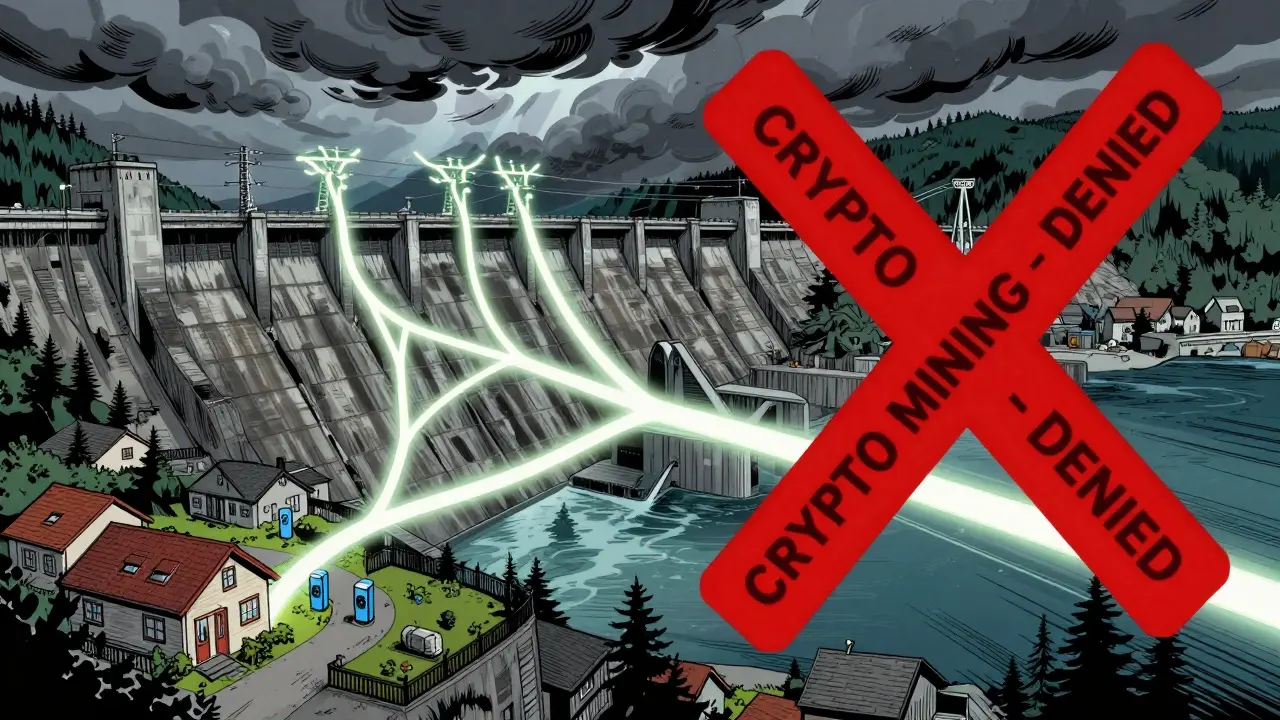
British Columbia doesn’t just limit crypto mining-it blocked it. In December 2022, the province stopped approving new electricity connections for cryptocurrency mining operations. That pause was extended to three years in 2024, and it’s still in effect as of December 2025. No new mines get power from BC Hydro. Not even one. And it’s not a temporary hiccup-it’s a deliberate policy shift that’s reshaping Canada’s crypto landscape.
Why Did British Columbia Shut Down Crypto Mining?
The answer isn’t about Bitcoin being illegal. It’s about electricity. British Columbia generates over 90% of its power from clean, renewable hydroelectric dams. That’s a huge advantage-low emissions, low cost, and reliable supply. But in 2022, crypto mining companies started asking for massive amounts of power. One project alone, run by Conifex Timber for Greenidge Generation, wanted 2.5 million megawatt-hours a year. That’s nearly half the output of the new Site C dam.
BC Hydro didn’t have enough surplus. And they couldn’t afford to give it away. Every megawatt diverted to crypto mining meant one less megawatt for homes switching to electric heat pumps, for businesses upgrading to electric machinery, or for families charging EVs. The province calculated that 1,403 megawatts requested by 21 mining projects could power 570,000 homes. That’s not a small number. That’s the entire city of Victoria, plus more.
Minister Josie Osborne put it plainly: crypto mining uses huge amounts of electricity to run and cool computers 24/7, but creates very few local jobs. Meanwhile, electrifying homes and factories creates skilled labor, reduces emissions, and builds long-term economic value. The math didn’t add up for mining.
How the Ban Works-And Why It’s Legal
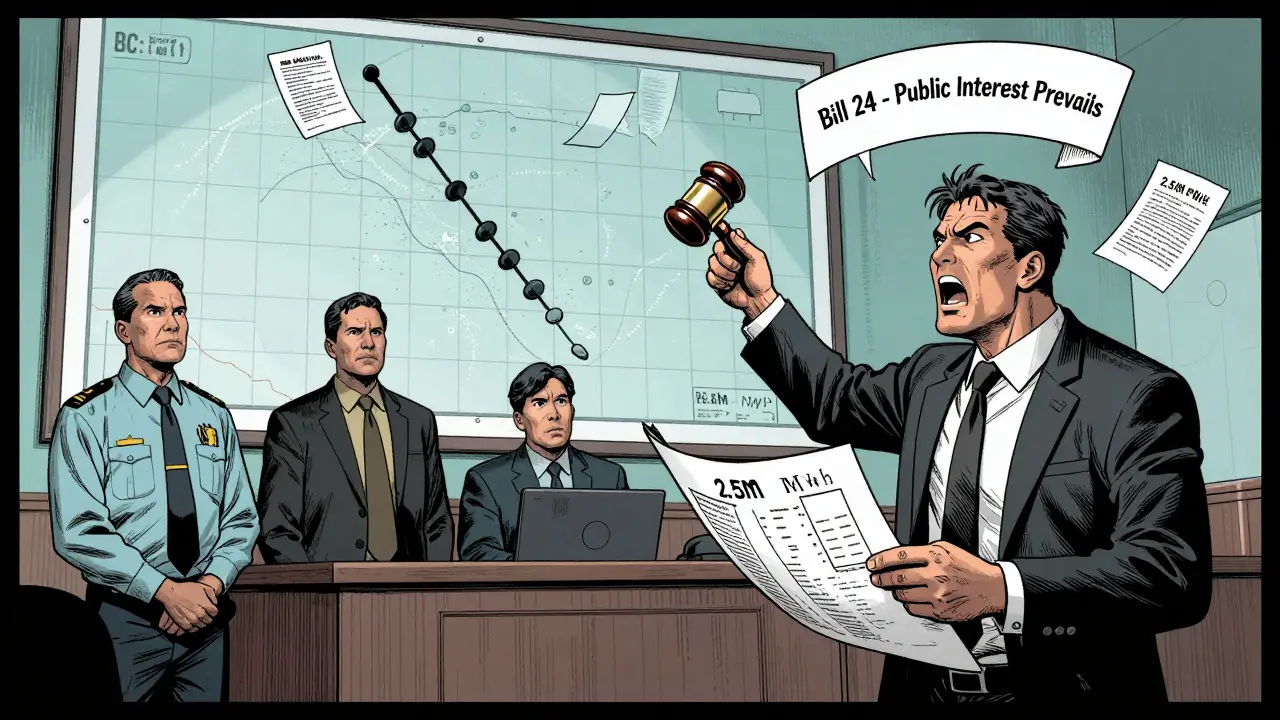
BC Hydro didn’t just say “no.” They got the law changed. In 2023, the provincial government passed the Energy Statutes Amendment Act (Bill 24). This law lets the government directly control who gets electricity from BC Hydro-bypassing the usual regulatory body, the BC Utilities Commission. That’s unusual. Normally, utilities can’t pick and choose customers. But the government argued that in this case, the public interest outweighed standard rules.
Conifex Timber tried to fight back in court. They argued the ban was unfair and violated their rights. The B.C. Supreme Court said no. Then the Court of Appeal agreed. Both rulings confirmed that the province has the legal right to protect its electricity grid for essential uses. The courts didn’t rule on whether Bitcoin is good or bad. They ruled that BC Hydro’s priority is to serve the public, not miners.
The ban isn’t a loophole. It’s a legal tool. And it’s working.
What’s Happening to Existing Mines?
The suspension only applies to new connections. Mines that were already connected before December 2022 can still operate. But they’re under pressure. BC Hydro has made it clear that no new power will be added, and existing operations can’t expand. Some are trying to renegotiate contracts. Others are looking at alternative energy sources-like natural gas or solar-but those aren’t viable at scale in most parts of the province.
One mine in the Interior was shut down after its power agreement expired and BC Hydro refused to renew it. Another in the Lower Mainland scaled back its operations by 40% because it couldn’t get more electricity. The message is clear: if you’re not already running, you’re not getting in.
How Does This Compare to Other Canadian Provinces?
British Columbia isn’t alone-but it’s the strictest.
- Manitoba paused new connections in 2022, similar to BC.
- Quebec raised electricity rates for miners and capped how much power they can use.
- New Brunswick issued a full moratorium on large-scale crypto mining requests.
- Ontario excluded crypto miners from energy cost-reduction programs.
- Alberta is the exception. With deregulated power markets and government support, it’s become Canada’s crypto mining hub. Miners flock there because they can buy power cheaply and without red tape.
That’s the split: the eastern and western provinces are pushing back. Alberta is doubling down. And British Columbia? It’s drawing a hard line.
What About Vancouver’s ‘Bitcoin-Friendly City’ Motion?
In 2023, Vancouver City Council passed a motion introduced by Mayor Ken Sim to promote Bitcoin and position the city as a crypto-friendly hub. The motion talked about economic growth, innovation, and financial freedom. It sounded great.
But here’s the catch: cities don’t control electricity. BC Hydro answers to the provincial government. No matter how many city councilors support Bitcoin, they can’t override a provincial energy ban. The motion was symbolic. It didn’t change a single wire, meter, or megawatt. It didn’t bring a single miner back online.
Provincial power trumps municipal wishes. Always.
What’s Next? The Permanent Policy in 2025
The current suspension ends in December 2025. That doesn’t mean mining will come back. The government has been using the past three years to build a permanent policy. They held four online sessions in 2023 with over 400 stakeholders-First Nations, municipalities, utilities, and even crypto companies. They listened. Now they’re writing rules.
What might those rules look like? Experts believe the province will allow mining only under strict conditions:
- Must use only surplus renewable energy-not baseload power
- Must prove zero impact on residential or industrial electrification goals
- Must pay premium rates that reflect true energy cost
- Must create measurable local jobs or tech development
Even if mining returns, it won’t look like it did in 2021. The era of cheap, unlimited power for crypto farms is over in British Columbia.
What Does This Mean for Miners and Investors?
If you’re thinking of setting up a mine in BC-don’t. The window is closed. The legal path is blocked. The energy is locked up.
If you’re invested in crypto mining companies operating in BC-expect pressure. Revenue will shrink as power gets cut. Valuations may drop. Some companies are already moving operations to Alberta or overseas.
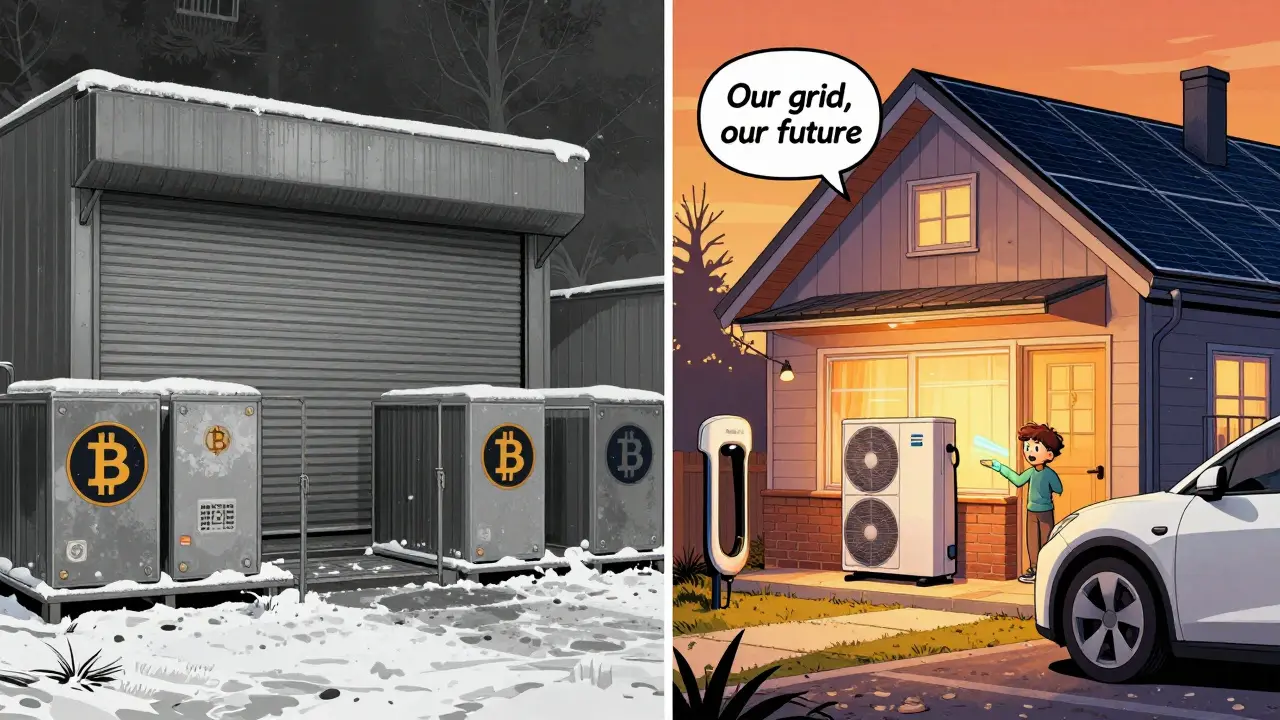
And if you’re a resident? You’re winning. Your electric bills are staying stable. Your home is getting heat pumps. Your city is getting EV chargers. The grid is being saved for things that matter.
British Columbia didn’t ban Bitcoin. It just said no to using public energy for a high-risk, low-reward industry. And for now, that decision stands.



Let’s be real-this isn’t about electricity, it’s about control. They’re scared of decentralized money because it can’t be taxed, tracked, or regulated by bureaucrats who think they know what’s best for everyone. The ‘public interest’ is just a fancy word for centralized power. And now they’re using climate guilt to justify it. Classic.
They’re lying. Crypto mining isn’t using that much power-it’s all a cover-up for the government to push their digital currency agenda. You think they’d shut down a billion-dollar industry over ‘homes and EVs’? Nah. They want you on CBDC. This is step one. Watch.
BC Hydro’s move is genius. They’ve got cheap hydro, so why hand it to offshore investors who leave zero legacy? It’s like giving your neighbor your last slice of pizza so he can host a rave in your backyard. No thanks.
Actually, this is one of the most rational energy policies I’ve seen in a while. Renewable power is a finite public resource. Prioritizing electrification of homes and transport over speculative digital mining makes perfect sense. Well done, BC.
Yessss!!! 🙌 This is what leadership looks like. No more letting greedy tech bros suck up our clean energy like a vacuum cleaner on steroids. I charge my Tesla at home and I’m damn proud of it. BC’s got my back!
bc hydro is just doing what the fed told them to do. crypto is a threat to the system. they dont care about homes or evs. they just dont want you to have money they cant track. its all connected. the grid is just the excuse
While I understand the economic rationale behind the policy, I am deeply concerned about the precedent it sets for utility governance. The bypassing of the BC Utilities Commission, even under the guise of public interest, risks eroding the procedural safeguards that ensure equitable access to essential services. This requires careful, transparent oversight moving forward.
Here’s the real question: if we’re going to allocate energy based on social value, why not apply the same logic to fossil fuel subsidies? Or corporate data centers? Or luxury air conditioning in McMansions? We’re not choosing between miners and mothers-we’re choosing between who gets to play the game and who gets to write the rules. And right now, the rules are written by politicians who don’t live in the future.
Bitcoin mining is inefficient? Sure. But so is every new technology at first. The printing press was once called a waste of paper. The internet was a fad. The real issue isn’t energy use-it’s power. Who controls it? Who profits? Who gets left out?
BC didn’t ban Bitcoin. They banned the idea that energy should be a commodity for rent-seekers. That’s not anti-tech. That’s pro-community. And if you think this is about climate, you’re missing the point. This is about dignity. The right of a province to say: ‘Our resources are for our people, not for your offshore balance sheet.’
Let’s not pretend this is a technical decision. It’s a moral one. And honestly? I’m proud of them for having the guts to make it.
Okay but like, have you even looked at the actual energy numbers? The whole ‘2.5 million MWh’ thing is misleading because a lot of those projects were just proposals that never got built. Like, the actual operational mines in BC were using maybe 0.3% of the grid total. And now they’re shutting down the whole industry because of fear? And they’re saying ‘no jobs’ but what about the engineers, electricians, security, maintenance? Those are real jobs, not just ‘low-wage retail’ jobs. And don’t even get me started on how they’re using this to push for CBDCs under the guise of ‘public interest’-it’s all connected. The same people who are banning mining are the ones who are pushing for digital dollars. And now they’re saying ‘we’re protecting the grid’ but they’re not saying ‘we’re protecting our control over money.’ And I just think it’s so ironic because if you actually cared about emissions, you’d be happy that crypto mining can use stranded or flared gas, which is way better than just burning it off. But no, they’d rather keep people poor and dependent on the state. It’s not about energy, it’s about power. And that’s why I’m not surprised they’re doing this. They’re scared of decentralization. They’re scared of people having money they can’t track. And they’re using climate as a weapon. It’s disgusting.
They’re not protecting the grid they’re protecting their own power. They don’t want people owning anything that can’t be taxed or controlled. Bitcoin is freedom. Freedom means you don’t need their permission to exist. And that terrifies them. So they shut down the miners and pretend it’s about EVs and heat pumps. Please. If they really cared about emissions, they’d ban all the oil rigs in Alberta, not the people trying to build a better financial system. This isn’t ethics. It’s tyranny wrapped in green packaging. And soon they’ll come for your crypto wallet next.
Of course BC hates crypto. It’s a liberal province full of people who think ‘sustainability’ means taking away your freedom. Meanwhile, Alberta is building real wealth, creating jobs, and actually using energy. BC is just a bunch of people who think if they ignore something hard enough, it’ll go away. Bitcoin doesn’t care about your feelings. It’s not a trend. It’s a revolution. And you’re trying to bury it under ‘public interest’ nonsense. Wake up. This isn’t about electricity. It’s about control. And you’re losing.
Let me explain something to the BC elites: you didn’t ban mining because of ‘jobs’ or ‘homes.’ You banned it because you can’t tax it. Bitcoin can’t be regulated by your little bureaucracy. That’s why you’re scared. You want everyone dependent on your system-your banks, your CBDC, your rules. You don’t want people to have money outside your control. So you use climate as an excuse. It’s the same old story. The only difference is now you’re pretending you’re the good guys. You’re not. You’re just afraid.
you know what sucks? i lived in vancouver for 5 years and every time i tried to get a job in tech they said 'oh we dont do crypto here' like its some kind of sin. now i see why. its not about energy. its about fear. they dont want people to be independent. they want you to need them. and now they've got the law on their side to make sure you never escape. and the worst part? everyone just nods along like its smart. its not smart. its cowardly.
That motion by Vancouver City Council? Pure theater. Mayor Sim didn’t think it through-or maybe he did. He knew it wouldn’t change a thing. But he wanted to say: ‘We still believe in something.’ And that’s more than the province’s doing. Sometimes symbolism is the only resistance left.