
C2CX Crypto Exchange Review: Does It Exist or Is It a Scam?
You type "C2CX" into your browser because you saw an ad promising high returns or found a forum post recommending it. You expect to find a detailed breakdown of fees, security features, and user reviews. Instead, you hit a wall of silence. There are no reputable news articles, no regulatory filings, and no credible community discussions about an exchange called C2CX.
This isn’t just bad luck. In the world of cryptocurrency exchanges, invisibility is often a red flag brighter than any warning sign. As of May 2026, there is no evidence that C2CX operates as a legitimate, regulated financial institution. This article will walk you through why this platform raises immediate alarms, what you might be confusing it with, and how to protect your funds from potential fraud.
The Silence Around C2CX
Legitimate cryptocurrency platforms do not operate in the shadows. Established exchanges like Binance, Coinbase, or even mid-tier players like CEX.IO have thousands of independent reviews, regulatory disclosures, and active social media presences. They publish their security audits, list their supported jurisdictions, and engage with users publicly.
C2CX has none of this. When you search for "C2CX crypto exchange," the results are sparse or non-existent on authoritative sources. There are no entries on CoinMarketCap’s exchange list, no listings on Coingecko, and no mentions in major financial news outlets like Bloomberg or Reuters. If a platform claims to handle millions in transactions but leaves zero digital footprint outside its own website, that is a massive problem.
Scammers know that legitimacy takes time to build. By creating a new site with a name that sounds similar to established brands, they can trick inexperienced traders into depositing funds before the rug is pulled. The lack of information isn’t a mystery; it’s a warning.
What Are You Actually Looking For?
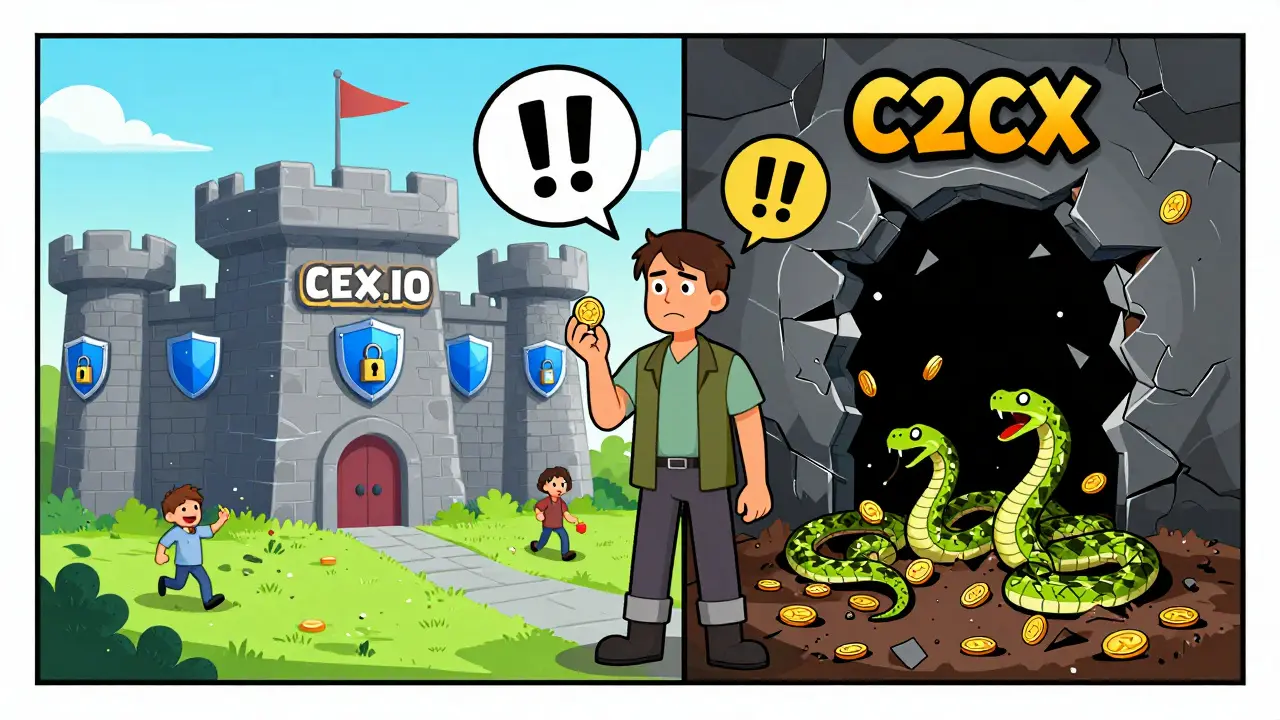
It is highly likely that you are confusing C2CX with one of two existing concepts: CEX.IO or Peer-to-Peer (P2P) Trading. Let’s break down the difference so you don’t send money to the wrong place.
CEX.IO is a well-known, regulated exchange founded in 2013. It holds Money Services Business status with FinCEN in the United States and complies with regulations in Europe and Asia. CEX.IO offers robust security features, including two-factor authentication (2FA), DDoS protection, and multi-signature cold storage for Bitcoin. It supports over 200 markets and allows deposits via Visa, Mastercard, SWIFT, SEPA, and Skrill. If you want a traditional exchange experience, CEX.IO is a verified option.
P2P Trading, often abbreviated as C2C (Customer-to-Customer) by platforms like Binance, is a different model entirely. Here, you trade directly with other users rather than the exchange itself. Binance’s P2P platform connects traders across more than 250 countries, supporting over 1,000 payment methods. The exchange acts as an escrow service, holding the crypto until both parties confirm the transaction. This is safe because the platform mediates the deal. However, if a site calls itself "C2CX" and asks you to transfer funds directly to a wallet address without escrow, you are bypassing all safety nets.
| Feature | CEX.IO / Binance P2P | C2CX (Unverified) |
|---|---|---|
| Regulatory Status | Registered with FinCEN, FCA, etc. | No public records found |
| Security Measures | 2FA, Cold Storage, Escrow | Unknown / Likely None |
| User Reviews | Thousands on Trustpilot, Reddit | None or fake testimonials |
| Payment Methods | Bank Transfer, Card, Crypto | Often only direct crypto transfers |
| Transparency | Public team, clear terms | Anonymous owners, vague policies |
Red Flags That Scream Scam
If you have already visited the C2CX website, look closely at these common tactics used by fraudulent platforms. These signs are not subtle-they are designed to rush you into acting before you think.
- Pressure to Deposit: Does the site offer a "limited-time bonus" if you deposit within the next hour? Legitimate exchanges do not use urgency to sell their services. They rely on trust and utility.
- Vague Team Information: Go to the "About Us" page. Do you see real names, LinkedIn profiles, and professional photos? Or do you see stock images and generic titles like "Senior Blockchain Advisor" with no verifiable history? Scams often hide behind anonymity.
- Direct Wallet Transfers Only: If C2CX asks you to send Bitcoin or Ethereum directly to a wallet address labeled as "customer support" or "deposit account" without an invoice system or escrow, run away. Once those coins leave your wallet, they are gone forever. There is no chargeback process for blockchain transactions.
- Unrealistic Promises: Any platform guaranteeing daily profits or offering leverage without risk disclosure is violating basic financial principles. Even top-tier brokers cannot guarantee market outcomes.
- Poor Website Quality: Check for broken links, grammatical errors, and low-resolution graphics. While some scams have polished sites, many still suffer from poor design. More importantly, check the domain registration date. If the domain was registered less than a year ago, it is a major risk factor.
How to Verify Any Crypto Exchange
Before you ever connect your wallet or enter your credit card details, you must perform due diligence. This process takes five minutes and can save you thousands of dollars. Here is the checklist every trader should follow in 2026.
- Check Regulatory Registrations: Visit the official websites of regulators like the US Financial Crimes Enforcement Network (FinCEN), the UK Financial Conduct Authority (FCA), or the Australian Securities and Investments Commission (ASIC). Search their public registers for the company name. If they are not listed, they are operating illegally in those jurisdictions.
- Search Independent Reviews: Look beyond the exchange’s own testimonials. Search for "[Exchange Name] scam" or "[Exchange Name] withdrawal issues" on Reddit, Twitter, and Trustpilot. Real users will complain about hidden fees or frozen accounts long before a platform collapses.
- Test Customer Support: Send a message to their live chat or email. Ask specific questions about fee structures or withdrawal limits. If they respond slowly, give vague answers, or ignore you, imagine how helpful they will be when you try to withdraw your profits.
- Verify Security Protocols: Does the platform offer Two-Factor Authentication (2FA)? Do they store most funds in cold wallets (offline storage)? Reputable exchanges publish regular security audits from third-party firms. If they claim to be "the safest" but provide no proof, treat it as marketing fluff.
- Start Small: If you decide to try a new platform despite the risks, never deposit more than you can afford to lose. Test the withdrawal process with a small amount first. Many scams allow initial withdrawals to build trust before locking larger sums.
Safer Alternatives for Trading
If your goal is to buy, sell, or trade cryptocurrencies, stick to platforms with proven track records. These exchanges have survived multiple market cycles, regulatory scrutiny, and security challenges.
Binance remains the largest exchange by volume, offering extensive pairs and low fees. Its P2P section is particularly useful for users who want to trade using local payment methods while maintaining privacy. Always ensure you are on the official domain, as phishing sites mimic Binance frequently.
Crypto.com has grown rapidly since its launch, now serving over 150 million users. It offers a unified app for trading, staking, and spending, with strong emphasis on regulatory compliance and security certifications. It is a good choice for beginners who want a user-friendly interface.
CEX.IO is ideal for users in Europe and the US who prioritize regulatory safety. It supports fiat deposits easily and offers leveraged trading for experienced users. Its reputation for stability makes it a reliable backup option.
Kraken is known for its strong security record and transparent operations. It has never been hacked in its history and provides advanced charting tools for professional traders. If security is your top concern, Kraken is a top contender.
What To Do If You Already Deposited Funds
If you have already sent money to C2CX or a similar unverified platform, act immediately. Time is critical.
First, document everything. Take screenshots of your deposit confirmation, the website URL, any communications with support, and the wallet addresses involved. This evidence is crucial if you need to report the crime.
Second, contact your bank or payment provider. If you used a credit card or bank transfer, request a chargeback or recall of funds. Explain that the merchant is unverified and potentially fraudulent. Banks are more likely to assist if you act quickly, especially within the first few days.
Third, report the incident to local authorities. In New Zealand, you can report cybercrime to the Police Cyber Crime Unit. In the US, file a complaint with the FBI’s Internet Crime Complaint Center (IC3). In the EU, report to your national consumer protection agency. These reports help law enforcement track patterns and shut down operations.
Finally, change your passwords. If you created an account on C2CX, assume your credentials may be compromised. Use a unique password for your email and primary crypto wallets, and enable 2FA everywhere possible.
Is C2CX a legitimate crypto exchange?
As of May 2026, there is no verifiable evidence that C2CX is a legitimate, regulated cryptocurrency exchange. The lack of regulatory filings, independent reviews, and transparent ownership suggests it may be a fraudulent platform. Users should exercise extreme caution and avoid depositing funds.
What is the difference between C2CX and CEX.IO?
CEX.IO is a well-established, regulated exchange founded in 2013 with millions of users and compliance with global financial laws. C2CX appears to be an unknown entity with no public track record. The similar names are likely intended to confuse users. Always verify the exact spelling and domain of the exchange you are using.
Can I recover my funds if I deposited into C2CX?
Recovering funds from an unverified exchange is difficult but not impossible. If you paid via credit card or bank transfer, contact your provider immediately to request a chargeback. Document all interactions and report the scam to local law enforcement. Direct cryptocurrency transfers are irreversible, making prevention far more important than recovery.
Why do scam exchanges use names similar to real ones?
Scammers use typosquatting and brand impersonation to exploit trust. By choosing a name like C2CX instead of CEX.IO, they hope users will overlook the slight difference and deposit funds based on familiarity. This tactic works because many traders do not double-check URLs or regulatory status before transacting.
How can I tell if a crypto exchange is safe?
A safe exchange will have clear regulatory licenses, positive independent reviews on platforms like Trustpilot and Reddit, transparent security measures (like 2FA and cold storage), and responsive customer support. Avoid platforms that promise guaranteed returns, pressure you to deposit quickly, or lack verifiable company information.





ugh honestly just stick to the big ones like binance or coinbase its so much less stress for everyone involved and you dont have to worry about losing your life savings to some random site nobody has heard of
One must question the intellectual capacity of those who fall for such elementary deceptions. The sheer audacity of these charlatans is matched only by the gullibility of their victims. It is truly a tragedy that in an age of information, people still fail to perform even the most rudimentary due diligence before parting with their hard-earned capital.
lol another scam alert :P why do people keep falling for this stuff its basic common sense really check the reviews first guys
actually i think there might be some legitimate offshore exchanges that operate quietly without all the regulatory noise because regulations are often designed to stifle innovation rather than protect users so maybe c2cx is just misunderstood
boring article basically says what we already know its a scam next time write something interesting instead of repeating obvious facts
I find it absolutely preposterous that anyone would consider depositing funds into an entity with zero verifiable track record. The very notion is laughable. One does not simply hand over one's cryptocurrency to a digital void and expect anything but ruin to follow. This is not speculation; it is a fundamental law of financial fraud.
i actually knew someone who tried this last year and lost like 5k dollars it was so sad she was trying to make extra money for her kids tuition and now shes just stuck paying off credit cards instead its really heartbreaking how these scams target normal families
thanks for sharing this info i was actually wondering if it was legit because i saw an ad on twitter but now im glad i didnt click through yet will definitely stick to kraken since they seem safer
Oh my goodness, the horror! I cannot even imagine the panic someone feels when they realize their money is gone forever. It is a nightmare scenario that no one should have to face. Please, everyone, please look out for each other and share these warnings so we can protect our community from these evil actors who prey on hope and trust.
The silence of C2CX speaks volumes about its intentions 🤔 In a world where transparency is key, hiding in the shadows is never a good sign. We must remain vigilant and support platforms that value honesty and security above quick profits. Let us learn from these mistakes and build a better future together 💡✨
u guys are all idiots if u think this is the only scam out there theres hundreds of them every day stop complaining and start doing ur own research instead of relying on some random blog post to tell u whats real
sigh another day another scam 😒 honestly i just want to sleep but then i see posts like this and feel so drained by the stupidity of humanity why cant people just read between the lines? its exhausting being right all the time while everyone else gets played 🙄💤
It is quite amusing to watch the masses scramble to validate their poor decisions. You likely already deposited, didn't you? Now you seek validation for your mistake rather than accepting responsibility. The audacity to blame the platform for your own lack of foresight is truly breathtaking. Perhaps you should have thought twice before sending crypto to a wallet address.
i appreciate the detailed breakdown here it helps to understand exactly what red flags to look for in the future so i can avoid making similar mistakes myself thank you for taking the time to explain this clearly
stay safe everyone and always double check the url before logging in
It is imperative that individuals recognize the distinction between established financial institutions and fraudulent entities. The absence of regulatory compliance is not merely an oversight but a deliberate act of deception. One must exercise extreme caution and adhere strictly to verified platforms to ensure the preservation of one's assets in this volatile market.
i hope everyone reads this carefully because safety is very important in crypto trading and we should all support each other by sharing useful information like this to help prevent losses