
Chinese Crypto Mining Exodus: Where Bitcoin Miners Relocated After the 2021 Crackdown
Before 2021, if you wanted to mine Bitcoin, you were probably looking at a warehouse in Inner Mongolia or Sichuan. China controlled over 75% of the world’s Bitcoin mining power. Then, in a matter of months, it all vanished.
The Crackdown That Changed Everything
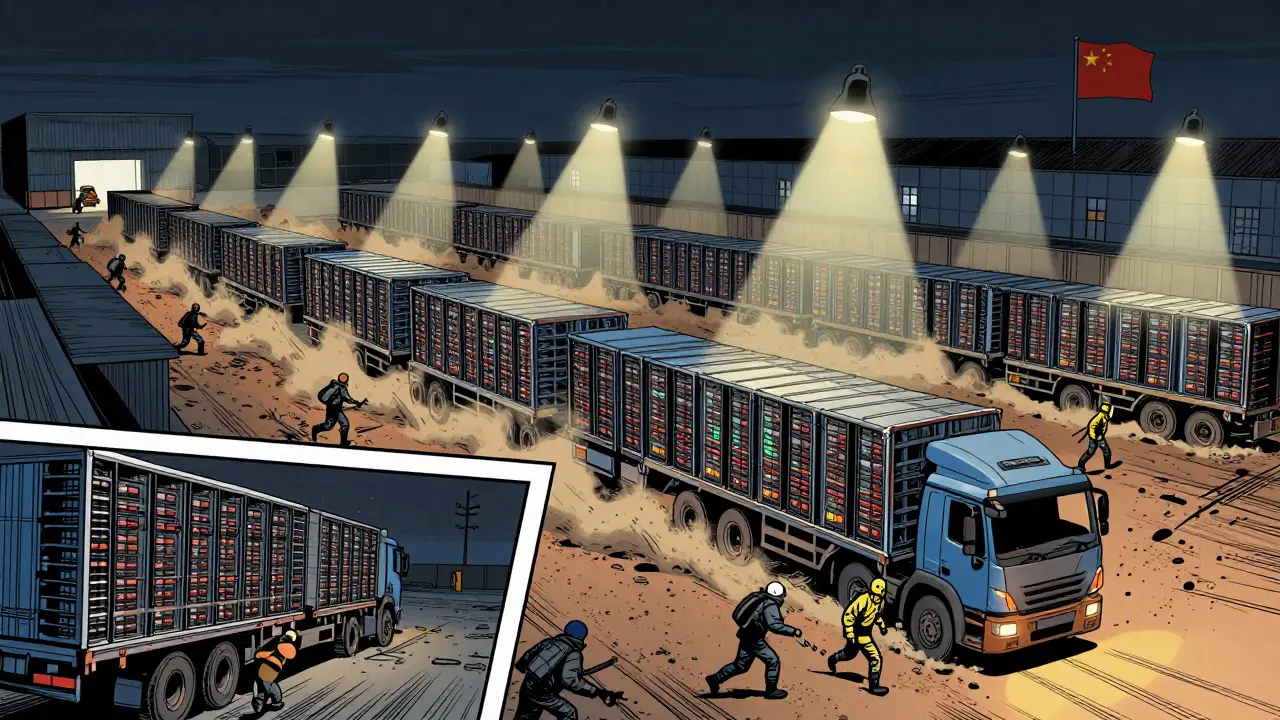
In mid-2021, China didn’t just tighten rules-it pulled the plug. The central government declared cryptocurrency mining a threat to energy goals and financial stability. Unlike past crackdowns that targeted trading or exchanges, this one went straight for the miners. Power grids were overloaded. Coal plants were burning too much. And China’s leadership decided Bitcoin mining had to go. Provinces moved first. Inner Mongolia, a coal-heavy region with cheap electricity, banned mining in May. Sichuan, where miners relied on seasonal hydropower, saw restrictions kick in during the dry season. But the real hammer came in June: the National Development and Reform Commission listed cryptocurrency mining as an industry to be phased out. No warnings. No grace period. Miners had weeks to shut down or flee. The result? A mass exodus. Entire mining farms packed up ASIC machines-each one weighing over 30 pounds-and shipped them across borders. Some moved by truck. Others flew in cargo planes. Within six months, China’s share of global Bitcoin mining dropped to under 20%. It was the largest industrial relocation in crypto history.Kazakhstan: The Unexpected Winner
Kazakhstan didn’t have a reputation as a crypto hub before 2021. But it had two things miners needed: cheap power and no questions asked. The country’s energy grid was built for heavy industry-coal-fired plants, natural gas, and surplus electricity from Soviet-era infrastructure. When Chinese miners arrived, they didn’t need new power plants. They just plugged in. Electricity cost as little as $0.02 per kWh in some regions. That’s less than half the price in Texas. Kazakhstan’s mining share exploded. From 1.4% in 2019, it jumped to 18% by late 2021. For a while, it was the second-largest Bitcoin mining country in the world. Miners set up shop in former industrial zones near Almaty and Karaganda. Some even rented out unused factories. But the boom didn’t last without fallout. In early 2022, the country faced rolling blackouts. Power demand from mining spiked so fast that households lost electricity during winter. The government responded by imposing temporary restrictions on new mining licenses and raising electricity rates for industrial users. Still, Kazakhstan remains a top-five mining hub today, with over 10% of global hashrate.Texas: The American Safe Haven
While Kazakhstan offered cheap power, Texas offered something rarer: stability. The state’s deregulated energy market lets miners negotiate directly with power providers. No red tape. No state-level bans. In fact, Texas lawmakers passed bills in 2021 explicitly protecting crypto mining as a legal industry. Governor Greg Abbott even called Bitcoin mining a “strategic asset.” Miners flooded into Texas, especially around Fort Worth, Houston, and the Permian Basin. They didn’t just use coal or gas-they tapped into renewable energy. Texas has the most wind power of any U.S. state, and solar installations are growing fast. Miners became flexible energy consumers: they ramped up when wind was blowing and turbines were spinning, and they shut down during peak demand. That helped stabilize the grid during the 2021 freeze. By 2025, Texas hosted about half of all Bitcoin mining capacity in the U.S.-roughly 2.6 gigawatts. That’s more than the entire country of Russia. Companies like Riot Platforms and Marathon Digital built massive campuses with thousands of machines. Some even partnered with energy firms to use flared natural gas from oil wells-waste that would’ve been burned off anyway.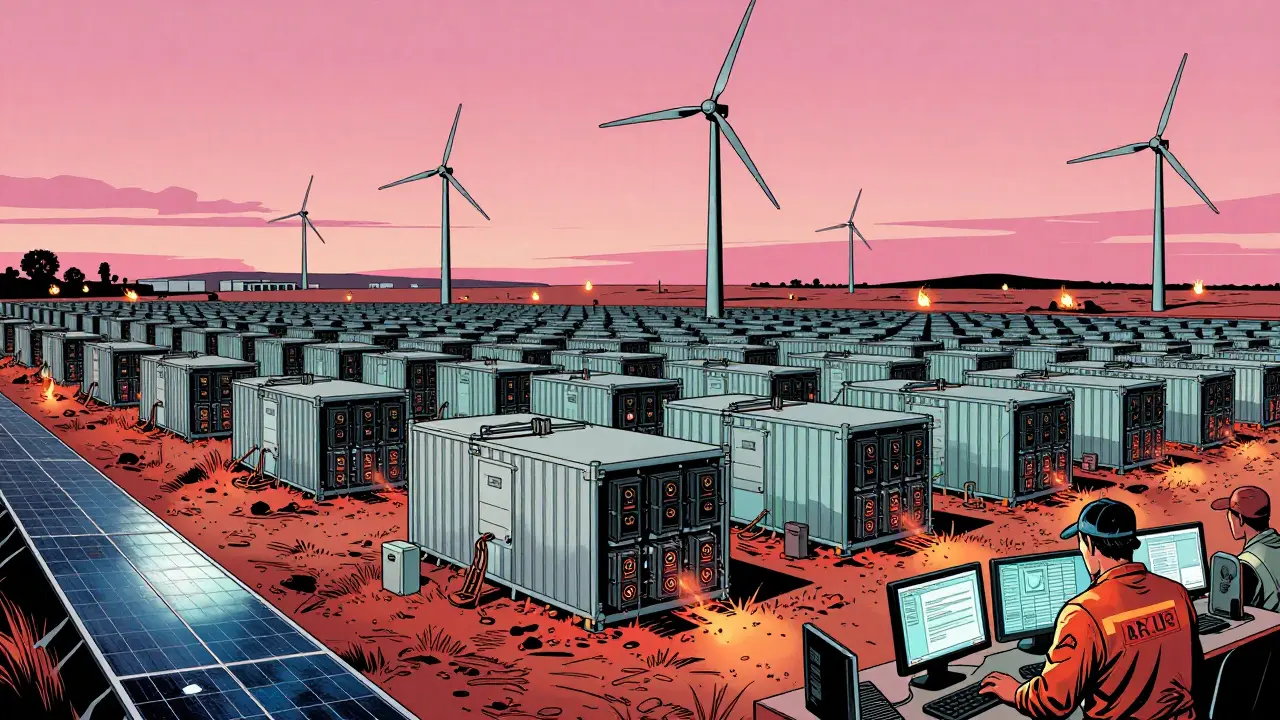
Other Destinations: The Rest of the Map
Not every miner went to Kazakhstan or Texas. Some found niches elsewhere. Russia became a quiet player. Miners moved to Siberia, where cold weather kept machines cool and electricity was cheap. But sanctions after 2022 made it harder to import new ASICs. Many operations stalled. Iran, already under U.S. sanctions, used mining as a way to earn hard currency. The government even taxed miners and gave them subsidized electricity. At its peak, Iran accounted for nearly 5% of global hashrate. But power shortages and currency collapse made it unstable. The U.S. didn’t stop at Texas. Georgia, Washington, and even North Dakota saw small surges. Canada, especially Quebec, attracted miners thanks to hydroelectric power. But Canada’s colder climate and stricter regulations kept growth modest. Even countries like Paraguay and El Salvador got in on the action. El Salvador, which made Bitcoin legal tender, started small-scale mining projects using geothermal energy. Paraguay’s cheap hydropower lured operators looking for a quiet, stable base.Why Did Miners Move So Fast?
Bitcoin mining isn’t like running a factory. You don’t need a port, a rail line, or a skilled workforce. You need two things: electricity and internet. The machines themselves-ASICs-are modular. You can unplug them, load them onto a truck, and plug them back in a week later. Setup takes hours, not months. That’s why the migration happened so quickly. Miners didn’t wait for permits. They didn’t build new data centers. They just moved. Some rented warehouse space in Kazakhstan. Others leased empty server farms in Texas. Many used pre-built container units that could be shipped anywhere. This mobility made Bitcoin mining uniquely resilient. When one country cracked down, miners didn’t shut down-they relocated. And because Bitcoin’s protocol doesn’t care where miners are, the network kept running.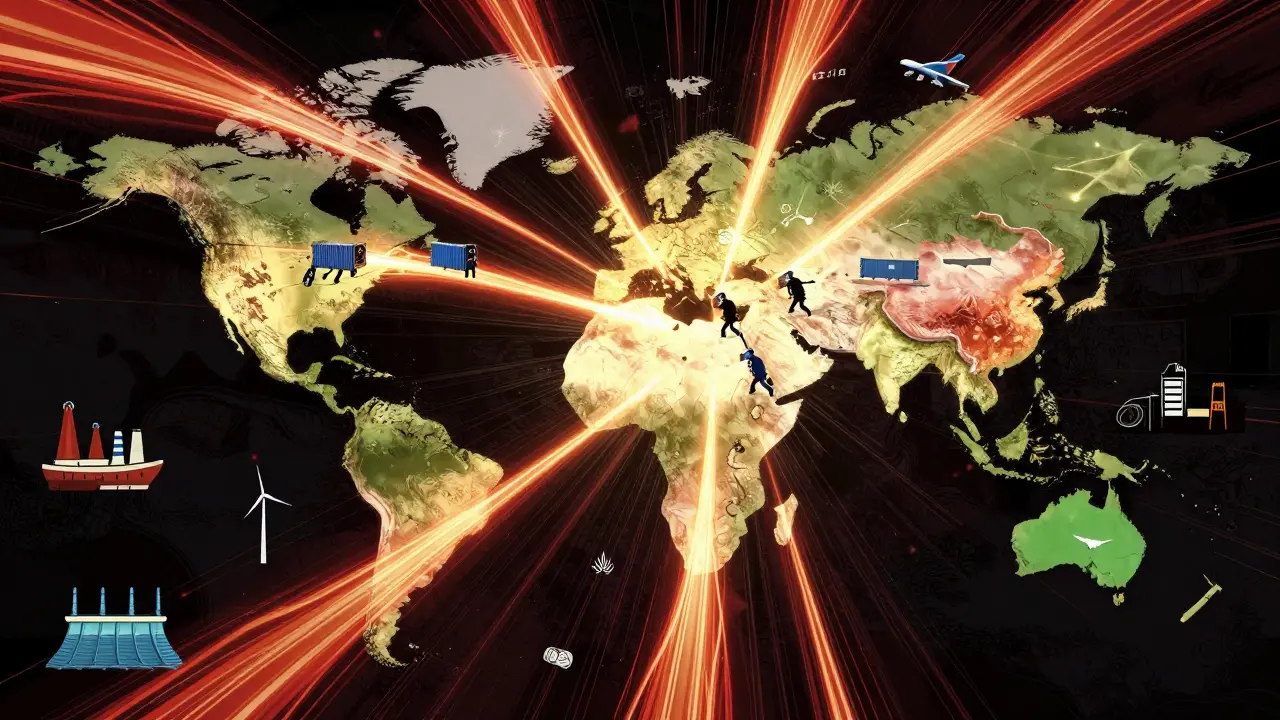
The Bigger Picture: Decentralization Wins
Before 2021, Bitcoin’s security relied on a single country. That was a vulnerability. If China had cut the internet, or turned off the power, the whole network could’ve been disrupted. The exodus fixed that. Today, mining is spread across more than 100 countries. No single nation controls more than 18%. That makes Bitcoin more resistant to political pressure, censorship, or blackouts. It also forced innovation. Miners now prioritize renewable energy. In Texas, wind-powered mining is common. In Canada, hydro is king. Even Kazakhstan is starting to invest in solar farms to offset coal use. The result? A stronger, more distributed network. Bitcoin didn’t just survive the Chinese crackdown-it got better.What’s Next?
The mining landscape keeps shifting. Kazakhstan’s government is tightening rules. Texas is seeing more scrutiny from environmental groups. New players like Saudi Arabia and the UAE are exploring mining with solar power. But one thing is clear: miners won’t stay put if the rules change. They’ve proven they can move faster than any government can ban them. And as long as electricity exists, Bitcoin mining will find a way.Why did China ban Bitcoin mining?
China banned Bitcoin mining primarily because it consumed too much electricity, straining the national power grid and conflicting with climate goals. The government saw mining as an unregulated, energy-intensive activity that undermined its control over financial systems and energy use. Provincial bans in Inner Mongolia and Sichuan preceded a nationwide crackdown in mid-2021, which classified mining as an industry to be phased out.
Where did most Chinese miners go?
The majority relocated to Kazakhstan and the United States, especially Texas. Kazakhstan became the top destination due to its cheap coal-based electricity and lack of regulatory oversight. Texas attracted miners with its deregulated energy market, pro-mining laws, and access to renewable power. Together, these two regions absorbed over 70% of the displaced mining capacity.
Did Bitcoin’s network get weaker after the ban?
No. Bitcoin’s network actually got stronger. Although the global hashrate briefly dropped during the move, it quickly rebounded and surpassed pre-crackdown levels. More importantly, mining became more geographically distributed, reducing the risk of a single country controlling the network. This decentralization improved Bitcoin’s long-term security.
Can miners move again if another country bans them?
Yes. Bitcoin mining equipment is portable and requires only electricity and internet. Miners have already proven they can relocate within months. If a country imposes new restrictions-like Kazakhstan did in 2022 or Texas might in the future-miners will simply move to the next place with cheap, reliable power and friendly regulations. Mobility is built into Bitcoin’s design.
Is mining in Texas really green?
It’s getting there. Texas miners use a mix of wind, solar, and natural gas. In 2024, over 30% of Bitcoin mining in Texas ran on renewable energy. Some operators even use flared gas from oil fields-waste that would’ve been burned off anyway. While coal-powered mining in Kazakhstan still raises environmental concerns, U.S. mining is trending toward cleaner sources thanks to market incentives and grid integration.




China kicked them out and boom-mining just moved like it was nothing. Wild how Bitcoin doesn’t care where you are as long as there’s electricity and a router.
Bro, the way miners just packed up ASICs and relocated faster than my roommate after rent went up is insane. Texas is basically the new Bitcoin Wild West-wind turbines spinning, flared gas getting put to work, and zero government interference. This is crypto resilience in action.
Think about it-mining isn’t some factory you can’t move. It’s just boxes that plug in. No permits no unions no bureaucracy. Just power and internet. That’s why China couldn’t kill it. They banned the people but the tech? It just flew to Texas and Kazakhstan like it was on a vacation. Bitcoin’s not a country. It’s a protocol. And protocols don’t bow to borders.
People act like this was some big loss for China but honestly? They were burning coal to mine crypto while telling everyone they were going green. The crackdown was overdue. Now the network’s healthier because it’s not tied to one country’s energy grid.
Kazakhstan’s surge was inevitable-cheap coal, weak oversight, and infrastructure already built for heavy industry. But the blackouts in 2022? That’s the cost of being the temporary haven. They didn’t plan for this. Now they’re trying to rein it in. Classic case of regulatory whiplash.
The real win here isn’t just decentralization-it’s that miners became grid stabilizers. In Texas, they’re not just power consumers. They’re demand-response partners. When the wind blows, they crank up. When the grid’s stressed, they throttle. That’s not mining. That’s energy arbitrage at scale.
Just saw a video of a miner in Siberia using a repurposed Soviet-era cooling plant. Like, imagine running 10,000 ASICs in a building built in 1978 with zero AC and minus 30°C outside. 😅 Bitcoin’s not just a currency-it’s a global scavenger hunt for free energy. And the winners? The ones who don’t ask questions, just plug in.
I love how this whole thing exposed how fragile centralized control is. One country thinks it can shut down a network by flipping a switch, but the network just… redistributed. Like a virus that finds new hosts. Bitcoin’s design is so elegant-it doesn’t need permission. It just exists where power flows.
It is a matter of considerable academic interest that the migration of mining infrastructure represents a paradigmatic case study in decentralized resilience. The Chinese government's policy intervention, while effective in domestic context, inadvertently catalyzed the global dispersion of hash power, thereby enhancing network security. This outcome aligns with the foundational tenets of Satoshi Nakamoto’s whitepaper.
Let’s be real-this was all a CIA plot to move mining to Texas so they could spy on it. Why else would the government suddenly love Bitcoin? And Kazakhstan? Please. They’re just a front for Russian oligarchs. And don’t even get me started on the ‘renewable energy’ BS. Wind turbines don’t mine Bitcoin. The grid does. And the grid is owned by the same people who own your bank.
Why are we letting Americans take all the good mining spots? Canada has hydro, cold weather, and we don’t need to beg for permits. But nooo, everyone goes to Texas because it’s ‘cool.’ Meanwhile, our hydro is just sitting there powering Bitcoin for the U.S. while we pay higher bills. This is economic colonialism.
So we moved all the mining to Texas… and now it’s just another industrial zone with giant boxes humming like a dying fridge. Where’s the revolution? It’s just capitalism with more watts. The only thing that changed is the zip code.
Miners just moved. That’s it.
China didn’t ban mining because it was bad-it banned it because they couldn’t tax it. Now the U.S. gets the revenue, the grid gets stabilized, and the world gets a stronger chain. Who’s the real villain here? The miner? Or the government that tried to control something that was never meant to be controlled?
It’s funny how we call this ‘decentralization’ like it’s some noble victory. But really, it’s just capitalism winning again. The miners didn’t move for ideology-they moved for profit. And now Texas is just the new Dubai with more wind turbines and fewer camels.
Let’s talk about the real innovation: containerized mining rigs. You order a 40ft container, load it with ASICs, ship it anywhere, plug into the grid, and boom-you’re mining. No construction, no permits, no delays. This isn’t just mining-it’s modular energy hacking. And it’s the future of how we use power globally.
Everyone’s acting like this was a win for Bitcoin. But the truth? The network’s hashrate went up, but the environmental cost just got outsourced. Kazakhstan’s coal is still burning. Texas’s flared gas is still methane. And the miners? They don’t care. They just want cheaper power. This isn’t sustainability. It’s displacement.
China's ban was a strategic miscalculation. By removing its own mining capacity, it inadvertently created a more resilient global infrastructure. However, the assumption that decentralization equates to security is flawed. The concentration of mining in Texas now represents a new vulnerability-one tied to U.S. regulatory and political cycles. The cycle of centralization continues, merely relocated.
I just think it’s beautiful how something so technical ended up being this huge story about freedom, mobility, and resilience. Miners didn’t fight a war. They just… left. And in doing so, they made Bitcoin stronger. No flags. No speeches. Just electricity and a whole lot of grit. 🌍⚡