

Cross-Border Crypto Transfers from Egypt: Legal Risks and Regulations
Moving money across borders is already a headache, but doing it with digital assets in Egypt is a different game entirely. If you're considering sending or receiving cryptocurrency across borders, you aren't just dealing with technical hurdles-you're stepping into a legal minefield. In Egypt, the gap between what the law says and what people actually do is massive, but that doesn't make the risks any less real.
The Hard Line: Law No. 194 of 2020
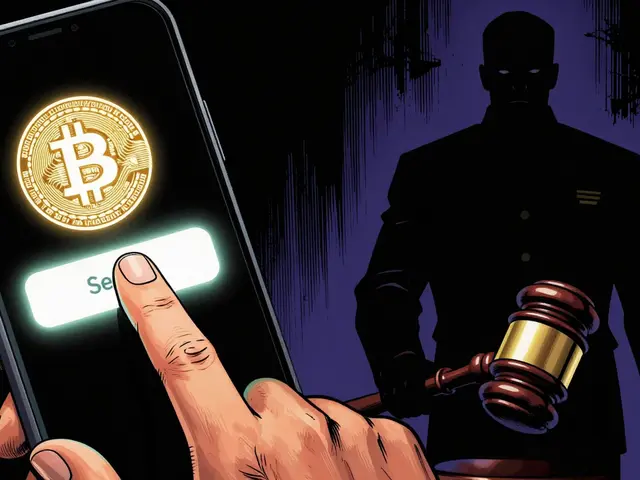
Let's be clear: the Egyptian government does not play around with unauthorized financial activities. The core of the problem is Law No. 194 of 2020, also known as the Central Bank and Banking System Law. This law is the hammer the state uses to keep crypto in check. It explicitly bans the issuance, trading, promotion, or operation of any cryptocurrency without a direct nod from the Central Bank of Egypt (CBE).
Now, here is the catch: the CBE hasn't issued a single license for crypto operations. Not one. This means that any time you hit "send" on a transaction to someone in another country, you are technically engaging in "unlicensed trading." This isn't just a minor technicality; it's a criminal offense. The state views these transfers as a threat to the stability of the national currency and a way to bypass official foreign exchange controls.
What Happens if You Get Caught?
You might think, "How would they even know?" but the penalties are designed to be a deterrent. If you're found violating the 2020 law, you aren't just looking at a slap on the wrist. We're talking about potential imprisonment and massive fines. Reports indicate that fines can soar up to EGP 10 million. To put that in perspective, that's over $200,000 USD-a life-altering amount of money for most people.
The government doesn't just target the individuals; they go after the platforms. Back in May 2024, the CBE shut down three unauthorized exchange platforms and slapped them with EGP 27 million in fines. While you might not be running an exchange, using those platforms to move money across borders puts you in the crosshairs of these enforcement sweeps.
| Feature | Legal Framework (The Law) | Practical Reality (The Street) |
|---|---|---|
| Legality of Transfers | Strictly Prohibited | Widespread (Underground) |
| CBE Licensing | Required for all operations | Non-existent |
| Penalties | Jail time and EGP 10M fines | Selective enforcement |
| Adoption Level | Zero officially sanctioned | ~4.2 million users (Top 20 globally) |
The Religious and Cultural Layer
In Egypt, the law isn't the only authority. There's also the religious dimension. Dar al-Ifta, the primary Islamic legislative body, has issued a fatwā declaring cryptocurrency transactions forbidden (ḥarām). While not a civil law that can put you in jail, it adds a layer of social and moral risk. For many, this religious prohibition is just as strong as the legal one, making the act of transferring crypto not just a crime, but a sin in the eyes of the community.

Why People Risk it Anyway
If the risks are so high, why is Egypt ranked 20th globally for crypto adoption? It comes down to survival. When you're facing an annual inflation rate of over 33% and your currency has lost nearly 70% of its value against the dollar since 2020, the "safe" legal path feels like a slow financial death.
Many Egyptians use crypto as a hedge against the plummeting pound. Cross-border transfers have become a lifeline for remittances. Instead of paying bank fees that can reach 8.2%, some users turn to crypto to bring the cost down to 1.5-3%. It's a desperate trade-off: risk a legal battle to save a chunk of your hard-earned money.
The Technical Cat-and-Mouse Game
To avoid the eyes of the state, users have turned to some pretty complex workarounds. You won't find these on a standard "how-to" guide because they are essentially manuals for avoiding law enforcement. People are moving away from centralized exchanges that require KYC (Know Your Customer) and instead using non-custodial wallets and peer-to-peer (P2P) networks.
But the government is catching up. Egyptian ISPs have become incredibly sophisticated. By late 2025, nearly 80% of crypto-related websites were blocked. This forces users to rely on VPNs or the Tor browser. Even then, the authorities have started using basic blockchain analysis tools-similar to those used by companies like Chainalysis-to track the flow of funds. If you're moving large amounts of money, the "digital footprint" you leave behind is a permanent record that can be used against you years later.

Is There Any Hope for Legalization?
The current situation is a pressure cooker. On one side, you have the CBE and Dar al-Ifta keeping the ban tight. On the other, you have millions of people and a $1.2 billion unofficial market that refuses to go away. There are hints of a shift. The IMF has noted that Egyptian authorities recognize the need for a regulatory framework for digital assets. The CBE even set up a Fintech and Innovation Unit in 2024 to talk with international regulators.
However, don't hold your breath for a change tomorrow. Most experts think it'll take at least another 2 to 7 years before we see a legal way to move crypto across borders. Until then, anyone doing it is operating in a "grey area" that is mostly black.
Is it illegal to just own Bitcoin in Egypt?
Owning crypto is a bit of a grey area, but trading it-especially across borders-is explicitly illegal under Law No. 194 of 2020. While the government focuses more on those promoting or operating exchanges, any activity that looks like "trading" can lead to severe legal trouble.
Can I use a VPN to bypass crypto website blocks?
Yes, many users use VPNs to access blocked exchanges. However, this doesn't hide your transactions on the blockchain. While the website might be accessible, the movement of funds from an Egyptian bank account to a crypto platform can still be flagged by the bank or the CBE.
What are the risks of using P2P transfers?
P2P transfers avoid central platforms, but they introduce trust risks. There are many reports of users losing money to unlicensed platforms that were suddenly shut down by the government, leaving users with no legal recourse to get their funds back.
Are there any legal alternatives for cross-border transfers?
Traditional bank transfers and licensed money transfer operators remain the only legal methods. While they are slower and more expensive, they don't carry the risk of a 10 million EGP fine or imprisonment.
Does the 2025 Small Business Law change anything?
No. Law No. 6 of 2025 focuses on supporting small businesses but does not amend the restrictions on cryptocurrency. The ban on unlicensed crypto trading remains fully in effect.
Next Steps and Reality Check
If you're an expat or a local trying to move money, you have two choices. The first is the legal route: use the official banking system and accept the fees and delays. It's boring, but it's safe. The second route is the underground crypto market, which requires high technical skill (non-custodial wallets, privacy tools) and a very high tolerance for legal risk.
If you choose the latter, be aware that the "safety" of a transaction is an illusion. Blockchain forensics are improving, and the Egyptian government is increasingly capable of linking digital wallets to real-world identities. In a country where the law is this clear and the penalties are this high, the most important rule is to understand that you are operating without a safety net.





Omg this is actually terrifiying!! I can't even imagine the stress of just trying to save your money and risking a massive fine like that. Its just so unfair how the systems work against regular people who are just trying to survuve inflation!!
Totally agree that the risk is insane though.
everyone knows the CBE only bans it because they cant control the capital flight if people actually used stablecoins
P2P is the only way here. Just be careful with the escrow.
this is just so depressing lol. imagine being so scared of your own goverment that you have to use vpn's just to keep your money safe. i feel like i'm spiraling just reading this
money is just a tool for survival
It is quite interesting to see how different countries handle this. In India, we have taxes but it's not a complete ban like this.
Which VPN you using?
Actually, the effectiveness of blockchain analysis is often overstted by govts to scare people, although if you use an exchange with KYC you are basicly handing them the keys to your house on a silver platter. The real way to stay safe is using Monero or other privacy coins, but those are even harder to offramp in Egypt without getting flagged by the bank. You have to be extremly careful with how you move the fiat side of the trade because the banks are the ones actually watching the money trail, not the blockchain itself which is mostly pseudonymous until you hit a centralized gateway.
I would strongly advise anyone operating in this environment to prioritize the security of their private keys above all else. Given the legal instability, the loss of access to funds due to a technical error is compounded by the fact that there is no legal recourse available in the Egyptian courts for digital asset recovery.
Absolute joke of a legal system. This is why some countries just fail. Stick to the Pound and watch it burn!
It is so important for everyone to remember that while the technical side of crypto is exciting, the emotional toll of living under such strict regulations can be overwhelming, so please make sure you are supporting your friends and family who are navigating these waters because the mental burden of potentially facing a ten million pound fine is enough to keep anyone awake at night for weeks on end.
USA does it better 🇺🇸 Just use a US bank 🤡
Man, just get a foreign account and stop complaining about the local laws if you hate them so much!
It's heartbreaking that people have to risk their freedom just to protect their savings from inflation. I really hope the regulatory framework the IMF mentioned comes through soon so people can breathe easier.
Who cares about Egypt's currency anyway.