
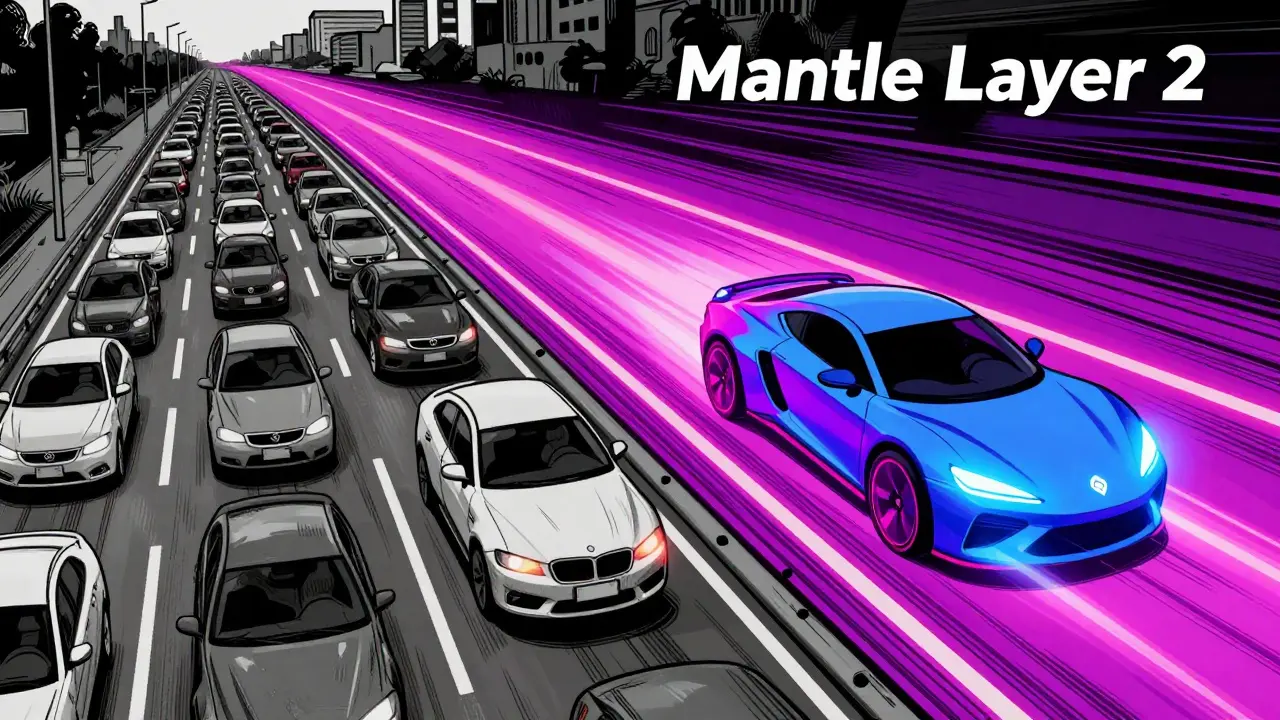
What is Wrapped Mantle (WMNT)? A Guide to the Layer 2 Token
How WMNT Actually Works
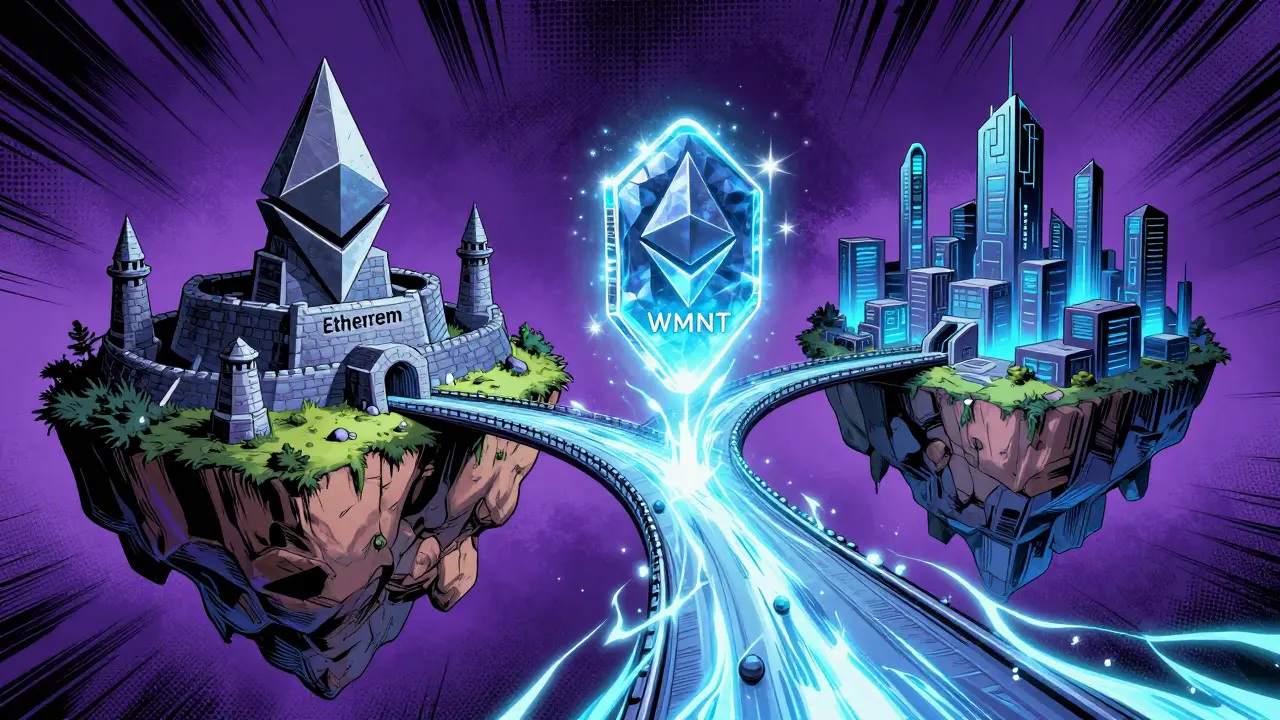
To understand WMNT, you first have to understand the concept of "wrapping." In the crypto world, wrapping a token is like putting a passport on an asset so it can travel between different countries (or in this case, different blockchains). Mantle is a modular Layer 2 network. Since not every app or wallet can talk to the Mantle network natively, WMNT serves as the version of the token that can move across bridges. It solves the "scalability trilemma"-the idea that a blockchain usually has to pick two out of three: security, decentralization, or speed. By using a modular architecture, Mantle tries to nail all three, and WMNT is the fuel and steering wheel for that journey.The Dual Role of the Token
WMNT isn't just a placeholder for value; it has two distinct jobs that keep the ecosystem moving. If you hold these tokens, you aren't just betting on a price increase; you're gaining a seat at the table.- Governance: Holding the token gives you voting power. This means you can influence how the network evolves, which upgrades get prioritized, and how the community treasury is spent. It turns a passive investment into an active role in a decentralized organization.
- Bridging and Interoperability: This is the technical "magic." WMNT allows assets to flow from the Ethereum mainnet into the Layer 2 ecosystem. Without this bridge functionality, the Mantle network would be an isolated island.
Market Reality: Volatility and Price Gaps
If you look up the price of WMNT on three different sites, you might get three different answers. This is a common quirk for smaller-cap tokens. For example, while some platforms like Coinbase might show it around $0.77, other data sources have seen it fluctuate up toward $1.66. Why the difference? It comes down to liquidity and how different exchanges report their data. Because WMNT is not tradable on every single major centralized exchange, the price can vary depending on where the most active trading is happening. As of late 2025, the token has shown significant swings, often trading nearly 50% below its all-time high of $1.50. This kind of volatility is typical for Layer 2 projects that are still fighting for market share against giants like Arbitrum or Optimism.| Feature | Wrapped Mantle (WMNT) | Polygon / Arbitrum | Optimism |
|---|---|---|---|
| Architecture | Modular Layer 2 | Sidechain / Rollup | Optimistic Rollup |
| Primary Use | Governance & Bridging | Network Fees & Staking | Governance |
| Market Position | Emerging / Small-Cap | Established / High-Cap | Established / High-Cap |
| Accessibility | Selective Exchanges | Most Major Exchanges | Most Major Exchanges |
The Risks and Rewards of Layer 2 Tokens
Investing in or using a token like WMNT is a bit of a gamble on the infrastructure of the future. The reward is simple: if the Mantle network becomes the go-to spot for developers and users because of its modular speed, the demand for the governance and bridge token will likely skyrocket. However, the risks are real. First, there is the competitive landscape. Mantle is fighting for a sliver of the market against well-funded projects that already have millions of users. Second, there is the technical risk of bridging. Every time you "wrap" an asset, you are relying on a bridge contract. If that contract has a bug, your funds could be at risk. This is why it is crucial to use only verified bridges and be aware of the security audits associated with the network.
Getting Started with WMNT
If you're looking to get your hands on WMNT, you won't find it on every single app. Since it's not available on all major centralized platforms, you'll likely need to look toward exchanges like MEXC or Kriptomat, or dive into decentralized exchanges (DEXs). When moving your tokens, always double-check the network. Sending tokens to the wrong blockchain address is the fastest way to lose your money forever. Ensure your wallet supports the Mantle network or the specific bridge you are using to transition from Ethereum to the Layer 2 environment.What is the difference between Mantle and Wrapped Mantle?
Mantle is the actual blockchain network (the Layer 2 infrastructure). Wrapped Mantle (WMNT) is the token representation of that value that can be moved across different chains via bridges, allowing it to be used in ecosystems where the native Mantle token isn't directly supported.
Is WMNT a safe investment?
Like all small-cap altcoins, WMNT is considered high-risk. It has a history of significant price volatility and is competing in a crowded Layer 2 market. While it offers high potential growth if the network gains adoption, you should only invest what you can afford to lose.
Where can I buy Wrapped Mantle?
WMNT is available on several exchanges including MEXC and Kriptomat, as well as various decentralized exchanges. It is important to note that it is not available on all major platforms like Coinbase.
How does the governance aspect of WMNT work?
Holders of the token can participate in the decision-making process of the Mantle ecosystem. This typically involves voting on protocol upgrades, treasury allocations, and other strategic changes to the network's development.
Why is the price of WMNT different across various websites?
This happens because WMNT trades on multiple fragmented exchanges. Different platforms use different methods to calculate the average price (volume-weighted average price vs. last traded price), and liquidity differences between exchanges can cause the price to vary.
Next Steps for Users
If you're new to this, don't jump in with a huge amount of capital. Start by exploring the Mantle ecosystem. See if there are decentralized apps (dApps) on the network that you actually find useful. If you decide to buy WMNT, set up a secure non-custodial wallet and test the bridge with a small amount of funds first to make sure you understand the process. If you're more interested in the tech, keep an eye on the governance forums to see what the community is debating-that's usually where the real clues about a project's future are hidden.

this is just another pump and dump 🙄 low liquidity is a huge red flag
modular l2 is basically just marketing speak for fragmented liquidity and higher complexity
be careful with the bridge guys. Always do a small test tranfer first because the bridge contracts can be risky sumtimes
omg please tell me you guys aren't actually buying this trash?? it's so basic and like everyone knows l2s are oversaturated now lol
Literally shaking rn because I lost money on a similiar L2 token last year!! dont do it people!!
It is definitely worth exploring the ecosystem for the dApps even if you don't hold the token. There is some interesting stuff happening on the modular side of things.
Too many words. Just buy it or don't.
When we contemplate the nature of modularity in the blockchain space, we aren't just talking about technical efficiency, but rather a philosophical shift in how we distribute trust and power across a network. The bridge isn't merely a piece of code, but a conceptual gateway that allows value to transcend the boundaries of a single chain, mirroring how human knowledge travels across different cultures and disciplines to create something entirely new. If we look at the governance aspect, the real value isn't in the vote itself, but in the collective consciousness of the holders trying to steer a digital ship through the stormy waters of market volatility. It makes one wonder if the drive for speed is actually a reflection of our own impatience as a species, where we sacrifice the purity of a single-layer truth for the convenience of a multi-layer approximation. However, we must also acknowledge that the risks mentioned are the price of admission for any frontier technology, and the bridge vulnerability is a reminder that in the digital realm, total security is an asymptotic goal we approach but never truly reach. By embracing this uncertainty, we learn more about the resilience of decentralized systems and our own capacity for risk management in an era of algorithmic finance. Truly, the move toward Layer 2s is a testament to the human desire to optimize, to refine, and to expand the horizons of what is possible within a limited computational environment. We should approach these tools with both curiosity and a healthy dose of skepticism, ensuring that we are not just following a trend but contributing to a genuine evolution of the internet. In the end, the success of WMNT won't be measured by its price peak, but by how much it actually reduces the friction for the average person to enter the web3 space without needing a degree in computer science. It is a journey of trial and error, and every bridge crossed is a lesson learned for the broader community.
just be safe
THEY WANT US TO MOVE OUR MONEY INTO "MODULAR" TRAPS!!! It is all a plot by the globalists to track every single cent we move between layers!!! WAKE UP!!! The bridges are just honey-pots for the elites to drain our portfolios!!!
I believe the modular approach is quite promising for long-term scalability. It is advisable to conduct thorough research into the audit reports of the bridge contracts before committing significant capital.
The discrepancy in pricing across exchanges is a classic liquidity issue. For those unfamiliar, this occurs because the token is not yet deep enough in the order books of the larger exchanges to maintain a tight spread.
Who cares about the price gaps? If the tech works, it works! Stop whining about 50% drops and look at the utility!
Omgg i tried to bridge and it took forever!! like why is the L2 so slow sometimes?? literally so frustratingnn
The interoperability aspect is definitely the key value prop here. By leveraging the modular stack, they're basically optimizing the data availability layer to reduce the overhead on the settlement layer.
it is all just energy in different forms moving through the ether
I'm still learning how this works but it sounds like a cool way to avoid those insane gas fees on mainnet. maybe i'll try a tiny bit just to see
pretty cool stuff man.. just gotta be patient with the market
Fast fees, high speed, big gains! Let's go!
I think it is important to remember that no investment is truly safe. However, if you have a long-term horizon and believe in the modular thesis, this is a logical bet. Just don't put your rent money into a bridge token because that is a recipe for disaster and we have all seen too many people do that during the bull run.
my wallet is empty and now im seeing this and just feelin so hopless about my finanshes lol
interesting
It's like a little bridge to a new world of possibilities! Just take it slow and enjoy the ride, folks.
The way they hide the real price on Coinbase is just a tactic to keep us in the dark. These exchanges are all controlled by the same group of people who want to manipulate the L2 market!!
I appreciate the detailed explanation of how the wrapping process works. It helps put the technical side into a perspective that is easier to grasp for those of us who aren't developers.