What Are Multi-Signature Crypto Wallets? A Complete Guide to Shared Security
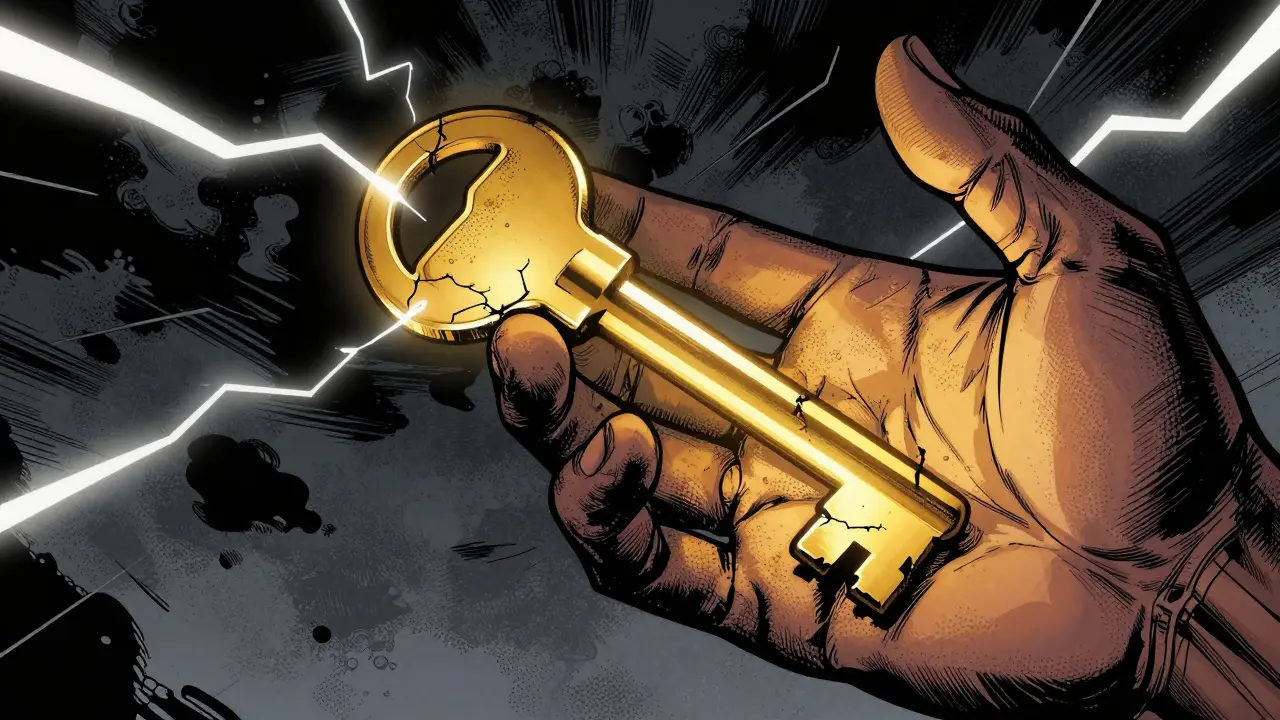
Imagine handing over the keys to your house to a single friend. If they lose them, get robbed, or decide to kick you out, you’re locked out of your own life. That is exactly how most people handle their cryptocurrency today. They store billions in assets using single-signature wallets, where one private key controls everything. It is fast, simple, and terrifyingly risky.
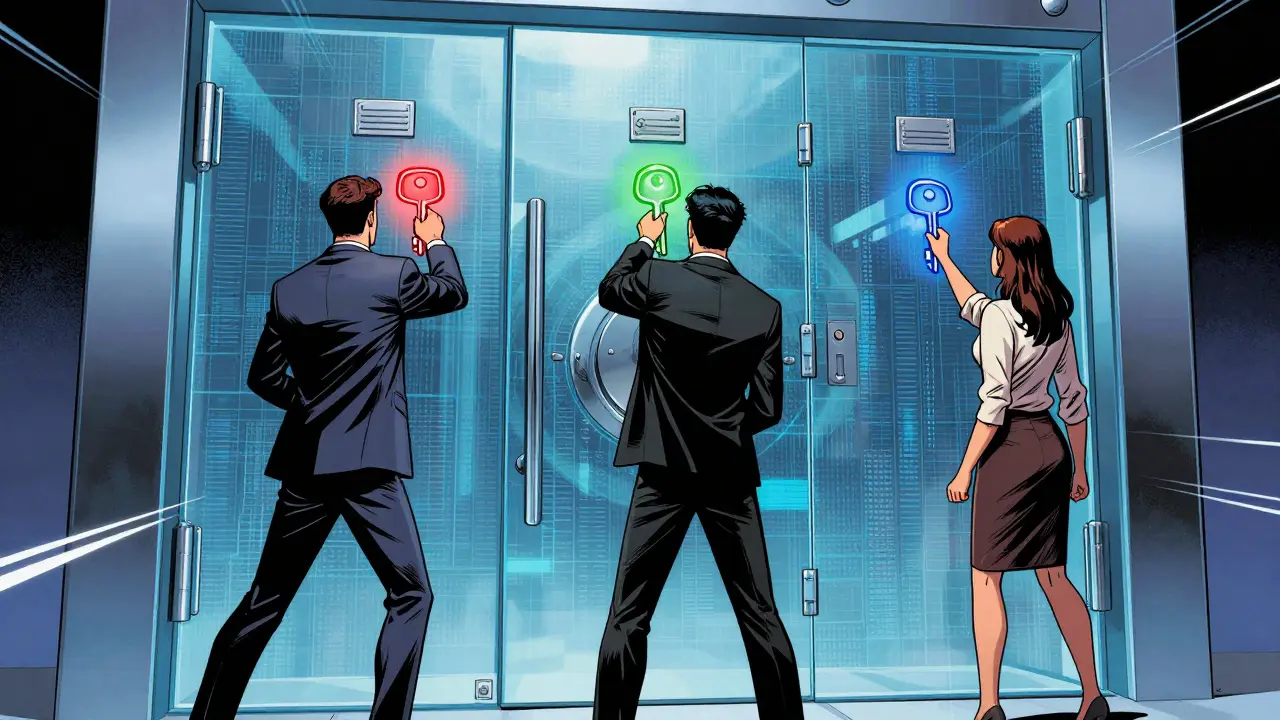
Enter Multi-Signature Wallets, commonly known as multi-sig. This isn't just a fancy feature for tech geeks; it is a fundamental shift in how we secure digital value. Instead of relying on one key, multi-sig requires multiple cryptographic signatures from different parties to authorize any transaction. Think of it like a bank vault that needs two managers to open, or a nuclear launch code split between three generals. In 2026, this technology has moved from niche experimental tool to the absolute standard for institutional security.
The Core Concept: How Multi-Sig Actually Works
To understand multi-sig, you have to forget the idea of a "wallet" as a physical object holding coins. A crypto wallet is really just a set of keys that prove ownership. In a traditional setup, you have one private key. If someone steals that key, they steal everything. Period.
A Multi-Signature Wallet changes the rules of the game by introducing a threshold system. This is usually expressed as an "M-of-N" model. Here, N is the total number of keys available, and M is the minimum number of signatures required to execute a transaction.
Let’s look at the most common configuration: 2-of-3. You generate three separate keys. To move funds, you need any two of those three keys to sign off on the transaction. Why is this powerful?
- Theft Protection: If a hacker steals one key, they still can’t move your money because they lack the second signature.
- Loss Recovery: If you lose one key (say, your laptop crashes), you still have two left. You don’t lose access to your funds.
- Shared Control: No single person can act alone. This prevents fraud within organizations or families.
This architecture was formally implemented in Bitcoin around 2012 through Bitcoin Improvement Proposals (BIPs). It gained massive attention after the 2013 Silk Road shutdown, when users realized that having a single point of failure made their assets vulnerable to both hackers and government seizure. Today, platforms like Safe (formerly Gnosis Safe) and services from BitGo make setting up these thresholds easier than ever.
Why Single-Signature Wallets Are a Risky Bet
Most retail investors still use single-signature wallets because they are easy. You download an app, write down a 12-word seed phrase, and you’re done. But ease comes with a steep price tag: total liability.
Data from Coinbase’s 2022 security report revealed a stark reality: 98% of hacked cryptocurrency exchanges used single-signature custodial solutions. When one key is compromised, there is no backup plan. The attacker drains the account instantly. There is no "undo" button on the blockchain.
Consider the difference in risk profiles:
| Risk Factor | Single-Signature Wallet | Multi-Signature Wallet (2-of-3) |
|---|---|---|
| Hacker Theft | Catastrophic (100% loss if key stolen) | Mitigated (Attacker needs 2 keys) |
| Key Loss | Catastrophic (Funds lost forever) | Recoverable (Use remaining 2 keys) |
| Internal Fraud | High Risk (One person acts alone) | Low Risk (Requires collusion) |
| Transaction Speed | Fast (~1.1 minutes avg) | Slower (~3.2 minutes avg) |
| Setup Complexity | Low (Minutes) | High (Hours to days) |
Ledger Academy reported a 92% reduction in successful theft attempts for properly implemented multi-sig setups compared to single-sign alternatives. That statistic alone should make anyone holding more than a few hundred dollars pause and reconsider their storage method.
Common Configurations and Who Should Use Them
Not every multi-sig setup looks the same. The "M-of-N" ratio depends entirely on your goals. Are you trying to prevent theft, recover from mistakes, or share power?
2-of-3: The Institutional Standard
This is the sweet spot for most businesses and serious investors. You hold one key, a trusted partner holds another, and a third key is stored in a high-security location (like a hardware wallet in a safe deposit box). If one key is lost or stolen, you still have control. BitGo identifies this as the industry standard because it balances security with operational flexibility. You never get locked out unless two keys disappear simultaneously.
3-of-5: For DAOs and Teams
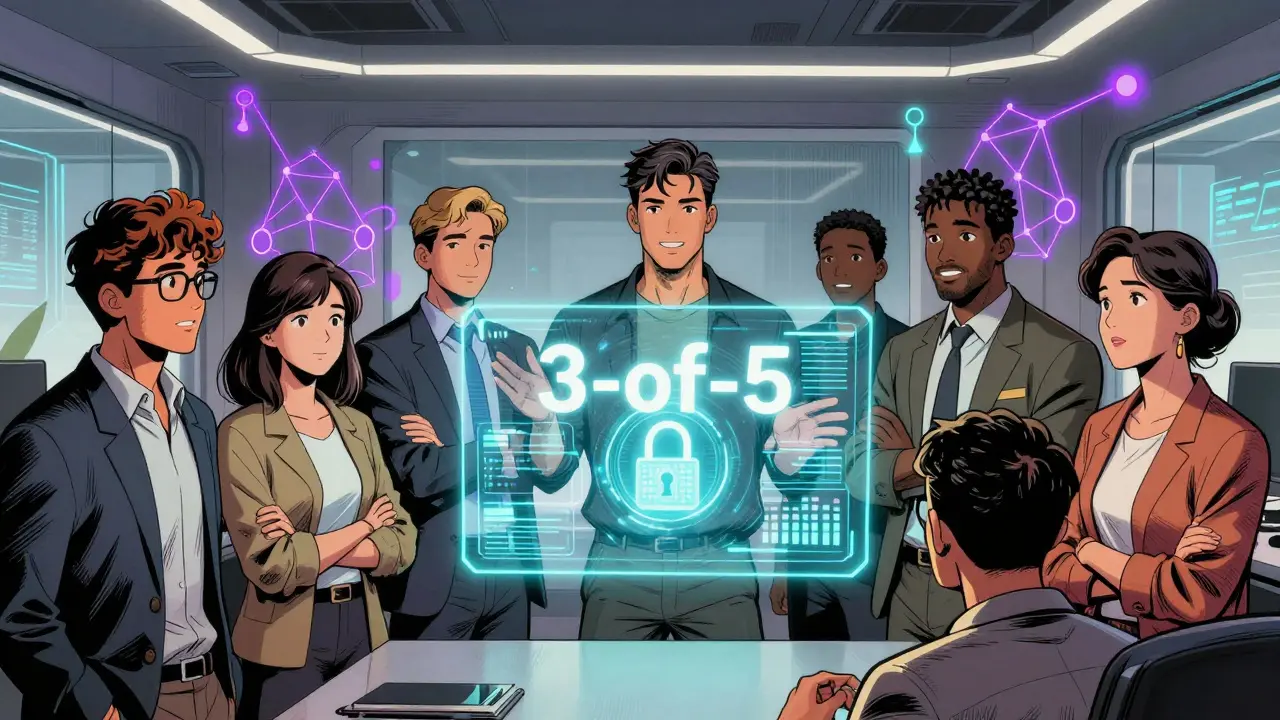
Decentralized Autonomous Organizations (DAOs) often use 3-of-5 or even 4-of-7 setups. With five team members, you need three to agree before moving treasury funds. This prevents rogue admins from draining the pot. Colony Blog noted that 3-of-5 configurations prevented $4.7 million in attempted fraudulent transfers in Q1 2023 alone. It forces consensus.
2-of-2: Joint Accounts
This is simpler but less forgiving. Two keys, both required. It’s great for joint ventures or couples managing shared crypto assets. However, if one person loses their key or passes away without a recovery plan, the funds are effectively frozen until legal processes resolve the issue. It lacks the redundancy of the 2-of-3 model.
The Trade-Offs: Complexity and Cost
If multi-sig is so much better, why doesn’t everyone use it? Because it is harder. There is no such thing as a free lunch in security.
Time and Effort: Setting up a robust multi-sig wallet takes time. BitGo recommends allocating 6-10 hours for initial setup, including key generation, secure distribution, and testing. You cannot rush this. A mistake during setup-like saving all keys on the same computer-defeats the purpose entirely.
Coordination Friction: Moving money is slower. You have to contact other signers. In an emergency, if one signer is unreachable (dead, hospitalized, or ignoring messages), you might be stuck. BitPay Support reports a 47% longer transaction approval time for multi-sig setups. For day traders who need to react to market swings in seconds, this latency is unacceptable.
User Error: Complexity breeds mistakes. BitPay also notes a 33% higher incidence of user errors during initial configuration. New users often misunderstand how recovery works, leading to panic when they think they’ve lost access.
Trezor’s data shows that 68% of single-wallet consumers abandoned multi-sig setups due to perceived complexity. It is not for the faint of heart. If you prioritize convenience over security, stick to single-sig-but accept the risk.
Real-World Applications Beyond Personal Storage
While individuals are starting to adopt multi-sig, its true power shines in organizational contexts.
Corporate Treasuries: Companies holding crypto assets use multi-sig to satisfy internal audit requirements. It provides a clear trail of who authorized what. Fidelity Digital Assets mandated multi-sig for all client holdings exceeding $500,000 in 2023. This isn’t optional for regulated entities; it’s compliance.
Inheritance Planning: This is a growing use case for high-net-worth individuals. Instead of leaving a single key to heirs (who might not know crypto), you set up a 2-of-3 wallet. One key is yours, one is held by a lawyer, and one by a family member. Upon your death, the lawyer and heir combine their keys to access the funds. It ensures continuity without exposing the assets to a single point of failure.
Escrow Services: In peer-to-peer trades, a neutral third party can hold one key. Buyer and seller each hold one. Funds only release when buyer and seller agree (2-of-3), or if a dispute arises, the escrow agent can intervene. This builds trust in anonymous transactions.
How to Set Up Your First Multi-Sig Wallet
Ready to upgrade your security? Here is a practical roadmap.
- Choose Your Platform: Don’t build from scratch. Use established protocols. Safe is the gold standard for Ethereum-based chains. For Bitcoin, consider Unchained Capital’s tools or hardware integrations from Ledger and Trezor.
- Define Your Threshold: Start with 2-of-3. It offers the best balance of security and usability. Avoid complex ratios like 5-of-9 unless you have a large team.
- Generate Keys Separately: Never generate all keys on the same device. Create Key 1 on your laptop, Key 2 on your phone, and Key 3 on a dedicated hardware wallet. Physically separate them.
- Distribute Securely: Give copies of keys to trusted parties. Store backups in fireproof safes or safety deposit boxes. Do not store digital copies in cloud drives unless encrypted.
- Test with Small Amounts: Before moving your life savings, send $10 worth of crypto through the multi-sig process. Verify that all signers can approve and that the transaction broadcasts correctly.
- Document the Process: Write down instructions for your co-signers. What happens if you die? What if a device breaks? Clear documentation prevents future disasters.
Remember, Andreas Antonopoulos warned in his Mastering Bitcoin (2023 edition) that "poorly configured multi-sig setups with co-located keys provide false security while adding complexity." Physical separation of keys is non-negotiable.
The Future: Social Recovery and Quantum Resistance
Multi-sig technology is evolving rapidly. The biggest pain point-key loss-is being addressed by "social recovery" mechanisms. Safe’s 2023 protocol update introduced "social guardians," allowing trusted contacts to initiate recovery without needing full signing authority. This bridges the gap between self-custody and the ease of password resets.
Another frontier is quantum resistance. As quantum computing advances, current encryption methods may become vulnerable. BitGo announced post-quantum cryptography integration scheduled for late 2024/early 2025. Multi-sig architectures will likely adapt first, as they offer more flexibility to upgrade signature schemes than single-key wallets.
Ethereum’s EIP-3074 proposal aims to natively support multi-sig at the protocol level by 2025. This could reduce gas fees and simplify interactions, making multi-sig accessible to everyday users, not just institutions.
Is a multi-sig wallet safe for beginners?
It can be, but it requires patience. Beginners should start with user-friendly interfaces like Safe or guided hardware wallet setups. Do not attempt to configure raw smart contracts without experience. Always test with small amounts first. If you struggle with basic tech concepts, single-sig with strong backups might be safer initially.
Can I use multi-sig for Bitcoin?
Yes. Bitcoin supports multi-sig natively through Pay-to-Script-Hash (P2SH) and newer SegWit formats. Hardware wallets like Ledger and Trezor support Bitcoin multi-sig setups. Tools like Unchained Capital provide excellent guides for creating Bitcoin multi-sig vaults.
What happens if one of my co-signers disappears?
In a 2-of-3 setup, you can still operate normally with the remaining two keys. In a 2-of-2 setup, you are locked out unless you have a pre-planned recovery mechanism, such as a lawyer holding a backup key or social recovery features enabled. This is why 2-of-3 is recommended over 2-of-2.
Do multi-sig wallets cost more in transaction fees?
Historically, yes. Multi-sig transactions are larger in size, costing more in gas fees on networks like Ethereum. However, Layer 2 solutions and protocol upgrades like EIP-3074 are reducing this disparity. On Bitcoin, the fee difference is minimal with modern SegWit addresses.
Which multi-sig platform is best for Ethereum?
Safe (formerly Gnosis Safe) is the dominant choice for Ethereum. It is open-source, widely audited, and integrates with most hardware wallets. It powers over $22 billion in DAO treasuries. Alternatives include Collateral Finance and custom smart contract solutions, but Safe remains the industry standard for reliability.