
Cross-Chain NFT Marketplace Support: How to Trade NFTs Across Blockchains in 2025
Back in 2021, if you bought an NFT on Ethereum, you were stuck with it-no way to sell it on Solana, no way to trade it on Polygon. Your digital art was locked in one world. Today, that’s over. Cross-chain NFT marketplace support isn’t a fancy add-on anymore. It’s the baseline. If a platform doesn’t let you move your NFTs between blockchains, it’s already behind.
Why Cross-Chain Support Matters More Than Ever
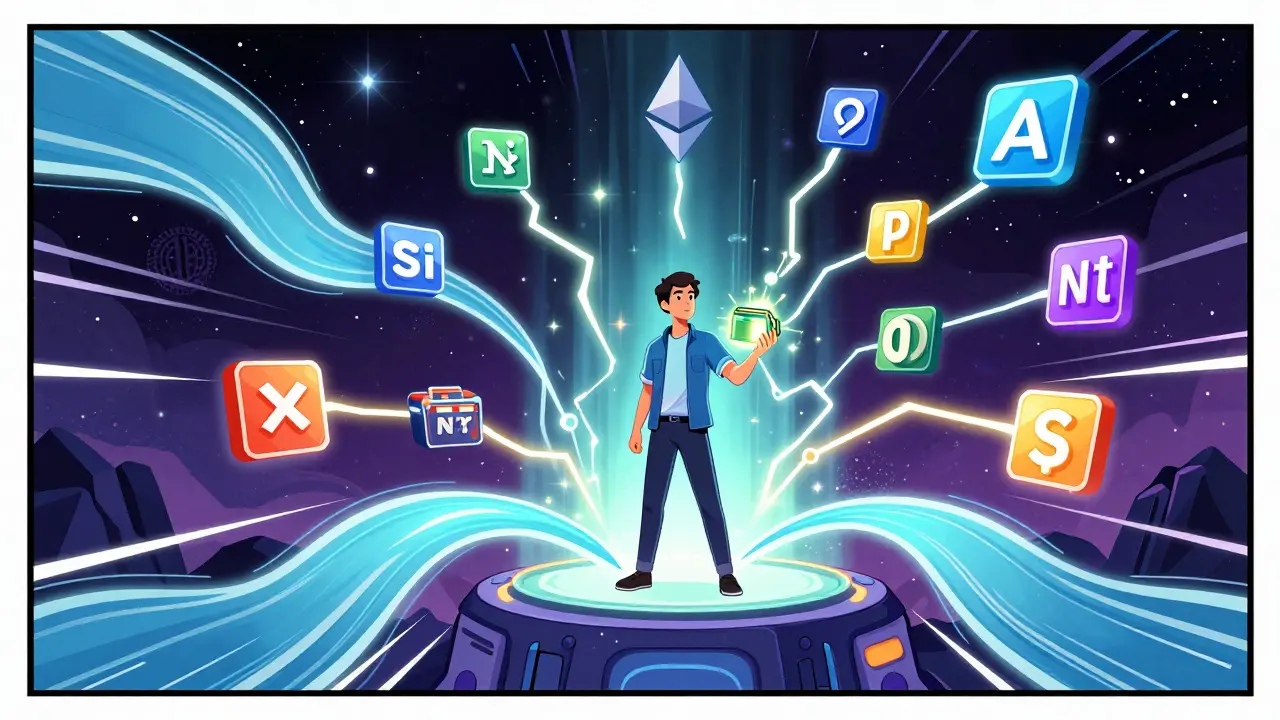
Think of blockchains like different countries. Ethereum has the biggest economy, but high fees. Solana moves fast and cheap. Polygon is quiet, reliable, and cheap for small trades. Sui and Aptos are rising stars with new tech. If you’re stuck on just one, you’re missing out. Cross-chain marketplaces break down those borders. You don’t need three wallets. You don’t need three accounts. You don’t need to learn five different interfaces. One platform, one login, one wallet-your NFTs from Ethereum, Solana, and Sui all show up together. That’s the power of cross-chain support. Liquidity is the real winner here. Before, if your NFT was on a niche chain, it might sit unsold for months. Now? It can instantly appear on a marketplace with 10x more buyers. No waiting. No bridges. No manual swaps. The platform handles it all behind the scenes.How Cross-Chain NFT Marketplaces Actually Work
It’s not magic. It’s smart contracts, APIs, and decentralized storage working together. When you list an NFT from Solana on a cross-chain platform, the system doesn’t move the token itself. Instead, it locks it in a secure vault on Solana and creates a verified, tamper-proof version on the marketplace’s main chain-usually Ethereum or Polygon. This version is called a wrapped NFT. It looks and acts like the original. Buyers see the same image, metadata, and ownership history. The original stays safe on Solana. The wrapped version trades freely on the platform. All of this is tracked on-chain. Every trade, every transfer, every ownership change is recorded across all relevant networks. No one can fake it. No one can delete it. The system doesn’t rely on one server. It uses decentralized storage-think IPFS or Arweave-so even if a blockchain goes down, your NFT’s data lives on. Layer 2 scaling solutions like zk-Rollups and Optimistic Rollups make this fast and cheap. You’re not paying Ethereum gas fees to move a $50 NFT. You’re paying pennies. That’s why platforms like TradePort and BlueMove can offer near-instant trades with fees under $0.10.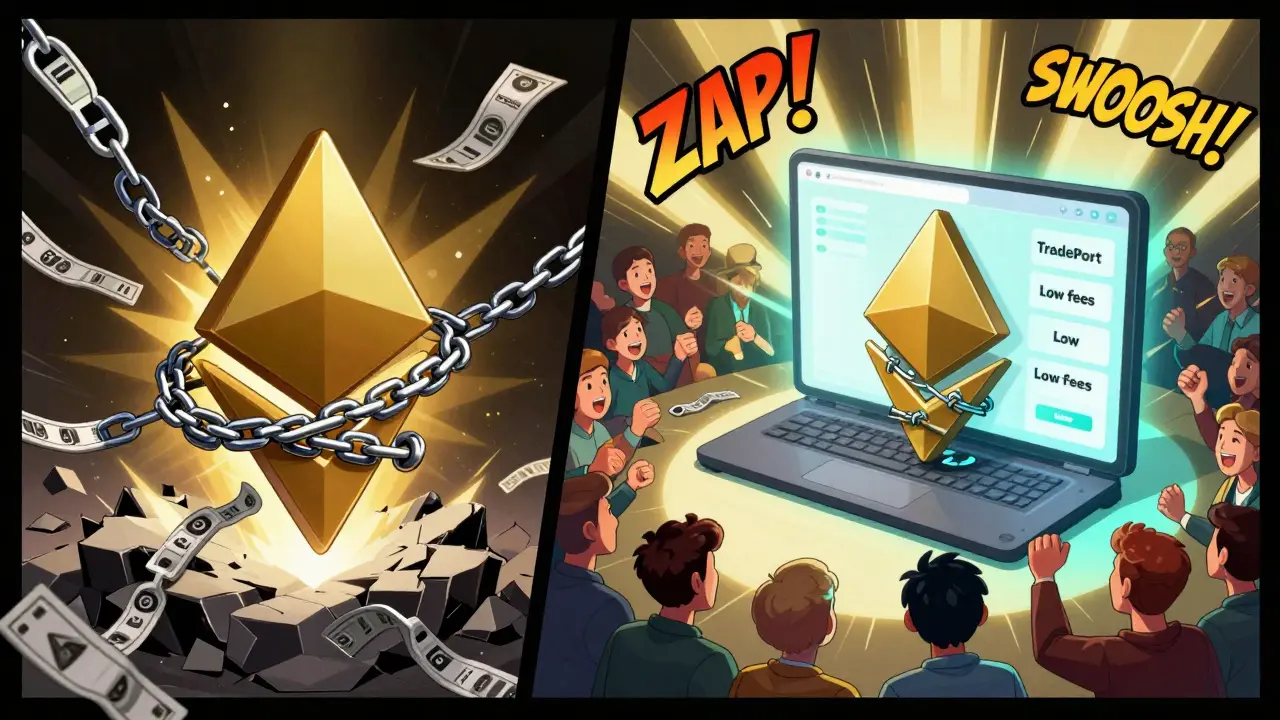
Top Cross-Chain NFT Marketplaces in 2025
Not all platforms are built the same. Here’s who’s leading and what they’re good for:- OpenSea: Still the biggest. Supports Ethereum, Solana, Polygon, and more. Best for beginners and collectors who want variety. Its interface is cluttered, but the selection is unmatched.
- TradePort: Built for traders. Focuses on Sui, Aptos, NEAR, and Stacks. Gives you real-time charts, price history, and volume trends for every collection. If you’re trying to flip NFTs based on momentum, this is your tool.
- BlueMove: For hunters and creators. Strong search filters, easy category browsing (gaming items, art, virtual land), and a built-in minting tool. If you want to find rare game skins or launch your own collection, BlueMove makes it simple.
- Binance NFT: Great if you already use Binance for crypto. Supports Ethereum and BSC, with fiat on-ramps. Good for casual buyers who want to pay with credit cards.
- SuperRare and Foundation: Still niche. Focused on high-end digital art. They’re slowly adding cross-chain support, but mostly still Ethereum-only. Not ideal if you want flexibility.
What to Look for When Choosing a Platform
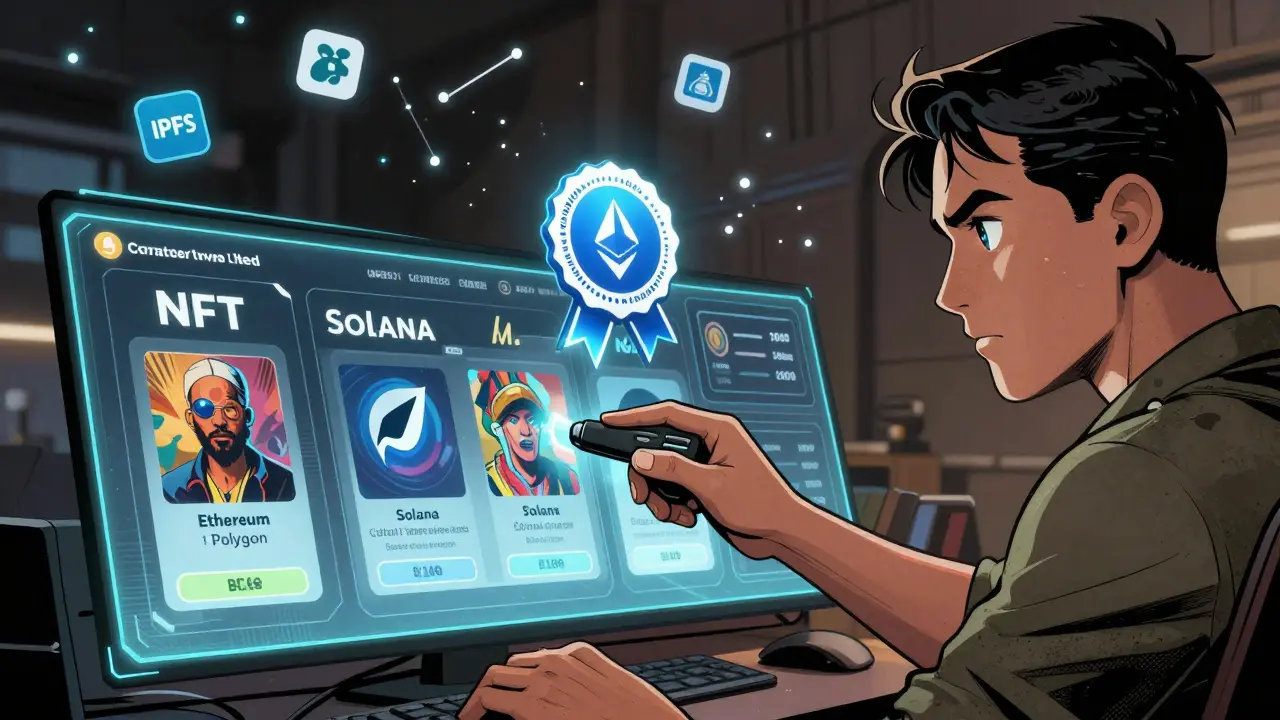
You’re not just picking a website. You’re picking a system that holds your digital assets. Here’s what actually matters:- Blockchains supported: Does it cover the chains you own NFTs on? If you have Solana NFTs but the platform only supports Ethereum, you’re out of luck.
- Fees: Look at both trading fees and gas fees. Some platforms charge 2.5% per sale. Others charge 0.5%. Some absorb gas fees for you. TradePort charges 1% flat. OpenSea charges 2.5% on sales. That adds up fast.
- User experience: Can you find what you’re looking for in under 10 seconds? Is the minting tool easy? Can you filter by price, rarity, or chain? If you need to Google how to list an NFT, walk away.
- Security: Does the platform use two-factor authentication? Are the smart contracts audited? Check if they’ve ever been hacked. Platforms like BlueMove and TradePort publish audit reports. Others don’t. That’s a red flag.
- Creator royalties: If you’re an artist, make sure the platform honors your royalty settings across chains. Some platforms ignore them on wrapped NFTs. That’s a scam.
Real-World Use Cases Beyond Art
NFTs aren’t just JPEGs anymore. Cross-chain support is unlocking serious business use cases. A luxury fashion brand launched digital twins of their handbags-each NFT tied to a physical item. Buyers could prove authenticity, resell on any chain, and even unlock exclusive events. They used a cross-chain marketplace so their customers on Ethereum, Solana, and Polygon could all participate. No fragmentation. No lost sales. A gaming studio released skins on Solana for speed, but let players trade them on Ethereum for higher-value buyers. The game’s economy now spans two ecosystems. Players aren’t locked in. The studio’s revenue doubled. Even real estate platforms are testing cross-chain NFTs for property deeds. Imagine owning a digital deed on Polygon, but being able to sell it to a buyer on Sui without switching wallets. That’s the future-and it’s here.What’s Next for Cross-Chain NFTs
The next leap isn’t just about connecting chains. It’s about making it invisible. Soon, you’ll buy an NFT with a credit card on a platform that automatically converts it to a wrapped token on the cheapest chain. You’ll trade it with someone on a different blockchain, and the platform will handle the swap without you even noticing. Wallets will become universal-no more picking between MetaMask, Phantom, or WalletConnect. Platforms that don’t adapt will die. The 15% weight given to cross-chain support in 2025 marketplace evaluations isn’t a bonus. It’s a requirement. If you’re still using a single-chain platform, you’re not just missing out-you’re risking your assets. The best time to move was yesterday. The second-best time is now. Pick a platform that supports your chains, keeps your fees low, and doesn’t make you jump through hoops. Your NFTs will thank you.What does cross-chain NFT marketplace support mean?
It means you can buy, sell, and trade NFTs that were created on different blockchains-like Ethereum, Solana, or Sui-all from one platform. The marketplace handles the technical details, so your NFTs move between chains without you needing separate wallets or complex transfers.
Can I trade my Ethereum NFT on a Solana-based marketplace?
Yes-if the marketplace supports cross-chain functionality. Platforms like OpenSea, TradePort, and BlueMove let you list Ethereum NFTs and sell them to buyers on Solana or other chains. The original NFT stays on Ethereum, but a verified version (wrapped NFT) is created on the buyer’s chain for trading.
Are cross-chain NFTs safe?
Yes, if you use a reputable platform. They use secure, audited smart contracts and decentralized storage (like IPFS) to preserve ownership. The original NFT is locked in its native chain, and only a cryptographically verified copy is traded. Always check if the platform has published third-party security audits.
Do I need multiple wallets for cross-chain NFTs?
No. A good cross-chain marketplace lets you connect just one wallet-like MetaMask or Phantom-and it automatically handles all chains. Your NFTs from different blockchains appear in one dashboard. You never have to switch wallets manually.
Which NFT marketplace has the best cross-chain support in 2025?
For most users, OpenSea is the safest choice because of its wide chain support and large buyer base. For active traders, TradePort offers superior analytics and lower fees on newer chains like Sui and Aptos. BlueMove is best for creators and hunters who want powerful search tools and minting features. Choose based on your use case, not just popularity.
Why do fees vary so much between cross-chain NFT platforms?
Fees depend on three things: the platform’s cut (usually 0.5%-2.5%), the blockchain’s gas fees (Ethereum is expensive, Solana is cheap), and whether the platform absorbs gas costs. TradePort charges 1% flat and covers gas. OpenSea charges 2.5% and leaves gas to the user. Always check both fees before trading.

Man, I remember when I had to juggle three wallets just to trade one NFT. Now I just log into TradePort and boom - my Solana ape and Ethereum pixel art are right there side by side. Feels like magic, but honestly? Just good engineering.
Biggest win? No more waiting weeks for a buyer on some niche chain. My weird frog NFT sold in 20 minutes to some guy in Japan. Never thought that’d happen.
The notion that cross-chain infrastructure is ‘baseline’ is technically accurate, yet semantically reductive. The architecture is not merely supportive-it is ontologically transformative, dissolving the epistemic boundaries of blockchain sovereignty.
OpenSea still the dumpster fire of NFTs. Everyone’s just dumping trash there and calling it art. If you’re not using TradePort or BlueMove, you’re doing it wrong.
I just bought my first NFT last week and I had no idea what I was doing. This post literally saved me. Thank you for explaining wrapped tokens like I’m five. Seriously, this is the clearest thing I’ve read all month.
They’re watching us. Every trade. Every wrapped token. Every time you click ‘list.’ They’re building a profile on you. This isn’t freedom. It’s surveillance with a blockchain sticker on it.
bro i just got my first nft on solana and tried to sell it on opensea and it took 3 days and i paid like 12 bucks in gas and then it got listed as ‘unverified’ lmao
tradeport is the real MVP. no cap. 0.10 fee and it showed up on polygon in 20 sec. i cried. no lie.
One must ask: Is the decentralization of NFTs truly preserved when a centralized marketplace acts as the arbiter of cross-chain verification? The wrapped NFT is a proxy. A simulacrum. A digital ghost. And who holds the keys to the vault? A corporation? A DAO? Or an algorithm?
These platforms claim liberation, yet they erect new temples of control. We are not free. We are merely migrating between cages.
Did you know the ‘wrapped NFT’ system is actually a front for the Fed to track your digital assets? They’re using blockchain to build a global financial surveillance grid. Binance NFT? That’s just the CIA’s pet project with a logo.
They’ll freeze your NFTs before they freeze your bank account. Mark my words.
They say ‘no more multiple wallets’ but what if your wallet gets hacked? What if the platform gets breached? What if the IPFS node goes dark and your JPEG disappears? You think your art is safe? It’s just stored on someone else’s server. You’re delusional.
And don’t even get me started on royalties. They’re lying to you. Every single one of them.
Hey, if you’re new to this - don’t stress. Start with BlueMove if you’re an artist or collector. TradePort if you’re trading. OpenSea if you just want to browse. All good options.
And yeah, fees matter. But don’t let fear stop you. Just do your homework. You got this.
It is worth contemplating the philosophical implications of the commodification of digital identity through the mechanism of cross-chain interoperability. The NFT, once a symbol of creative autonomy, has evolved into a liquidity instrument embedded within a globalized, algorithmically governed marketplace ecosystem.
One might argue that the democratization of access - the ability to trade across chains - paradoxically reinforces the hegemony of capital, as the most liquid assets are those most easily abstracted, commodified, and extracted for speculative value. The user, in this paradigm, becomes not a steward of art, but a node in a financial network.
And yet - is this not the inevitable trajectory of any decentralized technology? The tools of liberation are always co-opted by the structures they seek to dismantle. Perhaps the true revolution lies not in the technology, but in the consciousness of its users.
YESSSS! I just listed my whole collection on TradePort last night and already got three offers. This is the energy I needed! Stop overthinking it - just list, move, and enjoy the ride. You’re not late, you’re right on time. 💪✨
I used to think NFTs were just pictures. Now I see them as stories. Each one holds a moment - a song I made, a trip I took, a friend I met. Cross-chain just lets those stories live longer. Not because they’re valuable. But because they matter.
They’re gonna use this to track your every move. And then they’ll charge you a tax on your NFTs. ‘Digital asset tax’ they’ll call it. You think they care about your art? Nah. They care about the data.
And don’t even get me started on how OpenSea’s ‘verified’ badge is just a paid ad. 😒
So you’re telling me I can sell my cat meme on Solana to someone on Ethereum without switching wallets?
Wow. The future is here. And it’s just a 2.5% fee and a bunch of smart contracts that could vanish tomorrow. Cool. Cool cool cool.