Decentralized Content Platforms: Take Back Control of Your Online Voice
Decentralized Platform Earnings Calculator
Compare your current earnings on traditional platforms versus decentralized alternatives. See how much more you could keep when you own your content.
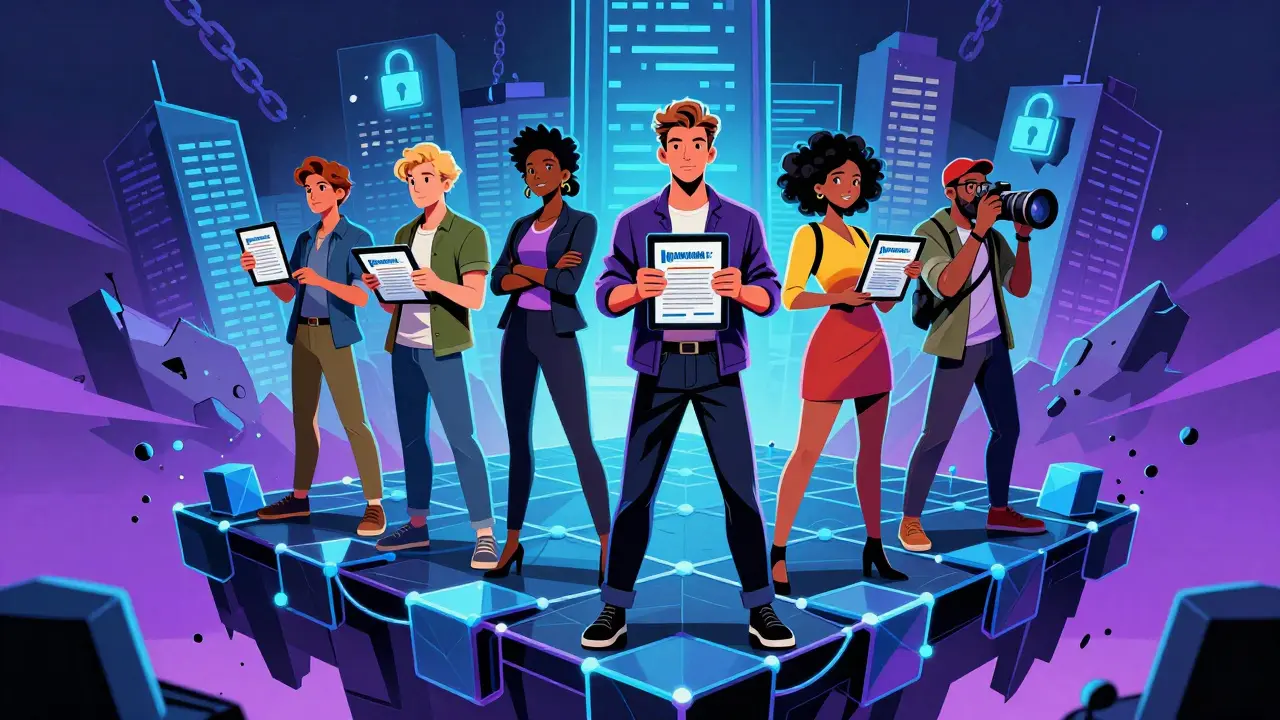
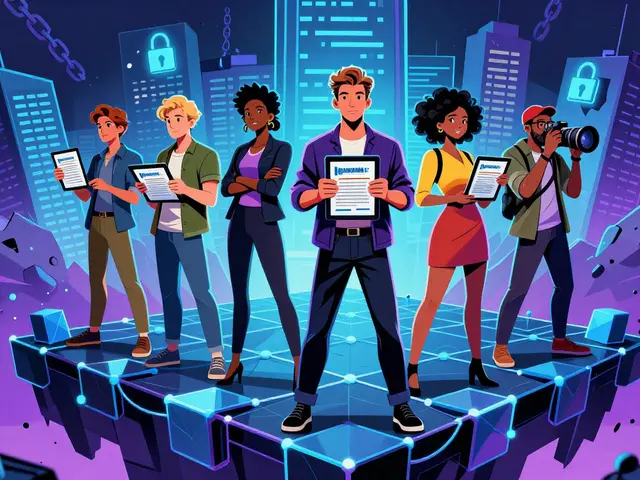
Imagine posting a video, article, or photo - and knowing no corporation can delete it, shadow-ban you, or sell your data to advertisers without your say. That’s not science fiction. It’s already happening on decentralized content platforms.
For years, we’ve accepted the trade-off: free social media in exchange for giving up control. Facebook decides what you see. Twitter (X) bans accounts overnight. TikTok’s algorithm pushes content you didn’t ask for. Your audience, your words, your followers - all locked inside corporate servers with no real ownership. By 2025, millions are walking away. Not because they hate tech, but because they’re tired of being the product.
How Decentralized Platforms Are Different
Traditional platforms like Instagram or YouTube run on central servers. One company owns the code, the data, the rules. If they change their mind, you lose everything. Decentralized platforms flip that. No single company controls them. Instead, they run on networks of computers - nodes - spread across the world. Think of it like a library where every copy of every book is stored in different homes, not just one building.
These platforms use two main systems: federated networks and blockchain. Federated systems, like Mastodon is a a federated social network built on the ActivityPub protocol that allows users to join independent servers while still interacting across the entire network, let you pick your own server - maybe one run by your local tech group, or a community of writers. But you can still follow someone on a server in Germany or Brazil. Your data stays with your server. You’re not trapped.
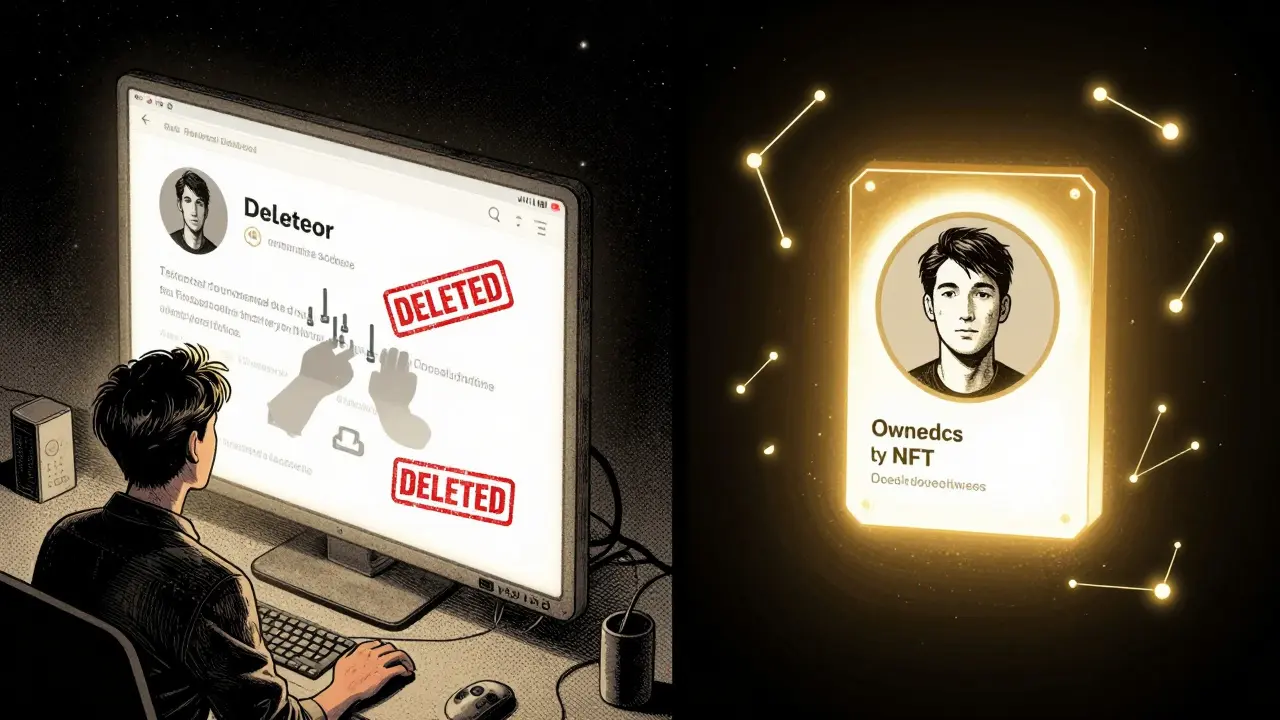
Blockchain-based platforms, like Lens Protocol is a decentralized social graph built on Ethereum that gives users permanent ownership of their profile, posts, and connections as NFTs, turn your profile, posts, and followers into digital assets you control. These aren’t just files on a server - they’re on the blockchain. That means no one can erase them. Not the platform. Not a government. Not even the person who built it.
Who’s Already Using Them
You don’t need to be a crypto expert to join. Mastodon is a a federated social network built on the ActivityPub protocol that allows users to join independent servers while still interacting across the entire network has over 12 million users as of late 2025. It’s where journalists, scientists, and artists post without fear of algorithmic suppression. Many left Twitter after Elon Musk’s changes - and never looked back.
Steemit is a blockchain-based social platform where users earn cryptocurrency for posting and curating content, with rewards distributed through a token economy pays creators in STEEM, a cryptocurrency that rises and falls with demand. Writers and photographers earn real money - sometimes more than they did on Medium or Instagram. One photographer in Colombia made $8,000 in six months just from posting daily nature shots.
Mirror is a blockchain-based publishing platform that enables writers to tokenize articles as NFTs and raise funds directly from readers using cryptocurrency lets authors turn essays into NFTs. You don’t need a publisher. You can sell access to your article, let readers tip you in ETH, or even offer a share of future royalties. A tech writer in Berlin raised $45,000 to fund a book by selling tokenized chapters - no venture capital involved.
Even Diaspora* is a distributed social network that allows users to host their own data on personal or community-run servers, ensuring full control over privacy and content - launched in 2010 - still has active communities. It’s not flashy, but it’s reliable. People use it to share family updates, political thoughts, and art without ads or tracking.
Why Creators Are Switching
On YouTube, you need 1,000 subscribers and 4,000 watch hours to start earning. Then they take 45% of your ad revenue. On Instagram, your reach drops if you mention a competitor. On TikTok, your video can vanish overnight for a word you didn’t even know was flagged.
On decentralized platforms, the rules are different:
- You keep 100% of your earnings - no middlemen.
- Your content can’t be deleted unless your community votes to remove it.
- You can move your audience to another platform without losing followers.
- No one is secretly profiling you to sell ads.
A podcaster in Toronto switched from Spotify to a decentralized audio platform. She now earns in crypto, sends direct tips from listeners, and keeps her entire archive online forever. She says: “I don’t have to worry about some algorithm deciding my voice isn’t ‘engaging’ enough.”
The Real Challenges
It’s not perfect. If you’ve ever tried to set up a Bitcoin wallet, you know: it’s not as easy as logging into Facebook.
Here’s what’s still hard:
- Learning curve: You need to understand wallets, keys, and seed phrases. Lose your key? You lose your account. Forever.
- Smaller audiences: Most decentralized platforms don’t have billions of users yet. Finding your tribe takes effort.
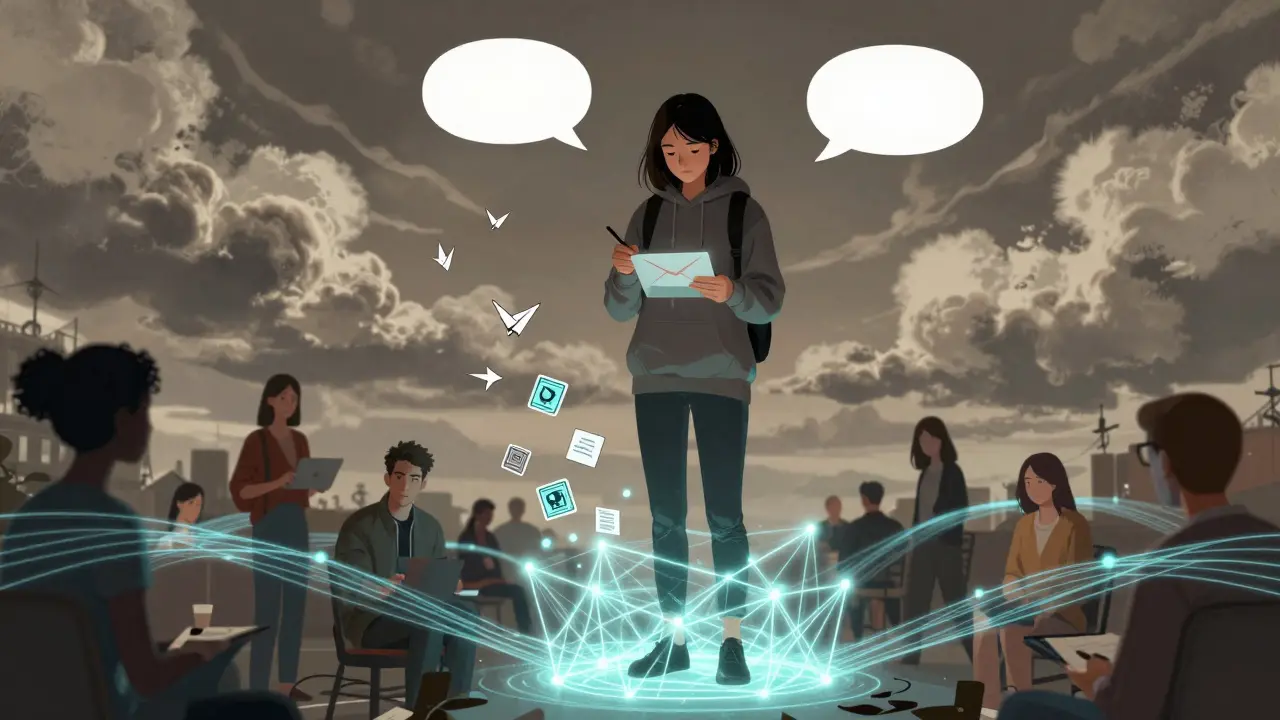
- No algorithm: No one’s pushing your content to strangers. You have to build community the old-fashioned way - by showing up, engaging, and being consistent.
- Wallet fees: On some blockchains, posting or tipping costs a few cents in gas fees. It’s cheap, but it’s still a barrier for people without crypto.
Some platforms are fixing this. Mirror now lets you sign in with email instead of a wallet. Mastodon apps like Tusky and Fedilab have simplified the interface. These aren’t just tech experiments anymore - they’re becoming usable.
What’s Next in 2025 and Beyond
The big players aren’t ignoring this. Facebook and Google are watching. But they can’t easily copy it. Decentralization isn’t a feature you can add. It’s a different architecture.
What’s coming:
- Hybrid platforms: Apps that feel like Instagram but store your data on a blockchain. You log in with email, but your posts are yours to take anywhere.
- Tokenized communities: Groups where members earn tokens for contributing - not just posting, but moderating, translating, designing.
- Government adoption: Cities in Canada and the EU are testing decentralized platforms for public feedback, to avoid censorship and ensure transparency.
- AI + decentralization: AI tools that help you find content on decentralized networks without centralized recommendation engines.
One thing’s clear: the internet is splitting. One path leads to more control by corporations. The other leads to users owning their voice, their data, and their income.
How to Get Started Today
You don’t need to quit everything overnight. Try one platform. Here’s how:
- Go to mastodon.social and sign up. Pick a username. That’s your Mastodon handle.
- Follow 5 people you already know on Twitter or Instagram. You’ll see their posts appear.
- Post something simple: a photo, a thought, a link.
- Try Mirror: sign up at mirror.xyz, write a short post, and publish it as an NFT. No crypto needed to start.
- Use a wallet like Phantom or MetaMask if you want to earn crypto. Start with $5 worth of ETH or SOL.
You’ll be surprised how quickly you find your people. The internet doesn’t need to be controlled by a handful of Silicon Valley CEOs. It can be a public square - open, fair, and owned by those who use it.
Are decentralized content platforms really safer than Facebook or Twitter?
Yes - but not because they’re magic. They’re safer because your data isn’t stored in one place. On Facebook, a single hack can expose billions of profiles. On Mastodon or Lens Protocol, your data is spread across hundreds of servers, encrypted, and under your control. No central database means no single point of failure. Plus, you decide who sees your posts - not an algorithm.
Can I make money on decentralized platforms?
Absolutely. On Steemit, writers earn STEEM tokens for posts and upvotes. On Mirror, you can sell articles as NFTs or let readers tip in ETH. On Lens Protocol, your profile is an NFT - and you can license it to apps or monetize it directly. Some creators earn more than they did on YouTube or Patreon because there’s no 30-50% platform cut. You keep it all.
Do I need cryptocurrency to use these platforms?
No - not always. You can join Mastodon, Diaspora*, or even Mirror without owning any crypto. But if you want to earn rewards, tip others, or own your content as an NFT, you’ll need a wallet. Start small: get $5 worth of ETH or SOL. Most platforms now let you sign up with email and add crypto later.
What happens if I lose my wallet key?
You lose access to your account - permanently. There’s no “forgot password” button on blockchain platforms. That’s why it’s critical to write down your seed phrase on paper and store it safely. Treat it like a house key. If you lose it, your posts, followers, and earnings are gone. No one can recover them.
Why aren’t these platforms bigger yet?
Because they’re still early. Most people don’t know how to use them. The interfaces aren’t as polished as Instagram. But adoption is growing fast. In 2024, Mastodon gained 5 million users. Mirror saw a 300% increase in writers. The tools are getting better. The culture is shifting. It’s not a question of if they’ll grow - it’s how fast.
Can I move my followers from Instagram to a decentralized platform?
You can’t automatically transfer them - but you can invite them. Post on Instagram: “I’m moving to Mastodon. Here’s my handle.” Share your new profile. Many people are curious. Some will follow. The key is to be consistent. Don’t disappear from Instagram overnight. Transition slowly. Your real audience will find you.

Decentralized platforms don't solve the problem of attention-they just move the grind elsewhere.
I spent six months trying to get my art onto Lens Protocol. Learned how to use MetaMask, paid gas fees, posted three pieces. Got 17 likes. No one from my old Instagram followers showed up. It felt like shouting into a forest where no one had ears. But then-three people from Japan, one from Poland, and a poet in rural Oregon started commenting. Real, deep comments. Not algorithm-driven. Just… human. I don’t care about virality anymore. I care about this.
Y’all are missing the real win here: ownership isn’t just about crypto or NFTs-it’s about psychological safety. On Mastodon, I posted about my anxiety after my mom passed. No one shadowbanned me. No ad bot tried to sell me grief counseling. People just… showed up. With stories. With silence. With tea emojis. 🫖 That’s the magic. Not the blockchain. Not the tokens. Just people choosing to be present. We’re not just moving platforms-we’re rebuilding trust, one post at a time.
Oh great, another Silicon Valley cult trying to rebrand surveillance capitalism as ‘freedom.’ You think your ‘decentralized’ platform won’t be bought by a hedge fund in 2 years? Or worse-turned into a crypto Ponzi scheme with ‘governance tokens’? Wake up. The only thing decentralized here is your delusion. They’re just selling you the illusion of control so you’ll keep giving them your data, your attention, and your wallet.
Just signed up for Mastodon today. Used my email. No wallet. Posted a photo of my cat wearing a tiny hat. Got replies from people in Canada, Germany, and Australia. One guy sent me a poem about cats and cosmic loneliness. I cried a little. No ads. No likes count. Just… connection. I didn’t know I was this lonely on Twitter.
As someone who works in digital sovereignty for Indigenous communities in Canada, I’ve seen how decentralized infrastructure can protect cultural knowledge from extraction. When elders share oral histories on federated platforms, they control who accesses it-not some ad-tech firm in San Francisco. This isn’t just tech-it’s cultural preservation. The tools are still clunky, but the intent? Pure. We’re not rejecting the internet. We’re re-claiming it.
Oh wow, you actually think people want to manage their own seed phrases? You think the average user wants to learn what ‘gas fees’ are? No. They want Instagram. They want TikTok. They want to scroll mindlessly while being sold toothpaste. Decentralization is a luxury for tech bros who think their wallet is a moral compass. The masses aren’t coming. And honestly? Good riddance.
so i tried mirror and i posted a 3000 word essay on why neoliberlism is the real social media algoritm and i got 12 likes and 1 tip of 0.0003 eth which is like 0.07 cents and then i realized i spent 4 hours writing that and my cat stared at me like i was a failure and now i just want to go back to youtube where at least the ads are entertaining
Let’s be real-most decentralized platforms have worse UX than a 2008 MySpace page. The fact that people are calling this ‘the future’ is embarrassing. If you need a PhD in blockchain just to post a photo, it’s not liberation-it’s a feature lockout. The real innovation would be making this easy. Until then, it’s just a niche for people who like debugging their own lives.
You all sound like you’re trying to convince yourselves this is sustainable. Let me tell you what happens when the crypto market tanks: the ‘tokenized communities’ collapse. The ‘creator earnings’ evaporate. The ‘ownership’ becomes a digital ghost town. We’ve seen this movie before-remember the crypto art boom of 2021? Now the NFTs are worth less than the gas it took to mint them. This isn’t revolution. It’s a speculative bubble with better branding.
Decentralization is just capitalism with more steps. You’re not freeing yourself-you’re just paying more to be exploited by a different set of gatekeepers. The blockchain doesn’t care about your voice. It cares about transaction volume. The real power still lies with the miners, the wallet providers, the gas fee middlemen. You think you own your content? You own a pointer to a hash. That’s not ownership. That’s digital mythology.
Stop romanticizing Mastodon. The platform is riddled with ideological purges, server admins banning people for using the wrong pronouns, and echo chambers that make Twitter look like a free speech haven. Decentralization doesn’t mean freedom-it means fragmentation. And fragmentation means isolation. You think you’re escaping the algorithm? You’re just living in a thousand smaller ones.
I went from YouTube with 800K subs to Mirror. I posted a 10-minute video essay on the ethics of AI-generated poetry. Got 37 tips. One was 0.5 ETH from a guy in Seoul who said it made him cry. I didn’t get rich. But I felt seen. Like, actually seen. Not as a metric. Not as a CPM. As a human who made something that mattered to someone. That’s worth more than any algorithm ever could. I’m not going back.
I tried Steemit last year. Posted about my garden. Got 12 STEEM. Spent a week trying to cash out. Got stuck in a verification loop. Gave up. Now I just post on Instagram and pretend the ads aren’t there. I don’t hate the idea. I just hate the friction. The internet should be easy. If it’s not easy, it’s not for most people. And most people are who matter.
Big Tech is just letting this happen so they can buy these platforms later for pennies. Watch. In 2027, Meta buys Lens Protocol. In 2028, Google buys Mirror. Suddenly your ‘decentralized’ NFTs get a ‘Terms of Service Update’ and now you’re back where you started. This is all a trap. They’re letting you think you’re rebelling so you’ll build them the next empire for free.