Ethereum Layer 2 Networks Explained: Scalability, Security, and Selection Guide
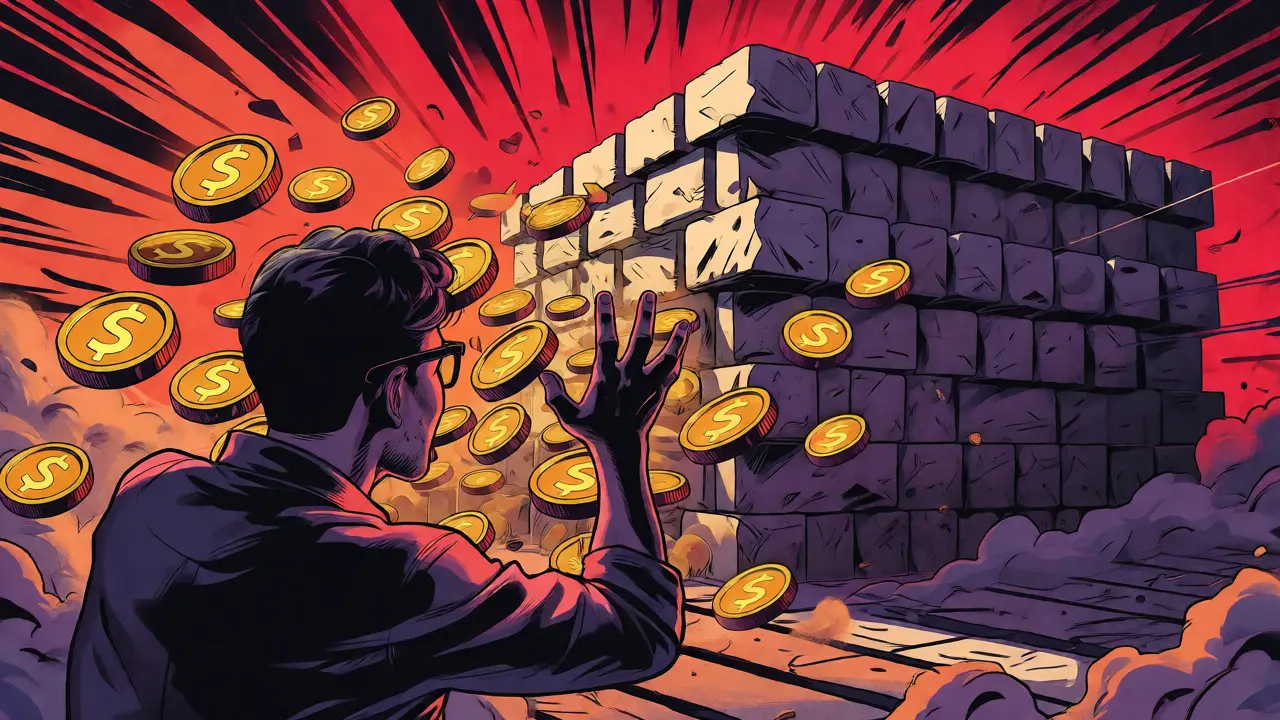
Remember May 2021? If you tried to swap tokens on Ethereum during that bull run chaos, you likely paid over $60 for a single transaction. It was painful, slow, and frankly, unsustainable. That moment wasn't just an inconvenience; it was the breaking point that forced Ethereum to change its fundamental architecture. Enter Layer 2 networkssecondary frameworks built atop Ethereum's mainnet to handle transactions off-chain while inheriting Layer 1 security. Today, these networks don't just help-they dominate. As of mid-2025, they process 85.2% of all Ethereum ecosystem transactions. If you're still treating Layer 2 as a "maybe" or a niche experiment, you're missing where the action actually is.
This isn't about hype. It's about infrastructure. Whether you are a developer building dApps, a trader looking for lower fees, or an investor analyzing market shifts, understanding how these networks work is no longer optional-it's essential for survival in the crypto economy. We're going to break down exactly what they are, why they differ, and how to pick the right one without getting burned by technical jargon or hidden risks.
The Core Problem: Why Layer 1 Isn't Enough
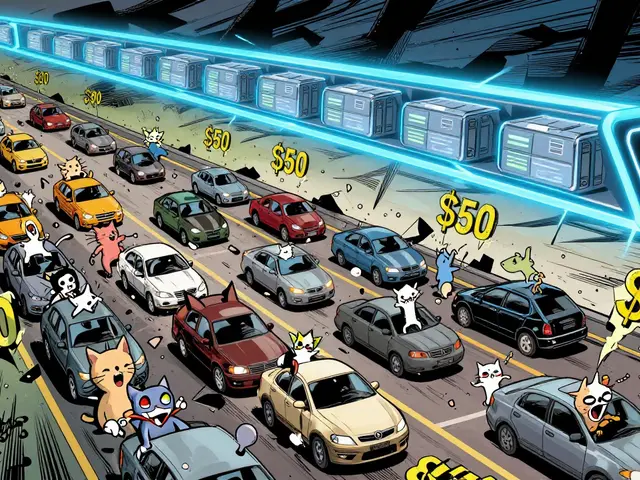
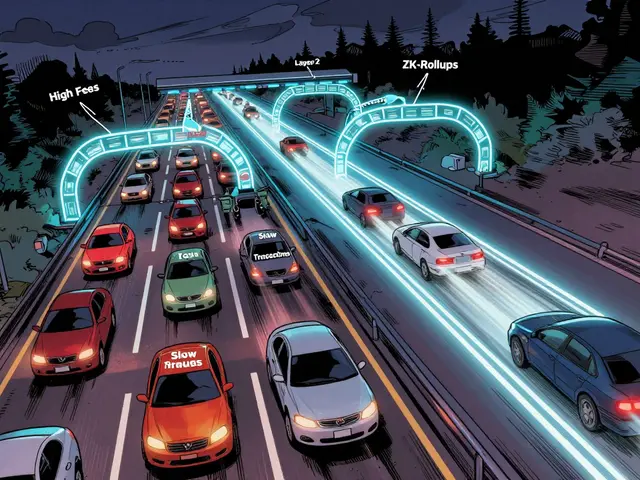
Ethereum’s Layer 1 (the mainnet) is secure and decentralized, but it’s slow. It processes roughly 15-30 transactions per second (TPS). Compare that to Visa’s thousands, and you see the bottleneck. During peak congestion, gas fees spike because everyone is bidding for limited block space. This is the classic "blockchain trilemma": you can usually have speed, security, or decentralization, but rarely all three at once. Layer 2 solutionsoff-chain scaling protocols that batch transactions and settle them back to Ethereum L1 solve this by moving the heavy lifting off the main chain. They execute transactions off-chain, compress the data, and then post a summary back to Ethereum. This means Ethereum keeps its security guarantees (it verifies the proofs), but users get sub-cent fees and near-instant confirmations. Think of it like taking a local train (L1) versus a high-speed bullet train (L2) that shares the same tracks but runs much faster because it doesn't stop at every tiny station.
Two Main Flavors: Optimistic vs. Zero-Knowledge Rollups
Not all Layer 2s are created equal. The technology splits into two primary architectures, each with distinct trade-offs. Understanding this difference is critical because it affects withdrawal times, costs, and security models.
| Feature | Optimistic Rollups | ZK-Rollups |
|---|---|---|
| How it works | Assumes transactions are valid unless proven otherwise (fraud proofs). | Uses cryptographic proofs to verify validity instantly (validity proofs). |
| Withdrawal Time | 7-day challenge period (to allow fraud detection). | Minutes (no challenge period needed). |
| Average Fees | $0.008 - $0.015 (varies by network). | $0.0015 - $0.005 (generally cheaper due to compression). |
| Top Examples | Arbitrum One, Optimism, Base. | zkSync Era, Starknet, Polygon zkEVM. |
| Developer Language | Solidity/EVM compatible (easy migration). | Cairo (Starknet) or Zinc/Rust (zkSync); harder learning curve. |
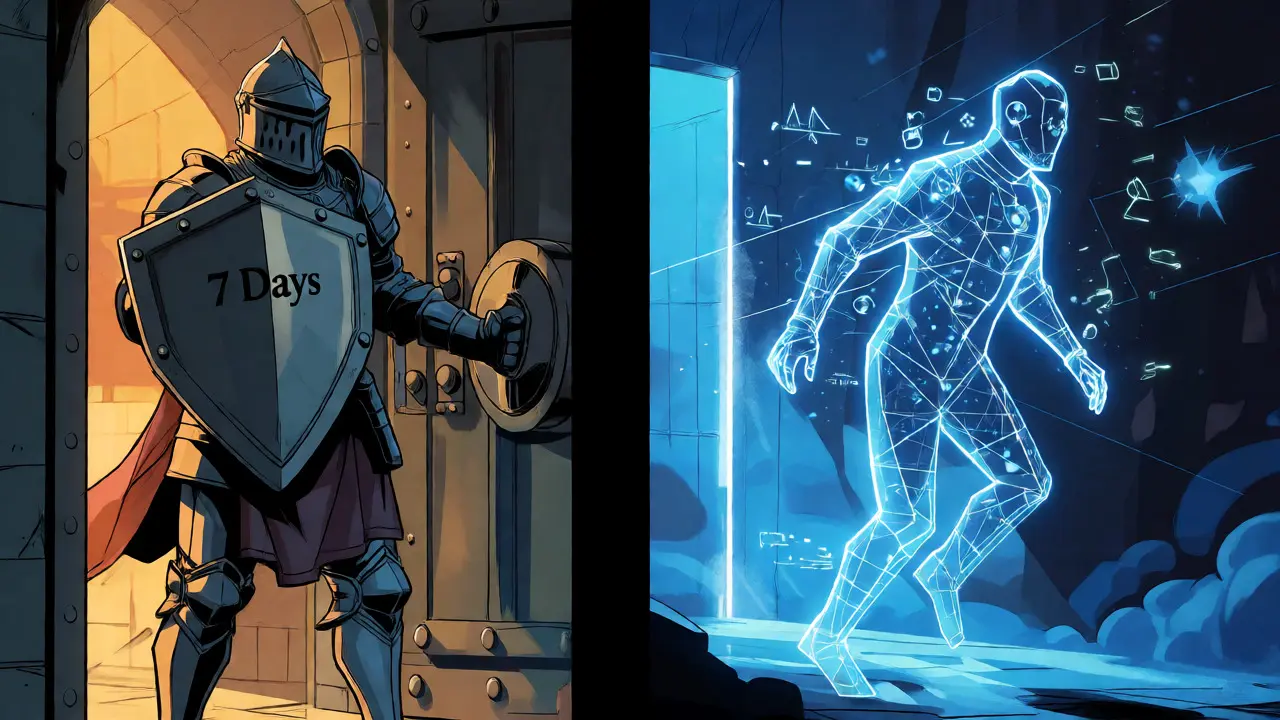
Optimistic Rollupsnetworks that assume transaction validity by default and use a 7-day window for fraud challenges are currently more popular in terms of Total Value Locked (TVL). Arbitrum Onethe leading optimistic rollup by TVL with $18.3 billion locked as of September 2025 leads the pack with $18.3 billion in TVL, capturing 34.2% of the market. Why? Because they are EVM-equivalent. Developers can copy-paste their Ethereum code almost unchanged. The downside? You have to wait seven days to withdraw funds back to Ethereum mainnet. That friction is real if you need liquidity fast.
On the other side, ZK-Rollupsscaling solutions using zero-knowledge proofs to validate transactions instantly without a challenge period offer superior speed and lower costs. zkSync Eraa ZK-rollup known for low data availability costs and high TPS performance boasts 98% lower data availability costs than optimistic systems. However, writing smart contracts for them often requires learning new languages like Cairo or Zinc, which adds a 3-6 month learning curve for developers according to ConsenSys Academy surveys. But for users, the experience is smoother: withdrawals take minutes, not weeks.
The Big Players: Who Dominates the Landscape?
The market has consolidated around a few key networks. If you’re picking a place to park your assets or build your app, these are the names you’ll hear most.
- Arbitrum One: The giant. With $18.3B TVL, it’s the go-to for DeFi. Its Nitro upgrade improved performance, processing 3,000 constraints per second. But remember the sequencer issue-when its centralized sequencer failed in April 2025, it caused a 44-minute outage affecting 1.2 million users. Centralization is still a risk here.
- Base: Backed by Coinbase, Base grew explosively, reaching $9.4B TVL. It’s user-friendly and integrated directly into the Coinbase wallet. It uses the OP Stack (same tech as Optimism). Great for retail users who want simplicity, but less decentralized initially.
- Optimism: The OG optimistic rollup ($11.7B TVL). It pioneered the "Superchain" vision, aiming to connect multiple L2s into one cohesive network. Its documentation, however, has been criticized for being outdated (scoring 2.8/5 in recent reviews), which frustrates developers.
- zkSync & Starknet: The tech leaders. zkSync offers the best balance of cost and speed for many apps. Starknet excels in complex computations, making it ideal for gaming (Immutable X migrated here to cut NFT minting costs from $1.20 to $0.0007!).
Notice the trend? User growth favors Base and Arbitrum due to ease of use. Technical superiority favors zkSync and Starknet. Your choice depends on whether you value convenience or cutting-edge efficiency.
The Hidden Risks: Sequencers and Bridges
It’s not all sunshine and sub-cent fees. There are significant risks you need to respect.
First, the Sequencer Problem. Most Layer 2 networks rely on a single entity (the sequencer) to order transactions. If that server goes down, the network halts. In mid-2025, 92.7% of Ethereum L2s still relied on single sequencer operators. Vitalik Buterin himself called this the "sequencer centralization timebomb." While plans exist to decentralize this (Arbitrum aims for 50 validator nodes by Q1 2026), we aren't there yet. If you hold large amounts of ETH on an L2, you are trusting that company’s infrastructure.
Second, Bridging Complexity. Moving money between Layer 1 and Layer 2, or even between different Layer 2s, is tricky. Cross-L2 bridges require 15-60 minute wait times and are prone to errors. MetaMask’s 2025 report showed 64.7% of negative user reviews cited failed cross-L2 transfers. Worse, bridges are hacker magnets. The $89 million Optimism bridge hack in January 2025 and the $22 million Synapse exploit on Arbitrum prove that smart contract vulnerabilities in bridging logic are costly. Always double-check addresses; 68% of phishing attacks target address confusion between networks.
Real-World Impact: What This Means for You
So, should you care? Absolutely. Here is how this shifts the ground beneath your feet.
For Traders: Stop paying $5+ for swaps on mainnet unless you are doing a massive settlement. Use aggregators like Socket or LI.FI to route through L2s. You’ll save 99% on fees. Uniswap’s daily active users jumped from 342k on mainnet to 2.1 million across L2s in just six months. That’s where the volume is.
For Developers: The Dencun upgrade in March 2024 reduced blob costs by 90%, making L2 deployment viable for micro-transactions. If you’re building a game or social app, Starknet or zkSync might be better fits than Arbitrum due to lower finality times. But budget time for learning non-EVM languages if you choose ZK routes.
For Investors: Look beyond the token price. Look at TVL trends and developer activity. Electric Capital reports 42% YoY growth in L2 developer activity vs. 18% on mainnet. The market cap of L2 tokens hit $187 billion in August 2025. However, be cautious: 73% of this value depends on Ethereum maintaining its dominance. If Solana or another L1 steals market share, L2s suffer too.
Looking Ahead: The Road to Mass Adoption
We are in a transition phase. Ethereum’s roadmap includes the Verkle Tree upgrade (Q2 2026), which will further reduce storage costs. Meanwhile, standardization efforts like EIP-7686 (April 2025) have already reduced bridging failures by 63%. The goal is clear: make using Layer 2 feel invisible. You shouldn’t need to know you’re on Arbitrum or Base; you should just know your transaction worked instantly and cheaply.
Vitalik Buterin summarized it best in June 2025: "Layer 2 isn't a temporary scaling solution-it's the permanent architecture for Ethereum's mass adoption." The technology is maturing, but the user experience still lags behind Web2 expectations. Bridging remains clunky, and decentralization is a work in progress. Yet, the trajectory is undeniable. If you want to participate in the next cycle of blockchain utility, you must engage with Layer 2. Ignoring it means paying higher taxes on your digital life.
Are Layer 2 networks safe?
Generally, yes, but with caveats. They inherit Ethereum's security for final settlement, meaning if the proof submitted to Ethereum is valid, the state is correct. However, risks exist in the bridging smart contracts and sequencer downtime. Unlike Ethereum mainnet, which has survived years of attacks, some newer L2s have shorter track records. Always diversify your holdings across multiple networks.
Why do I have to wait 7 days to withdraw from Arbitrum?
This applies to Optimistic Rollups like Arbitrum and Optimism. They assume transactions are valid to save computational power. The 7-day window allows anyone to submit a "fraud proof" if they detect invalid activity. ZK-Rollups like zkSync do not have this delay because they provide mathematical proof of validity immediately upon submission.
Can I use my existing Ethereum wallet on Layer 2?
Yes, most major wallets like MetaMask and Rainbow support Layer 2 networks natively. You typically add the network via Chainlist or automatically within the wallet. Your private keys remain the same, but you must ensure you have ETH on the specific Layer 2 network to pay for gas, as balances do not auto-sync across chains.
Which Layer 2 has the lowest fees?
As of late 2025, ZK-Rollups like zkSync Era and Starknet generally offer the lowest fees, averaging $0.0015-$0.005 per transaction. Optimistic Rollups like Base and Arbitrum are slightly higher at $0.008-$0.015. However, fees fluctuate based on network congestion, so always check current rates before executing large batches.
Is Layer 2 bad for Ethereum's decentralization?
Critics argue yes, because most L2s currently use centralized sequencers. This creates a single point of failure. However, proponents argue that L2s enable Ethereum to scale enough to onboard billions of users, which ultimately strengthens the ecosystem's overall resilience. Decentralization roadmaps are actively underway, with networks like Arbitrum planning multi-node sequencers by 2026.