
How Blockchain Enables Peer-to-Peer Energy Trading: A Practical Guide
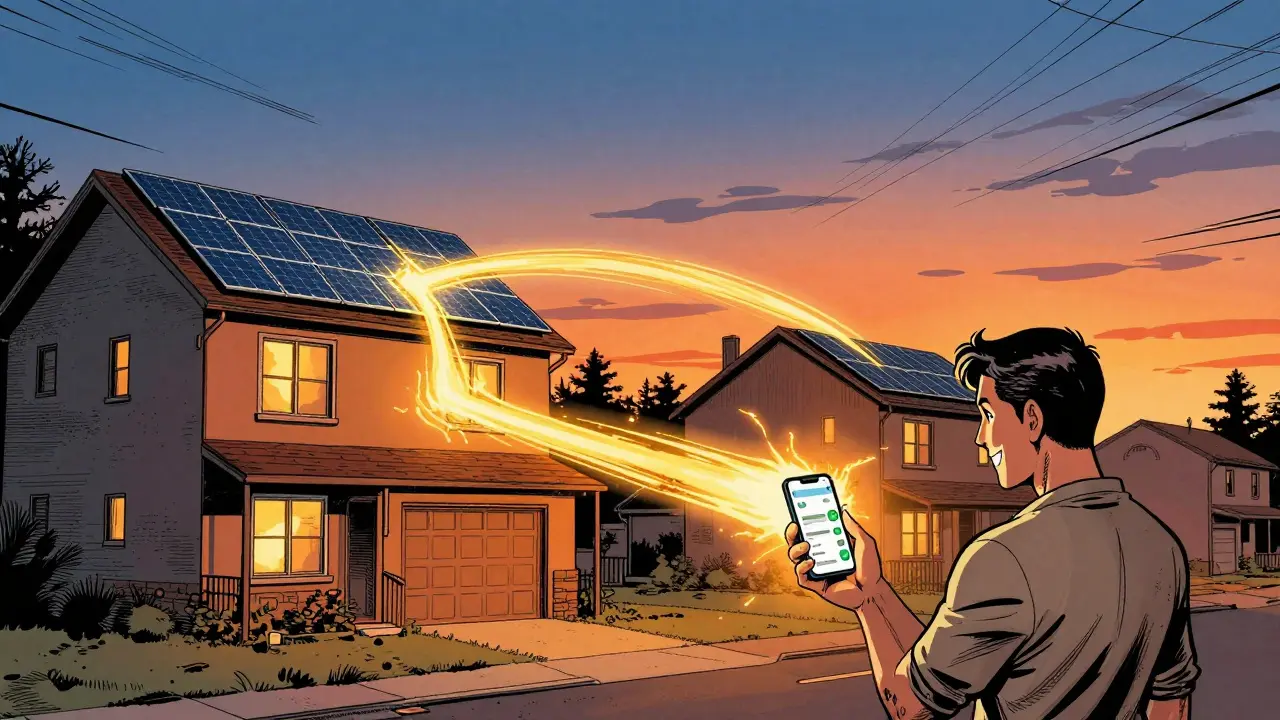
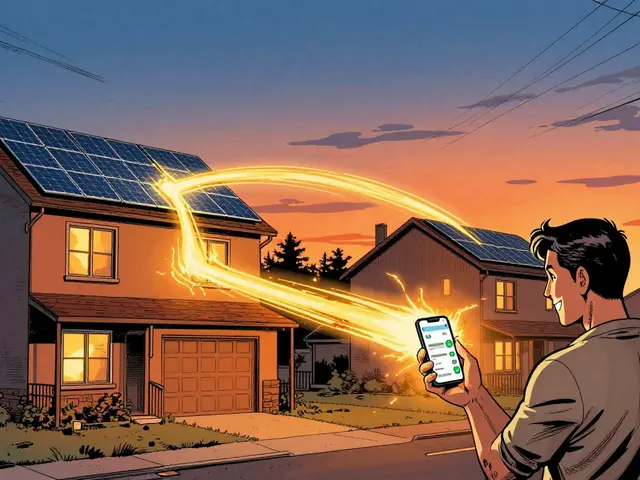
Imagine selling the extra solar power your roof generates directly to your neighbor instead of sending it back to a utility company that pays you pennies. This isn't science fiction anymore. It is happening right now through peer-to-peer (P2P) energy trading, which uses blockchain technology to create secure, transparent, and automated local energy markets without traditional utility intermediaries. For years, we have been locked into a one-way street for electricity: big plants generate power, lines carry it to us, and we pay the bill. But with rooftop solar panels becoming common and batteries getting cheaper, that model is cracking. Blockchain steps in to fix the trust and tracking problems that make direct neighbor-to-neighbor trades difficult.
The Core Problem: Why We Need Decentralized Energy Markets
Traditional grids are designed for centralized control. They suffer from transmission losses-typically 5-8% of energy vanishes as heat while traveling long distances, according to a 2024 study published in Nature.com. When you sell excess energy back to the grid, you often get a feed-in tariff set by the utility, which is rarely reflective of the actual market value of that clean energy. Meanwhile, your neighbor might be paying a premium rate for their evening usage. The system is inefficient, opaque, and leaves money on the table for everyone involved.
Enter the "prosumer"-a person who both produces and consumes energy. If you have solar panels, you are a prosumer. The problem has always been logistics. How do you prove you sent 5 kWh to Bob at 2 PM? How do you ensure he pays you instantly? Traditional banking and billing systems are too slow and expensive for micro-transactions. This is where blockchain shines. It acts as an immutable ledger that records every kilowatt-hour exchanged, ensuring transparency and automatic settlement without a middleman taking a cut.
How P2P Energy Trading Works Technically
You don't need to be a computer scientist to understand the flow, but knowing the components helps demystify the hype. The architecture relies on four main pillars working together:
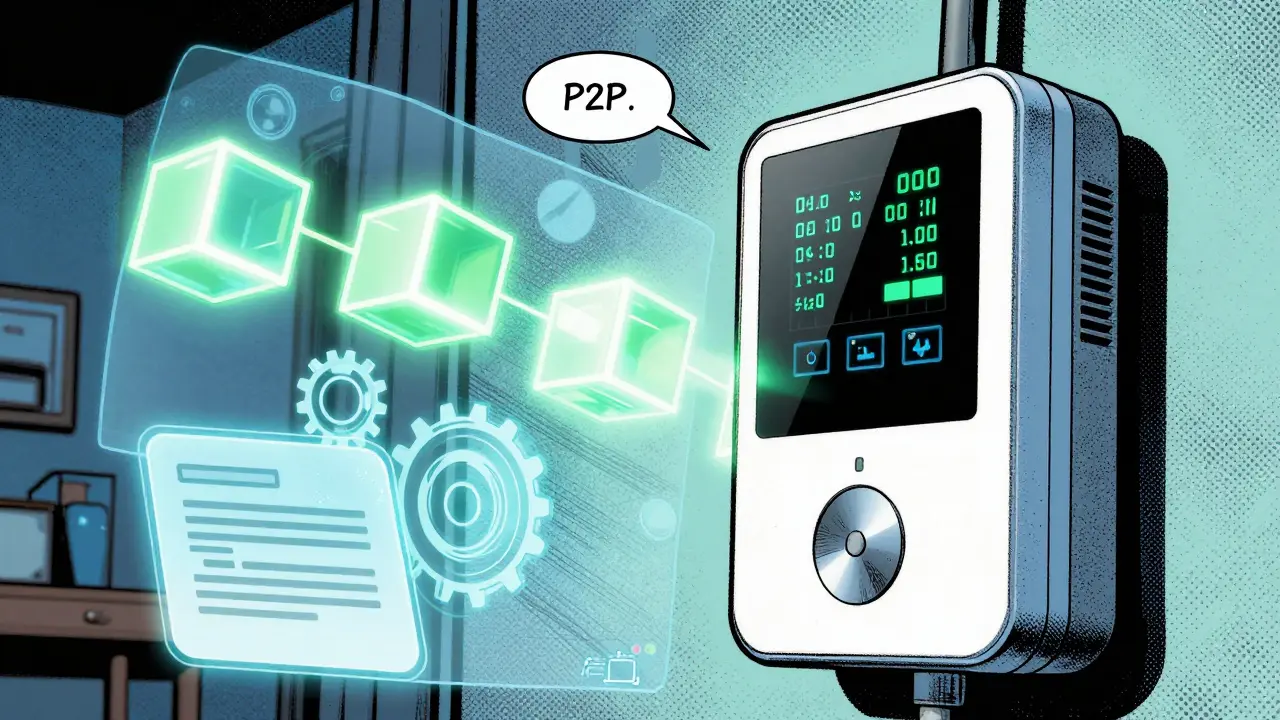
- Smart Meters: These are the eyes and ears of the system. Unlike old analog meters, IP-enabled smart meters (compliant with standards like IEEE 2030.5 or OpenADR 2.0) record real-time production and consumption data, usually every 15 to 60 minutes. They send this data over a secure internet connection.
- Blockchain Platforms: This is the database. Instead of a central server owned by a utility, the transaction history is stored across a distributed network. Popular choices include Ethereum, Hyperledger Fabric, and Corda. These platforms provide the security needed so no one can tamper with the records of who owed whom.
- Smart Contracts: Think of these as self-executing digital agreements. You program them with rules, such as "If I have surplus solar power and Alice needs power, transfer $0.20 per kWh from her wallet to mine automatically." No human intervention is needed once the conditions are met.
- User Applications: These are the web portals or mobile apps where you see your energy balance, set your selling price, and view your savings. They translate the complex blockchain data into something you can actually read.
The process flows logically: Your smart meter detects surplus energy. It broadcasts this availability to the blockchain. A smart contract matches your supply with a nearby consumer's demand based on pre-set prices. The trade executes, the smart contract triggers a payment, and the ledger updates. All of this happens in seconds, reducing transaction costs by 30-45% compared to traditional utility-mediated arrangements, according to IRENA's 2020 Innovation Landscape Brief.
Real-World Success Stories and Data
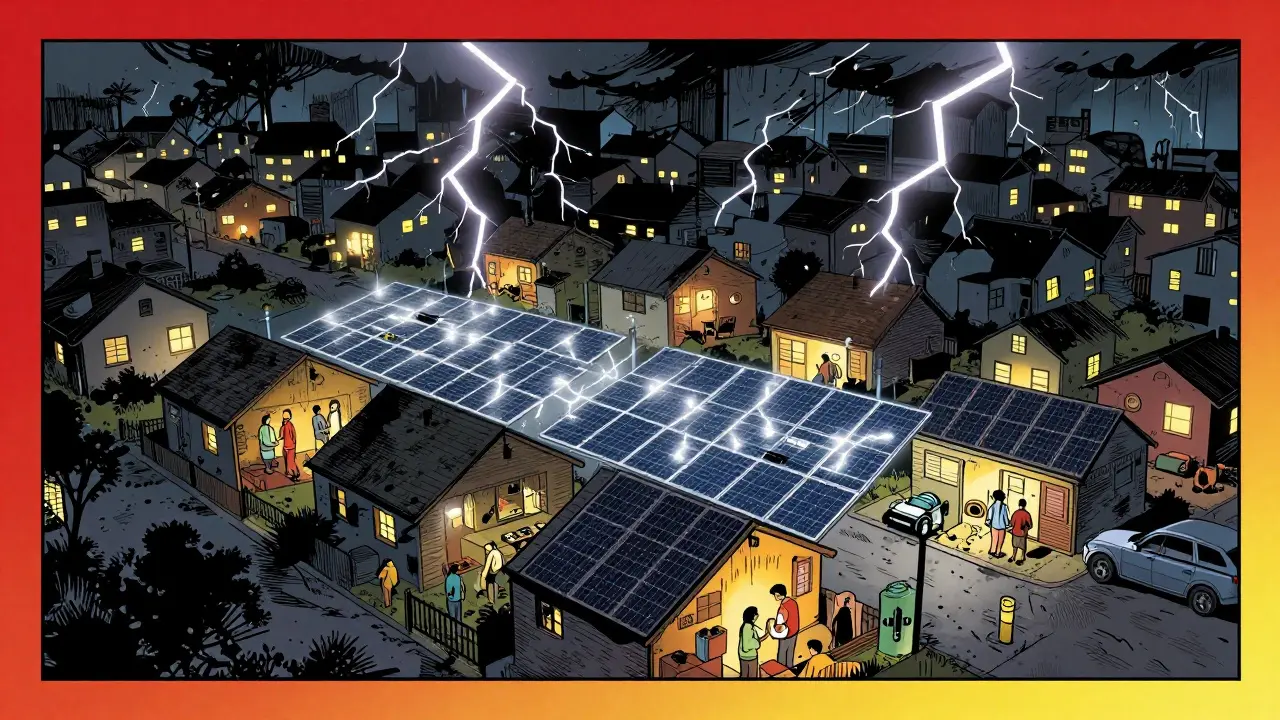
Theory is great, but does it work in practice? Yes, and the data supports it. The most famous example is the Brooklyn Microgrid project, launched in April 2016 by LO3 Energy and ConsenSys. As of Q3 2024, this initiative has connected over 500 participants across three New York neighborhoods. Participants report average savings of 12-18% on their energy bills. More importantly, during grid outages, the local microgrid maintained power for connected homes, demonstrating enhanced resilience.
In Australia, Power Ledger ran a trial in Fremantle involving 100 households. Their 2023 annual report showed a 97% user satisfaction rate. Solar prosumers in this trial earned between AUD$220 and AUD$350 monthly from selling their surplus energy. That is real income generated from assets people already owned but weren't monetizing effectively.
Even in colder climates, it works. A community in Sonderborg, Denmark, used a blockchain-based P2P system to reduce its grid dependency by 37% during winter months, as reported by the European Commission in March 2024. These aren't just tech demos; they are functional economic models.
| Feature | Traditional Utility Model | Blockchain P2P Model |
|---|---|---|
| Transaction Costs | High (utility margins + fees) | Low (30-45% reduction per IRENA) |
| Transparency | Opaque (black box pricing) | Immutable ledger (full visibility) |
| Settlement Speed | Monthly billing cycles | Near real-time via smart contracts |
| Grid Resilience | Centralized failure points | Localized microgrids isolate outages |
| Prosumer Revenue | Fixed feed-in tariffs | Market-driven dynamic pricing |
Challenges and Limitations to Consider
It would be dishonest to say this technology is perfect. There are significant hurdles. First, scalability. Current blockchain networks like Ethereum handle about 15-30 transactions per second, whereas Visa handles 24,000. While this is sufficient for neighborhood-level trading, scaling to a national grid requires layer-2 solutions or private blockchains like Hyperledger, which adds complexity.
Second, regulation. Electricity markets are heavily regulated. In some US states, laws prohibit individuals from selling electricity directly to others, viewing it as unlicensed utility activity. This led to the termination of certain Power Ledger trials in Q2 2022 due to regulatory conflicts. The EU has been more progressive, with the Clean Energy Package establishing rules for "renewable energy communities" since January 2021, but implementation varies by country.
Third, technical barriers for users. Reddit discussions in r/EnergyMarkets from June 2024 highlight complaints about complex onboarding processes, averaging 3-5 hours for first-time users. Smart contract execution can also delay during network congestion. You need reliable internet connectivity (minimum 1Mbps bandwidth) and compatible smart meters, which affects about 22% of initial deployments due to interoperability issues, according to Nature.com's data.
The Future Outlook: Where Is This Heading?
The trajectory is clear. The global P2P energy trading market was valued at $1.27 billion in 2023 and is projected to reach $8.43 billion by 2028, growing at a CAGR of 46.1%, according to MarketsandMarkets' May 2024 forecast. Several trends will drive this growth:
Vehicle-to-Grid (V2G) Integration: Electric vehicles are essentially rolling batteries. BMW and Siemens launched a joint P2P trial in Munich in April 2024, connecting 200 EVs to the energy market. Soon, your car could sell power back to your house when electricity prices spike.
Cross-Border Trading: The European Blockchain Services Infrastructure, launched in January 2024, now includes energy trading as a certified use case. This enables P2P transactions between EU member states, allowing regions with high wind generation to sell directly to sunny regions needing backup.
Green Consensus: Early critics pointed out that Proof-of-Work blockchains consumed too much energy. However, Ethereum's transition to Proof-of-Stake in September 2022 reduced its energy consumption by 99.95%. This addresses the irony of using energy-intensive tech to save energy.
By 2030, IRENA predicts P2P trading could account for 10-15% of distributed renewable energy transactions in supportive regions. Grid operators are adapting too, developing standards like IEEE 2030.5 Annex D to ensure P2P systems don't destabilize the wider grid.
Getting Started: What Do You Need?
If you are interested in joining this shift, here is what you typically need:
- Distributed Renewable Resource: Ideally, rooftop solar panels or a small wind turbine. You need to produce surplus energy to sell.
- Smart Meter: Ensure your meter is IP-enabled and compliant with open standards like IEEE 2030.5. Check with your local provider if they support third-party integrations.
- Internet Connection: Stable broadband with at least 1Mbps upload speed for real-time data transmission.
- Digital Wallet: Most platforms require a crypto-friendly wallet or a linked bank account for fiat settlements, depending on local regulations.
- Platform Access: Join a local P2P marketplace like LO3 Energy, Power Ledger, or Electron. Availability depends on your region.
Be prepared for a learning curve. Energy cooperatives report 3-6 months for full system integration and staff training. Start small, monitor your usage, and engage with community forums to troubleshoot issues.
Is P2P energy trading legal in my area?
Legality varies significantly by jurisdiction. The European Union has established frameworks for renewable energy communities since 2021. In the US, FERC Order 2222 (2020) opened pathways for aggregated resources, but state-level laws may still prohibit direct individual sales. Always check local regulations before investing in hardware or joining a platform.
How much money can I realistically earn from selling excess energy?
Earnings depend on your generation capacity, local energy prices, and neighbor demand. In the Fremantle, Australia trial, prosumers earned AUD$220-$350 monthly. In Brooklyn, participants saw 12-18% bill savings. It is not a get-rich-quick scheme, but it optimizes the return on your existing solar investment.
Do I need to know how to code to use P2P energy trading?
No. User-facing applications are designed to be intuitive. You interact with dashboards to set preferences and view balances. The blockchain and smart contracts run in the background. However, some technical literacy helps when troubleshooting connectivity or understanding transaction delays.
What happens if the internet goes down?
Most systems have offline modes or buffer periods. Smart meters store data locally and sync when connectivity is restored. Critical loads can often be managed by local battery storage within a microgrid setup, ensuring essential power remains available even if the blockchain network is temporarily unreachable.
Is blockchain really necessary for this?
While centralized databases could theoretically track trades, blockchain provides trustless verification. Since neighbors do not inherently trust each other or want to rely on a single utility's ledger, blockchain ensures immutability and transparency. It automates payments via smart contracts, removing the need for manual invoicing and dispute resolution.

Let's be real for a second. This entire premise is built on the assumption that your neighbor actually wants to buy electricity from you rather than just getting it from the grid at a stable rate. The transaction costs might drop, but the coordination overhead? Massive. You're talking about convincing an entire neighborhood to adopt a new digital wallet, install specific smart meters, and agree on pricing algorithms before they even flip a switch. It's not 'peer-to-peer,' it's peer-to-headache.
Oh, look at Jan, playing the role of the grumpy old man who refuses to get off his lawn! 🙄
You are missing the point entirely. It isn't about forcing neighbors to buy; it's about creating a market where surplus energy doesn't go to waste while someone else pays peak rates. The technology handles the matching. You don't need to convince anyone personally; the smart contract does the heavy lifting. If you have excess solar, why let the utility take it for pennies when your neighbor needs it now?
Plus, have you seen the resilience data? When the main grid goes down, these microgrids keep running. That is worth more than whatever 'coordination overhead' you are whining about.
The notion that blockchain is the panacea for energy distribution is, frankly, intellectually lazy. We are witnessing a classic case of solutionism, where a technological tool is applied to a problem that is fundamentally regulatory and infrastructural, not computational. The inefficiencies cited in the article-transmission losses, opaque pricing-are symptoms of antiquated utility monopolies, yes, but replacing them with a decentralized ledger does not magically solve the physical constraints of the grid.
Furthermore, the scalability argument is deeply flawed. As the post admits, Ethereum handles a fraction of the transactions Visa processes. To scale this to a national level requires layer-2 solutions or private blockchains, which reintroduces centralization points and complexity. One must ask: if we require complex, centralized infrastructure to make the blockchain work efficiently, what exactly are we decentralizing? The answer, inevitably, is nothing of substance. It is merely adding a layer of cryptographic bureaucracy to an already inefficient system.
lol another tech bro trying to sell us crypto dreams wrapped in green energy packaging. 'immutable ledger' my ass. I still cant figure out how to use my thermostat app without calling support twice. And you want me to trust a smart contract to pay my electric bill? nice try. also the typo in ur head is showing.
i mean think about it really do we want to trade with our neighbors or do we just want to feel like we are part of some big digital hive mind where everyone is connected by invisible strings of code
it feels very dystopian in a way like we are giving up our privacy for a few dollars saved on the bill and is that really worth it
also why does everything have to be so complicated cant we just share power like we used to share cookies
It is absolutely disgraceful that people are falling for this marketing fluff. The moral hazard here is immense. By incentivizing individual hoarding of energy resources through speculative trading, we are eroding the collective responsibility that keeps the grid stable. Electricity is a public good, not a commodity to be speculated upon by suburban hobbyists with rooftop panels.
The 'Brooklyn Microgrid' is a vanity project funded by venture capital, not a scalable model for societal energy needs. It creates a two-tiered system where those with capital can optimize their consumption while the rest bear the burden of maintaining the broader infrastructure. This is not progress; it is the privatization of essential services under the guise of innovation. We should be demanding stricter regulation of utilities, not enabling a wild west of unregulated energy trading.
Oh, Robert, spare us the lecture on 'collective responsibility.' You sound like a bureaucrat who hasn't seen sunlight since 1998.
Newsflash: The grid is NOT stable. It crashes every time there's a storm or a heatwave. Meanwhile, the guy next door has batteries and solar and you're sitting in the dark complaining about 'moral hazards.'
This isn't a 'vanity project'; it's survival insurance. And if you think regulating utilities fixes anything, you've been asleep at the wheel. They just raise rates and pass it on. P2P trading cuts out the middleman who charges you for the privilege of breathing air near their wires. Grow up.
I think we can all agree that the potential here is huge, but the execution needs to be smoother! 😊
The key takeaway for most people isn't the blockchain tech itself, but the financial incentive. Earning $220-$350 AUD monthly from existing assets is a no-brainer for many homeowners. It turns a passive investment into an active income stream.
However, the onboarding process mentioned (3-5 hours) is a major friction point. If platforms could simplify the wallet setup and meter integration, adoption would skyrocket. Imagine if your EV could automatically sell back power during peak hours without you lifting a finger. That’s the future we’re heading toward, and it’s pretty exciting! 🔋⚡
i read through all of this and honestly it sounds really cool but also kind of overwhelming because i dont know much about tech and the idea of having to set up a digital wallet and make sure my internet is fast enough just seems like a lot of work especially if i live in an older house where the wiring is probably terrible anyway
but i guess if it saves money then maybe its worth trying eventually just not sure when i will have the time to learn all of this stuff
its totally understandable to feel overwhelmed ashley
you dont have to do it all at once
just start by checking if your current meter is smart
that is the first step
everything else can wait until you are ready
The author’s reliance on anecdotal evidence from small-scale trials such as Brooklyn and Fremantle is methodologically unsound. These projects operate in highly controlled environments with significant subsidies and technical support, conditions that are neither reproducible nor scalable across diverse socioeconomic landscapes.
Furthermore, the assertion that blockchain reduces transaction costs by 30-45% ignores the substantial computational energy expenditure required to maintain the ledger, particularly in networks that have not fully transitioned to Proof-of-Stake. While Ethereum’s shift mitigates this concern, the environmental irony remains palpable. One must question whether the marginal gains in efficiency justify the introduction of complex, volatile cryptocurrency markets into the realm of essential utility provision. It is a frivolous distraction from genuine infrastructural reform.
typical western elitist nonsense. you guys build a tiny demo in brooklyn and think you solved world hunger and energy crisis. meanwhile in india we deal with actual grid failures daily and nobody cares about your fancy blockchain toys. simple truth is rich people play with gadgets while poor people suffer. sarcastic tone aside this is useless hype.
I’m curious about the interoperability issues mentioned. The post states that 22% of initial deployments fail due to incompatible smart meters. Is this primarily a hardware issue or a software protocol mismatch?
If IEEE 2030.5 is the standard, why aren’t utilities adopting it universally? It seems like a bottleneck that could stifle growth regardless of how good the blockchain layer is. Maybe the real innovation needed isn’t in the ledger, but in mandating open standards for metering infrastructure.
hey larry good question
its mostly a mix of both
utilities love proprietary systems because it locks customers in
they dont want third party apps talking to their meters easily
so yeah the bottleneck is definitely political and corporate greed not just tech
we need regulations that force openness otherwise this p2p stuff stays niche
keep asking questions though thats how we move forward
Why are we even discussing foreign technologies when our own grid is failing? The US needs to focus on domestic manufacturing of solar panels and batteries, not importing blockchain schemes from overseas startups. This P2P nonsense is a distraction from the real issue: energy independence. We should be building more nuclear plants and upgrading transmission lines, not letting neighbors trade watts like stocks. It’s weak and undermines national security.
From a pure tech stack perspective, the latency introduced by consensus mechanisms is non-trivial for real-time grid balancing. Smart contracts executing on-chain introduce delays that are unacceptable for frequency regulation services. Off-chain order books with periodic settlement might be a more viable architecture for high-frequency trading scenarios, though it sacrifices some transparency. The jargon-heavy reality is that 'blockchain' is often a buzzword for 'distributed database with extra steps.'
India is already experimenting with similar models in rural areas where grid access is limited. Solar microgrids are changing lives there. Why wait for perfect tech? Just deploy and iterate. 😎🇮🇳
You all are missing the bigger picture. This isn't just about saving money on bills. It's about control. Who owns your energy data? Who decides when you get cut off? With P2P, you take that power back. Literally.
I don't care if it's 'complex' or 'hard to onboard.' If you can't handle setting up a digital wallet, you deserve to be exploited by the utility companies. Stop whining and start adapting. The future is here and it doesn't care about your feelings or your outdated notions of how things 'should' work. Get on board or get left behind. Simple as that.
i think gavin is being a bit harsh but he has a point about data ownership
its scary to think the utility knows exactly when you turn on your ac or your oven
with blockchain at least that data is encrypted and shared only for the trade
plus i love the idea of earning money from my roof
maybe ill look into it soon if i can find a platform that doesnt require a computer science degree to sign up
Brilliant discussion everyone! 🌟
I’ve been following the Power Ledger trials closely, and the user satisfaction rates are genuinely impressive. It’s not just about the tech; it’s about community engagement. When people see their neighbors benefiting, they want in.
The challenges around regulation are real, but look at the EU’s Clean Energy Package. Progress is happening. We just need to push for local policies that support renewable energy communities. Let’s keep the conversation positive and focused on solutions!