
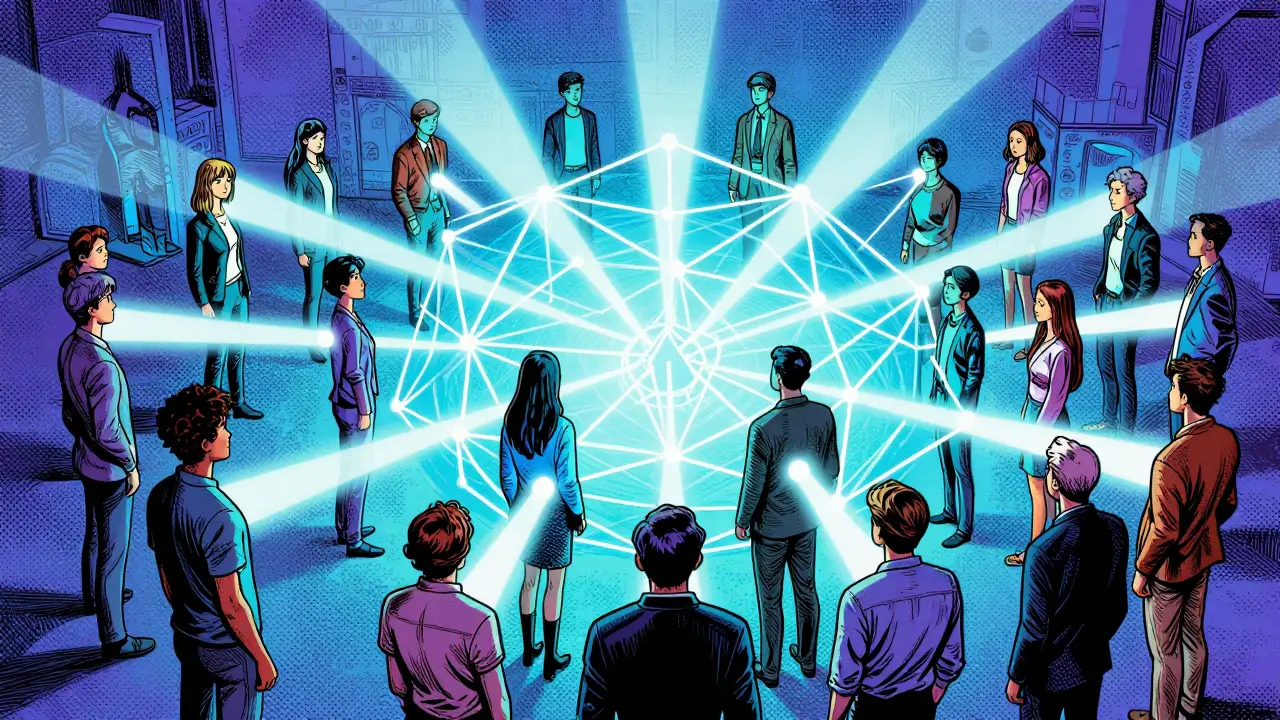
The Future of Decentralized Organizations: Trends Beyond 2026
We stand at a point where the experimental phase of Decentralized Autonomous Organizations is officially over. By early 2026, it is no longer news that these digital cooperatives exist; the conversation has shifted to whether they can survive the friction of the real world. When we look back at the 2025 milestone, where over 13,000 active DAOs operated globally, the numbers were impressive, but the maturity was mixed. Today, the focus isn't just on how many groups formed, but which ones solved actual problems without central leadership.
How Governance Has Evolved Since 2025
The biggest shift in the last year hasn't been about technology speed, but about decision-making quality. In the early days, holding a token meant you had power, often leading to situations where wealthy investors could dictate outcomes. That model faced heavy criticism, so 2025 saw a pivot toward fairness mechanisms. By now, many mature systems utilize Quadratic voting is a system that limits large stakeholder influence by making each additional vote progressively more expensive. This ensures that a community's collective voice outweighs a single whale's wallet.
Beyond voting math, reputation has become currency. Newer frameworks reward members based on their demonstrated activity rather than just their financial contribution. If you code, write proposals, or audit security for months, your voting weight increases. Some platforms even employ delegated voting, allowing busy members to transfer power to trusted representatives who specialize in specific topics. This hybrid approach mimics traditional boards but keeps the accountability transparent on-chain.
| Model Type | Mechanism | Best For |
|---|---|---|
| Token-based Voting | 1 Token = 1 Vote | Investment-heavy funds |
| Quadratic Voting | Cost increases per vote | Community welfare projects |
| Reputation Systems | Weight based on contribution | Long-term development teams |
Integration with Artificial Intelligence
If one word defines the 2026 landscape, it is automation. The integration of Artificial Intelligence with blockchain governance has moved from hype to utility. We are seeing AI-powered smart contracts that don't just execute rules but predict outcomes before they happen. For example, an autonomous fund might analyze market volatility using machine learning models and suggest a rebalancing strategy to the voters.
This reduces the burden on average users who might not have the time to read complex technical reports. Instead, the system summarizes risks and opportunities, highlighting exactly what needs approval. Security is another area where this fusion helps. Predictive analytics detect patterns of fraud or exploit attempts that traditional audits miss. However, this introduces a dependency question: if an AI suggests a path, do humans trust it enough to let it execute? The consensus remains that humans retain the final key, but AI handles the heavy lifting of data analysis.
Enterprise Adoption and Supply Chains
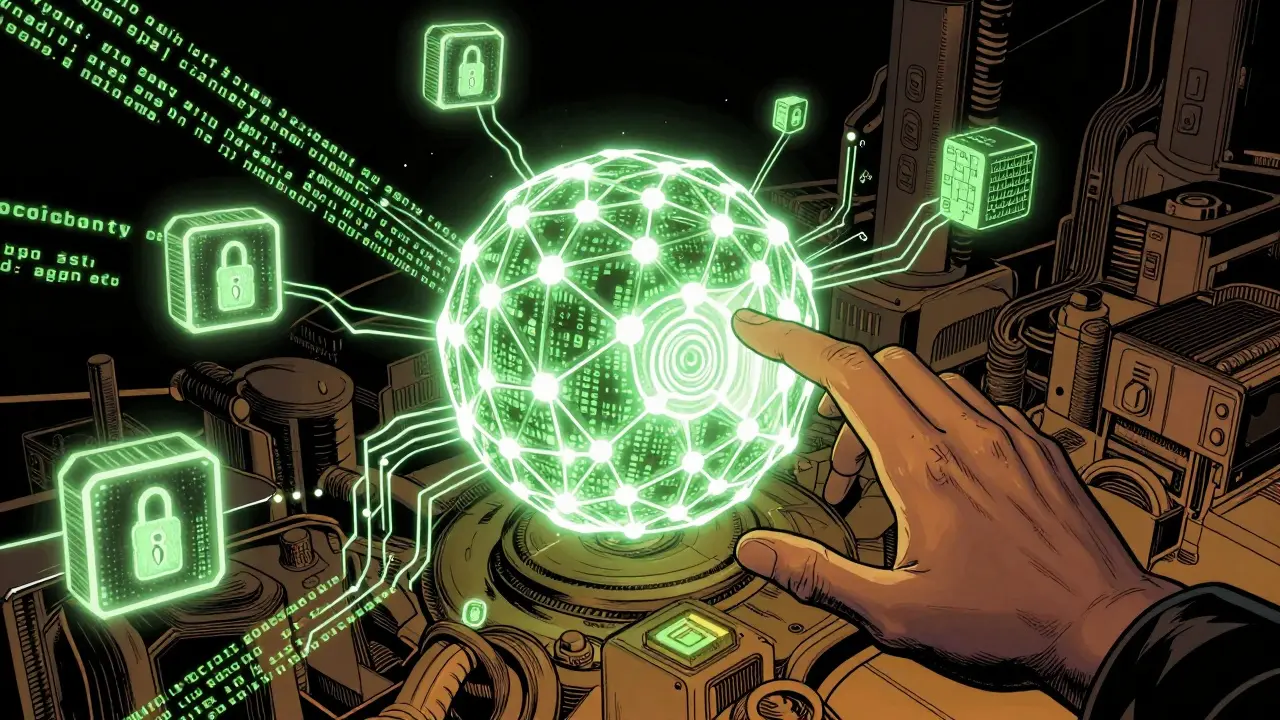
The narrative has changed significantly regarding corporate usage. While we used to talk mostly about crypto-native startups, major industries are now experimenting with decentralized structures. Manufacturing firms are piloting supply chain management where every component is tracked via immutable ledgers. This isn't about replacing their CEOs, but creating transparent layers between suppliers that prevent fraud and verify ethical sourcing.
In healthcare systems, patient data ownership is being tested through private networks that allow individuals to control access permissions. A doctor accesses records only when you grant permission, removing the hospital administrator as the gatekeeper. These applications prove that the technology scales beyond speculative finance. As Central Bank Digital Currencies (CBDCs) roll out globally, they provide a bridge. Governments offer digital fiat that can interact with private decentralized protocols, creating a hybrid economy where public stability meets private innovation.
Regulatory Realities and Legal Frameworks
Growth brings attention from regulators, and the 2025-2026 period marks the beginning of clarity. Previously, operating a DAO created massive liability concerns for members. If the organization failed, was everyone personally responsible? Jurisdictions worldwide have started drafting specific legislation to address this. New frameworks in several countries now define certain types of digital cooperatives as legal entities, offering liability protection similar to a standard corporation.
This shift is critical for long-term survival. Without legal recognition, banks remain hesitant to partner with these groups. As compliance tools improve-automating tax reporting and identity verification-we see traditional financial institutions integrating with these decentralized rails. They aren't buying the whole model, but they recognize the efficiency in clearing settlements using smart contract logic rather than legacy ledger processing.
Sustainability and Environmental Impact
A significant portion of the conversation around 2026 focuses on energy consumption. The industry has largely moved away from Proof-of-Work consensus mechanisms for governance layers due to environmental pressure. Most modern DAO infrastructure runs on proof-of-stake or alternative low-energy protocols. This aligns with global climate goals and removes a major stigma attached to the ecosystem.
Companies joining the space now demand carbon-neutral certification for their underlying chains. Green computing initiatives are standardizing how hardware resources are shared for validation tasks. This transition ensures that as these organizations scale to handle billions of transactions daily, they do not compromise planetary health.
Risks You Still Need to Manage
Despite the progress, the risk profile hasn't vanished. Security remains the number one vulnerability. A bug in a smart contract code doesn't mean a customer service call fixes it; the loss is immediate and often irreversible. In 2025 alone, protocol exploits caused substantial financial damage. Even with better tooling, the complexity of automated money management means mistakes slip through.
Participation rates also fluctuate. Many communities suffer from apathy. If only 5% of token holders vote, the "decentralized" aspect is questionable. This centralization of voting power can lead to collusion or stagnation. Solving voter apathy requires building culture, not just code. Communities that thrive usually have clear missions and social bonds outside of the token price action.
Are DAOs legally recognized everywhere?
No, legal recognition varies significantly by jurisdiction. As of 2026, some regions have passed specific laws protecting DAO participants, while others still treat them as partnerships or informal associations, leaving members exposed to unlimited liability.
How does Quadratic Voting work compared to Token Voting?
In standard token voting, one token equals one vote, favoring large holders. Quadratic voting charges exponentially more for additional votes, giving smaller holders a greater chance to express preferences without needing massive capital.
What role does AI play in DAOs in 2026?
AI is primarily used for predictive analytics, fraud detection, and summarizing governance proposals. It acts as an assistant to help humans make informed decisions faster, though it rarely executes transactions independently.
Can traditional businesses join a DAO structure?
Yes, enterprise adoption is growing in supply chain and manufacturing sectors. Companies use decentralized structures to ensure transparency among partners without surrendering complete control to the public.
Why is voter participation often low?
Voter apathy stems from complexity and lack of incentives. Users find interfaces difficult to navigate or simply don't care about minor proposals. Successful DAOs solve this by improving UX and aligning rewards with participation.






This whole idea of decentralized anything is just fancy talk for losing your savings. Americans built the internet but now robots decide policy. We trusted these digital cooperatives too early without checks. The government should control these networks instead of random whales. Freedom sounds nice until the money vanishes forever. I bet the rich just found a new way to hide assets abroad. It feels like a scam waiting to explode in our faces.
The evolution of these structures represents a fundamental shift in how humanity organizes itself socially. We see the dawn of something truly profound yet fraught with significant peril ahead. Governance used to be a closed club of elites but now the street voices matter much more here. It is fascinating to watch how power dilutes across a distributed network globally. Some might argue efficiency takes a heavy hit during this chaotic transition phase. I believe the long term benefits outweigh the initial friction completely. History shows us that new systems always struggle before stabilizing effectively. The integration of artificial intelligence adds another complex layer to consider. We must consider the ethical implications of automated decision making carefully. Trust becomes the primary currency rather than gold or fiat money. This transformation challenges our traditional notions of nation state authority deeply. Eventually we will look back at this era as the definitive turning point. The technology serves the people only if the people understand the tool well. Education will play a massive role in adoption rates across various demographics. Without widespread understanding the system remains brittle and vulnerable to attacks. We are witnessing history being written in immutable code blocks today.
i feel like the fear is natural change scares people
we just need patience to let things settle down
The inquiry into enterprise adoption provides substantial data points for further observation. Supply chains utilize these ledgers for transparency which is commendable progress. Manufacturing sectors appear poised to benefit from the verification capabilities. However one must remain vigilant regarding the implementation standards. Ethical sourcing requires rigorous auditing beyond simple ledger entries. The hybrid economy model presents interesting theoretical possibilities. We anticipate further regulatory frameworks emerging to support these structures. Interoperability between public stability and private innovation remains crucial. Continued monitoring of these developments is essential for accurate analysis.
You guys really think AI won't mess it up 😡 Code isn't perfect humans are idiots though 🤦♂️
The devs sleep at night dreaming of hacks 💀💰
Vulnerability assessment suggests high risk tolerance is unnecessary.
I think the green tech side is the most exciting part of this story. Finally things run on energy we can live with and respect the planet. Solar powered validation nodes sound like a win for everyone honestly. We need more of this positive change in the world right now.
Wrong.
i dont think the law part is clear enough for me. its scarry when govt gets involved and takes control away. i see red flags everywhere in the regs.
I hear where you are coming from on the scary legal stuff for sure. Maybe we wait until laws catch up to tech safely for everyone. Your concern is valid and understandable given the past issues. Let us stay grounded and supportive of one another in this journey.
Quadratic voting introduces convex cost functions which mitigate whale dominance via marginal utility decay mechanisms. Sybil resistance protocols remain paramount in dynamic reputation graphs across networks. Tokenomics fails when incentive structures misalign with long term viability goals. We observe governance bloat in larger communities without proper delegation layers. Layered blockchain architectures offer potential scalability solutions for high throughput voting.
Exactly. Layer two scaling helps reduce gas fees for those votes significantly for small holders. It makes participation cheaper and accessible to more people globally.
The sky is falling if one smart contract gets breached during peak hours. Everyone loses everything instantly without warning signs. Panic will sweep through the markets causing total liquidity collapse. We are one bad audit away from utter financial destruction.
scared sometimes tho 🙈 hope we dont get burned again 😬
the vibes are off lately
Perhaps the risk profile mentioned overlooks inherent human resilience in crisis situations. Systems fail often but communities rebuild stronger after shocks occur repeatedly. Resilience defines the true longevity of any cooperative structure over time. We see similar patterns in historical guilds and modern startup cultures alike. Failure is merely data gathering for future success iterations and improvements. Safety nets are necessary but autonomy drives genuine innovation forward rapidly. Balance remains the key to sustainable growth without stagnation setting in. People adapt faster than regulators predict most of the time usually. Trust recovers when transparency measures prove their worth clearly. We learn to navigate uncertainty better with each passing cycle of failure. Patience is a virtue that pays dividends in complex ecosystems eventually. The worst case scenarios rarely materialize due to community intervention. Collective action problems are solved through organic social norms developing naturally. We should observe how groups self police against malicious actors effectively. Technology amplifies intent but does not dictate moral outcomes solely. History teaches us adaptation is survival regardless of technological shifts.
Focus on the learning opportunities here everyone instead of doom scrolling. Mistakes happen but we grow from the feedback loops provided by errors. Keep pushing the tech forward together as a united group.
Great to see people talking about supply chain use cases specifically here today. Real world problems need real world solutions that actually help businesses work. Collaboration is the name of the game moving forward without doubt.
Yes im agree! Its going to work great soon hopefully everyone sees it. Just fix the bugs lol its not rocket science. We just need better tools for the job really.
Oh sure AI fixes fraud while secretly selling privacy data to advertisers. Nice pitch for the billionaires who want to own your soul.
looks good but reglation needs to be clearew for normal folks to use without lawyers. we cant read terms and conditions anymore please.