
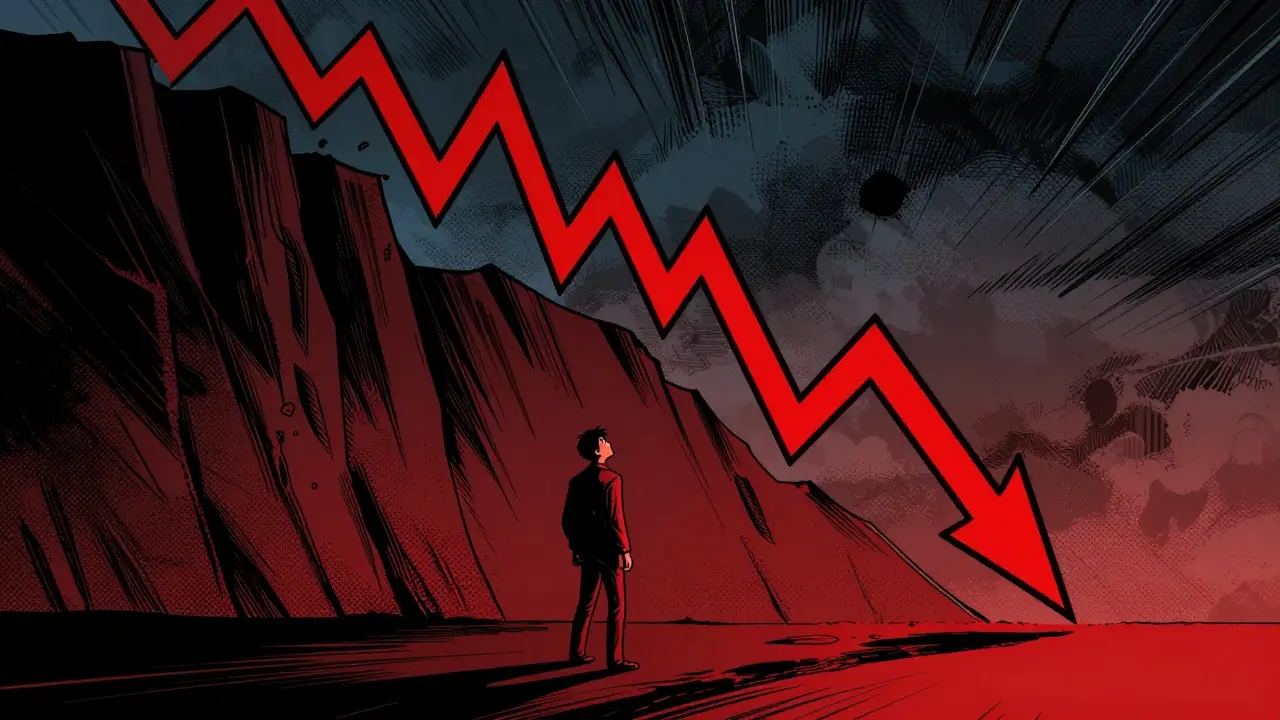
How Long Do Crypto Bear Markets Last? Historical Data & Future Trends
The Short Answer: How Long Does It Actually Take?
If you are staring at a red screen and wondering when the pain will end, here is the hard truth based on history. A typical cryptocurrency bear market lasts between 9 and 14 months. The average sits right around 10 months. However, the shortest recorded crypto winters lasted only about 5 months, while the longest stretched to nearly 20 months.
But duration is only half the story. The real question isn't just how long the drop takes, but how long it takes to get your money back. Historically, Bitcoin needs roughly 1,000 days (about 2.7 years) to fully recover from a major bear market crash and hit new all-time highs. That means even after the "bear market" technically ends, you might still be waiting for two more years before your portfolio looks like it did at the peak.
This timeline isn't random. It follows a predictable rhythm tied to Bitcoin's supply mechanics. Understanding this rhythm helps you stop panic-selling and start planning. Let’s break down exactly why these cycles happen, what the data says, and how the game is changing in 2026.
The 4-Year Cycle: Why Bear Markets Happen
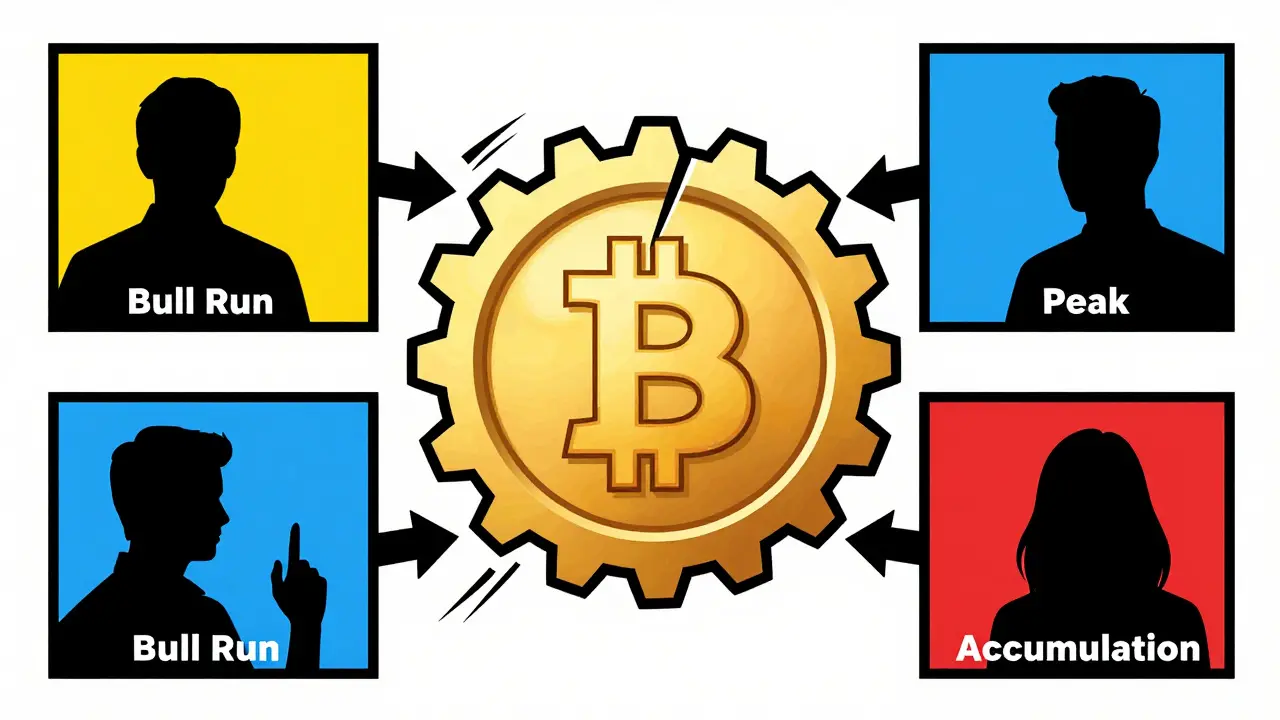
You can’t understand the length of a bear market without understanding the engine that drives it: the Bitcoin Halving. Every 210,000 blocks, or roughly every four years, the reward for mining new Bitcoin is cut in half. This reduces the new supply entering the market.
Historically, this creates a reliable loop:
- Pre-Halving Bull Run: Prices rise as anticipation builds.
- Post-Halving Peak: Prices surge to new highs, often 12-18 months after the halving.
- The Crash (Bear Market): Profit-taking, macroeconomic pressure, and reduced speculative interest cause prices to drop 20% or more from their peak.
- The Accumulation Phase: Prices stabilize and slowly grind upward until the next cycle begins.
In the past three cycles, the bear market phase-the period where prices decline significantly from their peak-has consistently lasted between 13 and 14 months. For example, following the massive bull run of 2017, Bitcoin peaked in December 2017. The subsequent bear market didn't truly bottom out until late 2018 or early 2019, lasting approximately 13 months. Similarly, the bear market following the 2021 peak lasted from November 2021 to January 2023, a span of 14 months.
This pattern suggests that if we look at the April 2024 halving, any bearish correction associated with the post-halving volatility would historically align with a bottoming period somewhere in mid-to-late 2025. By May 2026, we are well past that theoretical window, which brings us to a critical shift in the market structure.
Historical Data: What the Past Three Cycles Tell Us
Looking at raw numbers removes the emotion from the equation. Here is how the last three major bear markets performed:
| Cycle Period | Peak Date | Bottom Date | Duration | Max Drawdown |
|---|---|---|---|---|
| 2013-2015 | Nov 2013 | Jan 2015 | ~14 Months | ~84% |
| 2017-2018 | Dec 2017 | Dec 2018 | ~12 Months | ~74% |
| 2021-2023 | Nov 2021 | Jun 2023 | ~19 Months | ~76% |
A few things stand out immediately. First, the severity is brutal. In every case, Bitcoin lost over 70% of its value from peak to trough. If you bought at the top, you needed a 300% gain just to break even. Second, the duration has been creeping up. The 2021-2023 bear market was notably longer and choppier than previous ones, lasting nearly 1 year and 8 months according to some metrics. This extension was driven by external factors like rising interest rates and the collapse of major stablecoins and exchanges.
However, there is a silver lining in the recovery speed. While the drop takes a year, the initial bounce back is often violent. After the 2018 bottom, Bitcoin rallied sharply within months. The danger lies in the "dead cat bounce"-a temporary recovery that tricks traders into thinking the bear market is over, only for prices to fall again. True recovery, defined as surpassing the previous all-time high, took roughly 2.5 to 3 years in each cycle.
Crypto vs. Traditional Markets: A Speed Comparison
People often compare crypto crashes to stock market crashes. They are similar in psychology but vastly different in timing. A traditional bear market in the S&P 500, defined as a 20%+ decline, averages about 1 to 2 years. The longest traditional bear market on record lasted nearly 3 years (1946-1949).
Crypto bear markets are shorter but deeper. The average crypto bear market of ~10 months is less than half the length of a typical stock market bear market. However, the depth of the decline is far greater. The S&P 500 dropped 25% in its 2022 bear market. Bitcoin dropped 76% in its equivalent period.
This volatility creates a unique dynamic. In traditional finance, "time in the market" beats "timing the market." In crypto, timing matters more because the drawdowns are so severe. Holding through a 75% drop requires immense psychological resilience. Most retail investors fail this test. Data from Kraken’s behavioral finance reports shows that 68% of retail traders exit positions prematurely during bear markets, locking in losses just before the inevitable rebound.
Furthermore, liquidity behaves differently. In a bull market, crypto has massive volume, allowing large trades without moving the price much. In a bear market, liquidity dries up. This makes price swings sharper and more unpredictable. A single large sell order can tank the price further, creating a feedback loop of fear.
Why the Next Bear Market Might Be Different
We are now in a new era. The data from 2013-2023 is historical context, but it may not predict the future perfectly. Several structural changes are reshaping how long bear markets last in 2026 and beyond.
Institutional Adoption: The entry of BlackRock, Fidelity, and other giants via Spot Bitcoin ETFs has changed the game. Institutions don't panic sell like retail traders. They accumulate. During Q3 2024 alone, BlackRock’s ETF accumulated thousands of BTC. This steady buying pressure acts as a floor under the price, potentially shortening the duration of future bear markets. Analysts at JPMorgan predict that increased institutional involvement could shrink bear market durations to 6-8 months within five years.
Regulatory Clarity: Uncertainty prolongs bear markets. When regulators threaten bans or sue exchanges, capital flees. With frameworks like MiCA in Europe and clearer guidance from the SEC in the US, the regulatory overhang is lighter. This doesn't eliminate risk, but it removes one of the primary drivers of prolonged downturns.
Market Correlation: Bitcoin is no longer an isolated asset. Its correlation with the S&P 500 rose from 0.28 in 2020 to 0.67 in 2024. This is a double-edged sword. It means crypto benefits from traditional market rallies, but it also means crypto gets dragged down during broader economic recessions. If the global economy enters a deep recession, crypto bear markets could last longer than the historical 10-month average because they will be tied to macroeconomic distress rather than just internal cycle dynamics.

Surviving the Winter: Practical Strategies
Knowing that a bear market lasts ~10 months doesn't help you sleep at night unless you have a plan. Here is how experienced investors navigate this period:
- Dollar-Cost Averaging (DCA) Down: Instead of trying to catch the exact bottom, set up automatic buys every week or month. During the 2022 bear market, investors who DCA’d into Bitcoin at an average of $18,000 saw massive returns when prices recovered. This removes the emotional burden of timing.
- Stablecoin Reserves: Keep 3-6 months of living expenses in cash or stablecoins outside of risky assets. This ensures you never have to sell your crypto holdings at a loss to pay rent. It also gives you dry powder to buy when fear is highest.
- Ignore the Noise: Social media sentiment is a contrarian indicator. When terms like "crypto winter" trend heavily-as they did in June 2022 with over 18,000 daily mentions-it often signals a market bottom. Fear is your friend; it means sellers are exhausted.
- Avoid Leverage: This is the #1 killer. In 2022, 87% of liquidations affected users with 10x or higher leverage. Bear markets are designed to wipe out leveraged positions. Stick to spot holdings.
Education is also key. Use the downtime to learn. Binance Academy and other platforms have expanded their educational modules significantly. Understanding on-chain metrics like Net Unrealized Profit/Loss (NUPL) or MVRV can help you identify when the market is oversold, giving you confidence to hold or buy.
FAQ: Common Questions About Bear Market Duration
What defines the official start and end of a crypto bear market?
A bear market is formally defined as a decline of at least 20% from recent highs. It starts when the price breaks below key support levels and momentum turns negative. It ends when the market establishes a new base and begins a sustained uptrend, often confirmed by breaking above previous resistance levels. However, many analysts use the Bitcoin Halving cycle as a broader framework, considering the period between the post-halving peak and the next cycle's accumulation phase as the bear market window.
Is the current market in a bear market in 2026?
Determining the current status requires looking at price action relative to all-time highs. If Bitcoin is trading significantly below its previous peak and showing low volume, it may be in a corrective or bearish phase. However, given the April 2024 halving, historical patterns suggest we should be in a late-stage accumulation or early bull phase by mid-2026. Always check current technical indicators like the Relative Strength Index (RSI) and moving averages for real-time confirmation.
How long does it take for Bitcoin to recover after a bear market?
While the bear market itself lasts 9-14 months, full recovery to new all-time highs typically takes about 2.5 to 3 years from the peak. This includes the bear market duration plus the subsequent bull run. For example, after peaking in 2017, Bitcoin didn't surpass that level until late 2021, a gap of roughly 4 years including the intermediate cycles.
Do altcoins follow the same bear market timeline as Bitcoin?
Generally, yes, but altcoins are more volatile. They tend to crash harder and faster than Bitcoin during the onset of a bear market and recover slower. Many altcoins lose 90% or more of their value and never return to their previous highs. Bitcoin is the market leader; if Bitcoin is struggling, altcoins usually perform worse.
Can institutional investment shorten future bear markets?
Yes, likely. Institutional investors like pension funds and ETF providers operate on longer time horizons and do not panic sell. Their consistent buying pressure provides a price floor, reducing the depth and duration of declines. Analysts predict that as institutional ownership grows, bear markets could become shorter (6-8 months) and less severe (smaller percentage drops).





honestly this is such a relief to read. i was staring at my portfolio yesterday feeling like i lost my mind buying the top. knowing there is a historical pattern helps me breathe easier. thanks for breaking it down simply.
the data on recovery times is often overlooked by retail traders who expect immediate bounce backs. it is crucial to understand that the 1000 day average includes the accumulation phase which can be incredibly boring and psychologically taxing. most people sell right before the real move starts because they cannot handle the stagnation after the initial dead cat bounce.
historical data is useless when the fundamental structure of the market changes completely. institutions are not just participants they are now the liquidity providers and their risk models are entirely different from retail degens. expecting the same 4 year cycle to play out identically is naive at best and dangerous at worst. the correlation with equities means we will likely see longer bear markets tied to macroeconomic cycles rather than halving events.
nupl metrics during the 2022 bottom showed extreme capitulation but the rsi divergence on weekly charts was even more telling. smart money was accumulating while sentiment was at rock bottom. if you look at mvrv z-score you can clearly see the value zone entry points were wide open for those willing to deploy capital systematically instead of emotionally reacting to red candles.
india is seeing massive adoption regardless of what us regulators say. our youth are entering crypto in huge numbers and this demand floor is going to change everything. the old cycles might not apply here. 🇮🇳
you are all ignoring the elephant in the room which is that leverage is still rampant across derivatives markets. until exchange-traded products dominate spot volume significantly more than they do now the volatility will remain excessive. the idea that institutions have stabilized the market is a comforting lie told by people who want to hold their bags through another 70 percent drawdown. history repeats itself precisely because human psychology does not change merely because blackrock enters the chat.
i feel your pain on the leverage comment. it is terrifying to watch liquidations cascade. but remember that every crash is an opportunity for those who stayed disciplined. i stuck to my dca plan through the 2022 winter and it saved my sanity. keep your head up and focus on your long term goals not the daily noise.
one must consider the philosophical aspect of holding through uncertainty. the market tests your conviction not your intelligence. when everyone else is selling in fear you must find the inner strength to recognize value where others see only ruin. this mental fortitude is cultivated over time through repeated exposure to volatility and learning to detach self worth from portfolio performance.
oh sure just sit there and smile while losing half your net worth 🙄. easy for you to say when you probably bought at the bottom or have infinite patience. meanwhile the rest of us are watching our life savings evaporate in real time. good luck with your 'mental fortitude' while i try to pay rent 💀.
do not trust the institutional narrative. they are manipulating the supply via etfs to create artificial floors while slowly offloading to retail. the correlation with sp500 is engineered to make you think it is safe when in reality it is just tethered to federal reserve policy. wake up sheeple.
hey guys just wanted to add that stablecoin reserves are super important. i kept 50 percent in usdc during the last dip and it allowed me to buy btc at $15k. it feels weird having cash on the sidelines but it gives you so much power. dont forget to take profits too! 🚀💰
i really appreciate the section on avoiding leverage. so many newbies get wrecked trying to trade the dips. sticking to spot is the only way to survive these cycles without getting margin called out of existence. great reminder for everyone here.
actually i disagree with the notion that bear markets are getting shorter. the increasing complexity of the financial system means contagion risks are higher. if a major bank fails again crypto could be locked down for regulatory reasons for years. assuming smooth sailing based on past four year cycles is risky.
let us discuss how education plays a role here. many investors panic because they do not understand the technology behind bitcoin. taking time to learn about hash rate and mining economics can provide confidence during downturns. i started hosting local meetups to teach basics and it helped our community stay strong.
it is imperative to note that the psychological impact of a seventy percent drawdown is profound and often underestimated by quantitative analysts. the human brain is wired to avoid loss twice as strongly as it seeks gain therefore rational decision making becomes nearly impossible during peak fear periods. one must establish strict rules prior to entering any position to mitigate emotional interference.
this article is full of holes. the author ignores the fact that altcoins never recover to previous highs in nominal terms relative to btc dominance. most alts are dead on arrival after a bear market. focusing solely on btc is misleading for anyone holding a diversified portfolio. typical survivorship bias.
sarcasm aside the point about altcoins is valid but let us not pretend btc is immune to macro shocks either. the correlation spike mentioned in the post is scary. if the stock market crashes hard crypto goes with it. we are no longer the rebel asset class we used to be.
i have been tracking the moving averages closely. the two hundred week ma has historically been a strong support level. if we hold above that line the medium term trend remains intact despite short term volatility. patience is key.
it is important to approach this topic with respect for all viewpoints. whether one believes in the four year cycle or sees structural changes the key takeaway should be risk management. diversifying across asset classes and maintaining emergency funds ensures that crypto investments do not jeopardize financial stability.
stay focused. ignore the noise. buy the dip. repeat.
omg i cant believe i missed the bottom again. i always seem to buy just before it drops further. maybe i should just give up lol. but seriously the dca strategy sounds less stressful than trying to time it perfectly.
it is truly inspiring to see such detailed analysis shared openly. knowledge is power and sharing it helps the entire community grow stronger together. thank you for providing valuable insights into market dynamics.
typical fluff piece. nobody wants to hear about how long it lasts they want to know when to sell. also the grammar in some comments here is atrocious. american english is dying.
foreign influence in crypto markets is undermining national sovereignty. we need stricter regulations on offshore exchanges operating within our borders. protect american interests first.