What is Bulla (BULLA) Crypto? The Hasbulla Meme Coin Explained
You’ve probably seen the short videos. Hasbulla Magomedov is an internet celebrity known for his distinctive appearance and playful personality in the crypto community. Now, you’re seeing a coin named after him: Bulla (BULLA) is a cryptocurrency meme token on the BNB Chain themed around Hasbulla Magomedov. But what exactly is this coin? Is it just another joke, or is there real money to be made? More importantly, is it safe?
If you are looking for the next Dogecoin or Shiba Inu, you need to know that Bulla crypto operates in a completely different league. It is a small-cap, high-risk asset driven entirely by hype, community sentiment, and the popularity of its mascot. There is no complex technology here. There is no revolutionary DeFi protocol. It is pure "meme fuel."
The Origin Story: A Token Built on Personality
Unlike Bitcoin, which was created to solve a financial problem, or Ethereum, which aims to decentralize computing, BULLA exists for one reason: entertainment. The project markets itself as the "king of memes" and the official mascot of the bull market. This branding is intentional. It ties the token’s identity directly to the concept of rising prices (a "bull" market) and the viral appeal of Hasbulla.
The token launched on the BNB Chain is the blockchain network formerly known as Binance Smart Chain, used for fast and low-cost transactions. This choice is strategic. BNB Chain is the home base for most major meme coins because transaction fees are fractions of a cent, allowing traders to buy and sell quickly without paying high Ethereum gas fees. When the token first appeared, it gained traction through listings on centralized exchanges like MEXC Global and KuCoin, alongside decentralized trading on PancakeSwap.
The narrative behind BULLA is simple: it blends meme culture with virality. Exchanges describe it as having a "cult-like community." In the world of crypto, community is often more valuable than code for meme tokens. If people believe in the character and the joke, they buy the token. If the joke gets old, the price drops. That is the entire economic model.
Tokenomics: Who Holds the Supply?
To understand the risk, you have to look at who owns the coins. The maximum supply of BULLA is set at 1 billion tokens. However, the distribution reveals significant centralization risks that every investor should note before buying.
| Allocation Category | Percentage | Risk Factor |
|---|---|---|
| Hasbulla Wallet | 20% | High concentration; single seller can dump price |
| Liquidity & Marketing | Estimated 35% | Standard for meme coins, but unverified |
| Circulating Supply | Varies (See below) | Data inconsistency across exchanges |
A critical detail from early project documentation states that 20% of the total supply-200 million BULLA tokens-is allocated directly to Hasbulla’s wallet. This is a massive amount of control. If Hasbulla or his team decides to sell even a fraction of these tokens, it could crash the price instantly. This is not a decentralized treasury; it is a celebrity-backed asset where one person holds a whale-sized bag.
Furthermore, data on circulating supply is wildly inconsistent. Some aggregators report only 55 million tokens in circulation, while others show 1 billion. This discrepancy suggests that either tokens are being released gradually, or data providers are tracking different contract versions. Always check the live supply on-chain rather than trusting a static number on an exchange homepage.
Price Volatility and Market Performance
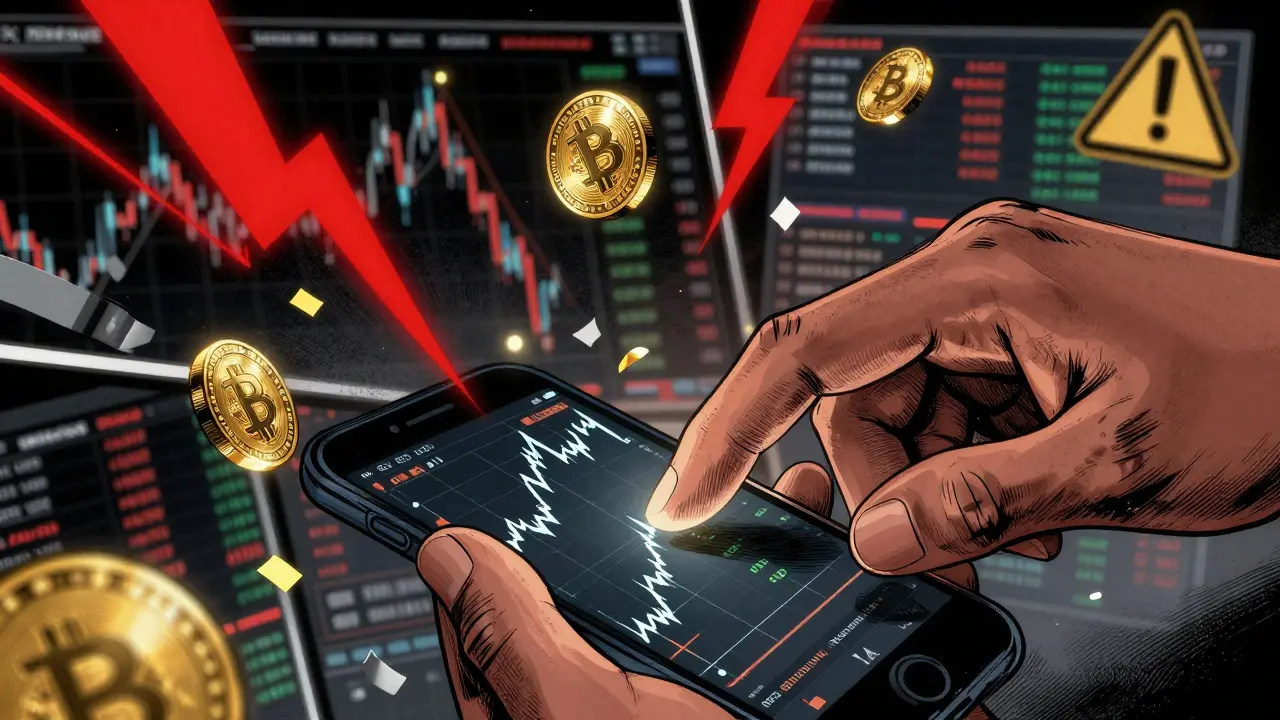
Let’s talk numbers, because that’s why you’re here. As of mid-2026, BULLA has shown extreme volatility. Prices have fluctuated between $0.005 and $0.024 depending on the exchange and time of day. This isn’t a stable investment; it’s a rollercoaster.
Technical analysis tools like CoinCodex classify BULLA as having "Extremely High" volatility, measured at over 48%. For context, Bitcoin rarely exceeds 3% daily volatility. With BULLA, you can wake up to a 20% gain or a 30% loss overnight. The Relative Strength Index (RSI) often hovers in neutral or bearish territory, indicating that the token spends more time correcting than trending upward.
Market capitalization figures also vary drastically. One day, Binance might list a market cap of $24 million, while Kraken shows $1.6 million. Why? Because liquidity is fragmented. Most of the trading volume happens on specific pairs (like BULLA/USDT on MEXC or PancakeSwap), and smaller exchanges may not reflect the true global price immediately. This arbitrage gap means you might see a "high" price on one site that you cannot actually execute at.
How to Buy BULLA: A Step-by-Step Guide
If you decide to take the risk, you need to know how to do it safely. There are two main ways to acquire BULLA: through a centralized exchange (CEX) or a decentralized exchange (DEX).
- Centralized Exchange (Easiest): Platforms like KuCoin, MEXC, or Kraken list BULLA. You create an account, complete KYC (Know Your Customer) verification, deposit USDT or USD, and search for the BULLA trading pair. This is the safest route for beginners because the exchange handles the wallet security.
- Decentralized Exchange (Advanced): To buy on PancakeSwap is a leading decentralized exchange on the BNB Chain for swapping tokens., you need a non-custodial wallet like MetaMask or Trust Wallet. Fund it with BNB (the native currency of the chain). Go to PancakeSwap, paste the official BULLA contract address, and swap BNB for BULLA.
Warning: Never copy a contract address from a random YouTube comment or Twitter DM. Scammers create fake BULLA tokens with similar names. Always verify the address on official project social media channels or reputable trackers like CoinMarketCap.
The Solana Confusion: Are There Two BULLAs?
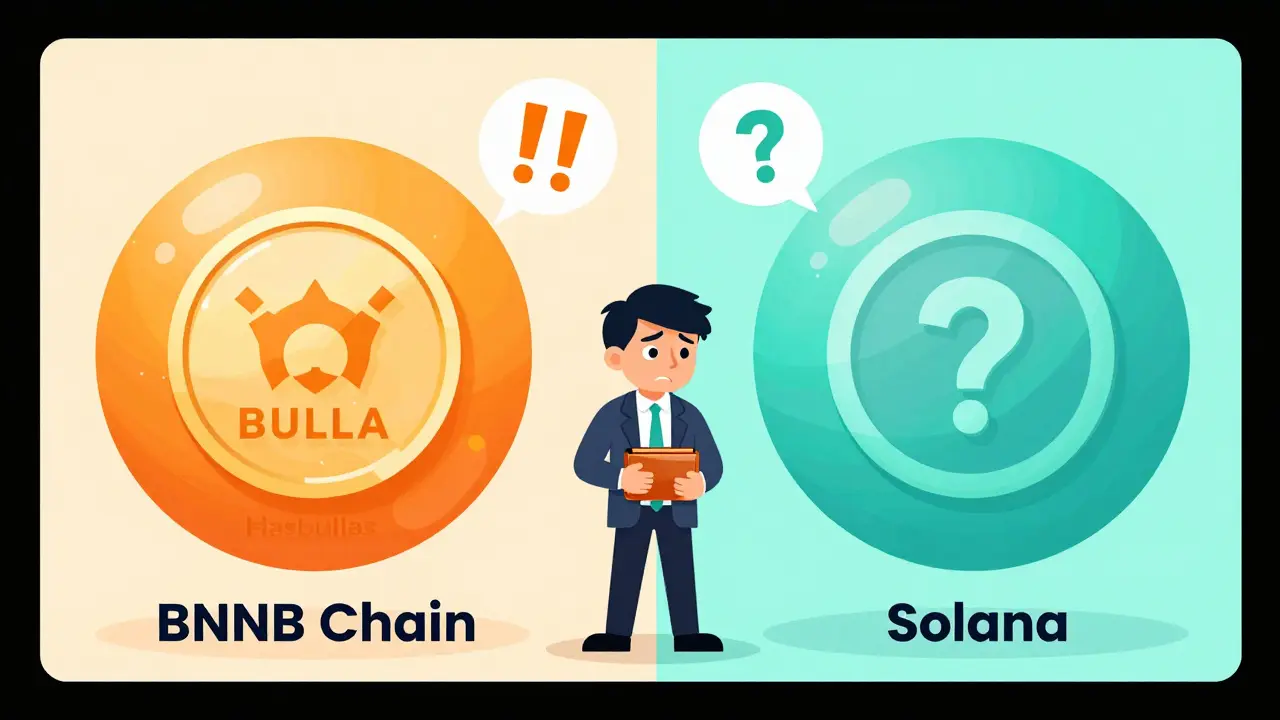
This is a critical trap for new investors. While the primary Hasbulla-themed BULLA lives on the BNB Chain, there is also a token with the ticker "BULLA" on the Solana is a high-performance blockchain platform known for speed and low costs. network. These are two completely different assets with different contract addresses, different communities, and different values.
If you intend to buy the Hasbulla meme coin, ensure your wallet is set to the BNB Chain (BSC). If you accidentally send funds to the Solana version, or buy the wrong token thinking it’s the same, you will lose money. Always double-check the network icon next to the token name in your portfolio.
Is BULLA a Good Investment?
We need to be brutally honest here. BULLA is not an investment in the traditional sense. It does not generate revenue, pay dividends, or provide utility services. Its value is derived solely from speculation and brand recognition.
Pros:
- Low Entry Cost: With prices under $0.03, you can buy large quantities of tokens with a small amount of capital.
- Viral Potential: Hasbulla remains a popular figure. Any new video or endorsement could spike interest.
- Exchange Listings: Presence on major platforms like KuCoin and MEXC provides legitimacy compared to unknown pump-and-dump schemes.
Cons:
- Centralized Control: 20% of supply held by one entity creates a "rug pull" risk if that entity sells aggressively.
- No Utility: Once the hype fades, there is nothing left to support the price.
- Regulatory Risk: Celebrity-endorsed tokens face increasing scrutiny from regulators worldwide. If authorities crack down on undisclosed endorsements, BULLA could be delisted.
If you buy BULLA, treat it like a ticket to a lottery, not a savings account. Only allocate money you are prepared to lose entirely. Do not leverage borrowings to buy meme coins.
Who created the Bulla (BULLA) token?
The exact founding team is not publicly disclosed in a formal whitepaper. However, the token is heavily associated with internet celebrity Hasbulla Magomedov, who receives a 20% allocation of the total supply. The development appears to be community-driven with marketing focused on his persona.
Which blockchain is BULLA built on?
The primary Hasbulla-themed BULLA token operates on the BNB Chain (formerly Binance Smart Chain). It uses the BEP-20 token standard. Be careful not to confuse it with unrelated tokens using the same ticker on other networks like Solana.
Is BULLA a scam?
It is listed on reputable exchanges like KuCoin, MEXC, and Kraken, which suggests it is not a classic "honeypot" scam where you cannot sell. However, it carries high speculative risk due to centralized supply distribution (20% to Hasbulla) and lack of fundamental utility. It is a high-risk meme asset, not a guaranteed investment.
What is the maximum supply of BULLA?
The maximum total supply of BULLA is 1 billion tokens. Circulating supply varies by data source, ranging from 55 million to 1 billion, indicating potential discrepancies in reporting or gradual token releases.
Can I buy BULLA on Binance?
Availability changes frequently. While data snapshots show BULLA trading on Binance with significant volume, always check the current listing status on the exchange directly. If it is not listed on Binance, you can trade it on KuCoin, MEXC, or via PancakeSwap on the BNB Chain.