
Social Recovery with Account Abstraction: How to Secure Your Crypto Wallet
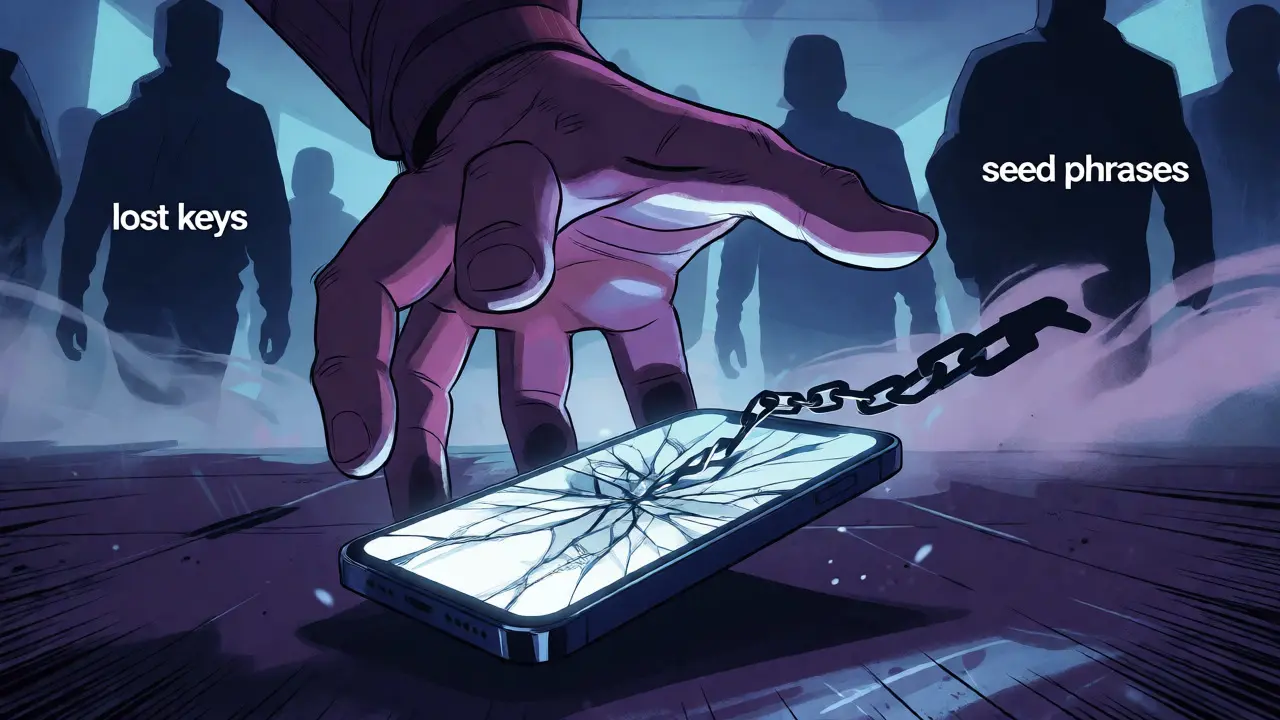
Imagine losing your phone, and with it, the only copy of your private key. For decades, this was a death sentence for cryptocurrency holdings. You didn't just lose access; you lost the assets forever. Today, that scenario is changing thanks to Account Abstraction, a technology that decouples control of funds from rigid cryptographic keys, enabling smart contract-based wallets with customizable security logic. At the heart of this shift is Social Recovery, a mechanism allowing trusted friends or family to help restore access to your wallet if you get locked out. This isn't just a convenience feature; it's the missing link needed to bring blockchain to billions of users who aren't ready to manage complex seed phrases.
The Problem with Traditional Keys
Traditional cryptocurrency wallets rely on Externally Owned Accounts (EOAs). These are simple pairs of public and private keys. If you lose the private key, no one can help you. There is no "forgot password" button in Bitcoin or Ethereum. Data from Chainalysis suggests that approximately 20% of all Bitcoin-worth billions-is permanently inaccessible because owners lost their keys. That’s a massive failure rate for any financial system.
Most new users cite managing the 12 or 24-word seed phrase as their biggest anxiety. A study by Blockchain@USC found that 78% of newcomers worry about storing these words securely. People write them on paper, hide them in books, or save them in cloud notes, each method carrying its own risks of theft or loss. Social recovery solves this by shifting the burden from perfect memory to social trust.
How Account Abstraction Works
To understand social recovery, you first need to grasp Account Abstraction. In technical terms, this process separates user control from the execution layer of the blockchain. Instead of using a standard EOA, you use a smart contract account that acts like a programmable vault. This concept was formalized in ERC-4337, an Ethereum Improvement Proposal finalized in September 2021 and deployed on mainnet in March 2023.
Here is the basic flow:
- UserOperation: When you want to send money, you create a UserOperation instead of a traditional transaction.
- Bundlers: Special nodes collect these operations and submit them to the network.
- EntryPoint Contract: This smart contract verifies the operation and executes it.
- Paymasters: Optionally, these contracts can pay gas fees for you, making the experience seamless.
This architecture allows developers to write custom rules into your wallet. One of those rules is social recovery.
Setting Up Social Recovery
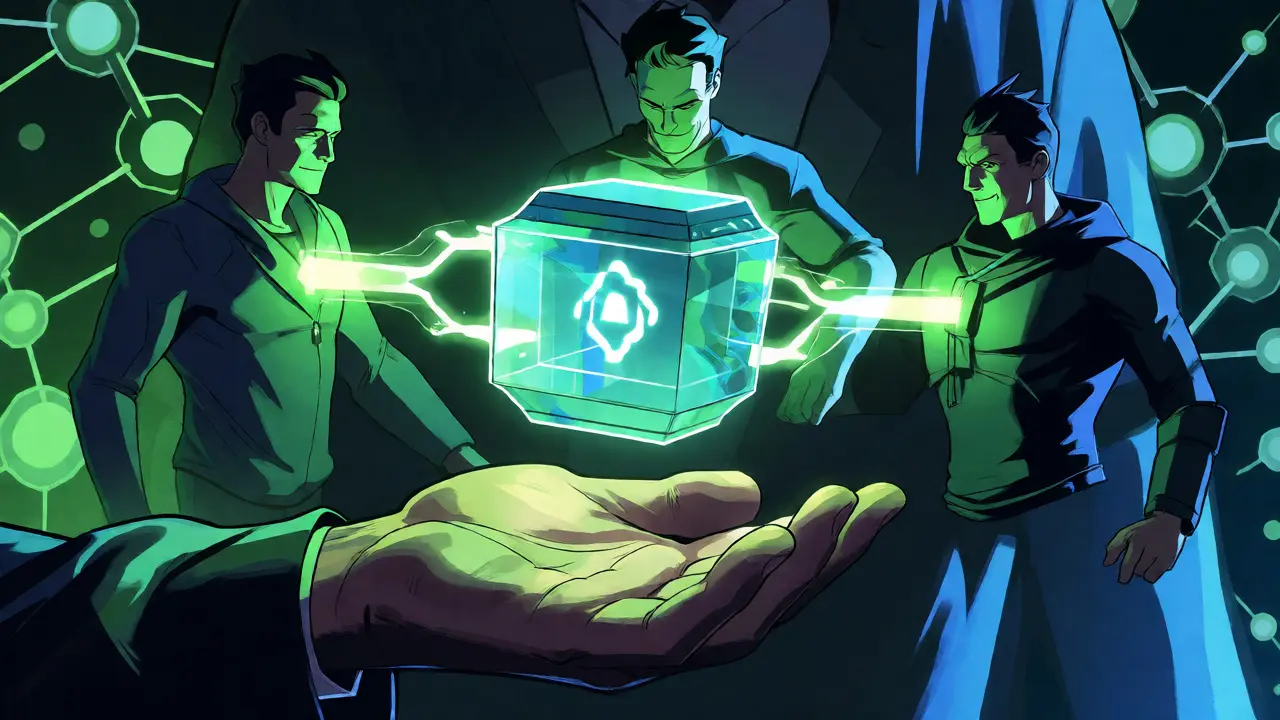
Social recovery works by designating "guardians." These are trusted contacts-friends, family, or even separate devices you own-who hold the power to help you regain access. The setup process typically takes 8-12 minutes and involves selecting 3-5 guardians. Verification happens through multiple channels, such as email, SMS, or signing a message with their own wallet.
When you lose access, you initiate a recovery request. Your guardians receive a notification and sign a transaction approving the change of ownership to a new key. Most implementations use an M-of-N threshold. For example, Argent uses a 2-of-3 rule, meaning two out of three designated guardians must approve the recovery. This prevents a single malicious guardian from stealing your funds.
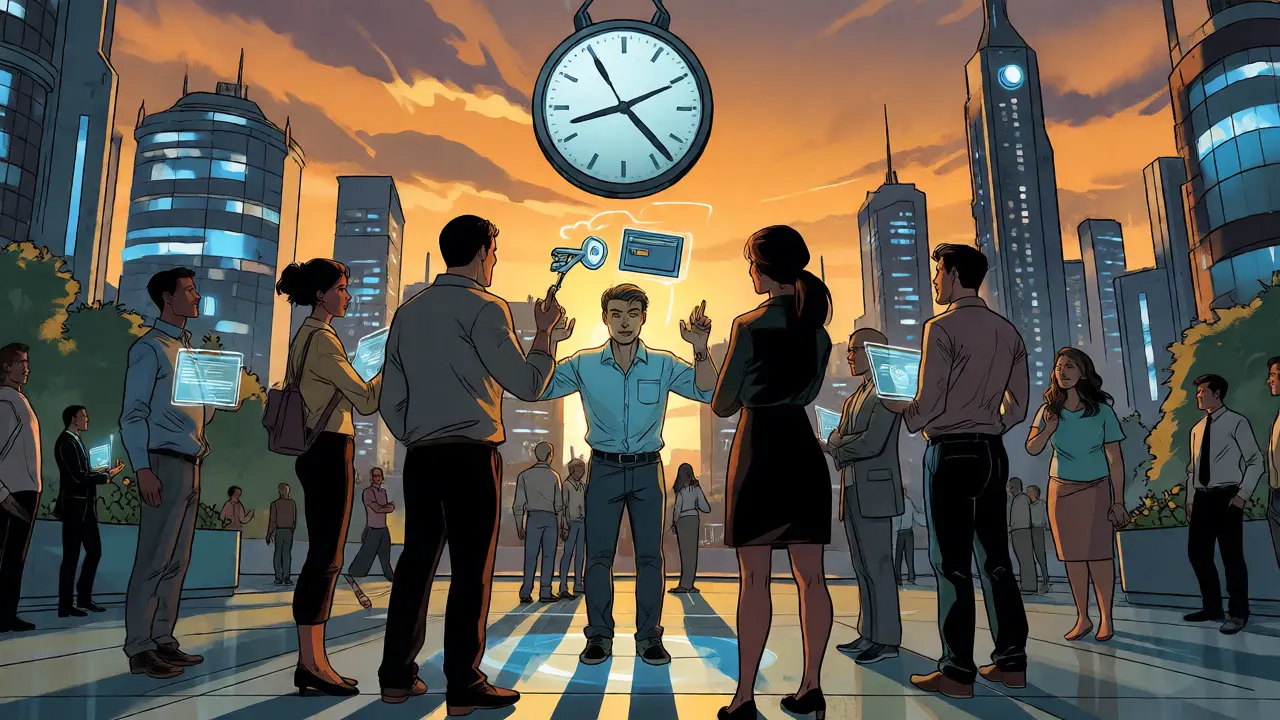
A critical safety feature is the timelock. After guardians approve the recovery, there is a waiting period, usually between 24 and 72 hours. During this time, you can cancel the recovery if it wasn't you who initiated it. This protects against social engineering attacks where someone might trick your guardians into signing off on a theft.
| Feature | Traditional EOA | Centralized Exchange | Smart Contract Wallet (Social Recovery) |
|---|---|---|---|
| Custody | Self-custody | Custodial | Self-custody |
| Recovery Option | None (Permanent Loss) | KYC/Support Ticket | Guardian Approval |
| Single Point of Failure | Private Key | Exchange Hack/Bankruptcy | Compromised Guardians (Mitigated by Timelock) |
| Gas Fees | User Pays | Often Free/Sponsored | User Pays or Paymaster Sponsored |
| Privacy | Pseudonymous | KYC Required | Pseudonymous |
Top Wallets Implementing Social Recovery
Several major players have integrated this technology. Argent is a leader in this space, boasting over 1.2 million monthly active users. It integrates deeply with Telegram and WhatsApp for identity verification, making the guardian selection process feel natural rather than technical.
Safe (formerly Gnosis Safe) offers more enterprise-grade features. It allows for complex multi-signature setups and integrates with corporate identity providers like Okta. This makes it ideal for business treasuries where institutional policies dictate who can act as a guardian.
On other chains, Starknet has implemented native account abstraction since November 2022. Its implementation allows for highly customizable recovery periods, ranging from 12 to 168 hours, giving users precise control over their security speed trade-offs.
Risks and Limitations
No system is perfect. Social recovery introduces new attack vectors. The primary risk is social engineering. If an attacker convinces enough of your guardians to sign a recovery transaction, they can steal your funds. Immunefi reported documented cases of this happening on Ethereum mainnet in Q2 2023. To mitigate this, always choose guardians who are tech-savvy enough to verify requests independently.
Another limitation is coordination friction. If your guardians are traveling or offline during an emergency, recovery can stall. Some users report frustration when trying to coordinate signatures across different time zones. Additionally, while Layer-2 solutions reduce costs, social recovery transactions still cost 15-25% more in gas than standard transfers due to the extra verification steps involved.
Security researcher Samczsun warned that poorly implemented social recovery can create false security perceptions. Early versions had vulnerabilities where a single compromised contact could potentially take over an account. Always audit the specific implementation details of your chosen wallet provider.
Why This Matters for Mainstream Adoption
Vitalik Buterin stated that social recovery is a necessity for making cryptocurrency usable by ordinary humans. We cannot expect everyone to manage cryptographic keys perfectly. By removing the fear of permanent loss, we lower the barrier to entry significantly.
Gartner predicts that 65% of new crypto users will adopt social recovery wallets by 2025. This trend is driven by emerging markets where smartphone loss rates exceed 30% annually. In these regions, relying on a physical piece of paper for backup is impractical. Social recovery turns human relationships into a security layer, aligning digital finance with how people actually live.
What happens if my guardians refuse to help me?
If guardians refuse to sign, you remain locked out unless you have another backup method. Some wallets allow you to add a "backup guardian" tier or use a hardware device as a secondary recovery path. It is crucial to communicate with your guardians beforehand so they understand their role.
Is social recovery safe from hackers?
It is generally safer than losing a seed phrase, but not immune to attacks. The main risk is social engineering targeting your guardians. Using a timelock gives you time to react if unauthorized recovery starts. Choose guardians who are difficult to impersonate and verify requests through independent channels.
Do I still need a seed phrase with account abstraction?
Not necessarily. With smart contract wallets, the seed phrase often serves as the initial admin key. Once guardians are set up, you can rotate this key. However, keeping a secure backup of the original deployment data is still recommended until you are fully comfortable with the guardian system.
How long does recovery take?
This depends on the wallet configuration. Typically, it requires the time it takes for guardians to sign plus a mandatory timelock period, which ranges from 24 to 72 hours. Starknet allows shorter windows down to 12 hours, while some enterprise setups may require longer delays for additional security checks.
Can I change my guardians later?
Yes, most smart contract wallets allow you to update your guardian list at any time. You simply sign a transaction adding or removing addresses. This flexibility lets you adapt your security circle as your life circumstances change, such as moving to a new city or gaining new trusted friends.

Finally!!! 😭😭😭 Someone gets it. I lost my seed phrase in a house fire and just cried for weeks... this tech is literally saving lives!! 🙏🙏🙏