
What Are Privacy Coins in Cryptocurrency? Monero, Zcash & Dash Explained
You probably heard that Bitcoin is anonymous. It’s not. It’s pseudonymous. There’s a massive difference. If you send Bitcoin to buy a coffee, the entire world can see the transaction amount and the wallet addresses involved on a public ledger. With enough digging, analysts can often link those addresses back to your real-world identity. This lack of true financial privacy is exactly why Privacy Coins exist.
Privacy coins are a specialized category of cryptocurrencies engineered specifically to obscure transaction details-sender, receiver, and amount-using advanced cryptographic techniques. Unlike standard blockchains where transparency is a feature, privacy coins treat opacity as a core function. They aim to replicate the anonymity of physical cash in the digital realm. But how do they actually work? And with regulators cracking down hard, are they still relevant in 2026?
The Core Problem: Transparency vs. Anonymity
Most people confuse "private" with "anonymous." In traditional banking, your bank knows who you are, but the merchant selling you shoes doesn’t. In most cryptocurrencies, everyone knows everything about the transaction except your name. This creates two major issues:
- Fungibility: If one Bitcoin was used for something shady, merchants might refuse it because they don’t want "dirty" money. Privacy coins make every unit identical and indistinguishable, ensuring true fungibility.
- Data Leakage: Your transaction history reveals your habits. Buying from a specific pharmacy or donating to a political group tells a story about you. Privacy coins hide this metadata.
These coins use math, not trust, to keep your data safe. They aren't just hiding your name; they are hiding the fact that a transaction even happened between two specific parties.
How Do Privacy Coins Work? The Tech Behind the Curtain
There isn't one single way to achieve privacy. Different projects use different cryptographic tools. Here are the three main methods you’ll encounter.
Ring Signatures (Monero)
Monero uses ring signatures. Imagine you sign a document, but your signature is mixed with nine other random signatures from strangers. To an observer, it looks like any of the ten people could have signed it. You can’t tell which one did. Monero mixes your input keys with decoy inputs from the blockchain. By default, it uses 11 decoys, meaning there’s only a 9% chance an outsider can guess the right sender. It also uses stealth addresses, which generate a unique, one-time address for every transaction so your main wallet address never appears on the chain.
Zk-SNARKs (Zcash)
Zcash takes a different approach using Zero-Knowledge Succinct Non-Interactive Arguments of Knowledge (zk-SNARKs). This is complex math that allows you to prove a transaction is valid without revealing any details about it. Think of it like proving you’re over 18 to a bouncer by showing a token, rather than handing over your ID card with your birthdate and address. Zcash offers optional privacy. You can choose "transparent" transactions (like Bitcoin) or "shielded" transactions (fully private). The catch? Most users pick transparent, which dilutes the network's overall privacy.
CoinJoin Mixing (Dash)
Dash originally called Darkcoin, uses a service called PrivateSend. This is essentially a CoinJoin protocol. Multiple users combine their transactions into one big batch. If Alice sends $10 and Bob sends $10, they get mixed together. When the funds leave the mix, no one knows which output belongs to whom. It’s less robust than Monero’s math but easier to understand and faster to process.
Comparing the Big Three: Monero, Zcash, and Dash
Not all privacy coins are created equal. Your choice depends on whether you prioritize absolute security, flexibility, or speed.
| Feature | Monero (XMR) | Zcash (ZEC) | Dash (DASH) |
|---|---|---|---|
| Privacy Method | Ring Signatures + Stealth Addresses | Zk-SNARKs (Zero-Knowledge Proofs) | CoinJoin (PrivateSend) |
| Default State | Mandatory (Always Private) | Optional (Transparent by Default) | Optional (PrivateSend toggle) |
| Anonymity Level | High (Untraceable) | Very High (If Shielded) | Moderate (Vulnerable to analysis) |
| Transaction Size | Large (~13 kB) | Medium | Small |
| Main Use Case | Cash-like anonymity | Selective disclosure | Fast payments with mixing |
Monero is the gold standard for pure anonymity. Because privacy is mandatory, every user contributes to the privacy set. There’s no "opt-out" that weakens the system. Zcash is powerful but fragile; if 97% of users stay transparent, the 3% who shield their transactions stand out more, potentially making them easier to track. Dash is great for everyday spending but offers weaker guarantees against sophisticated chain-analysis firms.

The Regulatory Tightrope Walk
If privacy is so good, why aren't these coins everywhere? Regulators hate them. Governments rely on tracking money flows to tax income and stop illicit finance. Privacy coins disrupt this surveillance model.
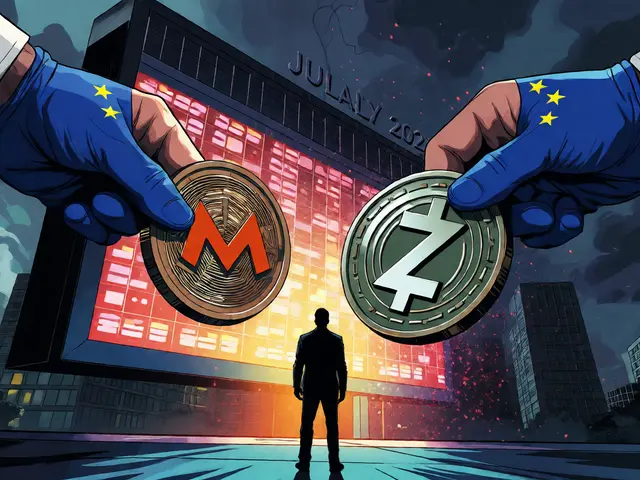
In recent years, we’ve seen significant pushback. Japan banned privacy coins entirely in 2018. South Korea restricted them in 2021. In Europe, the Markets in Crypto-Assets (MiCA) regulation treats them as high-risk assets, forcing exchanges to apply stricter due diligence. Many major centralized exchanges, including Binance in certain regions, have delisted Monero and Zcash to avoid regulatory headaches.
But here’s the nuance: Chainalysis reports that while privacy coins account for nearly 90% of crypto used in illicit activities, they represent a tiny fraction of total volume. Most usage is legitimate. Journalists in authoritarian regimes use them to receive funds without government interference. Activists use them to donate anonymously. Regular folks use them to prevent price discrimination based on their spending history.
Why Should You Care About Fungibility?
This is the concept most beginners miss. Fungibility means one unit of currency is interchangeable with another. A dollar bill from a drug deal is worth the same as a dollar bill from a paycheck. But with Bitcoin, if your coin has a "history" linked to a hack or a darknet market, a merchant might reject it. They fear liability.
Privacy coins restore true fungibility. Since no one knows where your XMR came from, it’s always acceptable. It behaves like cash. This makes privacy coins superior for actual commerce, not just speculation. If you want to buy goods without worrying about your past transactions haunting your current ones, privacy coins are the logical tool.
Future Outlook: CBDCs and the Rise of Surveillance
As Central Bank Digital Currencies (CBDCs) roll out globally, state-controlled financial surveillance is increasing. A digital dollar or euro could theoretically allow the government to see every purchase you make instantly. In this context, privacy coins serve as a counterbalance. They offer a decentralized alternative where the rules are coded, not dictated by policy.
Technologically, these networks are evolving. Monero recently implemented CLSAG signatures to reduce transaction sizes, addressing its biggest criticism (high fees/slow blocks). Zcash upgraded to Halo 2, speeding up verification times significantly. Despite regulatory pressure, adoption among privacy-conscious users continues to grow, driven by a global desire for digital civil liberties.
Frequently Asked Questions
Are privacy coins illegal?
No, owning and using privacy coins is generally legal in most jurisdictions, including the US, UK, and EU. However, regulations vary. Some countries restrict exchanges from listing them, and others require enhanced reporting. Always check local laws regarding taxation and exchange availability.
Can I mine privacy coins?
Yes. Monero is designed to be mined by regular CPUs using the RandomX algorithm, resisting ASIC dominance. Zcash and Dash can also be mined, though GPU mining is common for Zcash. Mining rewards are paid in the respective privacy coin.
Why are privacy coins harder to trade on major exchanges?
Regulators worry that privacy coins facilitate money laundering and tax evasion because transactions are opaque. To comply with anti-money laundering (AML) laws, many centralized exchanges voluntarily delist them or restrict deposits/withdrawals to maintain licenses.
Is Monero completely untraceable?
Monero is currently considered untraceable with existing technology. Its combination of ring signatures, stealth addresses, and confidential amounts makes it computationally infeasible to link senders and receivers. However, operational security errors by users (like reusing addresses improperly) can sometimes leak information.
What is the difference between transparent and shielded Zcash transactions?
Transparent Zcash transactions are visible on the blockchain, similar to Bitcoin. Shielded transactions use zk-SNARKs to hide the sender, receiver, and amount. Users must explicitly choose to send or receive via a shielded address (starting with 'z') to gain privacy.