
Perpetual Futures vs Quarterly Futures: Which Crypto Derivative Wins?
Imagine you’re holding a position in Bitcoin. You believe the price will climb over the next three months. Do you keep your trade open indefinitely, paying a small fee every eight hours to stay in the game? Or do you lock into a contract that expires on a specific date, avoiding those recurring costs but forcing you to make a move when the clock runs out?
This is the core dilemma for anyone trading crypto derivatives, which are financial instruments whose value is derived from an underlying asset like Bitcoin or Ethereum. The two most common vehicles for this exposure are perpetual futures and quarterly futures contracts. While they both let you bet on price movements without owning the actual coins, their mechanics differ wildly. Choosing the wrong one can eat away at your profits through hidden fees or force you into unwanted settlements.
The Core Difference: Time Is Money (or Not)
The defining feature of a perpetual future is that it has no expiration date. This sounds great until you realize how exchanges keep the contract’s price aligned with the real-world spot price of the asset. They use a mechanism called the funding rate.
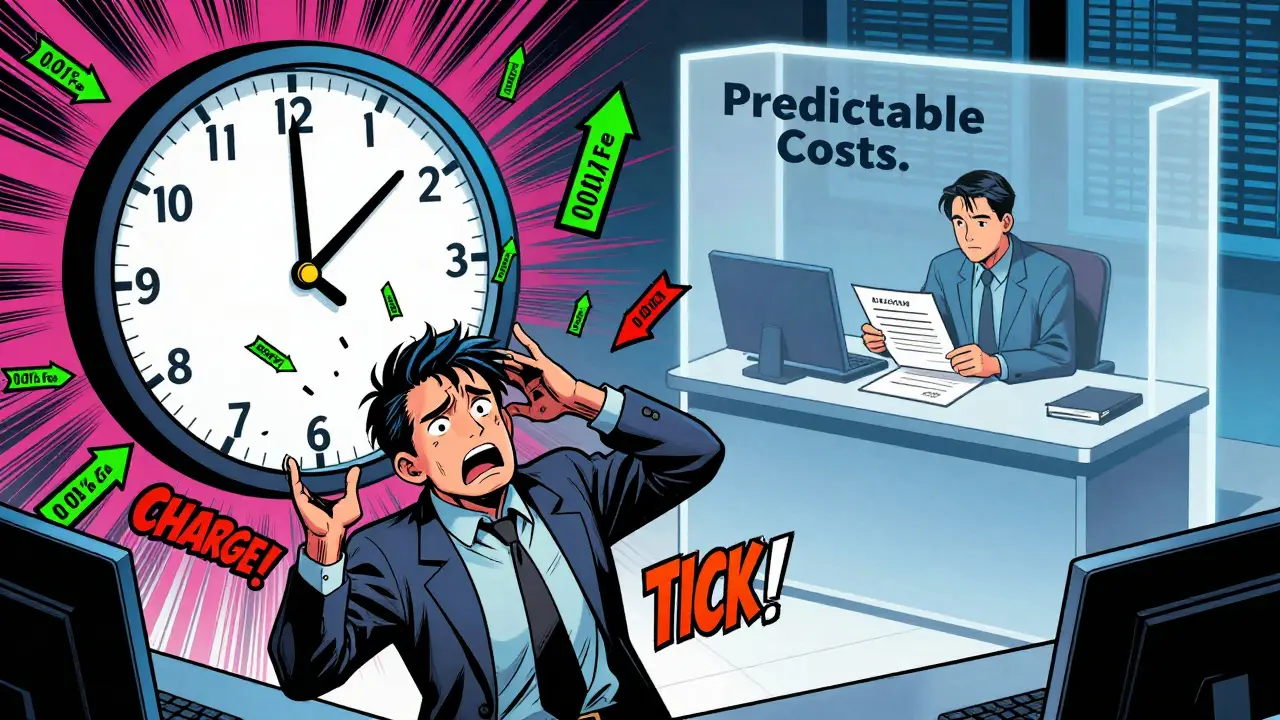
Every eight hours, traders on one side of the market pay traders on the other side. If the perpetual contract is trading higher than the spot price, long holders pay short holders. If it’s lower, shorts pay longs. This happens automatically. You don’t choose whether to pay; the market dictates it. For a day trader who closes positions within hours, these fees might be negligible. But if you hold a position for weeks, those eight-hour ticks add up fast.
Quarterly futures, on the other hand, have a hard stop. These contracts expire on the last Friday of March, June, September, and December. There are no funding fees. Instead, there is a settlement process. When the contract expires, it settles at the index price of the underlying asset. You either close your position before then, roll it over to the next quarter, or let it settle automatically.
Cost Structure: Hidden Fees vs. Zero Friction
Let’s talk numbers. Say you want to go long on Bitcoin for three months. With a perpetual swap, you might face a positive funding rate during a bull run. A typical rate could be 0.01% every 8 hours. That sounds tiny, but over 90 days, you’d pay roughly 13 times per month, totaling about 36-40 payments. At 0.01%, that’s nearly 0.4% just in funding fees, not including trading commissions.
If the market sentiment shifts and the funding rate turns negative, you might even get paid to hold the position. But relying on receiving funding is risky. In strong bull markets, longs consistently pay shorts, eroding gains.
With quarterly futures, the cost structure is transparent. You pay opening and closing commissions. That’s it. No hourly checks. No surprise deductions. For institutional hedgers or swing traders holding for months, this predictability is invaluable. It removes the variable cost of time from the equation.
| Feature | Perpetual Futures | Quarterly Futures |
|---|---|---|
| Expiration Date | None (Indefinite) | Last Friday of Mar/Jun/Sep/Dec |
| Funding Fees | Yes (Every 8 hours) | No |
| Liquidity | Very High (Dominant volume) | High (But lower than perps) |
| Settlement | Cash/Settle in Quote Currency | Physical or Cash Settlement |
| Best For | Day Trading, Short-Term Speculation | Swing Trading, Hedging, Long-Term Holds |
Liquidity and Slippage: Where the Market Lives
You can’t trade effectively without liquidity. In the crypto world, perpetual swaps dominate trading volume. On major exchanges like Binance or Bybit, perpetual contracts often account for 70-80% of total derivatives volume. Why? Because retail traders love the simplicity of "no expiry."
This massive volume means tight bid-ask spreads. You can enter and exit large positions with minimal slippage. Quarterly futures, while liquid, often have wider spreads. If you’re trading a smaller altcoin, the quarterly market might be thin. Trying to execute a $50,000 order on a low-volume quarterly contract could move the price against you significantly.
However, for major assets like Bitcoin and Ethereum, quarterly liquidity is robust enough for most strategies. Institutional players often prefer quarters because they align with traditional financial reporting cycles. This brings deeper pockets and more stable pricing around expiration dates.
Risk Management: Forced Discipline vs. Comfort Trap
There’s a psychological aspect to these contracts. Perpetual futures can create a "comfort trap." Since there’s no deadline, traders often neglect to take profits or cut losses, hoping the market will turn back in their favor. They forget to monitor funding rates, letting small fees bleed their margin over time. This leads to "bag holding" where a trader is stuck in a losing position for months, paying fees to keep it alive.
Quarterly futures enforce discipline. As the expiration date approaches, you must decide: close, roll, or settle. This forces active management. For many traders, this is a benefit. It prevents complacency. You can’t ignore a quarterly position; the calendar won’t let you.
Also, consider liquidation risks. Both contract types use leverage. If the market moves sharply against you, you get liquidated regardless of contract type. However, perpetual contracts can experience extreme volatility in funding rates during crashes. A sudden spike in negative funding can accelerate margin calls for long holders, creating a cascading effect known as a "long squeeze."">
Who Should Use What?
Your choice depends entirely on your trading horizon and goals.
- Day Traders & Scalpers: Stick to perpetuals. The high liquidity and lack of rollover hassle make them ideal for quick in-and-out trades. Funding fees are irrelevant if you’re closed by the end of the day.
- Swing Traders (Weeks): Compare the current funding rate. If it’s neutral or slightly negative, perps are fine. If it’s highly positive, consider quarters to avoid bleeding capital.
- Long-Term Investors & Hedgers: Choose quarterly futures. If you’re hedging a physical Bitcoin portfolio for six months, using perps would mean paying significant funding fees. Quarters offer a cleaner, cheaper hedge.
- Institutional Arbitrageurs: They often use both. They might buy spot Bitcoin and sell perpetuals to collect funding rates, or vice versa. This strategy requires sophisticated execution but can yield steady returns.

Practical Example: The 3-Month Hold
Let’s say Bitcoin is at $60,000. You expect it to hit $70,000 in three months. You have $10,000 to invest.
Scenario A: Perpetual Future You open a 1x long position. Over three months, the average funding rate is +0.03% every 8 hours. Total payments: 3 months * 30 days * 3 payments/day = 270 payments. Total cost: 270 * 0.03% = 8.1% of your position value. That’s $810 in fees alone. Bitcoin needs to rise by 8.1% just to break even on fees, before counting trading commissions.
Scenario B: Quarterly Future You buy a BTC-USD quarterly contract expiring in three months. Opening commission: ~0.02%. Closing commission: ~0.02%. Total cost: ~0.04%. That’s $4 in fees. Bitcoin only needs to rise slightly above zero to profit. The difference in efficiency is stark.
Common Pitfalls to Avoid
Don’t assume perpetuals are always more expensive. In bear markets, funding rates often flip negative. Shorts pay longs. If you’re longing into a crash, you might actually earn money on funding while losing on price. Always check the current rate before entering.
Avoid rolling quarters too frequently. Rolling involves closing one contract and opening another. Each step incurs commissions. If you plan to hold for six months, buying a quarterly contract now and rolling it once is usually cheaper than holding a perpetual with volatile funding.
Watch out for "expiry wicks." Near the expiration of quarterly futures, prices can become erratic as arbitrageurs adjust positions. If you’re trading very close to the last Friday of the month, be prepared for increased volatility.
What happens if I don't close my perpetual future?
Nothing happens immediately. You can hold it indefinitely as long as you have sufficient margin. However, you will continue to pay or receive funding fees every 8 hours. If your margin drops below the maintenance requirement due to price moves or accumulated fees, your position will be liquidated.
How do I know if funding rates are high?
Check the exchange's funding rate page. A rate above 0.01% per 8 hours is considered moderately high. Above 0.05% is very high and indicates strong bullish sentiment, meaning longs are paying heavily. Negative rates indicate bearish sentiment.
Can I convert a perpetual position to a quarterly one?
Not directly. You must close your perpetual position and open a new quarterly position. This incurs two sets of trading fees. Ensure the price difference between the two contracts justifies the transaction costs.
Why do quarterly futures expire on Fridays?
This aligns with traditional global financial markets. Most stock and commodity futures expire on Fridays. Crypto exchanges adopted this standard to attract institutional investors who are familiar with traditional expiry cycles.
Which contract has better leverage options?
Both typically offer similar maximum leverage (e.g., 100x on major pairs). However, perpetuals often have more flexible cross-margin modes. High leverage increases risk of liquidation regardless of contract type.