
Privacy Coin Delisting Wave from Crypto Exchanges: Why Monero, Zcash, and Dash Are Disappearing
Privacy Coin Availability Checker
Check Your Country's Privacy Coin Status
Privacy Coin Availability Report
Monero (XMR)
Zcash (ZEC)
Dash (DASH)
Alternative Options
Privacy coins are still available through alternative channels. Consider these options:
- Peer-to-peer platforms like LocalMonero (Monero only)
- Decentralized exchanges like Bisq or HodlHodl
- OTC (Over-the-Counter) desks for institutional trading
By the start of 2025, if you tried to buy Monero, Zcash, or Dash on Binance, Kraken, or Upbit, you’d find them gone. Not hidden. Not temporarily suspended. Delisted. Completely removed from trading pairs. This wasn’t a glitch. It wasn’t a market dip. It was a global purge - and it’s still rolling forward.
Why Are Privacy Coins Being Removed?
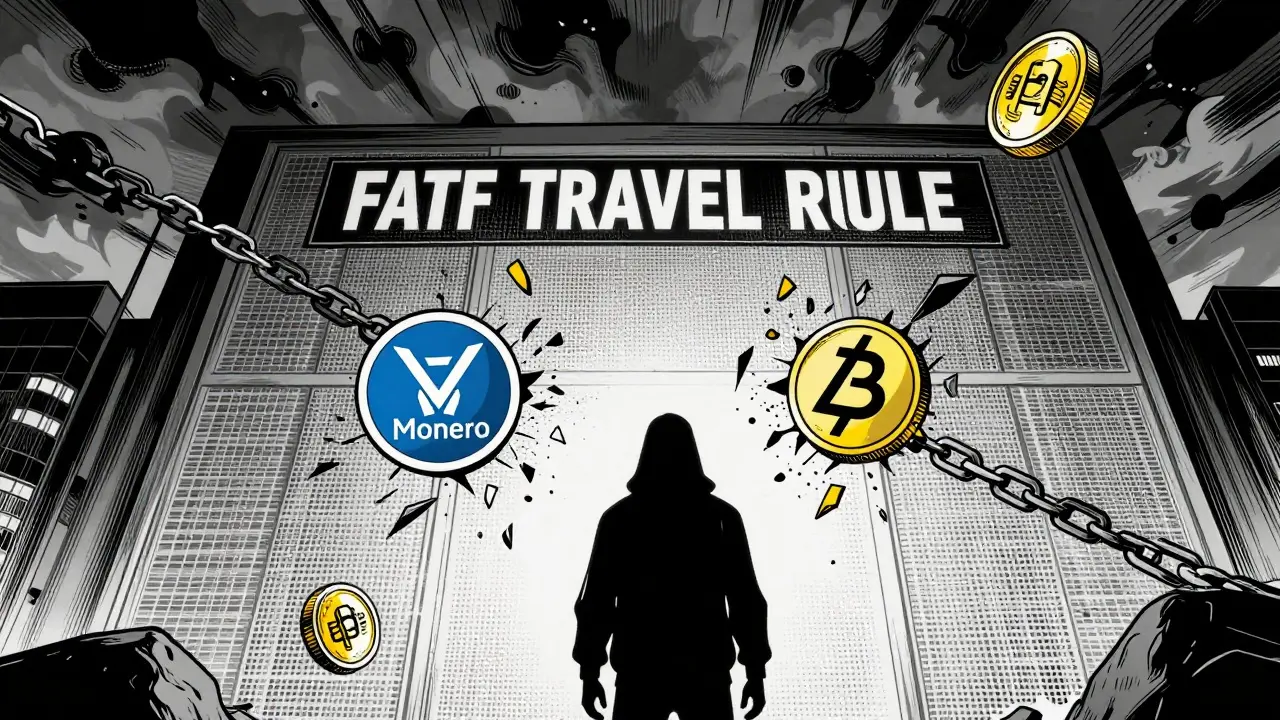
Privacy coins like Monero (XMR), Zcash (ZEC), and Dash (DASH) were designed to hide who sent what, to whom, and how much. That’s their whole point. Ring signatures, stealth addresses, zero-knowledge proofs - these aren’t just buzzwords. They’re cryptographic tools that make transactions untraceable. And that’s exactly why regulators hate them. In June 2024, the Financial Action Task Force (FATF) updated its guidance to explicitly call out privacy coins as high-risk. The new rules forced exchanges to collect and share customer data for every transaction over a certain amount - the so-called “Travel Rule.” But privacy coins can’t do that. You can’t trace a Monero transaction to identify the sender or receiver. No address is public. No amount is visible. So exchanges faced a choice: break the law or remove the coins. By December 2025, 73 exchanges worldwide had pulled privacy coins. That’s up from 51 in 2023. Binance dropped XMR, ZEC, and DASH from its U.S. and European platforms in February, cutting off $600 million in monthly volume. Kraken followed in March, citing FINTRAC rules in Canada. Japan’s entire exchange sector - all of them - stopped offering privacy coins entirely, sticking to a ban that started in 2018. South Korea’s top five exchanges, including Upbit and Bithumb, removed six privacy coins by September 2025, all citing FATF compliance.What Makes Privacy Coins Different From Bitcoin?
Bitcoin and Ethereum are transparent. Anyone can look at the blockchain and see that Wallet A sent 2.5 ETH to Wallet B. You can’t know who owns those wallets, but you can track the flow. That’s why regulators feel comfortable with them - they can trace money laundering patterns. Privacy coins? Not even close. Monero uses ring signatures to mix your transaction with dozens of others, making it impossible to say which one is yours. Zcash lets users choose between transparent and shielded transactions - but shielded ones hide everything. Dash’s PrivateSend mixes coins through multiple nodes, obfuscating origins. These aren’t flaws. They’re features. And they’re why these coins still have a loyal user base. The EU’s MiCA regulation cut privacy coin offerings by 22% in 2025. Australia, Singapore, and Dubai tightened rules. But the real hammer came with the FATF’s 2025 Travel Rule extension - which directly conflicted with how privacy coins work. Exchanges couldn’t comply without breaking the technology’s core promise. So they chose compliance.
Where Are Privacy Coins Still Available?
It’s not a global ban. It’s a patchwork. Switzerland and Liechtenstein still allow privacy coins on regulated exchanges - but only if users pass strict KYC checks. Singapore permits them with enhanced monitoring. In the U.S., some smaller exchanges still list them, though they’re under constant scrutiny from the Treasury Department. Poloniex delisted Monero in April 2025 after direct pressure from U.S. regulators. But here’s the twist: Japan and South Korea have full bans. Australia restricts access. The EU plans a complete ban on anonymous crypto accounts and privacy coins by July 2027. That means if you’re in Germany, France, or Spain, you won’t be able to trade XMR or ZEC on any licensed platform after that date. Meanwhile, in places like the U.S., Canada, and the UK, exchanges are playing a dangerous game. They keep privacy coins listed only if they’re confident they can avoid fines. Most aren’t willing to risk it anymore.What Happened to the Prices?
You’d think delisting would kill demand. But the opposite happened. Despite losing access on major exchanges, privacy coins surged 71.6% in value during 2025. Monero hit a new all-time high in August. Zcash climbed despite an 8% drop in shielded transactions - proof that regulatory pressure is slowing adoption, not killing it. Why? Because supply tightened. When exchanges delist, coins get locked up in wallets or moved to decentralized platforms. Fewer coins on the market means higher prices. Institutional investors noticed. Hedge funds started quietly accumulating privacy coins on OTC desks, betting that demand would outlast the regulatory crackdown. And users? They didn’t disappear. They migrated. LocalMonero, a peer-to-peer Monero trading platform, saw a 19% spike in activity after the major delistings. People turned to decentralized exchanges like Bisq and Hodl Hodl. Atomic swaps became more common. Reddit threads filled with guides on how to buy Monero without an exchange. Twitter became a hub for privacy advocates warning that centralized exchanges were betraying crypto’s original promise.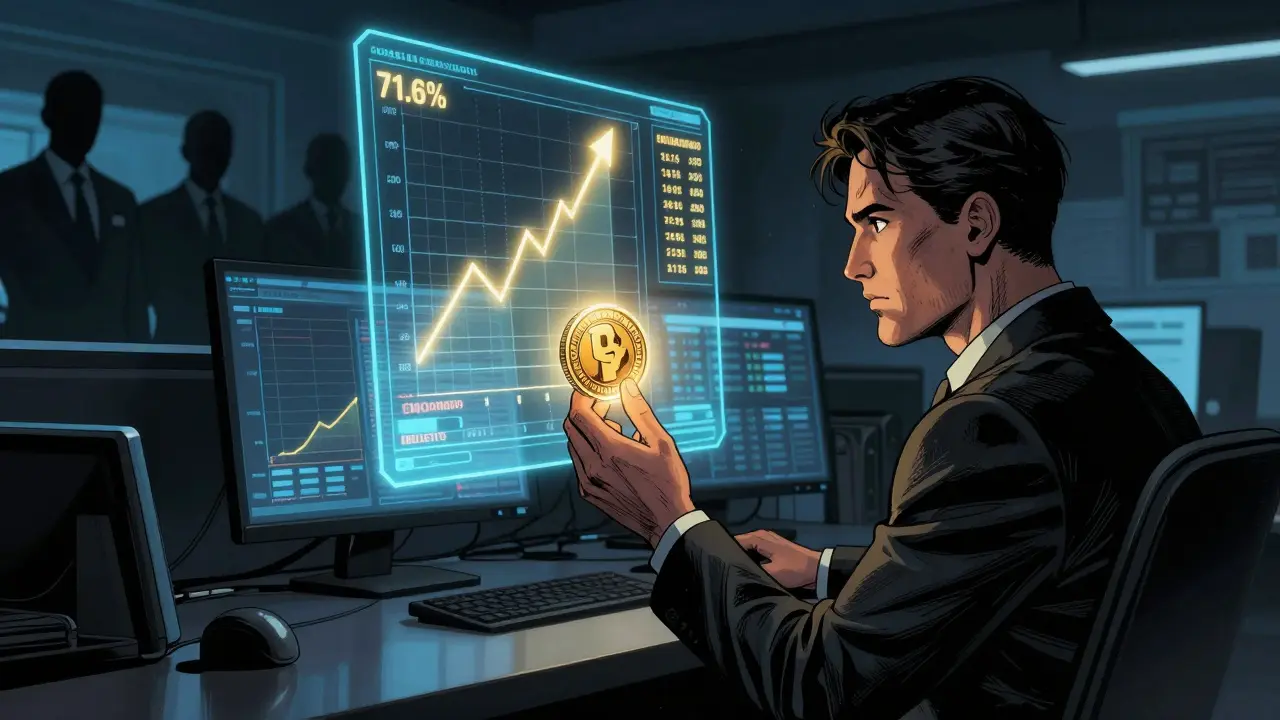
Is There a Way Forward for Privacy Coins?
Some developers are trying. A new wave of privacy coins is experimenting with “selective transparency.” Imagine a system where you can prove your transaction is clean to regulators - without revealing the details to the public. Zero-knowledge proofs are being reworked to allow compliance checks without breaking anonymity. Think of it like showing a cop your license without handing over your entire ID card. One project, Zcash’s zk-SNARKs upgrade, now lets users generate compliance proofs that authorities can verify without seeing the transaction amount or addresses. It’s not perfect. But it’s progress. Industry analysts say 74% of privacy coin developers now say FATF rules are their biggest challenge. The future isn’t about total anonymity. It’s about controlled privacy - the kind that satisfies regulators without betraying users.What Does This Mean for You?
If you’re a casual crypto user who just wants to buy Bitcoin and hold it - this probably doesn’t affect you. But if you care about financial privacy, you’re now in a different world. You can’t rely on exchanges anymore. You need to learn how to use non-custodial wallets. You need to understand peer-to-peer trading. You need to know how to send and receive Monero without a middleman. It’s harder. It’s slower. But it’s the only way left. And if you’re an investor? The price surge tells you something: demand hasn’t disappeared. It’s just gone underground. The coins that survived the delisting wave are now scarcer, more valuable, and more politically charged than ever. Regulators aren’t going away. Exchanges will keep complying. But privacy - real, unbreakable privacy - is still alive. It’s just not on Coinbase anymore.Why did exchanges stop listing privacy coins like Monero and Zcash?
Exchanges delisted privacy coins because of new global regulations, especially the FATF’s 2024 Travel Rule update. These rules require exchanges to collect and share customer data for transactions above certain amounts. Privacy coins like Monero and Zcash use encryption that hides sender, receiver, and transaction amount - making compliance impossible. To avoid fines and legal action, exchanges chose to remove them instead.
Are privacy coins illegal?
No, privacy coins aren’t illegal in most countries. But many exchanges can’t legally offer them anymore. Japan and South Korea have outright bans. The EU plans to ban them completely by 2027. In the U.S., Canada, and Australia, they’re restricted but not banned. The issue isn’t legality - it’s compliance. Exchanges fear regulatory penalties more than they fear losing users.
Can I still buy Monero or Zcash after they’re delisted?
Yes, but not through major exchanges like Binance or Kraken. You can still buy them on peer-to-peer platforms like LocalMonero or Bisq, using cash, bank transfers, or even Bitcoin. Decentralized exchanges (DEXs) that don’t require KYC also still support them. It’s less convenient, but it’s still possible - and growing.
Why did privacy coin prices go up even though they were delisted?
Delisting reduced supply on major platforms, creating scarcity. Many holders refused to sell, and institutional investors started accumulating privacy coins on private OTC desks. Demand didn’t disappear - it just moved underground. With fewer coins available on exchanges and growing interest from investors betting on long-term privacy demand, prices rose 71.6% in 2025.
Will privacy coins ever come back to exchanges?
Only if they change. Developers are working on hybrid systems that use zero-knowledge proofs to prove a transaction is compliant without revealing details. If a privacy coin can show regulators it’s not being used for crime - while still protecting user privacy - exchanges might relist them. But that’s still experimental. For now, the future of privacy coins lies outside centralized platforms.



So let me get this straight - we’re punishing privacy because it’s *too* private? 🤡 Like, if you can’t trace a transaction, it’s automatically shady? What’s next - banning encrypted emails because terrorists might use them? This isn’t regulation, it’s fear-driven censorship with a compliance sticker. Monero isn’t a crime, it’s a *tool*. And tools don’t have morals - people do.
Y’all are overcomplicating this. If you want privacy, use a non-custodial wallet. No exchange needed. It’s not hard. Just learn. The tech is there. The community is there. The price surge proves people still care. Stop whining about exchanges - they were never the point of crypto anyway 💪
Regulators hate privacy because they hate losing control. Bitcoin was supposed to be free money. Now it’s just another bank account with extra steps. The whole system is a lie. You think Zcash is gone? Nah. It’s just sleeping. And when the next crash hits, everyone will be begging for untraceable cash. Just wait. I told you so.
It’s funny how people act like this is some new tragedy. Exchanges have been skirting regulations for years. Now they’re finally doing what they should’ve done from the start. If you’re mad about delisting, maybe don’t put your money on platforms that are legally obligated to spy on you. Simple fix.
Guys. 🌱 I’m so proud of this community. We’re not giving up. We’re evolving. LocalMonero is booming. DEXs are getting better. People are learning how to self-custody. This isn’t the end - it’s the *awakening*. Privacy isn’t dead. It’s just going back to its roots. And honestly? It’s hotter than ever. 🙌 #CryptoIsFree #PrivacyIsAFundamentalRight
Let’s be real - this is all a setup. The government doesn’t care about money laundering. They care about tracking *you*. Every time you buy Monero, you’re signing up for a future where your every move is logged. This isn’t about crime. It’s about control. And soon, they’ll come for your Bitcoin too. Just wait. They always do.
In Nigeria, we don’t need exchanges to tell us what to do. We use P2P. We use WhatsApp. We use cash. Monero is the only way to send money without the bank stealing 15% and asking why. This isn’t about regulation. It’s about power. And we won’t let them take our financial freedom.
So what’s the real story here? Are privacy coins being banned because they’re used for crime… or because they’re too good at protecting people from surveillance? Because if it’s the latter… then maybe we’re not fighting crime. Maybe we’re just fighting freedom.
Actually, the whole situation is way more nuanced than it seems. I’ve been tracking this since 2023, and what’s happening isn’t just regulatory pressure - it’s a systemic shift in how financial infrastructure is being rearchitected globally. The FATF’s Travel Rule isn’t just a guideline anymore; it’s being embedded into core banking APIs through SWIFT integrations and AML gateways. Exchanges don’t have a choice - their compliance software literally blocks any transaction that can’t be mapped to a KYC identity. Even if they wanted to keep privacy coins, their backend systems would auto-flag and freeze them. It’s not a decision - it’s a technical inevitability. And honestly? That’s why the shift to P2P and DEXs is so critical. We’re not just moving coins - we’re moving entire economic models away from centralized control points. It’s messy, it’s slow, but it’s the only way to preserve sovereignty in a world where every transaction is monitored.
OH MY GOD THEY’RE COMING FOR US 😭 I TOLD YOU THIS WOULD HAPPEN!! Monero is the LAST TRUTH ON THE BLOCKCHAIN and now they’re trying to erase it like it never existed. Do you know what happens when you remove privacy? You create a world where your boss can see your salary transfers. Your landlord sees your rent. Your ex sees your donations to the shelter. This isn’t finance - it’s total surveillance capitalism with a side of crypto bros pretending they’re anarchists. I’m moving to Paraguay. Someone send me XMR.
Just use Wasabi Wallet or Samourai for Bitcoin. You don’t need privacy coins to get mixing. CoinJoin works fine. Most of the privacy advantages of XMR/ZEC are overrated. The real issue is adoption - not tech.
Don’t let them win. This is why we built crypto in the first place - to be free from banks, from governments, from control. Delisting? Good. It filters out the weak. The real ones are already on P2P. The real ones are already running nodes. The real ones aren’t scared. Keep stacking. Keep learning. We’re not losing - we’re upgrading.
For anyone new to this - if you want to buy Monero now, start with Bisq. It’s decentralized, no KYC, and you can trade BTC for XMR directly. Also, join r/Monero. The community’s got your back. It’s a little slower, but it’s real. And real is better than convenient any day.