Bitcoin Scarcity: Why Limited Supply Makes It Digital Gold
When we talk about Bitcoin scarcity, the fixed, unchangeable limit of 21 million Bitcoin that can ever exist. Also known as Bitcoin’s hard cap, it’s the core reason Bitcoin behaves like digital gold—not like fiat money that governments can print endlessly. Unlike dollars or euros, Bitcoin’s supply isn’t controlled by a central bank. It’s coded into the blockchain, enforced by thousands of computers worldwide. That means no one—not even Satoshi Nakamoto—can create more after 21 million are mined.
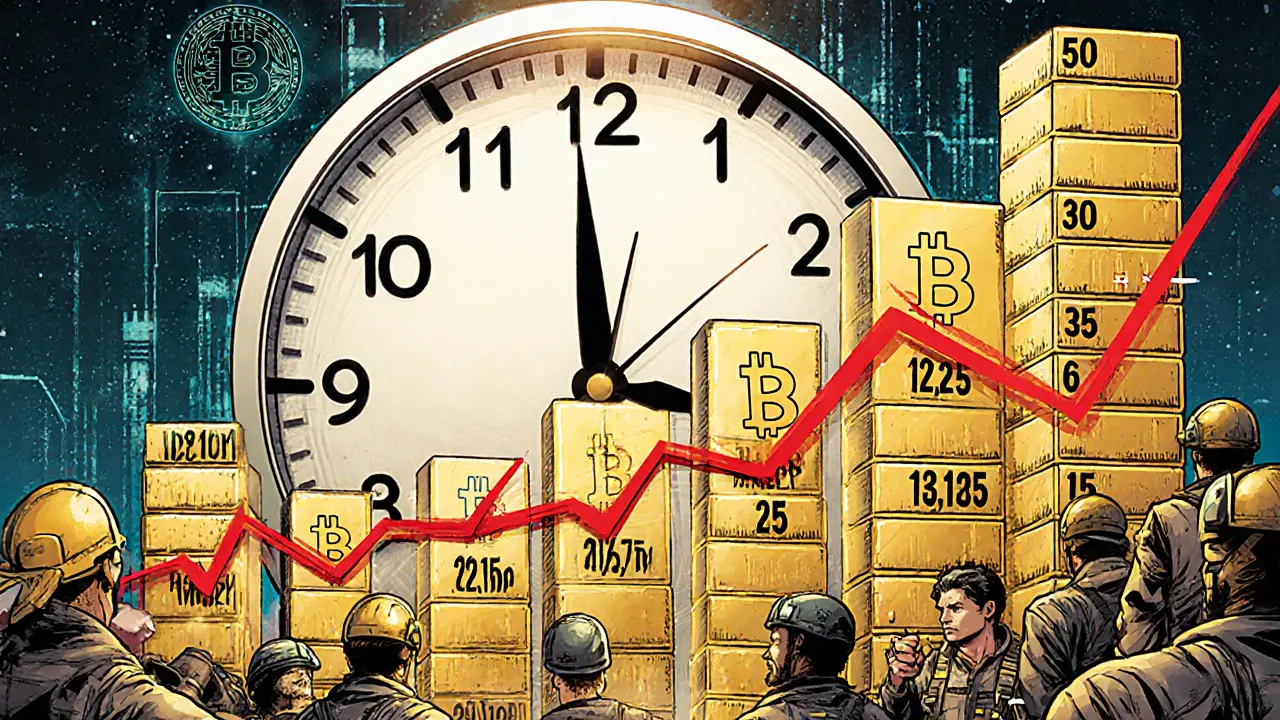
This isn’t just a technical detail. It’s an economic rule that changes everything. Think about gold: it’s rare because mining it takes time, energy, and effort. Bitcoin mimics that. Every new Bitcoin is earned through mining, and every four years, the reward for mining gets cut in half—that’s the Bitcoin halving, a scheduled event that reduces the number of new Bitcoins created per block by 50%. The first halving was in 2012, then 2016, 2020, and the next one’s due in 2024. Each time, fewer new coins enter circulation, making existing ones harder to get. That’s not speculation—it’s math.
Compare that to stablecoins or altcoins with unlimited supplies. Some tokens have billions or even trillions in circulation, and their creators can always mint more. Bitcoin doesn’t work that way. Its scarcity is baked in. That’s why people call it digital gold, a store of value with properties similar to physical gold: limited supply, durability, and global acceptance. It’s not about being flashy or fast. It’s about being reliable over decades. When inflation hits, people turn to gold because it holds value. Bitcoin does the same—but with the added benefit of being transferable across the world in minutes.
And it’s not just theory. Look at the data. As Bitcoin approaches its supply limit, transaction fees rise, miners rely more on fees than block rewards, and long-term holders accumulate more. The market reacts. Every halving has historically been followed by price increases—not because of hype, but because demand keeps growing while supply shrinks. That’s classic economics: limited supply + rising demand = higher value.
What you’ll find in the posts below isn’t just about Bitcoin’s price. It’s about the systems, scams, and strategies that surround scarcity. You’ll see how unregulated exchanges like TradeOgre got shut down for ignoring compliance, while privacy tech like zero-knowledge proofs tries to protect ownership without breaking scarcity rules. You’ll read about dead coins with infinite supply and no future, and how real value comes from something you can’t inflate away. This isn’t a speculative trend. It’s a fundamental shift in how money works—and Bitcoin scarcity is at the heart of it.